 Russia
 Belarus
 Georgia
 Kazakhstan
 Kyrgyzstan
 Uzbekistan
 China
China Nepal
Nepal Bangladesh
 Poland
 Romania
 Slovakia
 Hungary
 N. Macedonia
 Vietnam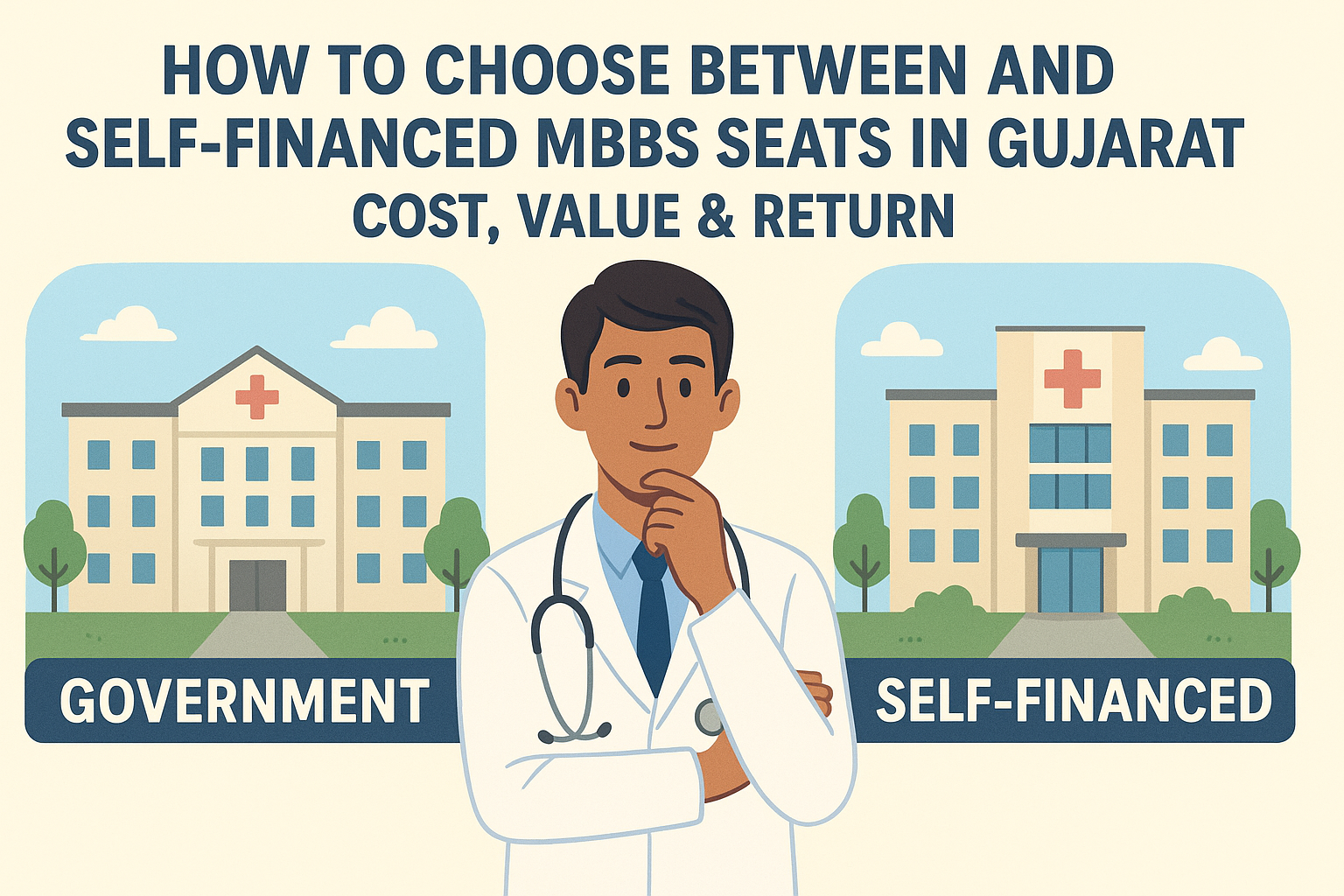
Choosing the right MBBS seat in Gujarat is one of the most crucial decisions for aspiring medical students. With the state offering both government and self-financed (private) medical college seats, understanding the differences in cost, quality, and future returns is essential to make an informed choice.
Government MBBS Seats: Affordable and Competitive
Government medical colleges in Gujarat are highly sought-after due to their low tuition fees and strong academic reputation. Tuition for a government MBBS seat typically ranges from ?50,000 to ?1,50,000 per year, depending on the college. These colleges are funded by the state, ensuring a standardized curriculum, experienced faculty, and well-maintained infrastructure.
Pros of Government Seats:
- Low tuition fees: Affordable for most families.
- High-quality education: Experienced faculty and clinical exposure in government hospitals.
- Better recognition: Degrees from government colleges carry strong credibility nationwide.
- Residency and postgraduate opportunities: Easier access to government postgraduate seats.
Cons of Government Seats:
- High competition: Limited seats mean NEET scores must be top-notch.
- Limited flexibility: Less control over choice of college if ranked lower in counselling.
For students aiming to understand the seat matrix and counselling strategy for government colleges in Gujarat, MBBS Advisor provides detailed insights, including category-wise seat allocation and previous years’ cut-offs.
Self-Financed MBBS Seats: Flexible but Costly
Self-financed or private medical colleges in Gujarat offer additional opportunities for students who may not secure government seats. These colleges generally charge ?10 lakh to ?25 lakh per year in tuition fees, with NRI quotas sometimes going even higher.
Pros of Private Seats:
- Higher seat availability: More chances to get admission if NEET score is moderate.
- Flexible admission: Management and NRI quotas provide alternative pathways.
- Modern facilities: Many private colleges invest heavily in infrastructure and technology.
Cons of Private Seats:
- High cost: Tuition and other fees can be a significant financial burden.
- Variable quality: Some colleges may lack adequate faculty or hospital exposure.
- Return on investment: High fees require careful planning, as future earnings may take longer to balance the initial cost.
To evaluate private colleges thoroughly, aspirants can refer to MBBS Advisor, which lists recognized colleges in Gujarat with fee structures, infrastructure details, and faculty information.
Cost vs Value: Making the Right Choice
When choosing between government and self-financed MBBS seats, students should weigh cost, quality, and return on investment:
- Cost: Government seats are more affordable and accessible, whereas private colleges require substantial investment.
- Education Quality: Government colleges offer standardized education, while private colleges vary widely in quality.
- Career ROI: Graduates from government colleges often have better placement opportunities and access to government postgraduate seats, providing higher long-term returns.
Practical Tips for Decision-Making
- Set Your Budget: Consider total tuition, hostel, and living expenses for the entire MBBS course.
- Check Recognition: Ensure the college is recognized by the NMC to avoid future complications.
- Analyze NEET Cut-Offs: Compare your NEET score with previous years’ closing ranks for both government and private colleges.
- Consider Long-Term ROI: Factor in postgraduate ambitions, career prospects, and potential debt from private colleges.
- Use Expert Guidance: Platforms like MBBS Advisor provide counseling tips, college comparisons, and insights to help make the best decision.
Conclusion
Choosing between government and self-financed MBBS seats in Gujarat requires careful consideration of cost, quality, and long-term value. Government seats are ideal for those with high NEET scores seeking affordable, high-quality education, while private seats offer additional opportunities at a premium cost. By assessing your budget, NEET rank, and career goals—and leveraging resources like MBBS Advisor and official NMC guidelines—students can make a well-informed choice that balances financial investment with career prospects.