 Russia
 Belarus
 Georgia
 Kazakhstan
 Kyrgyzstan
 Uzbekistan
 China
China Nepal
Nepal Bangladesh
 Poland
 Romania
 Slovakia
 Hungary
 N. Macedonia
 Vietnam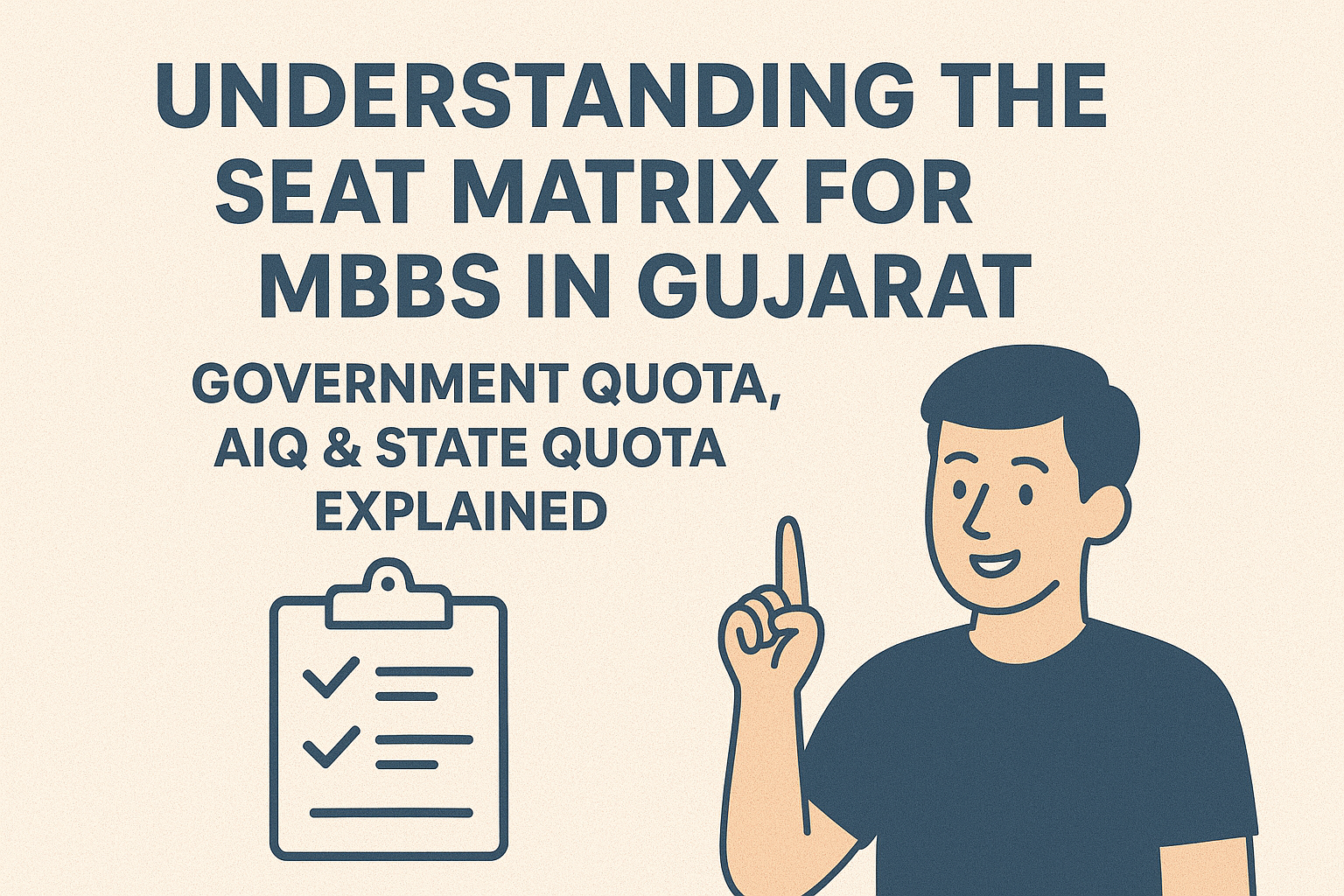
For aspirants aiming to pursue MBBS in Gujarat, understanding the seat matrix is critical for planning admissions effectively. The seat matrix defines how seats are allocated among various quotas, including the All India Quota (AIQ), State Quota, and reserved categories. This knowledge helps students strategize their NEET preparation and choice filling during counselling.
Overview of MBBS Seats in Gujarat
Gujarat has seen a significant increase in MBBS seats over the years. As of 2025, the state offers approximately 6,700 MBBS seats across government and private medical colleges. These seats are divided between government quota seats, management/self-financed seats, and NRI quotas. Proper understanding of the seat matrix ensures that students can target colleges based on their NEET scores and category eligibility.
For a detailed breakdown of colleges and seat availability, aspirants can consult MBBS Advisor, which provides comprehensive insights into Gujarat’s MBBS colleges, fee structures, and seat allocation.
1. All India Quota (AIQ) Seats
The AIQ constitutes 15% of the total seats in government medical colleges across Gujarat. These seats are open to candidates from all over India, irrespective of their state of domicile. AIQ seats are filled through NEET counselling conducted by the Medical Counselling Committee (MCC) at the national level.
Key Points about AIQ Seats:
- Reserved categories (SC/ST/OBC/EWS) follow central reservation rules.
- Students from any state can compete for AIQ seats.
- NEET rank plays a crucial role, and competition is high due to the national-level pool of applicants.
2. State Quota Seats
The state quota constitutes 85% of seats in government medical colleges in Gujarat. These seats are reserved for domicile students of Gujarat and are filled through state-level counselling conducted by the Admission Committee for Professional Undergraduate Medical Educational Courses (ACPUGMEC).
Key Points about State Quota Seats:
- Reserved categories (SC/ST/SEBC/EWS) are applied as per state government rules.
- State quota ensures that local students get preferential access to government colleges.
- High NEET scores are still necessary, especially for top government colleges.
Students can get the latest state quota seat matrix and previous years’ cut-offs from MBBS Advisor, which provides updated counselling strategies and college lists.
3. Management & NRI Quota
Apart from AIQ and state quota, private medical colleges in Gujarat offer management and NRI quotas. These seats are usually self-financed, with higher tuition fees ranging from ?10–25 lakh per year. These quotas provide additional opportunities for students who may not secure government or AIQ seats.
Key Considerations:
- Higher fees compared to government colleges.
- Merit-based selection via NEET.
- Recognized degrees are essential for future practice.
4. How to Use the Seat Matrix for Planning
Understanding the seat matrix helps students plan:
- Target Colleges: Prioritize government colleges if NEET rank is high; consider private seats if rank is moderate.
- Choice Filling: Optimize counselling choices based on state quota, AIQ eligibility, and category.
- Postgraduate Planning: AIQ and state quota seats influence chances of securing MD/MS seats in the future.
For detailed counselling tips and seat allocation trends, MBBS Advisor provides expert guidance and tools for navigating Gujarat’s MBBS seat matrix.
External Reference
For official information on NEET counselling, seat allotment, and reservation rules, students should refer to the Medical Counselling Committee (MCC) website, which conducts AIQ counselling and provides official updates.
Conclusion
Understanding the MBBS seat matrix in Gujarat—including AIQ, state quota, and management/NRI quotas—is essential for strategic planning. While AIQ seats open national opportunities, state quota benefits domicile students, and private management/NRI seats provide additional options for those who can afford higher fees. By leveraging resources like MBBS Advisor and official MCC updates, students can make informed decisions, maximize their chances of admission, and align their NEET preparation with realistic goals.