 Russia
 Belarus
 Georgia
 Kazakhstan
 Kyrgyzstan
 Uzbekistan
 China
China Nepal
Nepal Bangladesh
 Poland
 Romania
 Slovakia
 Hungary
 N. Macedonia
 Vietnam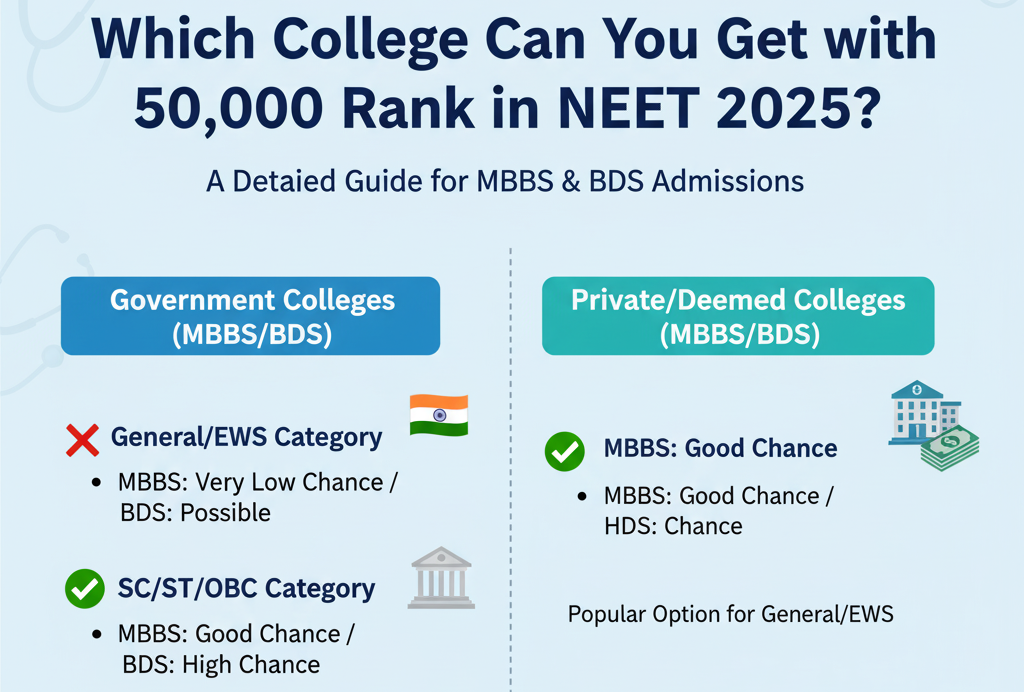
For NEET UG 2025 aspirants, achieving a rank around 50,000 can be both exciting and challenging. It is a respectable rank but places you in a middle tier, where competition for top government medical colleges is high, and strategic planning is crucial to secure a seat in a good institution.
Understanding Your Position with a 50,000 Rank
A 50,000 NEET rank typically does not guarantee admission to the most prestigious government medical colleges. However, it opens doors to several private and deemed universities and state quota government colleges. Factors influencing seat allocation include:
- Category: Reserved categories (OBC, SC, ST, EWS) have lower cut-offs compared to General category, improving chances.
- State Quota vs All India Quota (AIQ): State quota seats offer higher chances if you are a domicile of that state.
- Counselling Rounds: Mop-up rounds and stray vacancy rounds can be opportunities to secure seats not filled in the initial allotments.
Colleges You Can Target with a 50,000 Rank
Here’s an overview of colleges you might consider based on your rank:
- Private Medical Colleges
Private colleges form the backbone of MBBS education for mid-tier ranks. They provide quality infrastructure, hospital exposure, and modern teaching facilities. Examples include colleges in states like Karnataka, Maharashtra, and Tamil Nadu that often accept students in the 40,000–70,000 rank range under general category. - State Government Colleges in Less Popular States
Some government medical colleges in smaller states or less urbanized areas may have closing ranks closer to 50,000. These colleges may not be high-profile but provide excellent clinical experience and accredited degrees recognized across India. - Deemed Universities
Certain deemed universities admit students based on NEET rank and may offer MBBS seats for ranks around 50,000. These institutions often have higher fees but guarantee modern infrastructure and significant exposure to research programs.
Factors to Consider When Choosing Colleges
With a rank like 50,000, choosing the right college requires balancing several factors:
1. Fees and Financial Planning
Private and deemed colleges often charge higher tuition fees. Planning your budget, including hostel, mess, and other living costs, is essential.
2. Location and Clinical Exposure
Urban colleges provide better exposure to a variety of cases, whereas colleges in smaller towns offer more hands-on practice due to a smaller student-to-patient ratio.
3. Reputation and Alumni Network
While a college might accept a 50,000 rank, research its faculty, hospital affiliations, and alumni outcomes to ensure it supports your career ambitions.
4. Counselling Strategy
Prepare a balanced list of colleges — include some safe options, a few moderate choices, and a couple of ambitious targets. Staying flexible during counselling rounds, including mop-up and stray vacancy rounds, can improve your chances.
Backup Options
If securing an MBBS seat seems difficult:
- BDS (Dentistry) or allied courses: Many mid-tier NEET ranks gain admission to dental courses or other health science programs, which can also lead to rewarding careers.
- State-level private colleges: These may provide seats even for general category students around rank 50,000, though fees are often higher.
Tips for NEET 2025 Rank ~50,000 Students
- Check State Quota Policies: Many states allocate a significant number of seats to domiciled students, improving chances.
- Research Private College Options: Prioritize colleges with good hospital exposure, faculty, and infrastructure.
- Stay Updated on Counselling Dates: Missing deadlines can cost you valuable opportunities.
- Evaluate Financial Implications: Always consider long-term affordability before confirming admission.
- Consider Mop-Up and Stray Vacancy Rounds: Many students upgrade or drop out, creating additional opportunities.
Conclusion
A NEET 2025 rank of 50,000 does not close the doors to MBBS opportunities. While top-tier government colleges may be challenging, private medical colleges, deemed universities, and some state quota government colleges remain accessible. With careful planning, research, and flexibility, students can still secure a good MBBS seat, gain quality education, and build a strong foundation for a career in medicine.
Remember, success is not just about the college you join but also how you leverage your learning, hospital exposure, and clinical practice to become a competent doctor.