 Russia
 Belarus
 Georgia
 Kazakhstan
 Kyrgyzstan
 Uzbekistan
 China
China Nepal
Nepal Bangladesh
 Poland
 Romania
 Slovakia
 Hungary
 N. Macedonia
 Vietnam
 Canada
 Armenia
 UK
UK Australia
 USA
USA Ireland
 Germany
 New Zealand
 Italy
Italy France
 Singapore
 Netherlands
 Sweden
 Switzerland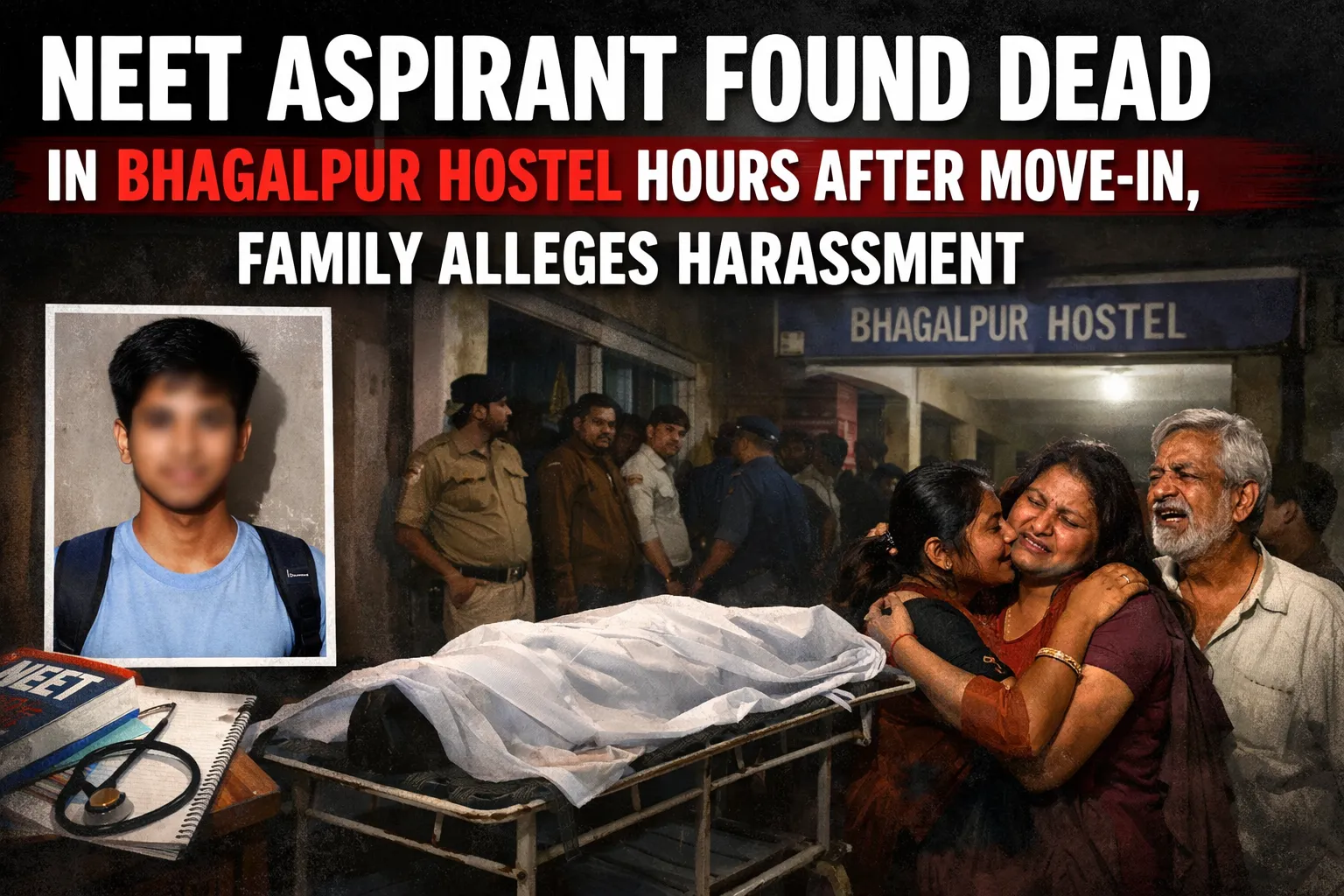
Once again, the questionable mental health and psychological well-being of NEET aspirants in India has come under fire — this time, with a tragic incident from Bhagalpur, Bihar. The family of a young medical aspirant found dead in a hostel room shortly after moving in are shocked and demanding justice. The incident has also fueled discussions about pervasive academic pressure, bullying and an urgent need for improved student support systems.
The student had recently come to Bhagalpur to start studies for the extremely competitive NEET test, according to reports. Detrimental circumstances fell on us just hours after arriving at the hostel. A harassment event has been alleged by the family as a potential cause as officials have opened an investigation into what happened and the family is asking for all aspects of the case to be thoroughly considered.
Rising Pressure Among NEET Aspirants
NEET is considered one of the toughest exams to crack. With thousands of candidates applying for only a small number of medical seats within the same year, students face significant academic pressure. Most of the aspirants shift to various coaching hubs and hostels, generally away from home support that can expose them to stress, loneliness and anxiety.
And experts say students need to stop honing in on academics and focus on mental health. Such platforms guide and support students in making better career decisions and alleviating anxiety targeted toward medical admissions.
Allegations of Harassment
The murder victim's family has claimed that their child had been harassed soon after joining the hostel. Although the details are still unfolding, such accusations cut to a wider issue within student accommodations and coaching setups.
Being a care of the Hostel authorities and institutions to provide safe and supportive living conditions for students. Strict anti-ragging measures, availability of counseling facilities and redressal systems must be put in place to prevent such tragedies.
Importance of Mental Health Awareness
One such big issue faced by competitive exam aspirants is Mental Health. Constant academic pressure, the fear of failure and, to a certain extent, societal expectations tend to have an extreme affect on students.
Mental health is an issue, added organizations like the WHO to highlight how crucial it is for us—particularly young people. WHO guidelines state that early intervention, counseling and open communication can go a long way to prevent mental health crises.
Doing so requires parents and educators to model an environment in which students feel safe talking about challenges they face without fear of being judged.
Role of Regulatory Bodies
In India, the NMC regulates medical education and welfare of students. The NMC’s governing body is the council, and while they are responsible for maintaining quality of education, there are growing calls for measures that ensure student safety and mental health support.
Worldwide, the medical schools in WDOMS are guided by organized systems that commonly incorporate student counseling and welfare programs. Similar structures in India will help assuage the rising apprehensions among aspirants.
Exploring Alternative Medical Education Paths
Due to the mounting competition and stress in India, a lot of students look for other options like studying medicine abroad. Programs such as pursuing MBBS in Georgia are quite popular owing to the low-cost of living, global acceptance and a bit of an easy approach towards studies.
These programs are a blessing for students who have dreams to enter the field of medicine but aren't able to because of intense competition like NEET in India. Before making such decisions though, it is a must to do proper research and seek out guidance.
Need for Systemic Change
This tragedy is not an isolated incident. There have been a few such instances over the years, demonstrating that there is an urgent need to reform the system at all levels of education ecosystem.
Here are some key actions that could help avert such tragedies:
- Fortifying mental wellness in coaching institutes through mandatory counseling
- Regular monitoring of hostel conditions
- Strict implementation of anti-harassment policies
- Promoting two-way communication between students and parents
- Decreasing stigma of mental health conditions
Educational institutions should show more onus and establish an environment for the students, which is not biased.
Conclusion
Evidently, there is hope in every struggle as the death of a NEET aspirant who jumped off from the 4th floor of his residence at Gandhi Chowk area in bomb blast Bhagalpur on October 2nd should be proof enough. Although academic excellence is paramount, it should never be in exchange for a student’s mental and emotional well-being.
Students need to feel comfortable asking for help if they need it, and families also need to be proactive and keep working hard to support their children’s mental health. At the same time, institutions and authorities must also take meaningful steps to foster safety, transparency, and accountability.
However, with increased awareness, assistance through platforms such as MBBS Advisor, and the exploration of options like MBBS in Georgia, students can make informed choices and chase their dreams in a healthier circumstance.