 Russia
 Belarus
 Georgia
 Kazakhstan
 Kyrgyzstan
 Uzbekistan
 China
China Nepal
Nepal Bangladesh
 Poland
 Romania
 Slovakia
 Hungary
 N. Macedonia
 Vietnam
 Canada
 Armenia
 UK
UK Australia
 USA
USA Ireland
 Germany
 New Zealand
 Italy
Italy France
 Singapore
 Netherlands
 Sweden
 Switzerland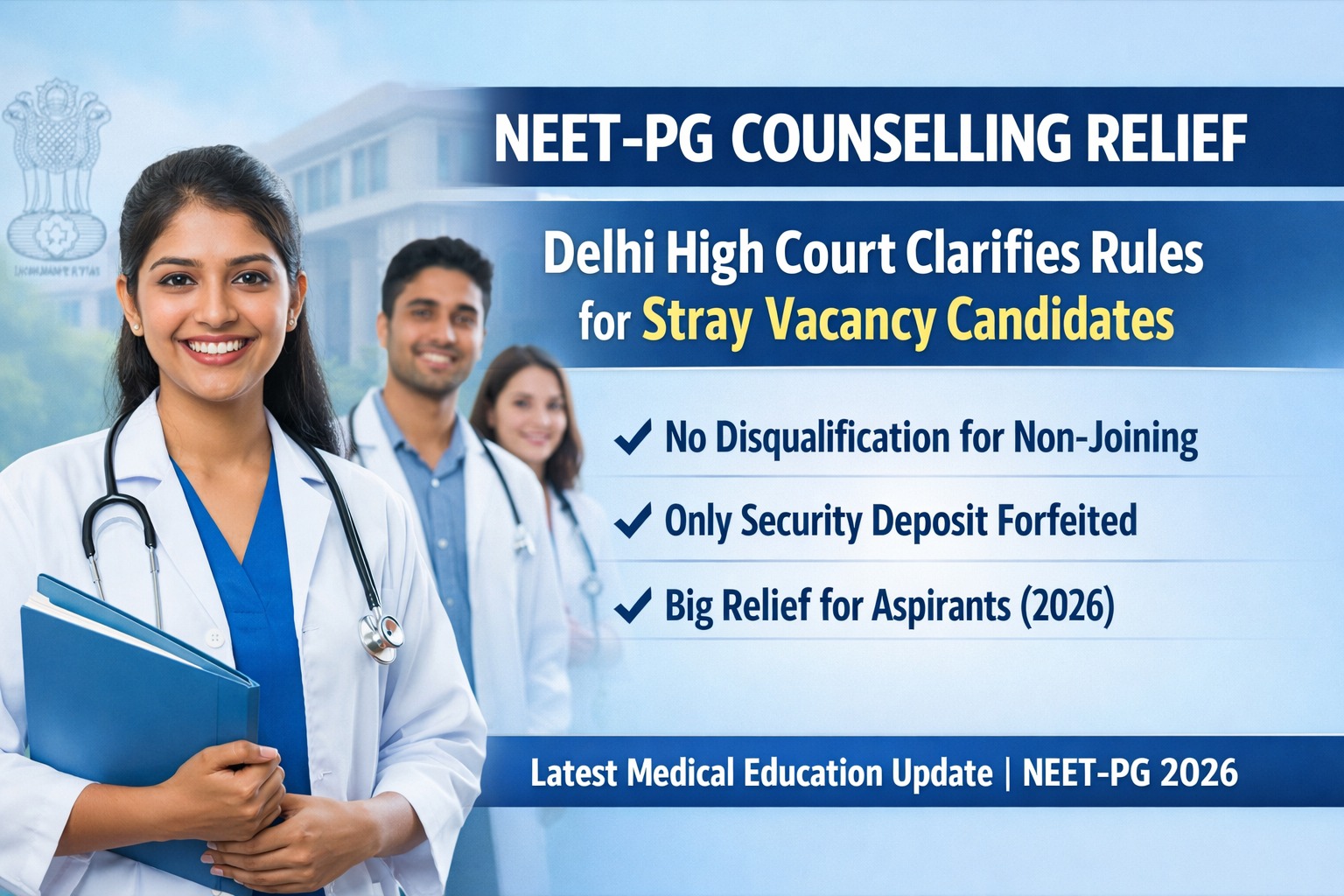
In a significant relief for postgraduate medical aspirants, the Delhi High Court has clarified that candidates who did not join seats allotted during the stray vacancy round of NEET-PG counselling cannot be permanently barred from participating in future counselling processes such as SPMD. This decision brings much-needed clarity and fairness to India’s complex medical admission system.
Background of the Issue
The NEET-PG counselling process consists of multiple rounds, including:
- All India Quota (AIQ) rounds
- State quota rounds
- Mop-up rounds
- Final stray vacancy round
The stray vacancy round is the last opportunity for candidates to secure remaining seats. However, many candidates choose not to join allotted colleges due to reasons like:
- Unfavorable specialization
- Location constraints
- Financial limitations
Previously, there was confusion about whether such candidates would be disqualified from future counselling opportunities, including SPMD.
Court’s Key Observations
The Delhi High Court ruled in favor of students, stating:
- Not joining a stray vacancy seat should not lead to a lifetime ban from future counselling.
- The only reasonable penalty is forfeiture of the security deposit.
- Denying participation in further counselling violates the principle of equal opportunity.
This judgment ensures that administrative rules do not override fairness in medical education access.
Impact on NEET-PG Counselling System
This decision is expected to improve the efficiency of the counselling process:
- Higher seat utilization: More candidates will be eligible for later rounds, reducing vacant PG seats.
- Flexibility for students: Candidates can make better-informed decisions without fear of harsh penalties.
- Improved system efficiency: Reduces last-minute seat wastage and improves allocation flow.
Role of Regulatory Bodies
The counselling system operates under the guidelines of the National Medical Commission, which ensures:
- Transparency in admissions
- Merit-based selection
- Standardization of medical education
Globally, organizations like the World Health Organization emphasize the importance of increasing the number of qualified doctors, making efficient seat allocation critical.
Additionally, the World Directory of Medical Schools helps validate medical institutions worldwide, supporting global mobility for medical graduates.
What This Means for NEET-PG Aspirants
This ruling brings several advantages:
- No permanent disqualification for not joining stray vacancy seats
- Opportunity to participate in further counselling rounds
- Reduced pressure to accept unsuitable seats
- More strategic decision-making during counselling
It also highlights the growing importance of guidance platforms like MBBS advisor services, which help students navigate complex counselling procedures.
Broader Significance
The judgment reinforces an important legal principle:
Admission rules should facilitate access to education, not create unnecessary barriers.
Courts have consistently emphasized that leaving medical seats vacant is not in the public interest, especially in a country facing a shortage of healthcare professionals.
Conclusion
The decision by the Delhi High Court marks a progressive step toward a more student-friendly and efficient NEET-PG counselling system. By allowing candidates greater flexibility and ensuring fair participation, the ruling helps maximize seat utilization and supports the broader goal of strengthening India’s healthcare workforce.
For NEET-PG aspirants, this update provides both relief and opportunity—making the counselling process more transparent, fair, and aligned with real-world challenges.