 Russia
 Belarus
 Georgia
 Kazakhstan
 Kyrgyzstan
 Uzbekistan
 China
China Nepal
Nepal Bangladesh
 Poland
 Romania
 Slovakia
 Hungary
 N. Macedonia
 Vietnam
 Canada
 Armenia
 UK
UK Australia
 USA
USA Ireland
 Germany
 New Zealand
 Italy
Italy France
 Singapore
 Netherlands
 Sweden
 Switzerland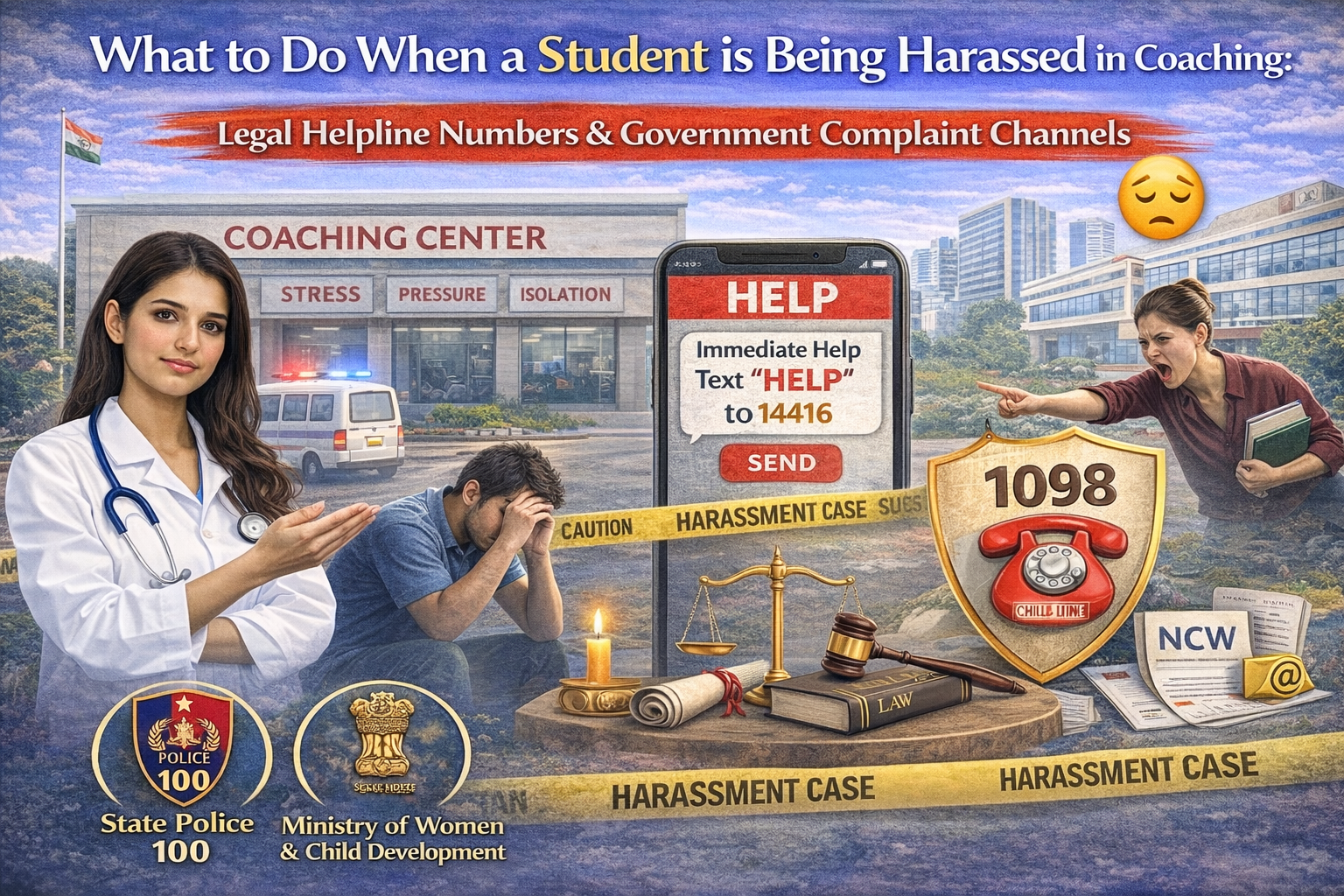
Moral instruction in coaching institutes is a grave business that steals a child's peace of mind, academic career, and even personal safety. Whether it is verbal, physical, psychological, academic-pressure induced, discriminatory, or sexual, students in India enjoy legal rights and government-backed protection.
This is a sad thing that we keep hearing from students who are preparing for NEET, JEE, or any professional course, but they don’t come forward due to fear, stigma, and ignorance. That is their first for those students who are harassed in a coaching environment.” This guide tells you exactly what to do, where to complain, and call helplines if a student is being harassed.
Understanding Harassment in Coaching Institutes
Forms of Harassment: forms, whether minor or significant, which a woman must face include:
- Verbal abuse, humiliation, or threats
- Mental pressure, intimidation, or discrimination
- Sexual harassment or inappropriate behavior
- Ragging-like practices
- Academic exploitation or unfair treatment
- Harassment online -messages or social media groups, etc
No form of harassment is acceptable, whether caused by teachers, staff, seniors, or peers.
Actions a Student Should Take Right Away
1. Ensure Personal Safety First
If the student is in imminent danger:
- Move to a safe location
- Go to a responsible adult, parent , or even a local official
- For an emergency police response, dial 112 (National Emergency Helpline)
Of course, safety trumps formal complaints Every Time.
2. Document Everything
Evidence is crucial. The student should:
- Record the dates, times, and places of incidents as well as brief descriptions.
- Record messages, emails, voice notes, or screenshots.
- Determine if there were any witnesses (peers, staff, others)
This evidence supports allegations brought before authorities or regulatory agencies.
3. If you feel it’s safe to do so, report internally
If the coaching institute has:
- A grievance cell
- Internal Complaint Committee
- Academic counselor
The matter may be put into writing. But it is optional – if the student is afraid of retaliation, they don’t have to.
I am listing below the link to a few of them: Legal Helpline Numbers for Students in India
National-Level Helplines
- 112 – Emergency Police Assistance
- 1098 – CHILDLINE (for persons under 18 years of age)
- 181 / 1091-Women Helpline (Depending on the State)
- 9152987821 – Tele-MANAS Psychosocial Support
- 14416 / 1-800-891-4416 – National Anti-Raging Helpline
They are government-operated, and the most important thing about their helplines is that they are confidential.
Government Complaint Channels for Harassment
1. Police Complaint (FIR)
If harassment involves:
- Physical assault
- Sexual harassment
- Criminal intimidation
- Stalking or threats
An FIR can be lodged at the nearest police station, or it can also be filed online through the internet in many states. The right to get an FIR registered is a legal right.
2. Women’s Safety & Sexual Harassment Complaints
Female students can approach:
- Women Police Stations
- State Women's Commissions
- Local Protection Officers
Sexual harassment is punishable as a crime in India, even if it happens abroad.
3. Child Protection Authorities (For Minors)
If the student is below 18:
- Child Welfare Committees (CWC)
- District Child Protection Units
- CHILDLINE coordination
Coaching centres are legally duty-bound to provide a safe environment for children.
Mental Health Support Is Equally Important
Harassment often leads to:
- Anxiety
- Depression
- Panic attacks
- Academic burnout
- Suicidal thoughts
Getting help is not abnormal. Students may also be directed to government-supported counseling services and mental health professionals. International health organisations, such as the World Health Organization (WHO, stress early mental health intervention for academically stressed students.
Role of Regulatory Bodies in Education Institutions & Medical Colleges
In cases of harassment, whether it is Medical entrance coaching or wrong information about medical education, students and their parents should also know what a genuine way of education is.
- In India, medical education is supervised by the National Medical Commission (NMC
- Institutions and universities recognized by global bodies such as the World Directory of Medical Schools (WDOMS) ensure academic legitimacy
Understanding official systems helps students avoid exploitative or fraudulent coaching environments.
How Parents Can Help a Harassed Child
Parents should:
- Listen without judgment
- Do not put the student at fault or try to force them
- Take complaints seriously
- If necessary, escort the student to law enforcement
- Seek legal or counseling support
Silence only benefits the abuser — not the student.
When It May Be Time to Get Professional Help for Educational Matters
Sometimes harassment is linked with:
- False promises by coaching centers
- Unrealistic pressure tactics
- Misleading career advice
In these scenarios, students will find well-reputed academic counseling platforms such as MBBS Advisor a blessing as there is no influence peddling or pressure selling, giving way for transparent, student-centric advice.
Keep Calm And Know These Legal Rights if You’re A Student
In India, punishment for harassment is affordable and convenient.
- FIR cannot be refused to be filed by the police
- Minors are protected by laws that make it illegal to forc You can read and share success stories here.
- Complaints of sexual harassment should be treated seriously
- Confidentiality is legally required
No coaching institute can be above the law.
Conclusion
Aggravated Harassment in Coaching Institute is a grave compromise with the dignity and security of students. Legal systems and government helplines, and mental health services were in place to protect students, but awareness was the key.
If you or someone you know is being harassed:
- Speak up
- Seek help
- Document everything
- Use official complaint channels
The right intervention and support, taken in time, can save students' futures, protect their well-being, and preserve academic careers.