
 Russia
 Belarus
 Georgia
 Kazakhstan
 Kyrgyzstan
 Uzbekistan
 China
China Nepal
Nepal Bangladesh
 Poland
 Romania
 Slovakia
 Hungary
 N. Macedonia
 Vietnam
 Canada
 Armenia
 UK
UK Australia
 USA
USA Ireland
 Germany
 New Zealand
 Italy
Italy France
 Singapore
 Netherlands
 Sweden
 Switzerland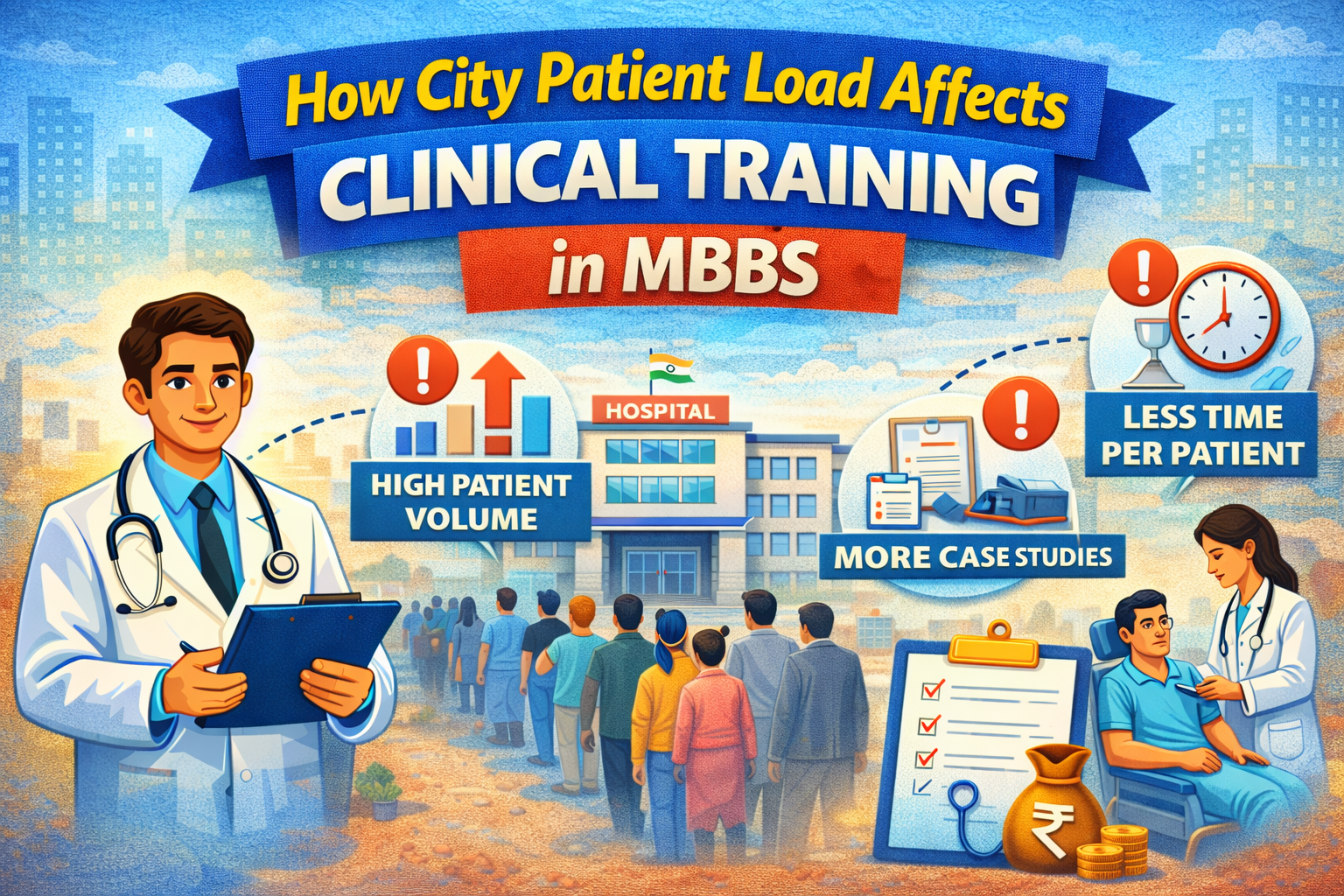
When students and parents choose an MBBS college, most attention goes to fees, infrastructure, and rankings. However, one of the most critical – and often ignored – factors is city patient load. The number and diversity of patients a city hospital receives directly impacts the quality of clinical exposure, practical learning, and confidence of future doctors.
Understanding how patient flow influences training helps families make smarter MBBS admission decisions. Trusted platforms like MBBS Advisor regularly guide students on choosing colleges located in cities with strong clinical exposure.
Why Patient Load Matters in MBBS
MBBS is not just about textbooks. It is a skill-based profession where learning happens mainly in:
- OPD (Outpatient Department)
- Wards
- Emergency rooms
- Operation theatres
A higher patient load means: - More real cases
- Better hands-on experience
- Stronger diagnostic skills
- Greater confidence in clinical decision-making
This is why medical colleges in cities with busy government hospitals often produce more clinically sound doctors.
High Patient Load Cities – Maximum Exposure
Cities with large populations, government hospitals, and referral centres usually see thousands of patients daily. In such cities, MBBS students get exposure to:
- Communicable and lifestyle diseases
- Trauma and emergency cases
- Paediatrics, obstetrics, and surgical cases
- Rural and urban health issues
Students posted in such hospitals observe and assist in multiple cases every day, which significantly sharpens their practical understanding. MBBS Advisor frequently recommends colleges attached to high-load hospitals for students who want strong clinical grounding.
Medium Patient Load Cities – Balanced Learning
Tier-2 cities usually offer a balanced patient inflow. While not as crowded as metro hospitals, these cities provide:
- Decent OPD footfall
- Regular inpatient admissions
- Structured clinical teaching
- Less overcrowding during rounds
In such cities, students often get more personal interaction with doctors and patients, which improves learning. Many parents prefer these cities as they offer good exposure without extreme pressure.
Low Patient Load Cities – Limited Clinical Practice
Cities with small populations or newly established medical colleges often face low patient inflow. This results in:
- Fewer real cases for students
- Limited hands-on practice
- Over-dependence on case discussions instead of real patients
- Less confidence during internship
Students from low patient load cities often need extra effort during internship or postgraduate preparation to compensate for limited exposure. MBBS Advisor helps parents identify such gaps before finalising admissions.
Impact on Internship & Future Practice
During the compulsory internship year, patient load becomes even more important. High patient volume ensures:
- Frequent emergency duties
- Better exposure to critical care
- Improved procedural skills (IV lines, suturing, catheterisation, etc.)
- Strong preparation for real-world practice
Students trained in busy hospitals generally adapt faster when they start independent practice or pursue postgraduate studies.
Role of NMC Guidelines in Clinical Training
The National Medical Commission (NMC) mandates minimum patient load and hospital bed strength for medical colleges. These norms ensure:
- Adequate OPD and IPD exposure
- Proper clinical posting schedules
- Sufficient case diversity for learning
However, even among NMC-recognised colleges, actual patient flow varies by city. This is why parents should not rely only on approvals but also consider real city patient dynamics.
For MBBS Abroad Students – Clinical Exposure & FMGE
Students studying abroad must clear the Foreign Medical Graduate Examination (FMGE) to practice in India. One major challenge faced by FMGE aspirants is limited clinical exposure during MBBS.
If a foreign university is located in a low patient load area, students often struggle with:
- Clinical reasoning
- Case handling
- Indian disease patterns
This directly affects FMGE performance. Hence, when choosing MBBS abroad, patient load of the city and hospital is equally important. MBBS Advisor provides practical insights into real hospital exposure in foreign universities.
How Parents Should Evaluate Patient Load
Parents should look beyond brochures and ask:
- Is the hospital government or private?
- Does it serve as a referral centre?
- How many patients visit OPD daily?
- Is it a teaching hospital with real case flow?
- Are rural and emergency cases handled there?
A college with a big campus but empty wards is far less valuable than a modest college attached to a busy hospital.
Why Expert Guidance Makes a Difference
Most admission consultants talk about fees and seats, but very few discuss patient load and clinical exposure. This is where MBBS Advisor stands out by helping families choose colleges based on practical learning quality, not just infrastructure.
Their guidance ensures students don’t face regret later due to weak clinical training.
Conclusion
City patient load plays a decisive role in shaping a competent doctor. High patient flow builds confidence, sharpens skills, and prepares students for real medical challenges. Whether choosing MBBS in India or abroad, families must prioritise clinical exposure over campus glamour.With expert support from MBBS Advisor, and awareness of standards set by the National Medical Commission and requirements of FMGE, parents can make informed decisions that truly benefit their child’s medical future.