 Russia
 Belarus
 Georgia
 Kazakhstan
 Kyrgyzstan
 Uzbekistan
 China
China Nepal
Nepal Bangladesh
 Poland
 Romania
 Slovakia
 Hungary
 N. Macedonia
 Vietnam
 Canada
 Armenia
 UK
UK Australia
 USA
USA Ireland
 Germany
 New Zealand
 Italy
Italy France
 Singapore
 Netherlands
 Sweden
 Switzerland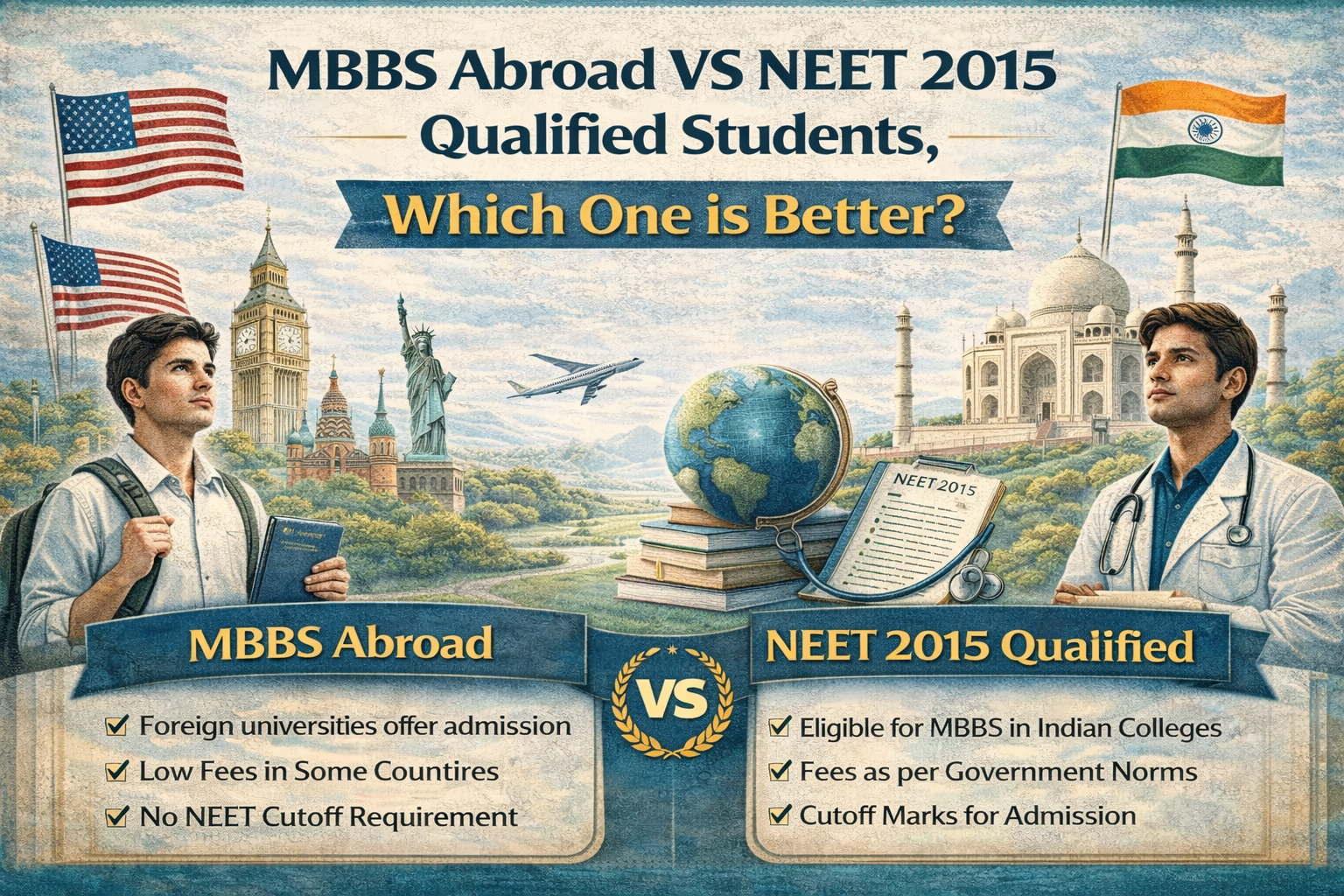
Introduction
Every year, NEET-qualifying students are left with the question of whether to do MBBS in India, especially at the newly opened private medical colleges or go abroad at countries like Georgia, Ukraine or Kazakhstan. With high-fee private institutions booming in India, and established international programs 2025 brings both opportunities and threats. Parents and students need to contemplate tuition, reputation, clinical exposure, and future career opportunities before taking such a life-altering decision.
1.Tuition Fees Comparison
Private Medical Colleges in India:
- The recently opened colleges extort hefty amounts, sometimes amounting to ?60 lakh – ?1.2 crore for the entire MBBS course.
- Other fees are hostel, library and hospital training fees.
MBBS Abroad:
- countries such as Georgia, Kazakhstan, Ukraine or Philippines offers the course at a package of ? 25–40 lakh for the full program.
- Tuition and cost of living tend to be lower, and many programs are in taught in English.
For parents looking for affordable options, study abroad often ends up being a financially viable option. You can see a comparison of the fee structure between overseas and Indian universities via platforms such as MBBSAdvisor
2.Admission Eligibility and Ease
Private Indian Colleges:
- It is purely through NEET ranking. Heavy competition forces those who scored high to get seats in top private premium colleges.
- New universities might add some places, but they frequently charge eye-watering fees.
Abroad:
- There is an NEET qualification for Indian students, but invariably there are no cut offs depending upon the rank.
- The admission process is quicker, and there’s less emphasis on marks if students meet the language and health requirements.
For several NEET candidates with a decent rank, studying MBBS abroad can be an easier and faster way.
3.Quality of Education & Infrastructure
New Private Colleges in India:
- The infrastructure is variable; a newly opened college may still be constructing hospital wings or recruiting faculty.
- There may be little clinical exposure if hospital beds or patient uptake is small.
MBBS Abroad:
- Existing universities, such as the ones in Georgia, bring decades of experience to medical education.
- Students frequently gain access to advanced training laboratories, simulation learning experiences and international hospital rotations.
Educational consultants, too, recommend verifying NMC recognition and global accreditation for Indian and foreign colleges. Recognition platforms such as NMC, WDOMS, and WHOare indispensable to verify the authenticity of your degree internationally.
4.Recognition and Career Opportunities
Private Indian Colleges:
- In India, degrees are automatically recognised if passed by NMC
- Postgraduate training in India is given on a competitive basis, and most are enrolled through NEET-PG.
MBBS Abroad:
- To practice in India, graduates have to clear the Foreign Medical Graduates Examination (FMGE) OR appear for the new National Exit Test (NEXT).
- WDOMS listed and WHO compliant: Degrees are accepted internationally if the college is in WDOMS & meets WHO standards.
Foreign MBBS degrees may provide greater opportunities for international mobility or higher studies overseas, and for students who are looking to work across different areas of the world.
5.Clinical Exposure & Hands-On Training
Private Indian Colleges:
- Table s and figure s that can be used for hands-on practical training with patients are restricted by the patient load of the hospital and availability of teachers.
- It can take years for newly opened colleges to establish a solid clinical base.
MBBS Abroad:
- Foreign medical schools usually offer rotations in hospitals from the early years, with exposure to a wide variety of cases and clinical experience.
- Students are exposed to international medical styles, which helps them to prepare for exams such as USMLE, PLAB or NEXT.
6.Fee Transparency and Guidance
Hidden fees: Parents left in the dark While only a few uncertain new Indian colleges asked parents for “donations”, there were 20 cases of them being booked for revealing hidden charges.
- Hostel fees
- Exam fees
- Laboratory or clinical charges
There is more transparency for out of country admissions. Resources such as MBBSAdvisor provide accurate and professional comparisons on costs, accreditation, and admission deadlines for students to make the best decision.
7.Important Mains Oriented Facts and Key Takeaways for 2025 NEET Aspirants
- Economically driven MBBS aspirant usually likes the MBBS abroad in such cases due to low cost of fees and quality garnering clinical skills.
- High NEET Ranked students may opt for new private indian colleges if can afford fees and want domestic vibes.
- Oversees reputation counts when working or pursuing a postgraduate course in foreign; verify NMC, WDOMS and WHO are referring you to.
- Guidance and advice is quintessential – there are websites like MBBSAdvisor who provide authentic information about the admissions, fees; recognition in Universities.
Conclusion
These decisions will have advantages and disad-vantages for students who are NEET-qualified in 2025. The private medical colleges that have been recently opened in India can provide the domestic convenience, but they are expensive and there is an uncertain infrastructure. MBBS abroad gives you low-cost fees, international exposure and image but students have to clear NEXT/FMGE exams for practicing in India.
The right path depends on individual priorities — budget, recognition, clinical training and career plans. Looking at MBBSAdvisor and validating NMC, WHO and WDOMS approvals can enable them to take an informed, more secured step towards their career in medicine.