 Russia
 Belarus
 Georgia
 Kazakhstan
 Kyrgyzstan
 Uzbekistan
 China
China Nepal
Nepal Bangladesh
 Poland
 Romania
 Slovakia
 Hungary
 N. Macedonia
 Vietnam
 Canada
 Armenia
 UK
UK Australia
 USA
USA Ireland
 Germany
 New Zealand
 Italy
Italy France
 Singapore
 Netherlands
 Sweden
 Switzerland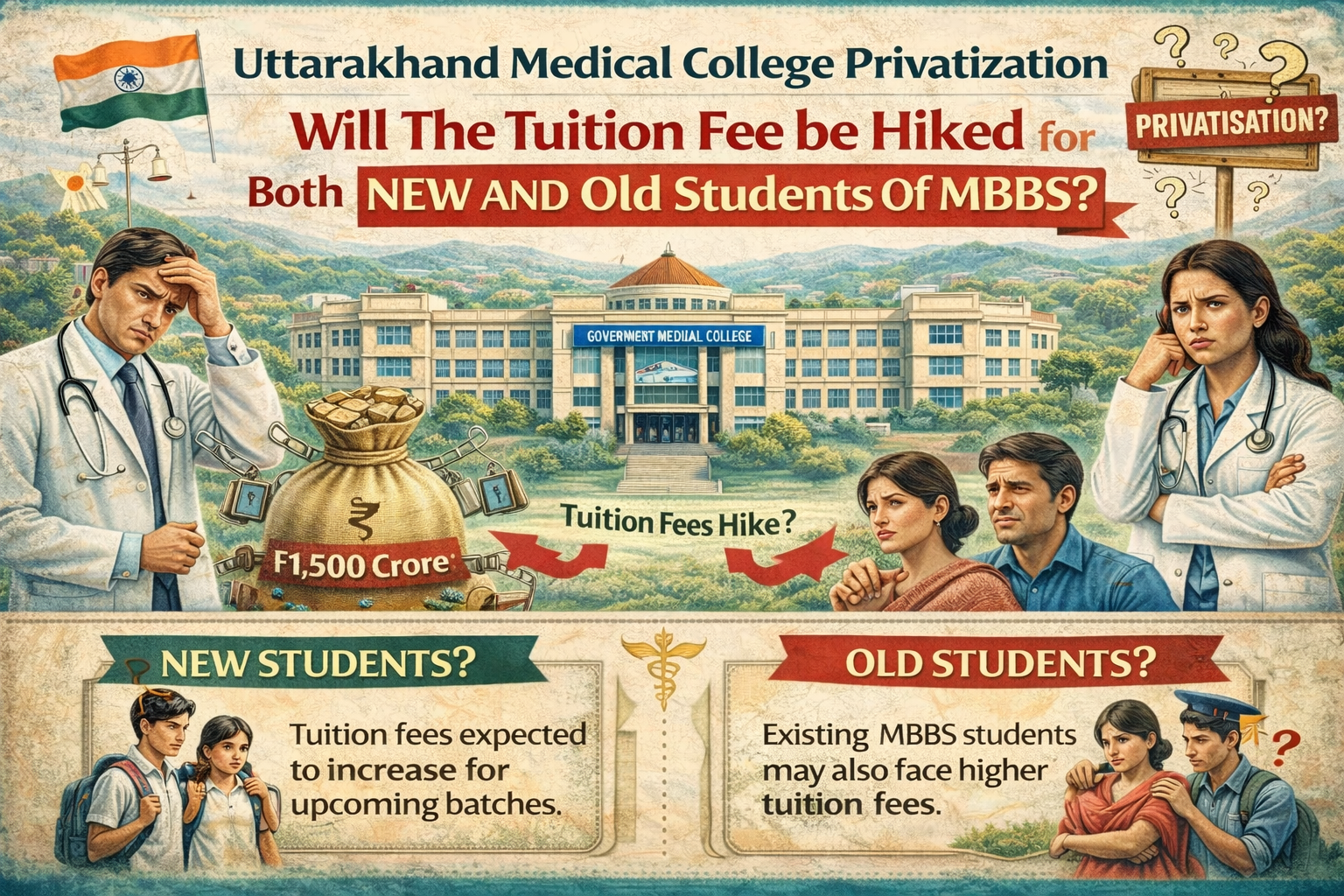
Introduction
The announcement of the privatization, of a ?1,500 crore government-funded medical college in Uttarakhand has caused widespread panic among MBBS students and their family members. The new Haridwar Medical College, initially considered as a government institution in NEET counselling is now proposed to be controlled by a private trust in the form of Public–private partnership (PPP). This sudden turn raises one important question: Will the new and old MBBS students have to pay higher tuition fee?
Are Rates Legally Changeable Post-Admission?
The students admitted under government quota think they ought to pay the same tuition fee for their entire course. Nevertheless, privatization introduces the potential for private authorities to hold fee control. This could result in:
- Revised tuition fees,
- Additional service charges,
- Higher hostel and lab fees.
Parents say that changing the financial picture after students have been admitted is unfair and violates their educational rights. Families are now turning to trusted counselling source i.e., MBBSAdvisor for policy clarity and to know the legal protection you have.
Anticipated Fee Increases — And How Big a Jump?
Once privatised, fee structures are likely to be more in sync with those of private medical colleges in India, with them charging anything from ?60 lakh- ?1.2 crore for an MBBS degree. Beyond tuition, students fear they’ll be billed extra for hospital practice, library use, clinical labs and visiting the hostels. Here (at the time of writing) the current and future batch are all left wondering what to expect without a formal assurance.
Will Degree Recognition Change?
Students are also concerned that privatization would affect legitimacy of degree-awarding and job opportunities. Global and national recognition is important for licensure, internship and international mobility. Recognition is overseen by global authorities including the World Health Organization and institutional directories like the World Directory of Medical Schools. Domestic regulation is the domain of theNational Medical Commission
Clarity on who owns or what status your college things are is very important because this would affect when applying for postgraduate exams, eligibility certificate and even residency program.
Government’s Position on Fee Structure
"Fees will not be changed for now," government officials say. But vague pledges simply won’t cut it, students say. Without such written and legally binding guarantee, fee increases would still be on the cards. Activist groups are demanding:
- Freeze of fees for all admitted batches,
- Full disclosure of the PPP agreement,
- Guaranteed government-affiliated degree wording.
Will There Be Increased Costs for New Students?
If the play of privatisation is made a day before commencement of next NEET admission, institution will no more own “government quota” seats. New contingents could receive private-level tuition from their initial counselling. As there is this confusion among candidates, most of the students are checking fee and seat category info on MBBSAdvisor prior to filling choices in NEET MBBS counseling.
Why Families Turn to a Trusted Adviser for College Help
The case of Uttarakhand reveals the unpredictability of MBBS admissions. Parents are afraid to put savings in colleges that could change status later. More and more real consultancy platforms such as MBBSAdvisor are being utilized to monitor:
- Ownership changes,
- Real-time fee updates,
- Recognition and listing status,
- Counselling risks.
Having the correct information would allow students to prevent unnecessary policy shifts that hurt them financially.
Conclusion
The issue of privatization of a state-built college has triggered a national debate about the affordability of MBBS in future. There is no protection for either current or new students from any financial detriment if there are not written commitments to fee protection and degree status. This case has the potential to set a new precedent, one that could decide whether medical education in India will remain accessible — or inch further toward privatization and soaring costs.