
 Russia
 Belarus
 Georgia
 Kazakhstan
 Kyrgyzstan
 Uzbekistan
 China
China Nepal
Nepal Bangladesh
 Poland
 Romania
 Slovakia
 Hungary
 N. Macedonia
 Vietnam
 Canada
 Armenia
 UK
UK Australia
 USA
USA Ireland
 Germany
 New Zealand
 Italy
Italy France
 Singapore
 Netherlands
 Sweden
 Switzerland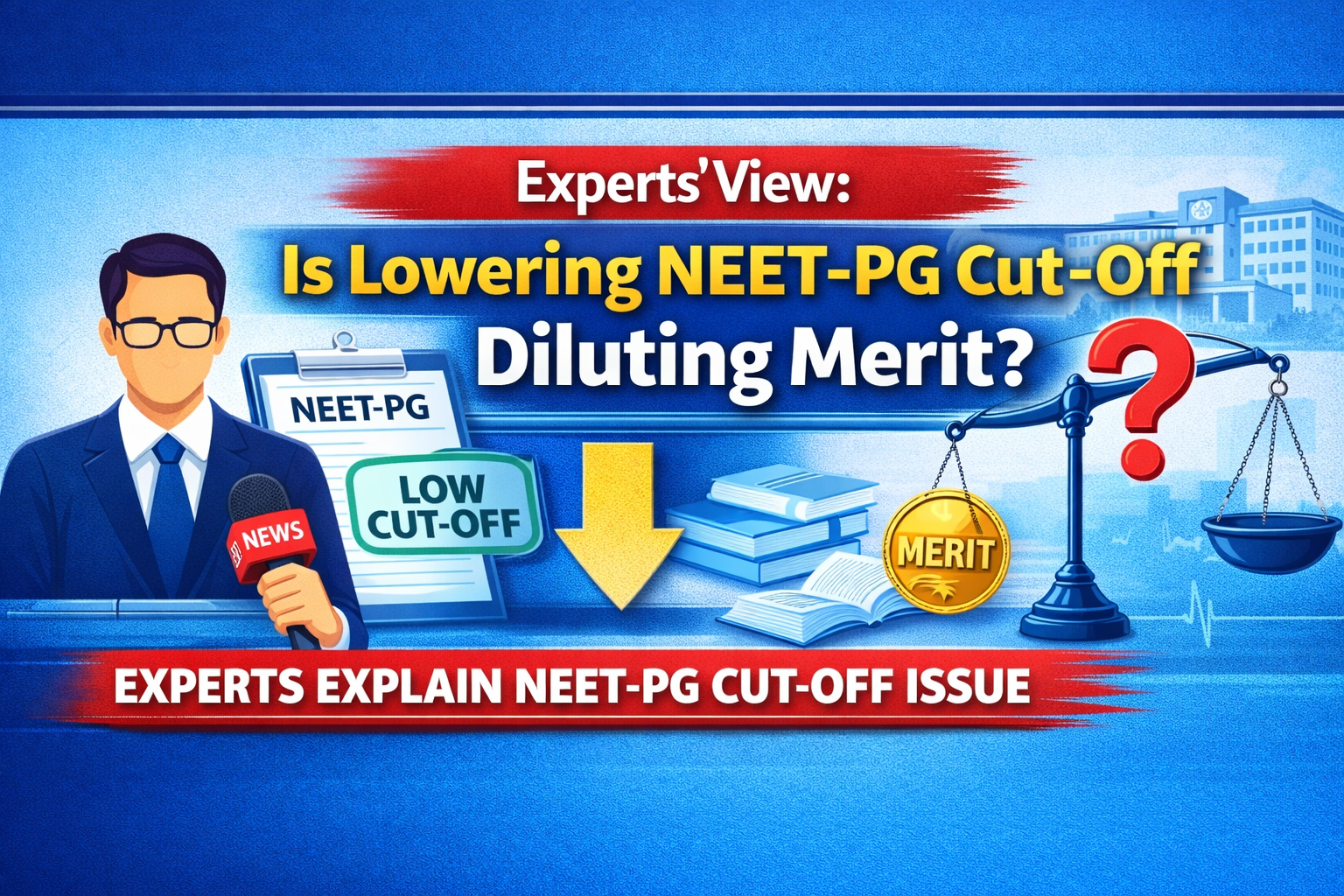
The latest decision on reducing the NEET-PG cut-off, especially for reserved categories, for the cycle 2025 has triggered a fierce debate in medical education circles. Policymakers maintain that this move increases access and optimizes the use of seats, but opponents are concerned about the adverse impact on the most well-qualified to gain admission to postgraduate medical courses in India.
The dispute brings to the fore substantive questions of fairness versus academic standards. As aspirants and schools make their way through this changing terrain, it’s important to grasp both sides of the equation — and what it really means for applicants. As for a comprehensive guidance and planning support in times of altering eligibility criteria, aspirants can follow on the lines of MBBS Advisor site that contains detailed cut-offs analyses as well as strategic advice.
In this article we discuss if making NEET-PG cut-off low is going away with merit or just evolving the admission policy according to ground realities.
Background: What Altered in NEET-PG Cut-Off Rules?
Until now, the NEET-PG cut-off is interpreted as the minimum percentile or score a candidate must have to qualify for counselling and subsequently obtain a seat. This benchmark percentile would act as a sieve to eliminate those below some performance threshold, theoretically allowing only candidates who are sufficiently competent to begin postgraduate training.
2025 There was a significant change by decreasing the qualifying cut-off for specific categories (the so-called reserved categories) to 0 percentile. That's not a sure thing, but it does open the door wider for people that otherwise would have been stopped cold at a hard cutoff.
What Do the Experts Say About Merit?
Educators, policy makers, and clinicians are much divided in their views. Here are the key arguments from both sides:
- Arguments which Say Low Cut-Off will affect Merit
- Postgraduate Training Requires Higher Competency
Continue reading “What is Expected in Postgraduate Medical Education?”. Critics call attention to the fact that a reduced cut-off may sample students with low core knowledge into demanding specialization programs. But final results — like clinical decision-making and patient care — could suffer if attendees aren’t well-rehearsed.
Uniform Standards Matter
A common quality filter has been the same high cut-off. Selection on the basis of merit means that students are competing as equals and contributes to excellence and maintaining high academic standards. Critics of the change fear that lowering standards for some categories may erode these measures.
Augmented Pressure on Faculty and Institutions
Untrained learners who do not have the core knowledge base required for graduate education may place an additional burden on programs. Faculty may be forced to focus more on remediation, rather than promoting academic and clinical competency.
Cut Off Downward Revision Will Not Dilute Merit: Counter Argument
Eligibility ≠ Automatic Admission
With 0 percentile, you still have no automatic access. Allotment of seat will be subject to rank, order of preference of Seat taken by the candidate and mere availability at that point of time. Top recruits will still be able to compete for top races.
The word eligibility in this regard refers to the right to participate in counselling only, and shall not be construed as an offer for admission. This is an important distinction because it allows the argument that merit is not being jettisoned, only readjusted.
Addressing Uneven Score Distributions
In some NEET-PG sessions, score ranges are squeezed at both ends of the scale because of examination complexity or erratic marking scheme. In these years several very good candidates may bunch up at the lower cut-off percentiles, which is why a rigid cut-off isn’t the best measure of competency. Opening up eligibility allows these to stay in the running.
Focused Remedial Support
The broadening of the admission criterion could be ameliorated by remedial education in the postgraduate curricula where competency is achieved during rather than assumed at enrolment. This model focuses on training result as opposed to only entry scores.
Merit Versus Access: Striking The Right Balance
The debate shows that merit and access are not opposites, but rather two poles of public policy. Reducing eligibility thresholds can achieve inclusivity without sacrificing merit provided it is done prudently. While they may disagree on many other elements, critics and backers all believe that clear counselling, competitive stacking and institutional responsibility should be maintained.
Of course, many countries adopt a mix of academic and structured criteria — interviews, entrance tests, preparatory courses — to try to balance merit with access.
Impact on Aspirants
For NEET-PG takers, the adverse effects are manifold:
- Expanded Counselling Pool
Now, more candidates — especially from reserved categories — will be eligible for counselling. Considering admissions are still rank based, candidates must improve their scores and concentrate on how they can be positioned during choice filling.
- Strategy Becomes Critical
Given the volume of eligible candidates, wannabes must now plot more carefully. They should:
Understand historical cut-off trends
Analyse seat acceptance data
Try to ensure the best choice filling (as per rank expectations) as possible depending on realistic rank expectations.
Platforms like MBBS Advisor go a long way in providing tools for predicting rank, analysing cut off, counselling insights and dynamic prediction of college based on varying criteria for aspirants to take decision.
Enhanced Competition in Certain Specialities
Specialty Inflammations It was expected that higher demand specialties such as General Medicine, Pediatrics and Surgery would remain highly competitive despite broadening the selection criteria. Applicants should have aspirational and backup options.
Regulatory Perspective and Long-Term Implications
Medical education in India is regulated by the National Medical Commission. Details about eligibility guidelines, patterns of courses and conditions for professional registration are provided at the NMC official website.
Candidates desiring to do their postgraduation abroad also need to ensure recognition and eligibility for practice in India. Medical degrees from abroad should either be listed in the World Directory of Medical Schools (WDOMS) if returning to India, or to pass Foreign Medical Graduate Examination (FMGE) exam when they return.
These regulation check points must be present no matter who should have the cutoff, otherwise we end up in a situation where academic and professional quality are more or less by run away.
Conclusion: Merit Intact or Undermined?
The lowering of the NEET-PG cut-off is a rare policy swing in Indian medical education. Though some experts have contended that it might devalue merit, a closer examination suggests that the expansion of eligibility, without outright assurance of automatic admission, only expands the pool rather than dilutes its quality.
Merit itself requires more than one threshold number, it involves:
- Competitive ranking
- Structured counselling
- Continuous assessment in postgraduate training
- Institutional accountability
For contenders moving in this evolving terrain, nuances need to be grasped and plans must adapt. Guidance from reliable advisory services such as MBBS Advisor further facilitates the correlation of NEET-PG scores and reality-based counselling strategies thus allowing aspirants the ability to make educated, merit-minded decisions.
The environment of postgraduate medical education is in a state of flux, and policies such as this represent attempts to balance opportunity with quality. The trick will be to strike that balance wisely, so merit and access can reinforce each other rather than tearing apart.