 Russia
 Belarus
 Georgia
 Kazakhstan
 Kyrgyzstan
 Uzbekistan
 China
China Nepal
Nepal Bangladesh
 Poland
 Romania
 Slovakia
 Hungary
 N. Macedonia
 Vietnam
 Canada
 Armenia
 UK
UK Australia
 USA
USA Ireland
 Germany
 New Zealand
 Italy
Italy France
 Singapore
 Netherlands
 Sweden
 Switzerland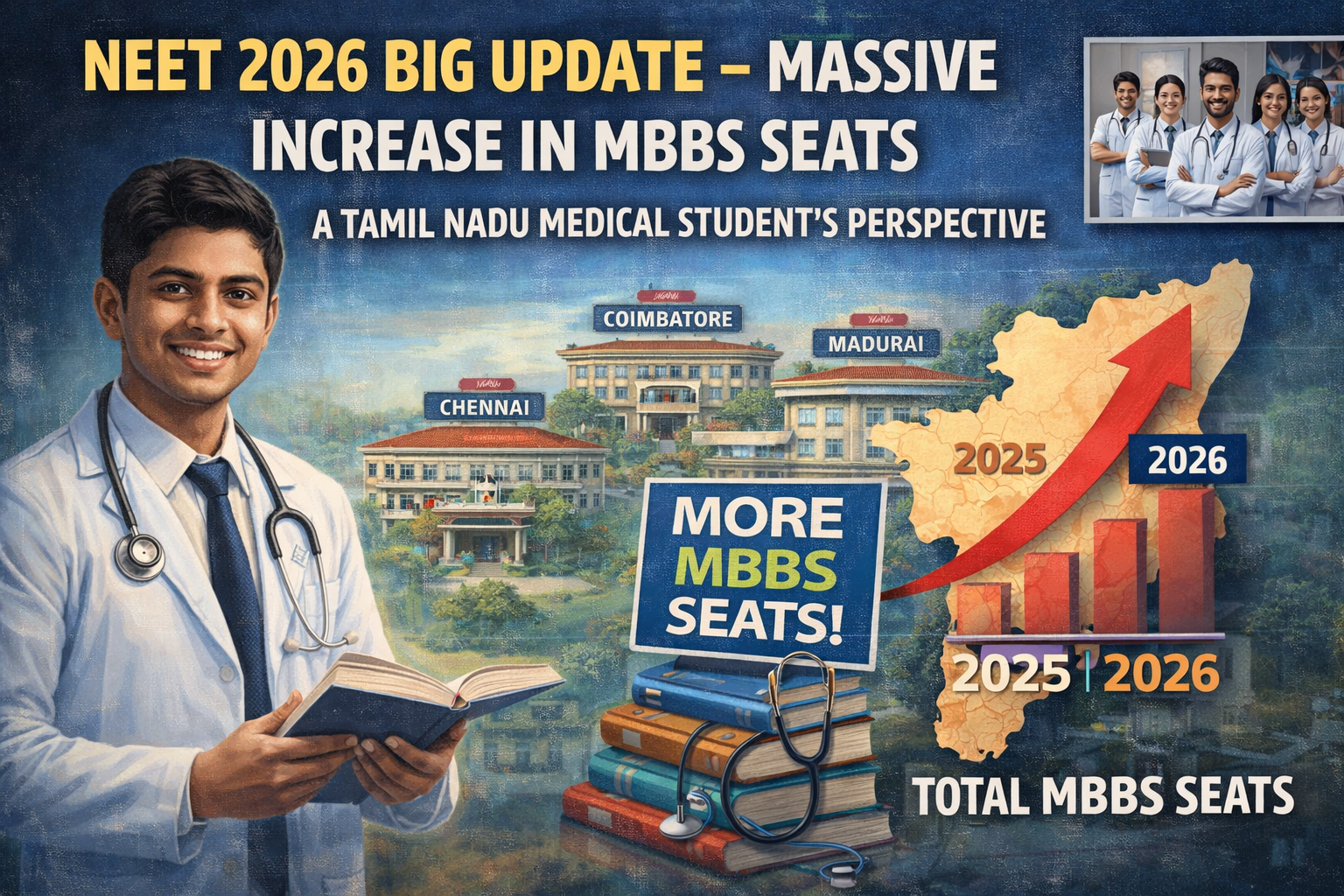
A major update for NEET 2026 aspirants indicates a significant increase in MBBS seats in India, bringing new hope for lakhs of medical students. Following recent trends after the NEET-UG exam, India is expected to witness a substantial expansion in medical seats by 2026. This move aims to reduce intense competition and create a more level playing field for students across the country.
The decision aligns with the government’s long-term vision to strengthen healthcare infrastructure and address the shortage of doctors, in line with global benchmarks highlighted by the World Health Organization (WHO).
Background: Rising Competition for MBBS Seats
The National Eligibility cum Entrance Test (NEET) is one of the most competitive entrance exams in India, with over 20 lakh students appearing annually. However, the number of MBBS seats in India has historically been insufficient compared to demand.
This imbalance has led many students to:
- Take drop years for NEET preparation
- Opt for MBBS abroad options
Recognizing this issue, the government has already increased seats in recent years—and NEET 2026 is expected to continue this expansion trend.
Role of Regulatory Authority (NMC)
The National Medical Commission (NMC), which replaced the Medical Council of India, is responsible for regulating and approving medical education in India.
Key responsibilities of NMC:
- Approval of new medical colleges
- Increasing MBBS seat capacity
- Maintaining quality of education
- Ensuring proper infrastructure and faculty
The expansion of seats is being carried out under strict NMC guidelines to ensure quality is not compromised.
NEET 2026 MBBS Seat Expansion: Key Highlights
1. Increase in Government Medical Colleges
Several new government medical colleges are being established, especially in rural and underserved regions. This improves regional access to medical education.
2. Seat Expansion in Existing Colleges
Many existing colleges have been permitted to increase their MBBS seat intake, provided they meet infrastructure and faculty requirements.
3. Focus on Affordable MBBS Education
More government seats mean lower tuition costs, making affordable MBBS in India accessible to more students.
4. Upgrading District Hospitals
District hospitals are being converted into teaching hospitals, increasing seats while improving local healthcare services.
Impact on NEET 2026 Aspirants
Reduced Competition Pressure:
More seats may slightly ease cut-offs, though competition will remain high
Higher Chances for Government Colleges:
Increased availability improves admission chances
Reduced Need for MBBS Abroad:
Students may prefer studying in India due to increased opportunities
Better Career Opportunities:
More doctors entering the system improves healthcare services nationwide
Government Vision & WHO Standards
India’s doctor-patient ratio has been improving but still aims to meet the standard recommended by the World Health Organization, which suggests 1 doctor per 1000 population.
The increase in MBBS seats through NEET 2026 is part of a broader initiative by the government to:
- Improve healthcare accessibility
- Strengthen medical infrastructure
- Meet global healthcare benchmarks
Challenges to Consider
While the expansion is positive, certain challenges remain:
- Maintaining quality education with rapid growth
- Availability of qualified faculty
- Ensuring adequate clinical exposure
- Infrastructure development in new colleges
Balancing quantity with quality will be crucial under the supervision of the National Medical Commission.
What NEET 2026 Aspirants Should Do
Stay Focused on Preparation:
Despite more seats, NEET remains highly competitive
Explore All College Options:
Consider both new and established medical colleges
Track Counseling Updates:
Stay updated with seat matrix and counseling procedures
Conclusion
The increase in MBBS seats for NEET 2026 is a major positive development for aspiring doctors. It reflects India’s commitment to strengthening medical education and healthcare services.
Aligned with global standards set by the World Health Organization and regulated by the National Medical Commission, this expansion offers a golden opportunity for students to pursue their dream of becoming doctors in India.