
 Russia
 Belarus
 Georgia
 Kazakhstan
 Kyrgyzstan
 Uzbekistan
 China
China Nepal
Nepal Bangladesh
 Poland
 Romania
 Slovakia
 Hungary
 N. Macedonia
 Vietnam
 Canada
 Armenia
 UK
UK Australia
 USA
USA Ireland
 Germany
 New Zealand
 Italy
Italy France
 Singapore
 Netherlands
 Sweden
 Switzerland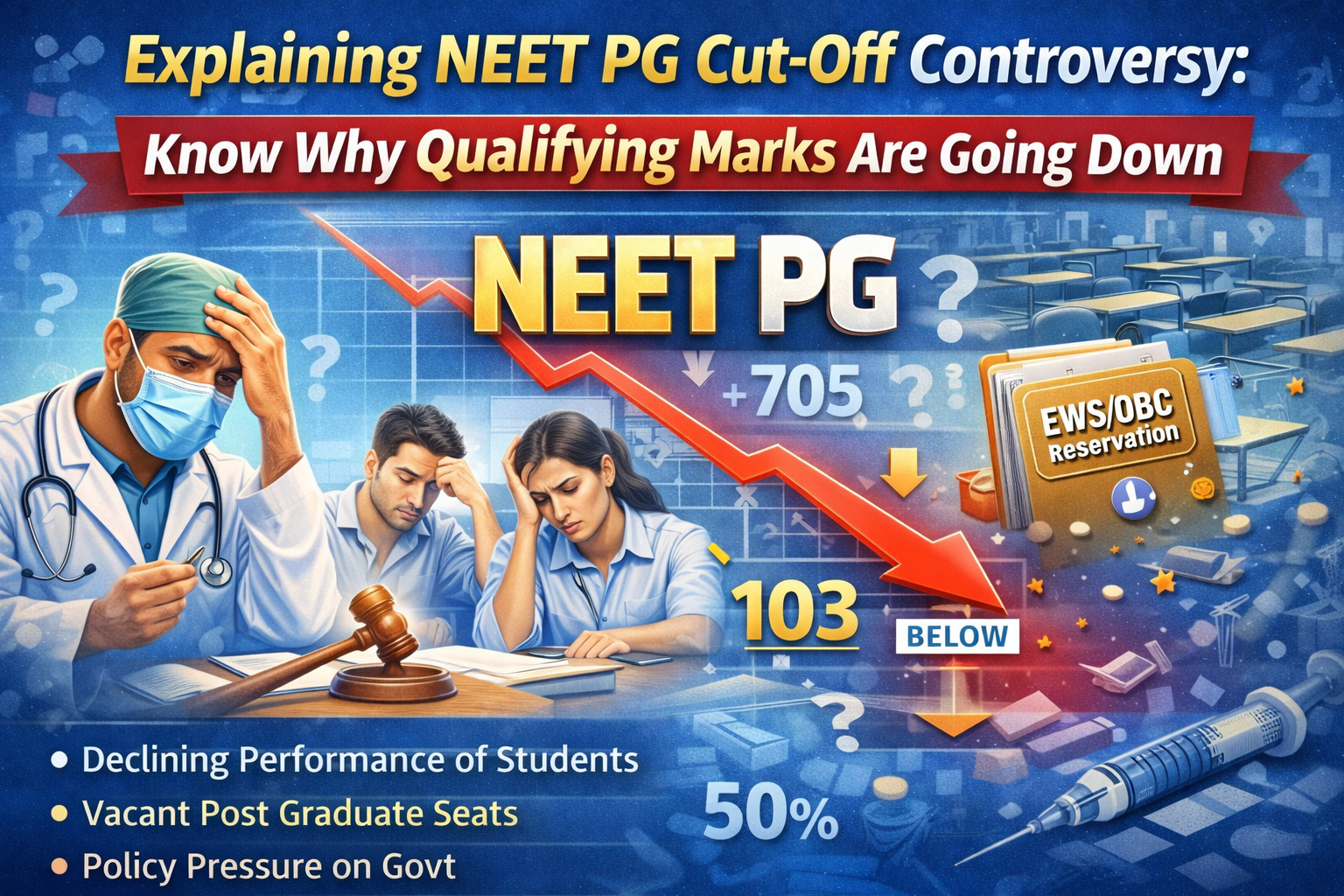
The NEET PG qualifying marks revision is a cause for national debate among medical aspirants, educators and policymakers. Thousands of MBBS graduates vie each year for a small number of postgraduate seats, and the cut-off score is a key benchmark of merit and eligibility. That said, when authorities in positions of trust arbitrarily shift the bar lower, it raises concerns over fairness, educational standards and — the big one — future impact on healthcare delivery systems. No wonder MBBS Students are now keeping a close eye for expert analysis and the counselling updates to Know what this shift actually means for them.
What Is the NEET PG Cut-Off?
The NEET PG cut-off is the minimum qualifying mark for which candidates may be eligible to apply for MD, MS and diploma seats through counselling. Usually, it is determined based on percentile, which ensures that only candidates with a certain degree of performance are qualified for post graduate medical training. Historically, this cut-off has been set at a threshold that excludes candidates who are not academically prepared for specialised clinical training.
But in recent years, the authorities have lowered qualifying marks — in some cases dramatically. That has caused concern and confusion among students who entered to take the exam expecting tougher benchmarks.
What does the reduction in qualifying marks imply?
One of the primary reasons mentioned to reduce the cut-off is a huge number of postgraduate seats being left vacant during several rounds of counselling. Even less popular specialties suffer from low demand and failing economy results as most private and even some government institutions fail to fill all their seats. Revising the cut-off downwards helps cement more candidates into eligibility, resulting in an expanded applicant pool.
Students who are closely following these latest developments have been taking MBBS Advisor’s help to analyze how the revised cut offs may affect branch selection and counselling strategies.
Role of Medical Regulators
In India, the standards for medical education and medical personnel qualifications and eligibility are regulated by the National Medical Commission. This authority plays a pivotal role in sustaining academic standards and at the same time fulfilling health needs. Backers of cut-off reduction say the regulator is being pragmatic by jostling merit with a practical need to fill seats.
But critics say dramatic changes like these should be supported by transparent academic data. They worry that frequent changes dilute an entrance examination's credibility, and send mixed messages with regard to expectations of performance.
Impact on Students
For applicants who were on the fence about the new cut-off, it’s like a second opportunity in the same game. Many students who would have been disqualified, now become eligible for the counselling. For those who just missed the earlier benchmark, this can be life-changing.
Meanwhile, higher-scoring candidates are concerned that lower thresholds devalue their performance and exacerbate competition for coveted branches. The uncertainty produced by last-minute adjustments further upends preparation strategies, as students cannot tell which benchmark they should realistically aim for.
Hence, counselling guidance platforms like MBBS Advisor have emerged as critical knowledge resources that can help aspirants understand policy changes and plan ahead.
Merit vs Seat Utilisation
And it illustrates a fundamental policy tension: should the system focus on merit purely, or preventing empty training seats?
This includes all the common arguments for reduction:
- Preventing wastage of postgraduate seats
- Training Additional Specialists
- Addressing regional shortages of doctors
- Arguments against reduction include:
- Weakening academic filtering
- Risk of lowering clinical competence
- Erosion of confidence in national admission tests
- This tension between access and excellence is at the core of the debate now unfolding.
International Perspective and Licensing
Medical qualification is subject to scrutiny not only in India but also internationally. Its degrees are only recognised abroad for colleges listed in the World Directory of Medical Schools. Raising domestic entry standards could negatively influence the standing of Indian qualifications abroad.
Also, those Indian graduates who study medicine in countries outside India have to qualify the Foreign Medical Graduate Examination to be able to practise in the country. Such mechanisms exist in part to ascertain that minimum standards of competency are met, no matter where a doctor is trained. Critics of cut-off reduction say that the same stringency ought to be applicable to entry into postgraduate training too.
What Should Aspirants Do?
Until a stable policy comes into view, students should:
- Keep an eye on the latest from the National Medical Commission
- MBBS Advisor to track counselling trends and analysis
- Instead of hoping for one outcome, have flexible counselling options ????? ???
- Do not enter into the rumour mill or take to social media
- Staying up to date is the surest way to minimize anxiety during times that pose regulatory ambiguity.
Conclusion
The NEET PG cut-off controversy is only a symptom of deeper tensions in the medical education system in India. Relaxing the qualifying criteria may help increase access and fill a number of vacant seats in the country; however, it also leaves an equally valid concern regarding academia and subsequent healthcare quality. The challenge is in devising a policy that respects merit while being responsive to practical realities.
As aspirants adapt to a changing medical education landscape, the expertise of MBBS Advisor and consultation with trusted authorities such as the National Medical Commission will continue to be important. How this controversy plays out could determine how future medical entrance exams strike the balance between opportunity and excellence.