
 Russia
 Belarus
 Georgia
 Kazakhstan
 Kyrgyzstan
 Uzbekistan
 China
China Nepal
Nepal Bangladesh
 Poland
 Romania
 Slovakia
 Hungary
 N. Macedonia
 Vietnam
 Canada
 Armenia
 UK
UK Australia
 USA
USA Ireland
 Germany
 New Zealand
 Italy
Italy France
 Singapore
 Netherlands
 Sweden
 Switzerland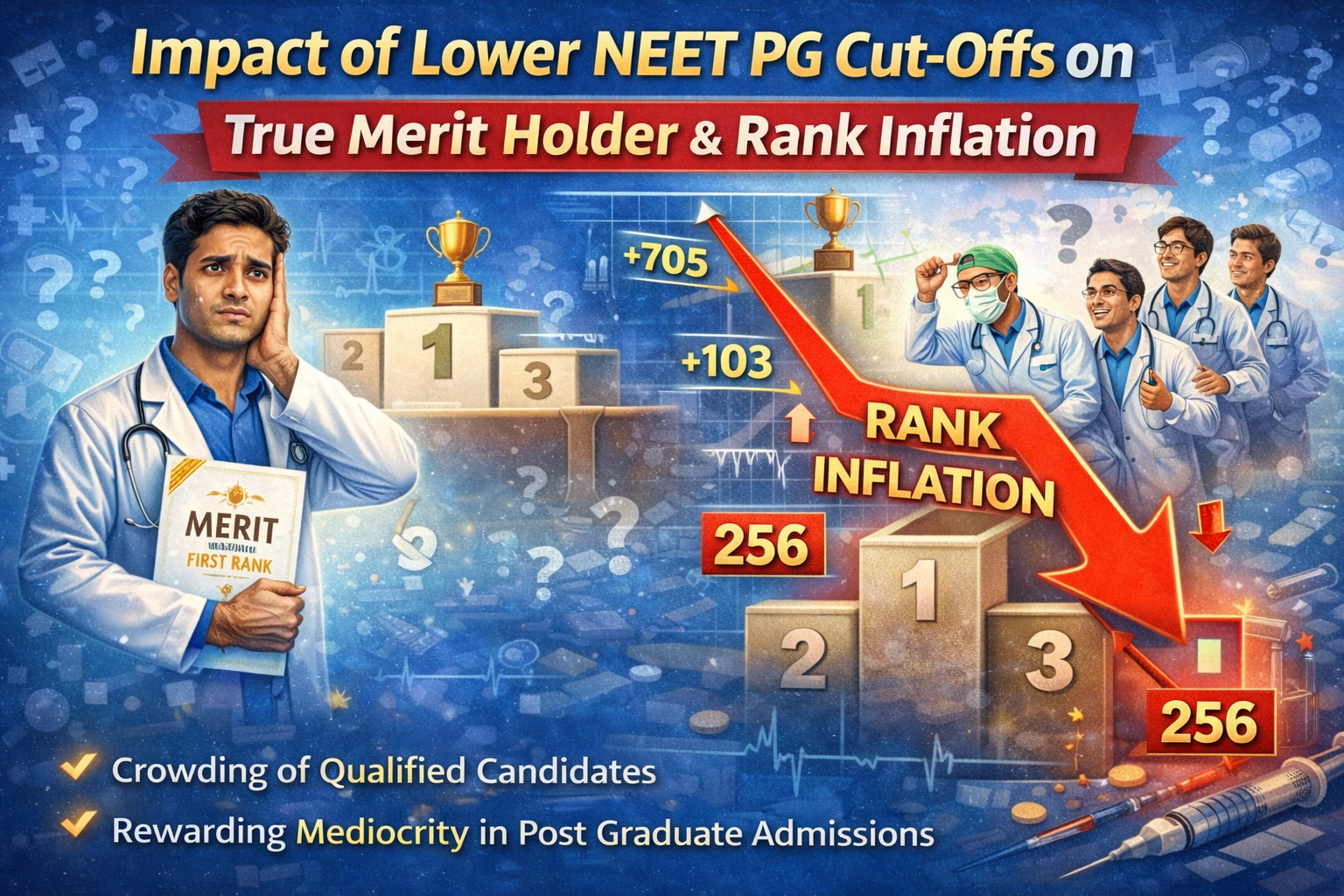
Continuous lowering of NEET PG-cut offs have raised eyebrows amongst medical aspirants, educators and policy makers. Although the primary rationalisation for decreasing crucial qualifying scores is to occupy uninhabited postgraduate clinical seats, it has invited severe concerns over fairness, saving merit and synthetic position-sanctification. These policy changes are monitored closely by platforms like MBBS Advisor, which also guides students on how such decisions will affect their prospects for admission and career planning.
NEET PG Cut-Offs Are Not Reduced? Why?
Thousands of PG medical seats have gone unfilled in the last few years because of high qualifying marks, stringent counseling guidelines, and unwillingness on part of candidates to choose branches or institutions they do not prefer. To fix this issue, authorities have lowered the cut-off percentile so that more candidates can become eligible for counselling. These decisions are made under the parameters of the National Medical Commission, which oversees standards in medical education in India.
Although this method enhances the seats-per-department ratio, it introduces a disparity with regard to candidates who attained high ranks through academic merit versus those who qualified due to loosening of standards.
Impact on Genuine Merit Holders
For high-ranking candidates, lower cut-offs may seem like a dilution of effort and fair play. Those who studied hard and scored well expect to gain an advantage in landing one of the coveted specialties (radiology, dermatology or orthopaedics). But when cut-offs areWith a drastic lowering of pass marks, the number of eligible candidates expands exponentially:
- Increased competition for limited seats
- Very little separation between the high and low scorers
- Greater unpredictability in counselling outcomes
- Particularly in the later rounds of counselling, pursuing a merit holder may see their rank holding less weight as candidates who ranked lower than them become eligible.
Understanding Rank Inflation
A majority of candidates qualify when cut-offs are lowered, which leads to a misperception of how competitive the ranks actually are. For instance, a candidate who was previously in the top scoring 10% may now be part of the exact same top-scoring-ratio within this larger group since thousands more candidates qualify.
This complexity makes counselling more challenging in two senses:
- Even if true performance gaps stay wide, perceived competition increases.
- Candidates who score much higher or lower are then in the same counselling pool, so seat allocation becomes less transparent.”
- Such inflation can give students a false sense of their actual standing and compel them to settle for a branch or institution.
Effect on Medical Education Standards
One of the biggest concerns raised by faculty members and professionals is that reducing cut-offs could compromise academic rigor. It requires significant general knowledge, clinical reasoning skills and discipline. This is especially the case when eligibility criteria are widely expanded, allowing weaker students to enroll at colleges that themselves would prefer academically stronger students (and thus putting excess pressure on faculty and potentially lowering overall training quality).
Lower-ranked candidates are not incapable but suddenly extending the eligibility of candidates without proportionately strong academic filtering will put pressure on teaching systems and assessment standards monitored by the National Medical Commission.
Psychological Impact on Aspirants
It demotivates merit holders when upward revisions make it to the cut-off repeatedly. The feeling that years of disciplined preparation have gone dot,_appear to be wasted makes it an emotionally stressing and frustrating process. The borderline candidates, however, are in a predicament as being eligible does not ensure allotment of seats. Both types of groups have anxiety, but for different reasons
We will call above average performance high and the average,we are making
In such fluctuating scenarios, students often rely on MBBS Advisor to explain cut-off trends and counselling probabilities.
Legal and Ethical Questions
Lowering cut-offs has also come under litigation, with petitions alleging that radical relaxation affects merit-based selection. Courts frequently consider whether such decisions offend constitutional norms of equality and professional competence. Officials argue the measure is needed because empty seats are bad for health care delivery and burn public resources.
This conflict reveals an ethical dilemma at its core: Is the priority strict merit ranking or maximising available training capacity?
Long-Term Career Implications
Rank inflation can also affect long-term career paths. Candidates who join PG strongly with an academic or Praxis Basis will get found out early while the second-level candidates might be pushed towards a branch they are not so fond of. Over time, this could impact:
- Distribution of specialists
- Research output
- Teaching quality in medical colleges
For students pursuing international pathways, recognition and quality of training continue to be critical. Maintenance of consistent academic standards is crucial for listing in the World Directory of Medical Schools as well as eligibility for examinations such as the Foreign Medical Graduate Examination.
Balancing Access and Merit
The regulators’ challenge is to find a balance between inclusion and excellence. It’s important to fill empty seats, but it’s also imperative to protect the value of competitive performance. Possible middle-ground solutions include:
- Branch-wise or institution-wise cut-off adjustment
- Additional screening or aptitude assessments
- Transparent counselling algorithms
Until those kinds of reforms arrive, aspiring artists need accurate data and guidance. Data for prospective students to analyse score-to-rank trends and prepare realistic counselling strategies are provided by resources such as MBBS Advisor.
Conclusion
Lower NEET PG cut-offs not only focus on improving seat utilisation, but change the dynamics of competition as well. Legitimate merit-grabbers are increasingly forced to compete on a field of vapid advantages and psychological stress, while the size of the gap between ranks becomes more and more difficult to decipher. The long-term effects on education quality and professional standards are still up for debate.
Aspirationists need to comprehend these policy changes. Students can navigate through a complex and unpredicted admission landscape by keeping an eye on the latest updates on regulations and counselling trends using platforms like MBBS Advisor.