 Russia
 Belarus
 Georgia
 Kazakhstan
 Kyrgyzstan
 Uzbekistan
 China
China Nepal
Nepal Bangladesh
 Poland
 Romania
 Slovakia
 Hungary
 N. Macedonia
 Vietnam
 Canada
 Armenia
 UK
UK Australia
 USA
USA Ireland
 Germany
 New Zealand
 Italy
Italy France
 Singapore
 Netherlands
 Sweden
 Switzerland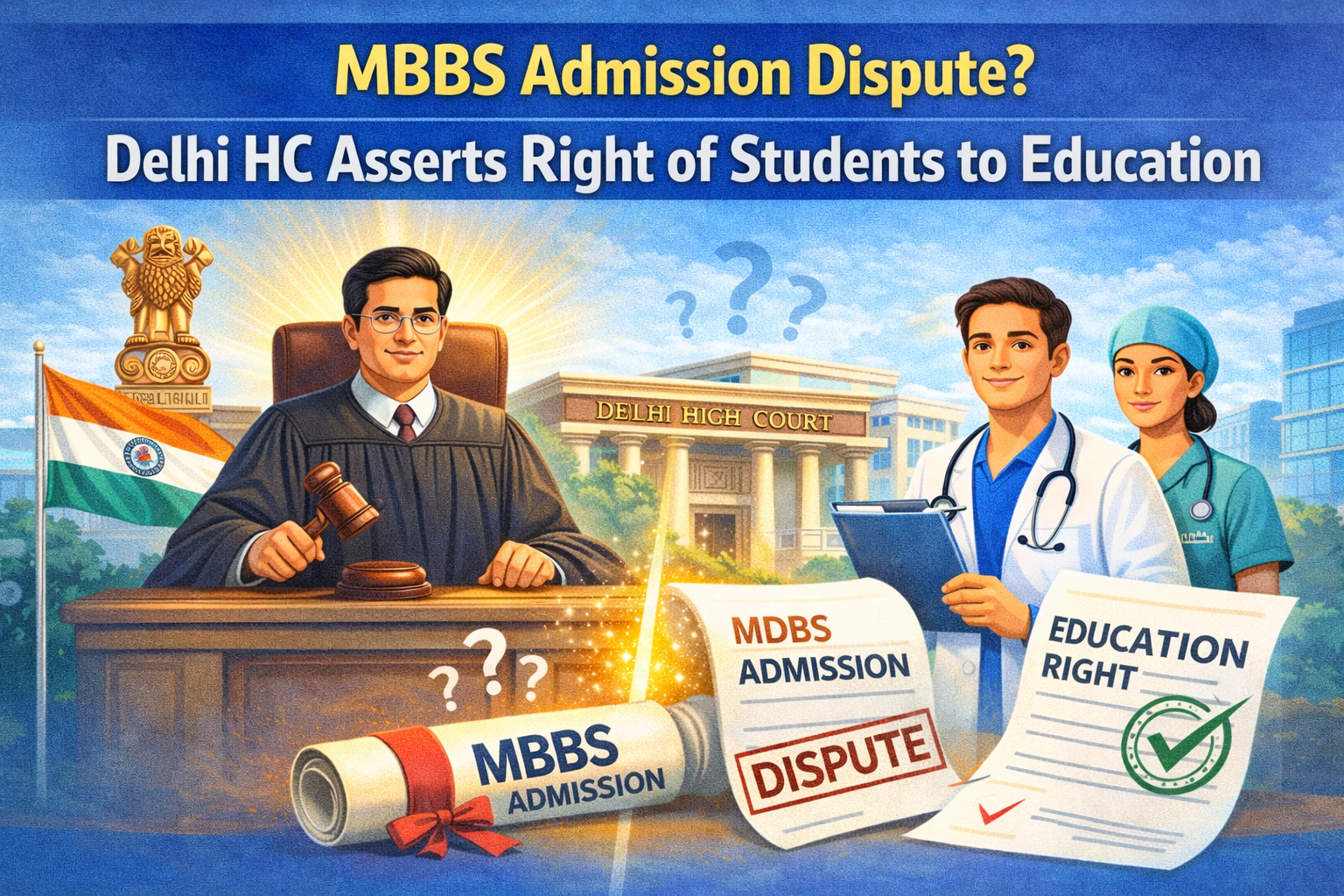
The education in medical programs in India has become hugely competitive, with lakhs of aspirants fighting for a few MBBS seats annually. NEET-UG decides eligibility and counselling priority, but the road from exam to admission is arguable inasmuch as tricky to walk on. In the past few years, there have been several cases where students who ran into problems in counselling/withdrawal of admission/document requirements, and policy changes mid-cycle had to fight their case. It is in this context that judicial involvement to secure the rights of students has been really helpful.
An excellent specimen of such judicial supervision is the Delhi High Court’s position that aspects of MBBS admission cannot be withheld arbitrarily and students’ educational rights need to be implemented via an impartial process. These trends also mark an argument that regulation should ensure merit and procedural fairness, not curtail aspirants who have satisfied eligibility norms.
In such a complex situation where the students are manoeuvring to make decisions, structured advice from the MBBS Advisor can help in understanding counselling rules, reporting requirements, and regulations.
Disputes About Settlement and the Role of Fairness
Admission arguments can be due to any number of reasons, such as:
- Sudden changes in counselling rules
- Administrative delays in document verification
- Provisional Admission Letters are denied or revoked
- You don't know how to block/lock a seat
- Policy changes that impact active candidates
Such disputes can put students in limbo, with academic years on the line and questions about their future careers. Institution and regulatory authorities do have the legitimate power to lay down policies and police them, but such exercises cannot go beyond the principles of natural justice, openness, and informed participation.
Judicial Intervention: Protections for Students
In recent times, the Delhi High Court has expressed unequivocally that students’ right to seek higher education cannot be violated without good reasons. The relevant legal principle is not that higher education is a “fundamental right” in the abstract, but that equality and fair play are protected by the Constitution, and any administrative decision that affects a student has to comply with those principles.
In a notable case, when students had already undergone counseling and fulfilled the eligibility criteria, the court also dealt with the denial /cancellation of admissions based on procedural/ technical disputes. The court highlighted that meritorious students cannot be allowed to suffer on account of sudden or backward rule changes with no equitable protection and opportunity for a hearing.
Two key ideas are in play in the court’s reasoning:
- NEET score and participation in counselling generate a legitimate expectation of fairness in the matter of admission
- Administrative expediency cannot trump students' valid academic concerns
These rules uphold that candidates undergoing regulatory scrutiny of admission prospects into medical courses are to be accorded procedural justice.
To bring clarity about counselling norms and rights during admission, websites such as MBBS Advisor throw light on the areas that are normal while questioning or opposing certain practices.
Regulatory Framework Governing MBBS Admission
The admission process of students in MBBS in India is regulated by Laws framed under the Medical Council of India as per its Act 1956, most competently through NEET-UG (National Eligibility cum Entrance Test for Undergraduate courses). The Criteria for eligibility, minimum cut-off marks, documents required , and procedure of counseling are regulated under NMC rules mentioned on the official website of NMC Official Website.
And when disputes do arise from administrative decisions, or interpretations of policy, students frequently look for clarity and (in unusual instances) relief by appealing to the regulatory regime that governs them — underscoring again the imperative that rules should be applied consistently and with fairness.
Foreign Medical Graduates and the Problem of Recognition
Admission conflicts are hardly local to Indian colleges. To avoid this possibility, there are plenty of students who are interested in studying MBBS abroad, and they find themselves stuck with no recognition or eligibility in India to practise as a doctor after returning to their home country. There are two things that students need to know about:
Foreign Medical Graduate Examination (FMGE)
If a student has passed MBBS from abroad, he/she needs to pass the Foreign Medical Graduate Examination to become a licensed medical practitioner in India. FMGE eligibility, syllabus, and application criteria are prescribed according to the instructions released by official portals such as FMGE.
It is from this point that problems may arise, since delays and miscommunication or misunderstanding about eligibility can result in disputes when students come to apply for registration or licensure post-foreign study.
WDOMS: World Directory of Medical Schools
Institutions outside of India must be recognized and listed in the World Directory of Medical Schools (WDOMS) for their medical degree to be acknowledged for FMGE, followed by registration in India. A listing can be found online at WDOMS.
Those students who don’t verify this listing prior to getting admitted overseas may face obstacles in the process of registration or recognition of their practice, leading to disputes.
Case Examples of Admission Challenges
There are several typical instances when disputes arise:
- Applicants rejected on the basis of discrepancies in documents
- Colleges with other eligibility criteria over and above the NMC requirements
- Sudden cancellation of admission made after counselling
- Tensions between state counseling standards and federal policy mandates
In such situations, courts order that students are to be dealt with fairly and in accordance with the law, which gives this temporary relief to affected candidates. Subsequent decisions reaffirm that any departure from the procedures laid down should be justified objectively and fairly.
Practical Takeaways for Aspirants
Students aspiring to appear or appearing in the MBBS admission process, by adopting a few best practices, can prevent the unnecessary controversies and get a smoother result:
- Know the Rules of Counselling: One should go through the detailed rules of counselling
- Document accuracy: All academic and identity documents should be completed and verified well in advance before counselling
- Keep an Eye on Policy Changes: Keep yourself updated with NMC official notifications so that the policy changes don’t come to you as a surprise
- Confirming Recognition Status: If you decide to go abroad for studies, before admission into a medical college, check its recognition on WDOMS
- Plan for Licensure: One should be clear about their FMGE (foreign MBBS) needs post-medical abroad and prepare accordingly
Conclusion
MBBS admission controversies, be it counseling discrepancies, document deformation, policy amendment, or recognition confrontation; had always become a cause of turmoil among aspirants and families. The extreme statement of the Delhi High Court is a more welcome reiteration that the educational rights of students , too, cannot be ordered unfairly and unconstitutionally, even while recognising that powers of regulation have their limits when it comes to merit-led entry into professional courses.
By gaining knowledge regarding the regulations of NMC and the importance of verification agencies like WDOMS, along with readiness for the licensure need via FMGE, the path will not seem difficult to tread. Moreover, a well-structured consultation from professional platforms like MBBS Advisor enables aspirants to perform systematically, eliminate risks, and help concentrate on what is desired most- The Realistic & honourable Medical education.
With Transparency, Preparation with awareness of rights, the NEET to MBBS Admission becomes more fair for each and every aspirant who deserves it.