 Russia
 Belarus
 Georgia
 Kazakhstan
 Kyrgyzstan
 Uzbekistan
 China
China Nepal
Nepal Bangladesh
 Poland
 Romania
 Slovakia
 Hungary
 N. Macedonia
 Vietnam
 Canada
 Armenia
 UK
UK Australia
 USA
USA Ireland
 Germany
 New Zealand
 Italy
Italy France
 Singapore
 Netherlands
 Sweden
 Switzerland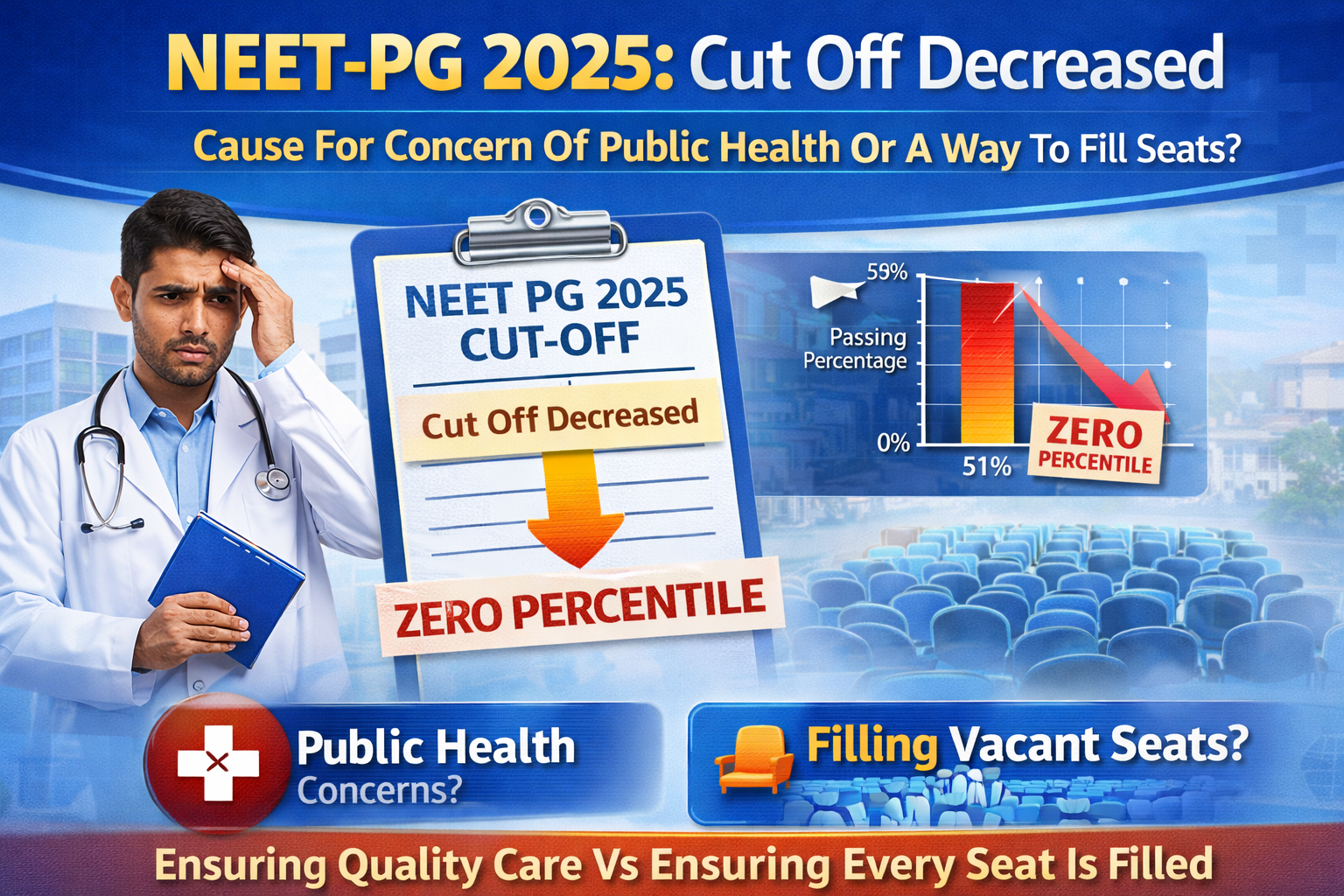
The recent ruling to amend qualifying criteria for NEET-PG 2025 has created a furore in the strata of the medical community. It has received mixed reactions in India, as some see it as an administrative necessity to fill open postgraduate medical seats while others express concerns about its possible consequences for the quality of healthcare in the country. There is an important question raised by this issue: is the cut-off reduction a public health risk or a pragmatic adjustment to admissions?
In India, medical education is regulated by nmc, which is in sync with the global recommendations of who on behalf of the health workforce. Any changes to qualifying standards have implications not only for admissions but for the future medical workforce.
NEET-PG Cut-Off: Why Was It Reduced?
The main reason for reducing the cut-off is the huge number of unfilled PG medical seats after rounds of counselling. Despite several rounds of counselling, many of the government and private institutions were reported with unfulfilled seats.
Key reasons include:
- High cut-off leaves fewer candidates eligible
- Students showing little willingness to work in specific specialties
- Regional imbalance in seat distribution
- Financial constraints in private colleges
- Decreasing the cut-off ensures that:
- PG seats are not wasted
- Hospitals affiliated with colleges have proper staffing
- The entire medical education infrastructure is utilized
- From an admissions viewpoint, this is considered a correction in admission policies, and not so much as watering down of expectations.
Public Health Concerns
They say lowering the qualifying percentile would permit unprepared students to enter postgraduate medical training. This raises concerns regarding:
- Clinical competence of future specialists
- Patient safety and treatment quality
- Increased burden on senior doctors
- The tactical implications of this for long-term trust in medical education standards
- Postgraduate education must also assure substantial base knowledge and clinical skills, according to global medical training benchmarks endorsed by the who. If academic floors sink so low that diagnostic literacies and therapeutic results suffer, there could be societal consequences.
And some health care professionals worried that the trend could have normalized lower benchmarks in future years, with a downward spiral of academic quality.
Admission Adjustment Perspective
Critics of cut-off reduction point out that NEET-PG is a relative ranking exam and not an absolute knowledge test. They argue that:
- However, lower cut-off does not indicate unqualified doctors.
- Candidates are still required to clear MBBS and internship
- Further enhancement of clinical ability through postgraduate training
- Faculty supervision maintains quality control
They further underscore that medical education cannot waste thousands of PG seats when India already lacks specialists in adequate numbers in areas like anesthesia, family medicine, and radiology.
From this perspective, the move is more a short-term policy decision than a long-run relaxing of standards.
Impact on Healthcare System
The ruling impacts several tiers of health care:
- Short-Term Effects
- Increased PG admissions
- Better utilization of hospital infrastructure
- Improved availability of junior residents
- Long-Term Effects
- Larger pool of specialists
- Potential strain on training quality
- Need for stronger internal assessments
- Oversight by the nmc becomes necessary to ensure standards for training are maintained even with broader eligibility.
Student Perspective
For numerous MBBS graduates, the reduced cut-off provides a second opportunity after years of trying again and again. It reduces:
- Psychological stress
- Multiple exam cycles can be costly
- Dropping out of the medical profession.
But it also camouflages agitation of borderline scorers, which makes counselling strategy even more vital. Guidance platforms like mbbs advisor help students understand cut-off trends, preference in branches and feasible seats.
Ethical and Policy Dimensions
This situation reflects a deeper policy problem:
Do we need more specialists or better trained?
Ideally, both must coexist. The solution lies in:
- Strengthening PG curriculum
- Regular faculty audits
- National exit exams
- Standardized evaluation
The WHO's recommended global health education models emphasize that training quality is just as critical as entry-level selection.
Balancing Opportunity and Standards
A balanced approach would involve:
- Strict monitoring of academic performance
- Enhanced exit assessments
- Skill-based clinical evaluation
This checks that although an increasing number of students enter PG instruction the human services framework does not bargain on patient wellbeing or professional expertise.
Conclusion
In effect, the lowering of the NEET-PG 2025 cut-off is situated at the crossroads of public health responsibility and administrative activity. Concerns about quality are legitimate, but the decision also reflects practical realities like empty seats and a shortage of specialists.
This can be done with proper regulation by the nmc and adherence to global healthcare education principles through who without compromising quality of medical education. For aspirants, this policy change can be wreaking havoc or constructive opportunity through well-informed counselling and strategic decision making through platforms like mbbs advisor.
In the end, whether this adjustment works depends not just on the cut-off itself, but how well India protects the quality of its future doctors.