
 Russia
 Belarus
 Georgia
 Kazakhstan
 Kyrgyzstan
 Uzbekistan
 China
China Nepal
Nepal Bangladesh
 Poland
 Romania
 Slovakia
 Hungary
 N. Macedonia
 Vietnam
 Canada
 Armenia
 UK
UK Australia
 USA
USA Ireland
 Germany
 New Zealand
 Italy
Italy France
 Singapore
 Netherlands
 Sweden
 Switzerland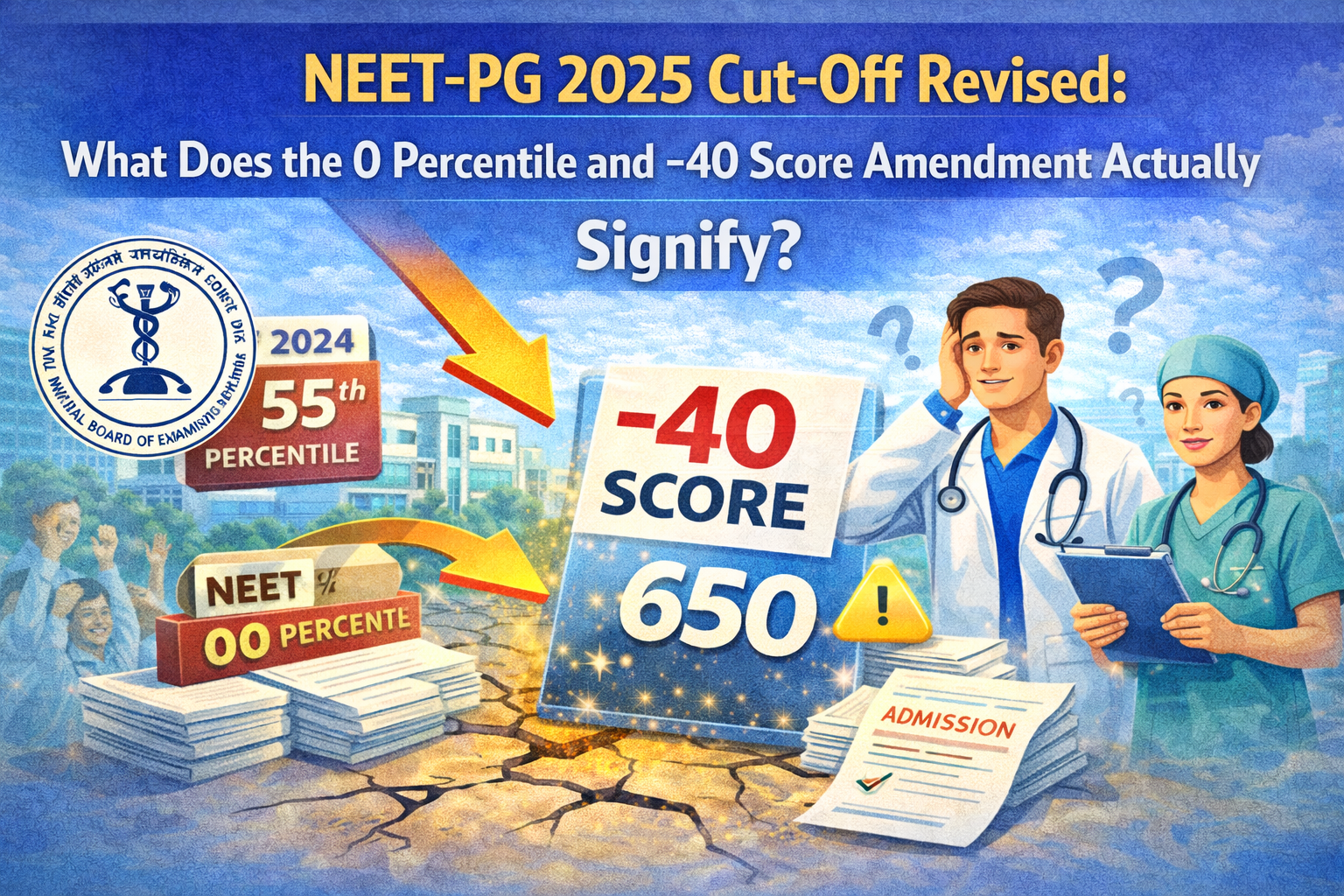
There is a big change announced today for postgraduate medical aspirants applying to the NEET-PG examination across India. The new ceiling on “NEET-PG 2025 cut-off criteria” has something peculiar, an aberration: the introduction of a 0 percentile and -40 score adjustment for eligibility. It’s sparked questions about how candidates’ scores are interpreted, how counselling will be affected, and how it may (or may not) make postgraduate medical admissions a fairer or more dog-eat-dog process.
It is important to realize this change of pattern for NEET PG aspirants, and also those who were on the borderline in the last year. Strategic coaching, along with decisions under counselling, plays a vital role for the candidates who travel through this admission process, and in this changing scenario, something like the MBBS Advisor has some level of impact that can be seen.
This article dissects the implications of the revised cut-off in terms of eligibility and counselling dynamics, as well as what it means for aspirants going into 2025 and beyond.
So What Is Different in the 2025 Cut-Off Rules?
Traditionally, eligibility for taking the NEET-PG exam had a strong correlation with clearing a minimum percentile (mostly a few percentage points higher than the lowest in the test). Getting rid of any such cut-offs meant that a few lakh students from MBBS could be eligible to do PG. Well, for the 2025 cycle, they have provisioned that those candidates who scored 0 Percentile (which would practically mean every one of them who actually gave the exam properly with a legit NEET score) can be considered for counselling if they meet even this basic qualifying criteria.
Also, –40 modification relates to a change in the qualifying score formula. Rather than cutting based only on absolute scores in comparison to the past history, adjusting cut-offs negatively allows students below the traditional limits of history but above revised limits – eligibility for counseling.
Put simply:
- 0 percentile eligibility. There would be the potential for those who are technically eligible for counselling to extend their pool beyond the traditional cut-offs
- –A 40 score increase makes those who did not cross the threshold in the conventional sense eligible for counselling
These modifications are intended to reduce the number of trainees who are 'filtered out' of postgraduate medical training by inflexible cut-off points. But that does not ensure the seat, as the seat allotment still depends on your rank in this competitive exam and the choices entered during counselling.
Why Was This Change Made?
Here are some of the factors behind the shift:
Variation in Performance Trends
In certain NEET-PG exam cycles, the compression effect is much more acute, where a very small number of learners get high scores. In those particular years, cut-off percentiles applied too rigidly can unduly exclude potentially suitable applicants from counselling.
Seat Utilisation Goals
Seats in medical colleges across the country, more so in unrefined institutions or those dealing with less-coveted branches of medicine, have been underutilised at a certain point in time. Expanding eligibility is also an attempt to boost seat occupancy.
Career Continuity
One entire year is lost by many aspirants just because they don’t qualify for the exam by small margins. The new criteria are trying to minimize this loss by retaining as many candidates in the counselling circuit.
While this move has been made with an aim for inclusivity, candidates should know that this amends the eligibility criteria and not the priority or seating order — those remain scheduled based on your rank and choices.
Impact on Counselling and Seat Allotment
And the implications of this shift are practical and profound:
Larger Eligible Candidate Pool
This leads to more number of candidates in the All India Quota (AIQ) and state quota rounds.
That means that while the eligibility is wide, competition for seats — particularly in top specialties and good colleges — will continue to remain tough. It is advised that candidates must make up their preference list as per the rank and score.
Score vs Rank Becomes Critical
Even if the eligibility criteria widens AIR will still be the dominant determining factor for seat allotment. Higher-ranked candidates would continue to get priority by virtue of their ranks in the counselling rounds.
Advice of the MBBS Advisor enables candidates to cross check them self for their ranking and which specialty colleges they can get admission to as per realistic scores.
Strategic Choice Filling
When more number of candidates are considered to qualify, tactical preference filling becomes increasingly important. Aspirational value needs to be weighed against practicability — the ideal fit should include some reach goals, mixed with safety bets that zig in a key direction of travel.
Does This Mean Easier Admission? Not Necessarily
The new cutoff brings a larger chunk in the net, but it does not ensure that admission will be easier this year. Admission still depends on:
- NEET-PG score
- All India Rank
- Category-wise reservation
- Choice filling and locking
- Seat availability in preferred specialties
A candidate with a lower score may still get counseling, but cannot compete for the seats in competitive specialties or institutions though his/her merit position.
Broader Implications Beyond Counselling
Regulatory Compliance
Higher medical education and training are still governed by the National Medical Commission. Applicants will need to ensure they are aware of eligibility requirements, documents required, and training commitments by accessing the NMC website.
.
Recognising Foreign Medical Degrees
Applicants to an IMG should also confirm that the medical school from which they have graduated is included in the World Directory of Medical Schools, available on WDOMS. Post completion, Indian students also have to clear the Foreign Medical Graduate Examination (FMGE) for registration in India, and details can be obtained from FMGE.
Although the cut-off modification extends to NEET-PG eligibility in India, candidates aspiring postgraduate route outside of India should base their choices keeping requirements for global recognition and exit examination standards into account.
Practical Advice for NEET-PG Aspirants
Understand the Revised Rules
Preparation can go on based on the revised cut-off, but one should not consider oneself selected merely because one is eligible.
Focus on Rank and Strategy
Because an entire chunk of the eligibility declaration does not mean the admission letter, focus on improving/ enhancing your overall score as well as ranking. Use trend analysis and choice prediction tools provided by platforms such as MBBS Advisor for more understanding.
Plan for Multiple Scenarios
Candidates should have preference lists in the competitive and non-competitive branches and ensure that their rank projection aligns with the choices they opted for.
Stay Updated
Checking official notifications by NBEMS and NMC helps candidates to be informed of all the eligibility criteria and seat allotment rules before counselling starts.
Conclusion
The provision of 0 percentile eligibility and -40 score adjustment in NEET-PG 2025 cut-off rules was introduced as an attempt to increase the eligibility for the counselling and limit exclusion. Although this allows more access to a wider pool of applicants, admission is still competitive and also based on rank, choice reaches, and seat availability.
To sail through these changes for the aspirants, they need to plan well, and that makes them take wise decisions with the help of online tools with guidance available at MBBS Admission or Advisor. A better appreciation of interactions between EP changes and rank competition allows applicants to better navigate their counselling decisions, minimising process ambiguity that often characterizes admissions in medical postgraduate training.