 Russia
 Belarus
 Georgia
 Kazakhstan
 Kyrgyzstan
 Uzbekistan
 China
China Nepal
Nepal Bangladesh
 Poland
 Romania
 Slovakia
 Hungary
 N. Macedonia
 Vietnam
 Canada
 Armenia
 UK
UK Australia
 USA
USA Ireland
 Germany
 New Zealand
 Italy
Italy France
 Singapore
 Netherlands
 Sweden
 Switzerland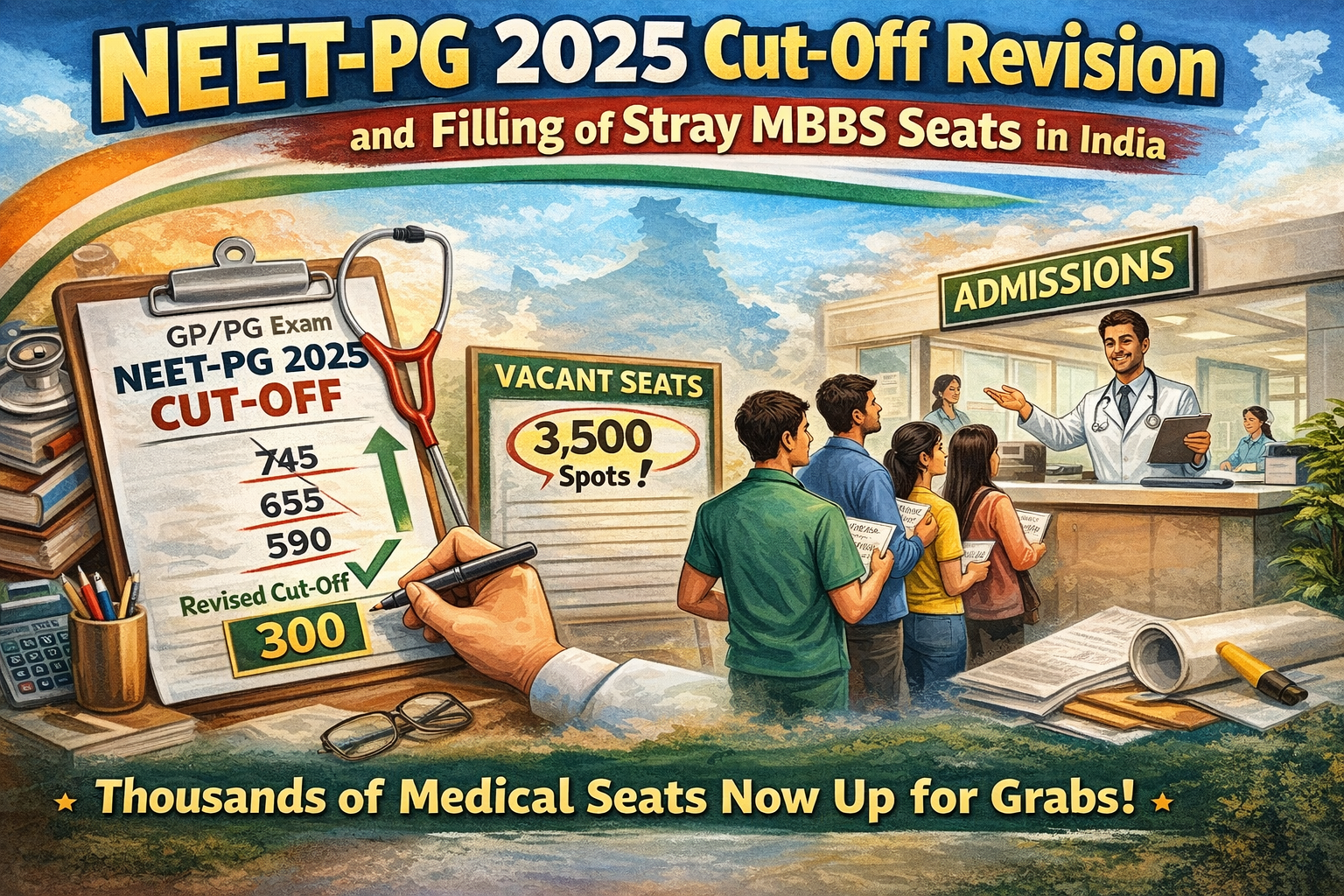
The acting of medical education in India has undergone important transformations as one that took shape was the revision in the NEET-PG cut-off in 2025. Despite the new rules mainly affecting postgraduate admissions, they also significantly influence how vacant MBBS seats are managed across the country.
One of the biggest issues in India’s MBBS admission process is vacant seats — those that remain unfilled after counselling rounds. Revision of the NEET-PG cut-off is an example of changing eligibility criteria that can have ripple effects impacting not just postgraduate training but also how aspirants strategise their trajectory in medical school.
Understanding this change, its implication and how the aspirants can plan accordingly is the key. While proceeding with these complexities, aspirants are helped by structured data and counselling insights which they receive from the trusted academic planning tools like MBBS Advisor’s admission planning pages on the MBBS Advisor website.
Why MBBS Seats Become Vacant
Different factors contribute to creating vacant MBBS seats:
- High Cut Off’s:High qualifying or closing cut off in the first round of counselling leads to many aspirants being excluded from it and seats are left vacant.
- Location Preferences: A number of students end up rejecting an allotment in less urbanised or less-in-demand locations.
- Avationista's Picks: Applicants tend to dismiss more achievable choices further down their preference hierarchy.
- Late Withdrawals: Those upgrading to other colleges leave behind open seats in earlier rounds.
- Rigid Eligibility: At senior entrance sessions, inflexible barriers can discourage aspirants from attempting all rounds of counselling.
These have historically led to a disconnect in the number of seats versus the actual admissions — even if deserving aspirants are languishing on their waiting lists.
Reasons Why NEET-PG 2025 Cut-Off Was Revised
In 2025, changes were made to NEET-PG eligibility criteria that included reducing cutoff percentiles for some categories. Although this alteration centred around postgraduate eligibility, its philosophical influence permeates the medical education continuum from pre-graduate (MBBS) seat uptake.
- The revision of the cut-off stemmed from important concerns:
- NEET-PG exams have seen a compressed score distribution in recent years
- Long lists of MBBS graduates eligible for postgraduate training but unable to get it
- Demand for post graduate seats, but still vacant
- The medical graduate: the need for greater continuity between undergraduate and postgraduate medical education
The increase in upper limits of eligibility is expected to unleash further candidates into the counselling and admission system motivating them not only at a level playing field, but also for a very diverging medical education opportunity with appropriate caveats rather than limiting access to any stack based on a single line in this lottery through an arbitrary cut-off.
How This Amendment Will Help Fill MBBS Seats
Though the link between NEET-PG cut-off revision and vacant MBBS seats may not be obvious at once, when we take into account student behaviour and long run planning it makes perfect sense:
-
Improved Aspirant Confidence
Due to limited postgraduate scopes, many students tend to avoid or drop out of counselling at a very early stage. Candidates may look at MBBS counselling much more positively even if their NEET-UG scores are average, as NEET-PG eligibility is more liberal.
-
Encourages Participation Across Counselling Rounds
Reduced postgraduate barriers may’ve in turn encouraged a higher take-up within the MBBS counselling — together with mop-up rounds — that are very important for filling locations left vacant at earlier classes
-
Broader Career Path Clarity
The perception of long-term career opportunities after MBBS remains within reach through increased acceptance into postgraduate training, so students take offered seats rather than holding out for those top colleges.
-
Better Merit Utilisation
The use of lower cut-offs does not dilute merit — seat allocation still relies on true rank and performance. What they do is to enhance the pool of candidates who are eligible for counselling, thereby creating competition for seat matrix instead of leaving it vacant.
-
How Aspirants Should Respond Strategically
Whether you are a first-timer in MBBS counselling or tracking NEET-UG result-based availability of MBBS seats, thoughtful planning is the key:
-
Participate in All Counselling Rounds
After the first or second rounds, seats are often unfilled. Mop up and stray vacancy rounds are good opportunities for the students with moderate scores. For a perfect counselling strategy based on historical data and chances to get admitted, visit MBBS Advisor directly through its counselling strategy pages.
Adapt Choices Realistically
In the place of simply writing everything free for you from top colleges solely to end up with none allotment, prepare your inclination rundown in a way that there are:
- Aspirational options
- Safe options
- Colleges with historically lower cut-offs
- On MBBS Advisor, you will get a prediction and simulation tool that can help you customize your choice filling according to your rank as well as category.
- Option state quota and private college
Many of the vacant seats are in private colleges or on state quota lists, where competition is less intense. Exploring those options can help aspirants get a seat in the first attempt and avoid a year drop.
Regulatory and Academic Implications
Though there is much discussion about cut-offs, aspirants must not lose sight of the fact that all medical training pathways in India and abroad must meet regulatory standards for quality or risk issues with future licensing.
National Medical Commission (NMC)
In India, the National Medical Commission continues to be the body responsible for medical education and its regulation and quality, college recognition as well as admission policies will also be enforced through this overarching body. The NMC makes rules and timelines for curriculum, internship structure and seat allocation process public for all.
Studying Abroad: Recognition Requirements
Due to limited domestic options, some students look for pursuing their MBBS abroad. In those cases:
- Confirm the foreign medical college is included in the WDOMS database. The college must be recognized as a valid one by the World Directory of Medical Schools if licensed back in India.
- Indian graduates from the Foreign Medical Graduate Examination (FMGE) must pass the exam in order to register and practise in India after completing an foreign MBBS. FMGE portal: Details on FMGE are available.
- These checkpoints guarantee that a student’s training — domestic or international — is still recognised and qualified for clinical practice.
Housing: Save Lives, Reduce Vacancies and Build Careers
From a few cycles in recent years, it is evident that if accurate implementation of cut-offs and counselling as per students’ needs are observed, all seats can be filled. Schools that had previously reported empty seats in early rounds performed better following a broadening of eligibility rules. It does not guarantee you admission automatically — particularly in top-notch colleges — provides you with better opportunities for many applicants to get what they deserve.
For students, the trick is not just securing marks — rather strategic planning, guided choice filling and understanding trends. This is where you need tools like MBBS Advisor’s Rank prediction and counselling analysis.
Conclusion
Attempting for the NEET-PG — although primarily used to determine eligibility for PG seats — assumes significance in filling up MBBS seats as well by broadening participation, streamlining career aspirations and increasing seat utilisation with the 2025 cut-off revision. But being eligible is only the second step — actual admission still depends on rank, choice strategy and readiness.
Aspirants must become cognizant to the purpose of relevant policy changes from real data, tools like MBBS Advisor can help such aspirants understand NMC regulatory standards for medical colleges they are considering as well as international examination paths like FMGE and WDOMS.
There is an informed way vacant MBBS seats in India can go from numbers on a sheet to opportunities for enthusiastic students — even those whose first scores might not have been upper extreme. Staying connected to counselling processes and maintaining a willingness to adapt will enhance seat occupancy and lead the candidate closer to entering the medical field.