 Russia
 Belarus
 Georgia
 Kazakhstan
 Kyrgyzstan
 Uzbekistan
 China
China Nepal
Nepal Bangladesh
 Poland
 Romania
 Slovakia
 Hungary
 N. Macedonia
 Vietnam
 Canada
 Armenia
 UK
UK Australia
 USA
USA Ireland
 Germany
 New Zealand
 Italy
Italy France
 Singapore
 Netherlands
 Sweden
 Switzerland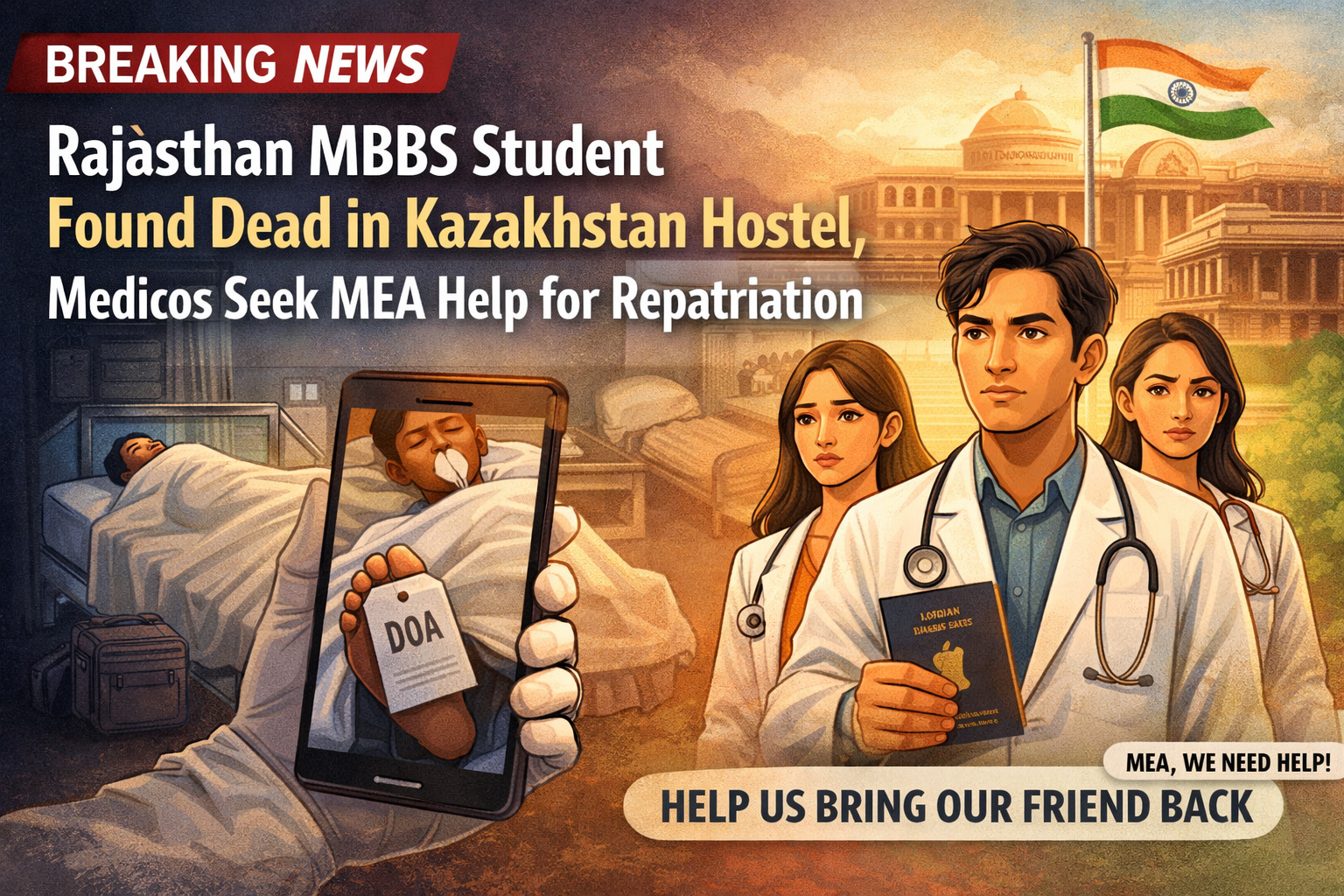
A case that is deeply tragic, where an Indian medical student studying abroad has committed suicide, is one that raises serious questions about safety and mental health of students8819antium. A young MBBS student hailing from Rajasthan reportedly died by suicide at his hostel in Kazakhastan and made the medical fraternity mourn. The incident has also prompted urgent appeals from fellow students and medical associations to the Ministry of External Affairs (MEA) to step in and help bring the body back home.
Overview of the Incident
The deceased, in his early twenties and hailing from Rajasthan, was studying MBBS at Karaganda Medical University. Preliminary information suggests that the incident took place inside the university hostel campus, when students apparently consumed extreme steps due to emotional distress.
News of the attack quickly spread among Indian students studying in the region, and there was silence on campuses across India as students mourned a loss that they felt closely. Well-respected by his peers and faculty alike, many fellow students described him as dedicated, making the loss that much more difficult for both students and teachers to process.
Appeal for Repatriation
In the aftermath of the incident, associations like All India Medical Students Association (AIMSA), among others, have called on Indian government to respond. They requested the MEA to liaise with authorities in Kazakhstan and facilitate early repatriation of the student’s mortal remains.
Repatriation in these cases is time-consuming and includes a lot of paperwork, post-mortem formalities as well as coordination between several authorities. These delays are emotionally exhausting for grieving families, which is why the student bodies insisted that the government needed to be there immediately.
OBSTACLES FACED BY MBBS STUDENTS ABROAD
This tragic case is symptomatic of a wider problem facing Indian students who study medicine abroad. Students prefer such destinations like Kazakhstan because of less number of MBBS seats in India and tuition fees are comparatively cheaper.
But settling into a new country is no easy feat. They face numerous challenges, such as a language barrier, cultural differences, extreme weather conditions and an unknown academic system. The isolation of being away from family support adds another dimension of emotional stress.
Loneliness and nostalgia are normal things, particularly during the early years. Lack of support system for the students or counseling facilities, they don’t able to manage stress which gradually became there mental health.
Mental Health in Undergraduate Medical Education
As we all know, medical education can be quite intense and demanding. Students must also cope with enormous academic syllabi, regular examinations and clinical work. Over time, that pressure can accumulate into anxiety, burnout and depression.
The challenges are frequently exacerbated for students studying abroad. The lack of a familiar support network and the pressure to achieve academically can lead to feelings of loneliness. Mental health issues are still stigmatized, however, and they prevent many students from getting the help they need.
It is a stark reminder that mental health challenges can impact any one of us, no matter how smart we are or what kind of career path we may be pursuing.
Role of Government and Institutions
In situations such as this, the involvement of the Ministry of External Affairs is important. Indian embassies and consulates overseas are also doing their bit to help the students in the event of any emergency such as death or hospitalization including helping them communicate with local authorities and coordinating with families back home.
At the same time, universities owe a duty of care towards their students. Institutions hosting international students must offer accessible counseling services, routine mental health check-ins and support groups to make sure that students do not feel isolated.
Recognition and preventative strategies source We are all encouraged to maintain human rules in the world.
Several proactive steps can be taken to prevent such tragedies:
Awareness of mental health among students
Promoting conversations around stress and mental health
Building networks of peer support for international students
Offer 24/7 counseling and helpline services
Wellness sessions on regular basis in Universities
Be sure parents and guardians are in touch with students as well and aware of any signs of distress, even at a distance.
Conclusion
This death of a promising young recently graduated MBBS student, who is away from his home and who outwardly displays the joys of pursuing his dreams (as we all do), but whose inner demons reveal themselves to be quite another story. However, the incident highlights the urgent need to prioritize mental health and student support systems.
Providing a safe, nurturing and understanding atmosphere is vital for students — particularly international students. It will take a concerted effort on the part of governments, institutions and society to avoid having such tragic incidents happen in the future.