 Russia
 Belarus
 Georgia
 Kazakhstan
 Kyrgyzstan
 Uzbekistan
 China
China Nepal
Nepal Bangladesh
 Poland
 Romania
 Slovakia
 Hungary
 N. Macedonia
 Vietnam
 Canada
 Armenia
 UK
UK Australia
 USA
USA Ireland
 Germany
 New Zealand
 Italy
Italy France
 Singapore
 Netherlands
 Sweden
 Switzerland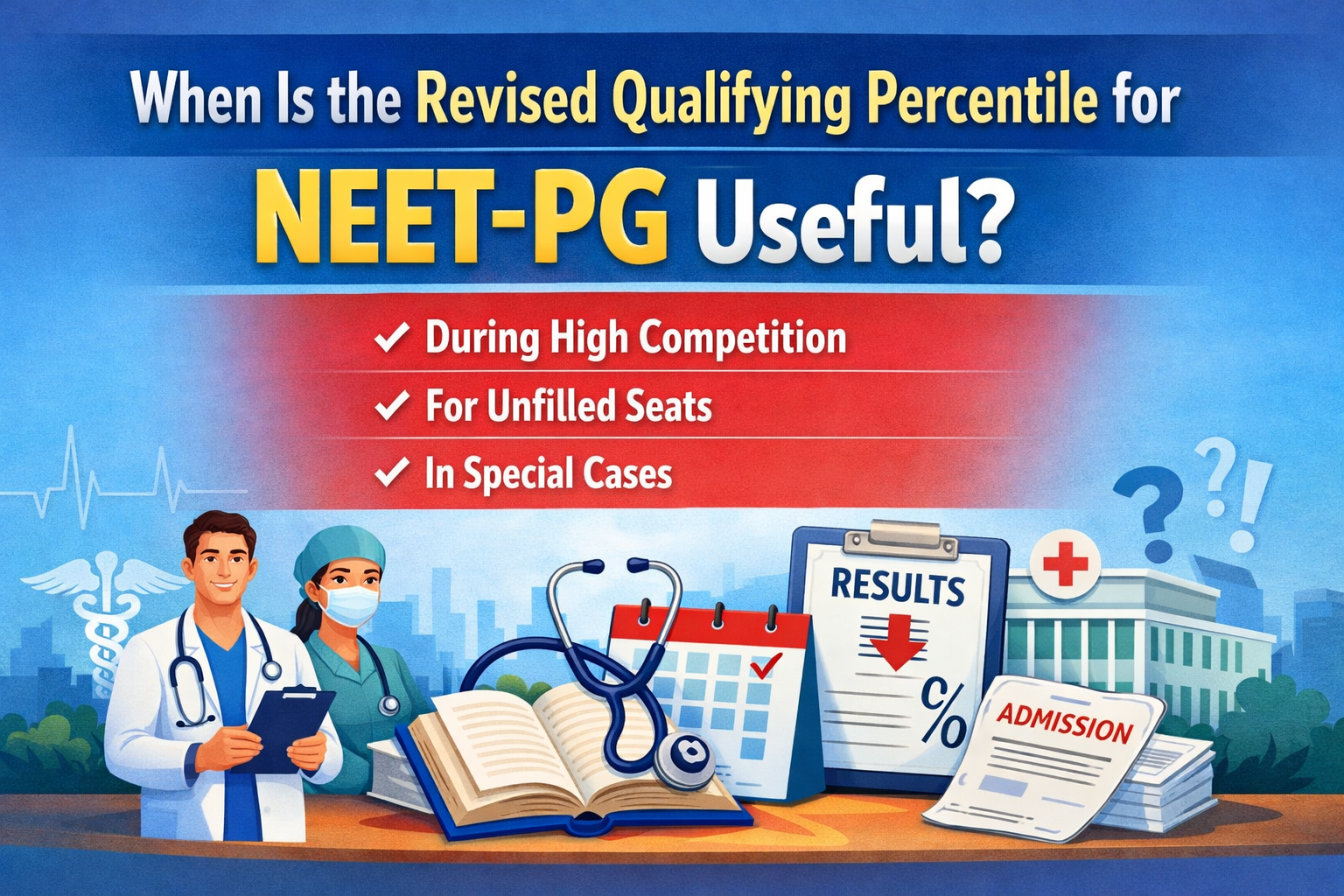
The reduction of the qualifying percentile of NEET-PG has brought a sense of relief as well as confusion amongst these medical graduates. Though the decreased percentile results in a larger number of students who are now eligible to apply for counseling, it also intensifies competition for entry into Postgraduate (MD/MS/Diploma) courses. In order to do well in this new situation, you need to move from a panic-preparation phase to a smart, data-driven phase comprising revision, practice sessions, and career plans.
This post details how to prepare efficiently for NEET-PG after the revised qualifying percentile and prepare wisely according to long-term career goals.
Understanding the Revised Qualifying Percentile
The cutoff percentile decides whether or not a candidate is eligible to appear in the counselling for postgraduate medical courses. A lowering of this threshold means that:
- More candidates qualify
- Cut-off scores may drop
- Competition for seats increases
- Strategic planning is now more critical than ever
Though eligibility has been relaxed, getting a coveted branch still necessitates good command over subjects and prescribed preparation.
Shift in Preparation Mindset
Previously, most of the aspirants aimed at just clearing the cut-off. With the revised percentile:
- The passing of the exam has ceased to be the prime target
- Receiving better ranks among qualified candidates is very important
- Smart studying matters more than long hours of study
Your aim should be to:
- Maximize accuracy
- Strengthen high-weightage subjects
- Improve recall speed
- Reduce negative marking
Focus on High-Yield Subjects
All subjects are not equal in NEET-PG. Prioritize:
- Medicine
- Surgery
- Obstetrics & Gynecology
- Pathology
- Pharmacology
- Microbiology
These muscles contribute most to the score and also have clinical importance. After your core sections are solid, if possible, go through other short sites such as:
- Dermatology
- Psychiatry
- Radiology
- Anesthesia
This is to create a balanced way to cover supplements without taking up too much of your time.
Revise, Don’t Restart
The candidates get really worried after the percentile revision, and they decide to start the preparation once again. This is counterproductive. Instead:
- Strengthen what you already know
- Revise weak areas strategically
- Questions about what I have learned before
Revision should follow:
- Concept recall
- MCQ practice
- Error analysis
- Re-revision
This process enhances retention and exam attitude.
Increase Mock Test Frequency
Mock tests are crucial at this stage because:
- Simulate real exam pressure
- Identify weak subjects
- Improve time management
- Teach your brain to recognize patterns
After each mock:
- Analyze incorrect answers
- Categorize errors (error in reasoning vs. error due to not having enough time)
- Revise only those topics
When you have mock-based learning, who needs to read passively?
Branch Selection Strategy
The recast percentile will lead to higher competition among students applying for preferred branches, like:
- General Medicine
- Pediatrics
- Radiology
- Orthopedics
If you don't belong to one of these branches:
- Consider alternative specialties
- Considerations: Both diploma and DNB options can be explored
- Forgo social status for long-term happiness
Verify if the institute or branch you are choosing is approved by the National Medical Commission that regulates postgraduate medical education in India, before opting.
Career Safety Through Recognition
Must be eligible for your PG degree should be:
- Medical registration
- Employment
- Super-specialization
- International practice
For those interested in pursuing MBBS abroad after PG, make sure your medical qualification is listed in the World Directory of Medical Schools. This is essential for:
- Licensing exams abroad
- International hospital employment
- Academic mobility
They would also need to qualify for the Foreign Medical Graduate Exam in order to practice medicine in India. While FMGE is an avenue available only to foreign graduates, knowing about this bridge also helps students plan non-traditional careers.
Avoid Misinformation and Panic
There’s a lot of misinformation that tends to get out there when policy changes. Students should:
- Rely only on official notifications
- Avoid social media rumors
- Cross-check updates with regulatory authorities
Misunderstanding percentage reduction could result in:
- Poor branch choices
- Wrong counselling decisions
- Missed opportunities
Always go into any match based on facts and an honest rank analysis.
Use Expert Guidance Platforms
Percentile changes, rules of counselling, branch options, and recognition of institutes can be a bit complicated things to understand. Reliable sites such as MBBS Advisor offer defined assistance on:
- PG admission pathways
- College and branch comparisons
- Counselling updates
- Career planning
These platforms enable students to translate their raw scores into meaningful career choices.
Mental Discipline and Consistency
Your percentage should not make you any less serious. Instead, it should motivate:
- Daily study targets
- Weekly revision cycles
- Regular self-assessment
Mental discipline matters because:
- Rank gaps are small
- A handful of additional correct responses can change branch placement
- Consistency beats last-minute cramming
Don’t just focus on eligibility; remain focused on improvement.
Final Thoughts
While the new NEET-PG cut-off percentile has made the gates wider, there is less room for error. Success at this point is contingent not just on passing the test but on placing high against an expanded group of competitors. Strategic Revision, mock-based learning, smart branch selection, and recognition awareness are the keys to preparation.
Following the policy updates announced by the National Medical Commission, if you are an MBBS aspirant, and can adopt some indirect learning from this happening situation; aligning strategy as per NMC and understanding career aspects like FMGE prevalence, interntational recognition through World Directory of Medical Schools and reliable sources at the desk to guide your further way with platforms like MBBS Advisor helps you make it rather than break it.
With targeted preparation, achievable expectations, and educated choices, candidates can proceed towards postgraduate medical success with assurance – even in more difficult times.