
 Russia
 Belarus
 Georgia
 Kazakhstan
 Kyrgyzstan
 Uzbekistan
 China
China Nepal
Nepal Bangladesh
 Poland
 Romania
 Slovakia
 Hungary
 N. Macedonia
 Vietnam
 Canada
 Armenia
 UK
UK Australia
 USA
USA Ireland
 Germany
 New Zealand
 Italy
Italy France
 Singapore
 Netherlands
 Sweden
 Switzerland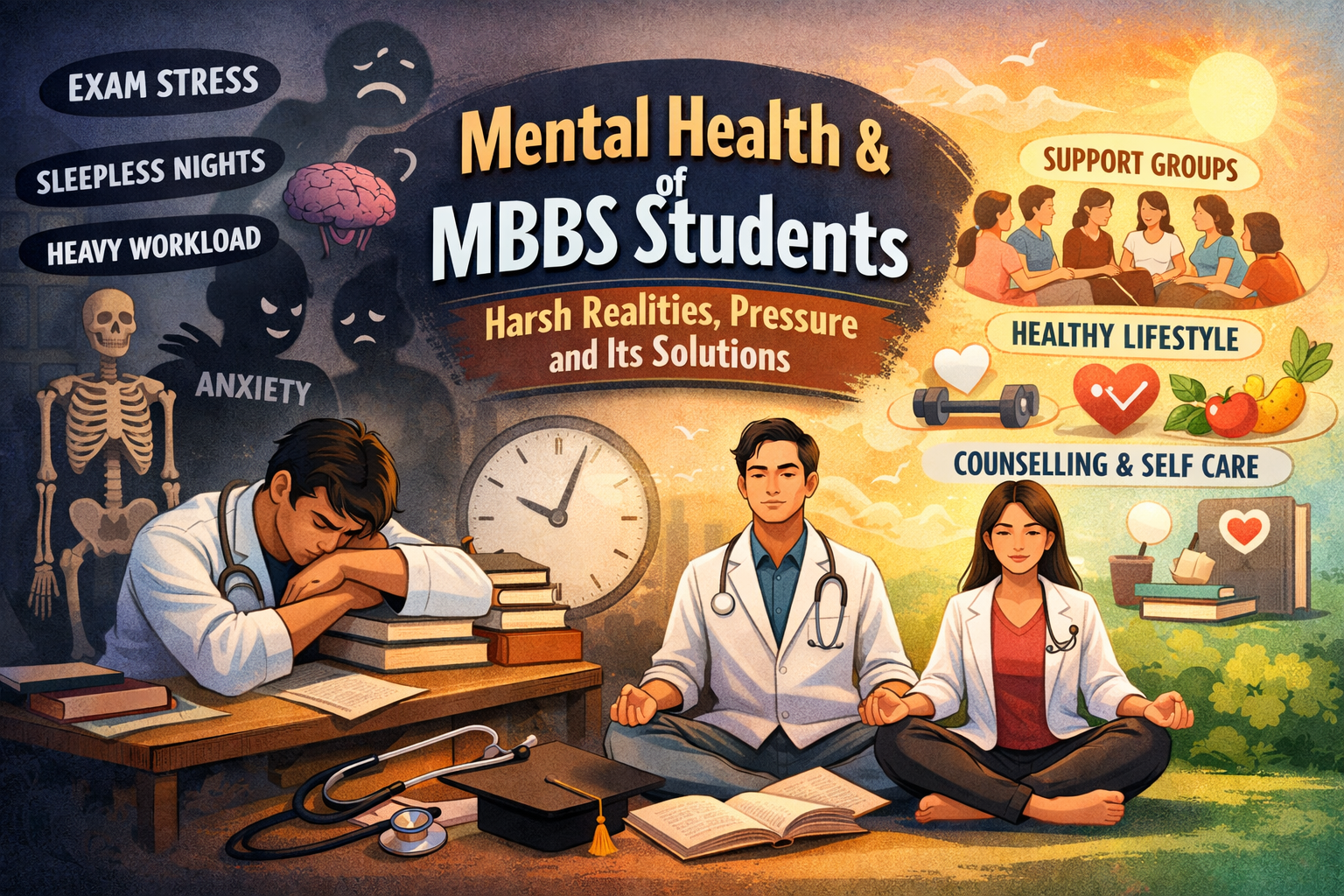
Preparing for an MBBS degree is a good thing, but this journey to become a doctor comes with its own hardships. It is with this curiously privileged perspective that we are expected to function as medical students while navigating long hours studying, clinical responsibilities and the psychological load of human suffering. Thus it becomes important to understand the mental health and daily life of MBBS students so that we can create a more supportive and balanced medical education system.
Academic Pressure and Competitive Environment
Compared to other branches, MBBS students have one of the toughest academic curricula. Right from first year they need to learn huge amounts of information on anatomy, physiology and biochemistry As their development continues, subjects become increasingly complex and expectations are elevated.
This results in an extremely competitive environment around exams, practical and internal assessments. The fear of not succeeding haunts most students, given the limited availability of postgraduate seats and uncertainty regarding a career path. This stress can result in anxiety, burnout, and a diminished sense of self-worth.
Sleep Deprivation and Long Study Hours
An average MBBS spends hours of their day, every day, attending lectures, reading books, studying notes, preparing for their exams and undergoing clinical postings. Student sleep schedules are often upended during exam periods, with students awake into the small hours of the morning.
Sleep deprivation is the arch-nemesis of health. It lowers focus, raises irritability, and promotes emotional instability. Without sufficient rest, mental health issues such as depression and fatigue can manifest over time.
Emotional Challenges in Clinical Exposure
As students transition into their clinical years, they are confronted with the reality of medical training: real-life illness, trauma and death. For many it is the first time they witness such intensely human behavior.
Being with patients when they suffer, delivering bad news and seeing loss can exact an emotional toll. When students are left to navigate these situations without guidance or emotional support, some may develop compassion fatigue or emotional detachment as a form of survival.
Heightened sense of social isolation and less personal time
MBBS students find it hard to maintain a social life due to hectic schedules. Often, family gatherings, friendships and hobbies are sacrificed. As it is, many students leave home for studies, which can heighten feelings of loneliness and alienation.
Wrestling with this imbalance between academic life and personal well-being often takes a toll on several aspects of mental health. It makes students feel detached, which in return increases stress and decreases life satisfaction.
Stigma Around Mental Health
As a newly recognized integral member of the health care system, medical students remain behind in mental health awareness. Most are afraid of being judged, stigma and seem weak to ask for help.
Such silence tends to make things worse, however, allowing stress and emotional problems to simmer. In extreme scenarios, this can result in burnout, anxiety disorders—as well as instances of suicidal ideation—all underscoring the necessity for more discussion around mental health and support systems.
Coping Strategies and Solutions
Time Management:
As a result, effective planning can help reduce academic stress. Finding a balance between doing small and manageable portions of data combined with coming up with a realistic timetable enables the candidate to improve productivity without getting overwhelmed by the amount of study material.
Regular Breaks and Self-Care:
Short breaks, physical activities and hobbies can contribute hugely to mental health. Particularly useful in this regard are exercise, meditation and relaxation techniques.
Building Support Systems:
A good support network of friends, family and peers means students can discuss their experiences and feelings. Discussing stress openly can lessen its weight.
Seeking Professional Help:
Medical colleges should make more of an effort to normalize counseling and mental health services. It’s a good thing, not a sign of vulnerability — seeking support from psychologists or counsellors.
Institutional Support:
Wellness programs, mentorship systems and mental health awareness at medical colleges. We need to change our approach: stripping away academic overload and creating a more healthy atmosphere around learning can make all the difference.
Conclusion
Every MBBS student goes through a journey of aspiration, perseverance, and emotional turmoil. The journey is undoubtedly difficult, but tackling mental health issues is critical to producing competent, compassionate physicians. All students and institutions must collaboratively ensure a healthier and more balanced medical education experience through awareness, open dialogues, and safe environments.