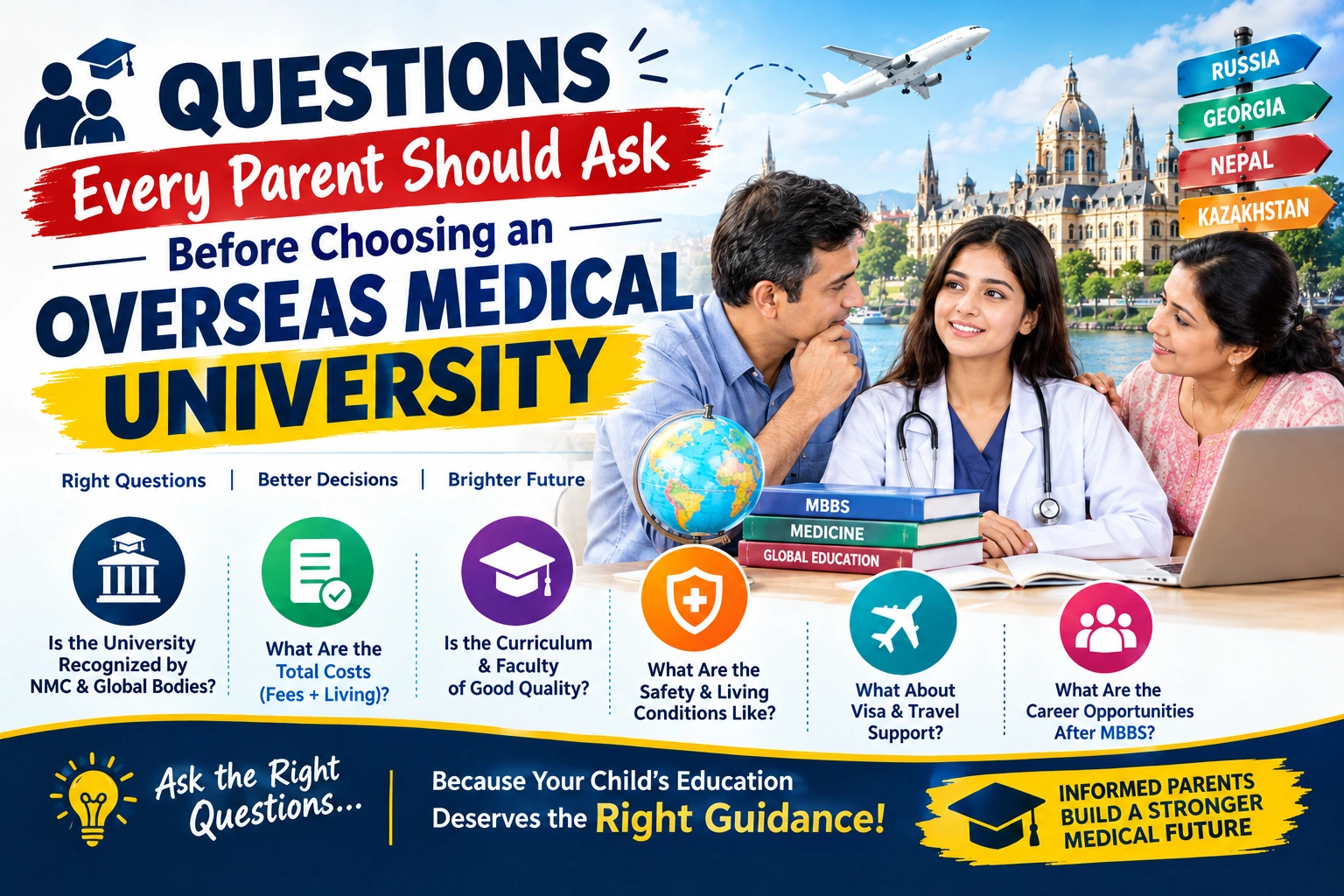
 Russia
 Belarus
 Georgia
 Kazakhstan
 Kyrgyzstan
 Uzbekistan
 China
China Nepal
Nepal Bangladesh
 Poland
 Romania
 Slovakia
 Hungary
 N. Macedonia
 Vietnam
 Canada
 Armenia
 UK
UK Australia
 USA
USA Ireland
 Germany
 New Zealand
 Italy
Italy France
 Singapore
 Netherlands
 Sweden
 Switzerland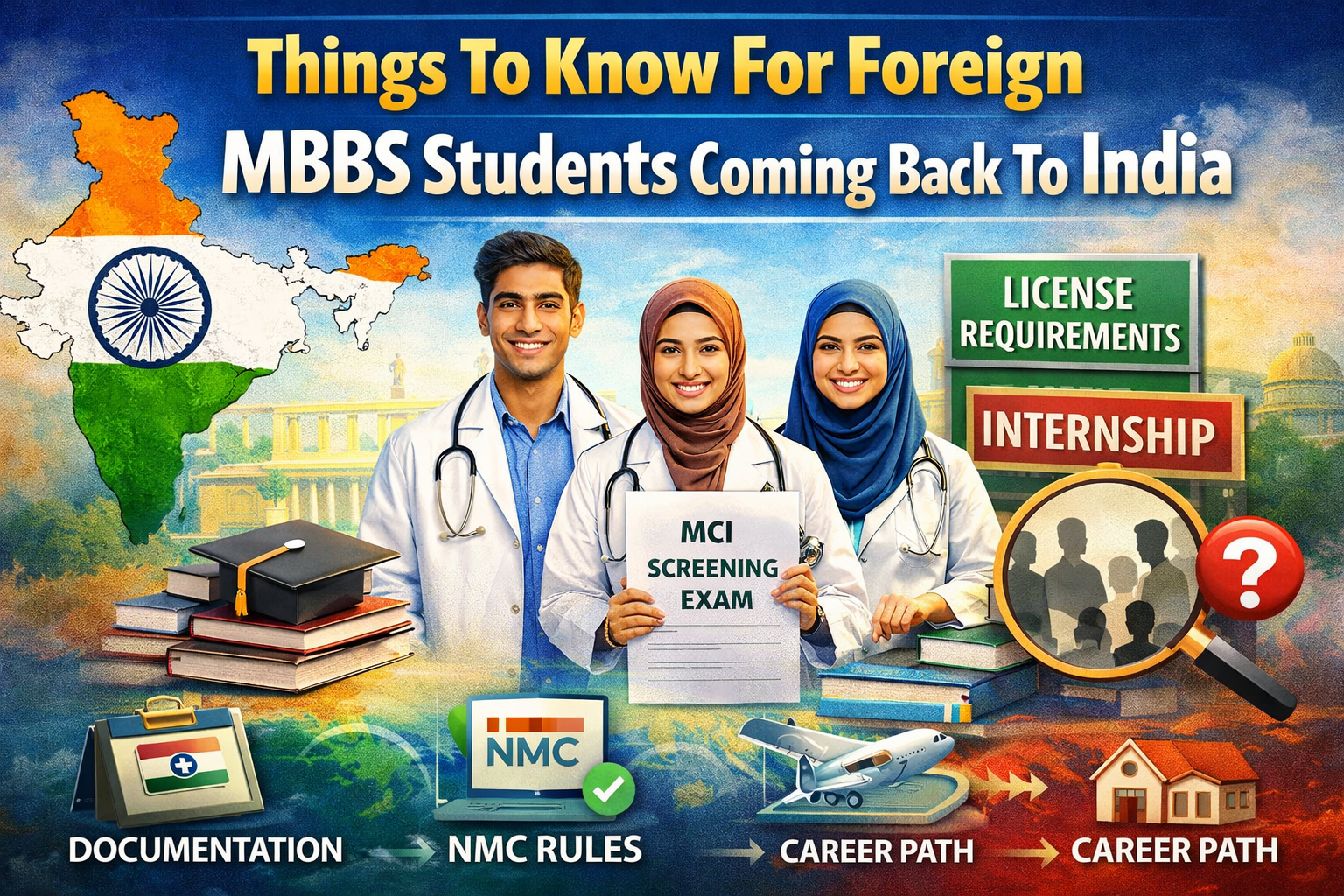
There have been some relatively more stringent and structured guidelines framed by the Indian government in recent years for students wanting to pursue MBBS abroad and practice back at home in India. The medical registration rules, governed by the National Medical Commission, are designed to ensure that foreign medical graduates (FMGs) are at par with Indian educated doctors. While these changes address quality and patient safety, they also increase the rigor surrounding re-entry for returning students.
Why New Rules Were Introduced
Due to the limited number of MBBS seats coupled with high competition, thousands of Indian students opt to study MBBS abroad every year. However, there were concerns due to variation in curriculum, inadequate clinical exposure and variation in training quality.
To solve this problem, the National Medical Commission introduced a structured regulation to ensure that foreign medical education adheres to Indian-compatible standards to produce competent doctors.
Important Rules For Foreign MBBS Graduates
Mandatory NEET Qualification
- The NEET examination is mandatory for admissions abroad. They will not be able to practice in India later, if they are not NEET-qualified.
- Minimum Course Duration Requirement
The MBBS course abroad should have:
- Minimum of 54 months (4.5 years) of academic study
- 12 months of internship
- This ensures that its duration and structure is on par with the Indian MBBS program.
- Mandatory Licensing Exam
- It is important to note that the students are required to clear a licensing examination after completing MBBS from abroad.
- FMGE or Foreign Medical Graduate Examination
- Upcoming NExT (National Exit Test)
- They can only apply for registration in India after clearing this exam.
- Compulsory Internship in India
All foreign medical graduates need to undergo the compulsory rotating medical internship (CRMI) in India before they can get a permanent registration.
Guidelines for Education Online or Hybrid
New rules focus specifically on online learning:
- However, medical education has to be mainly offline (physical mode)
- Any part of the online course needs to be compensated with onsite practical training
- You can not skip clinical exposure which is a must.
- This makes sure students get a proper hands-on experience.
- Recognition and Documentation Requirements
To practice in India:
- Medical degree must be recognized in the country of foreign award
- This would require proper documentation and verification
- Details of training must be up to national medical commission standards
- Admission Year Matters
The rules are different, based upon when the student took admission:
Before November 2021:
- Older rules apply
- Some flexibility in internship recognition
After November 2021:
- Must follow updated strict regulations
- Mandatory internship in India
- Full compliance with NMC guidelines
- It is essential that students be aware of which category they belong to.
Alignment with Global Standards
These reforms are in line with global health benchmarks from the World Health Organisation. And the implication is: we cannot allow standards to slip when it comes to medical training, patient safety, or quality, and we must keep rising standards so that everywhere in the world you get a consistent experience.
Challenges for Students
The new rules may lead to better quality, but they also present challenges:
- Longer and stricter academic requirements
- Mandatory internship in India
- Licensing examinations with a high level of difficulty
- Increased documentation and compliance
- Students should choose appropriate foreign universities, meeting these criteria.
Role of Guidance Platforms
Given the complexity of these rules, proper guidance is critical. Students are being assisted by platforms like MBBS Advisor:
- Choose NMC-compliant universities
- Understand eligibility and licensing requirements
- Manage their education and return process well
Conclusion
The revised guidelines for foreign MBBS graduates wanting to come back and exercise medicine in India are a clear indication of the quality- and standardization-mindedness of medical education now. Yes, while that makes the process more rigorous but still allows only good and competent doctors to practice in India.
Thus, the students aspiring to study abroad should be vigilant and follow the National Medical Commission guidelines with adherence to global norms prescribed by the World Health Organization.
Thus, it is important to note that success here is not only based on holding a degree from abroad, but also fulfilling all regulatory requirements to pursue a sustainable career in medicine in India.