 Russia
 Belarus
 Georgia
 Kazakhstan
 Kyrgyzstan
 Uzbekistan
 China
China Nepal
Nepal Bangladesh
 Poland
 Romania
 Slovakia
 Hungary
 N. Macedonia
 Vietnam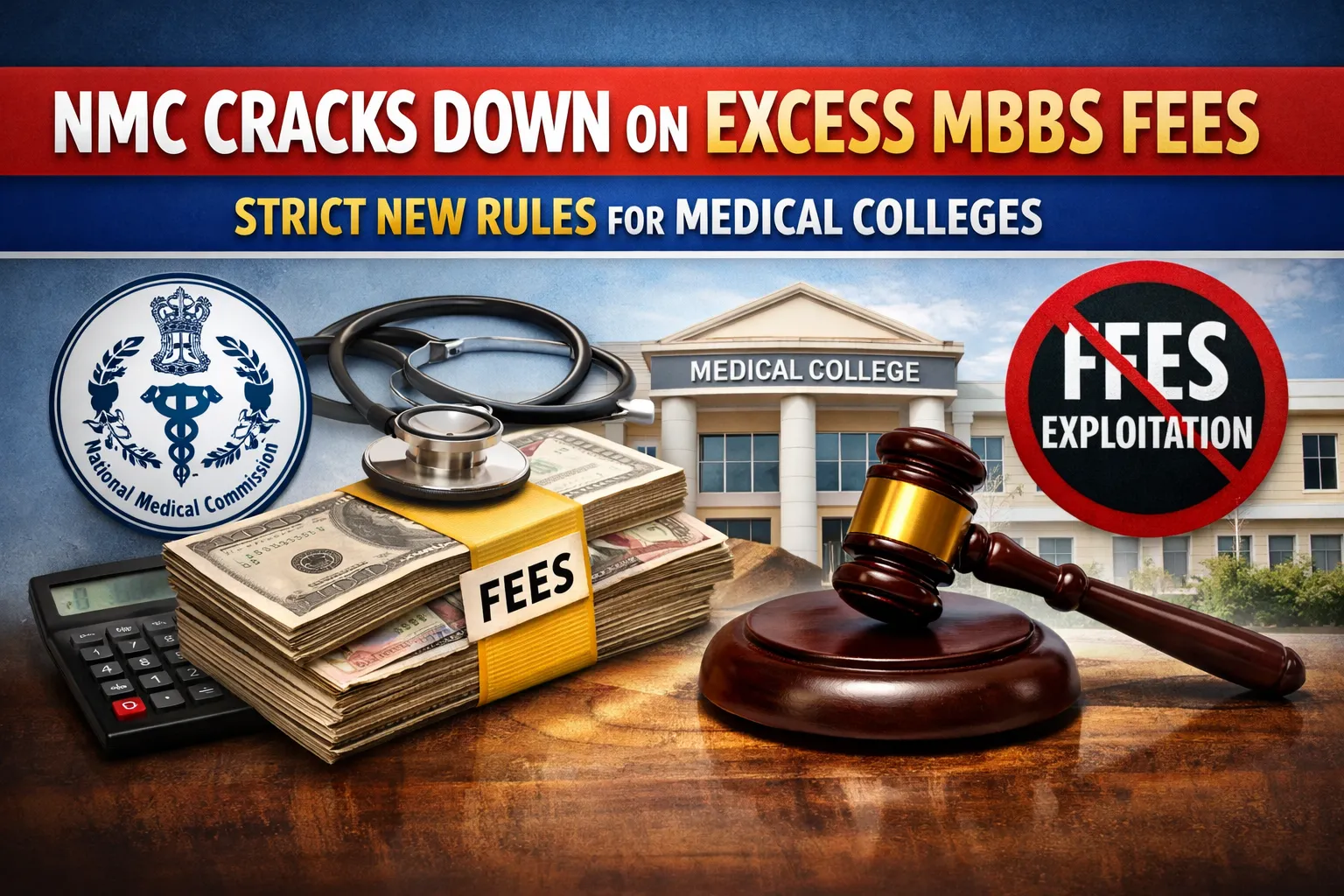
The ever-increasing cost of medical education in the country has been a cause of worry for students and parents alike. Faced with growing complaints over capitation fees fraud and opaque processing of MBBS admissions, the National Medical Commission (NMC) has implemented stringent new measures to prevent private medical colleges from charging excessive amounts as MBBS fees.
These changes are designed to make the medical entry process more affordable, transparent and just for the thousands of NEET aspirants every year.
The Need for New Rules
Countless private institutions have been accused of levying astronomical tuition charges and under-the-table transfers over the years - a process that has made MBBS education a dream rather than something accessible for worthy students in India. While NEET qualified many aspirants had turned to secondary schools due to financial pressure.
One way to mitigate all these issues is through stricter processes which is where NMC came in with a new set of regulations to:
- Prevent unfair fee practices
- Standardize tuition structures
- Ensure merit-based admissions
- Protect students from financial exploitation
As a result they are dependent on us to make some decisions regarding colleges and fee structure, so here we trust mbbs advisor during this process as well.
Highlights of NMC Fee Regulation Policy
The new norms under the National Medical Commission are explainable and transparent.
1. Fee Regulation for 50% Seats
At least 50 per cent of seats in private medical colleges and deemed universities shall follow government regulated fee structure; however, the National Medical Commission (NMC) has provided exemption to it. This substantially lessens the burden of costs for students.
2. Ban on Capitation Fees
At present, charging a donation or capitation fee is strictly prohibited. Colleges that violate this rule may be subject to heavy fine or even cancellation of recognition.
3. Transparency in Fee Structure
As per its guidelines, colleges are mandated to display comprehensive fee data publicly including tuition fees, hostel charges and other levies. No more hidden costs.
4. Uniform Guidelines Across States
While each state's fee regulation might differ a little, the NMC provides universal guidelines to avoid exploitation.
Impact on Medical Aspirants
After the NEET-UG2023, there was a row over why it took so long to announce this exam.
- Greater access to low cost medical training
- Reduced financial pressure on families
- The judiciary is believed to be fairer and there is more trust in private medical institutions.
- Improved transparency in admissions
In addition, students can better compare options now when studying abroad. Many aspirants consider prospects such as studying MBBS in Georgia, which provides affordable education with worldwide acceptance.
Global Standards & Recognition
The reforms in medical education are parallel to global standards for quality and credibility in Indian medical institutes.
One of the enablers of this step would be a collaborative effort from the World Health Organization, which can provide international guidelines and give opportunities for better education in healthcare systems worldwide.
In a similar but globally context, the World Directory of Medical Schools lists recognized medical institutions across the world allowing students to check out universities they want to enroll into.
The framework established by the National Medical Commission will raise the standards of Indian medical graduates not only at international level but also nationally.
Challenges & Concerns
While the new rules represent a huge advance, there are still some hurdles:
- Implementation may vary across states
- Private colleges can be hard to monitor effectively.
- Share Some institutions may seek to bypass regulation
They need to be careful and stay informed about college choices. Hence, consulting authentic sources such as mbbs advisor can help you not getting scams and providing misleading data.
What Students Should Do Now
These new regulations in place call for students to:
- Carefully review official fee structures
- Avoid colleges demanding unofficial payments
- Confirm college MCI, WHO approval through World Directory of Medical Schools and National Medical Commission
- Explore international(English) and Indian options
- Get expert advice before taking any steps
An informed choice is imperative for a successful medical career.
Final Thoughts
The tough response of the National Medical Commission against exorbitant MBBS fees is a watershed moment in India’s medical education system. These reforms are aiming to making medical education more affordable for deserving students by enhancing transparency.
However, awareness remains key. Students need to keep current, fact–check and strategize. If you are in India and wish to take MBBS in Georgia or any other country, your decision will decide who you want to be when you grow up.
Websites such as mbbs advisor can assist you with the application process and ensuring, that your applications are competitive.