 Belarus
 China
China Nepal
Nepal Bangladesh
 Poland
 Romania
 Slovakia
 Hungary
 N. Macedonia
 Vietnam
 Canada
 Armenia
 UK
UK Australia
 USA
USA Ireland
 Germany
 New Zealand
 Italy
Italy France
 Singapore
 Netherlands
 Sweden
 Switzerland
Your Global Journey, Simplified.
Join 5,000+ students who secured their dream university
 Russia
 Georgia
 Kazakhstan
 Kyrgyzstan
 Uzbekistan
Why Study MBBS Abroad?
- Affordable Fees – Much lower than private colleges in India
- English Medium – No language barrier
- WHO, NMC Approved Degrees
- Modern Labs & Good Clinical Exposure
Register Now for Study MBBS Abroad
NEET PG Syllabus 2026: Check Detailed Syllabus For Anatomy, Biochemistry and Physiology
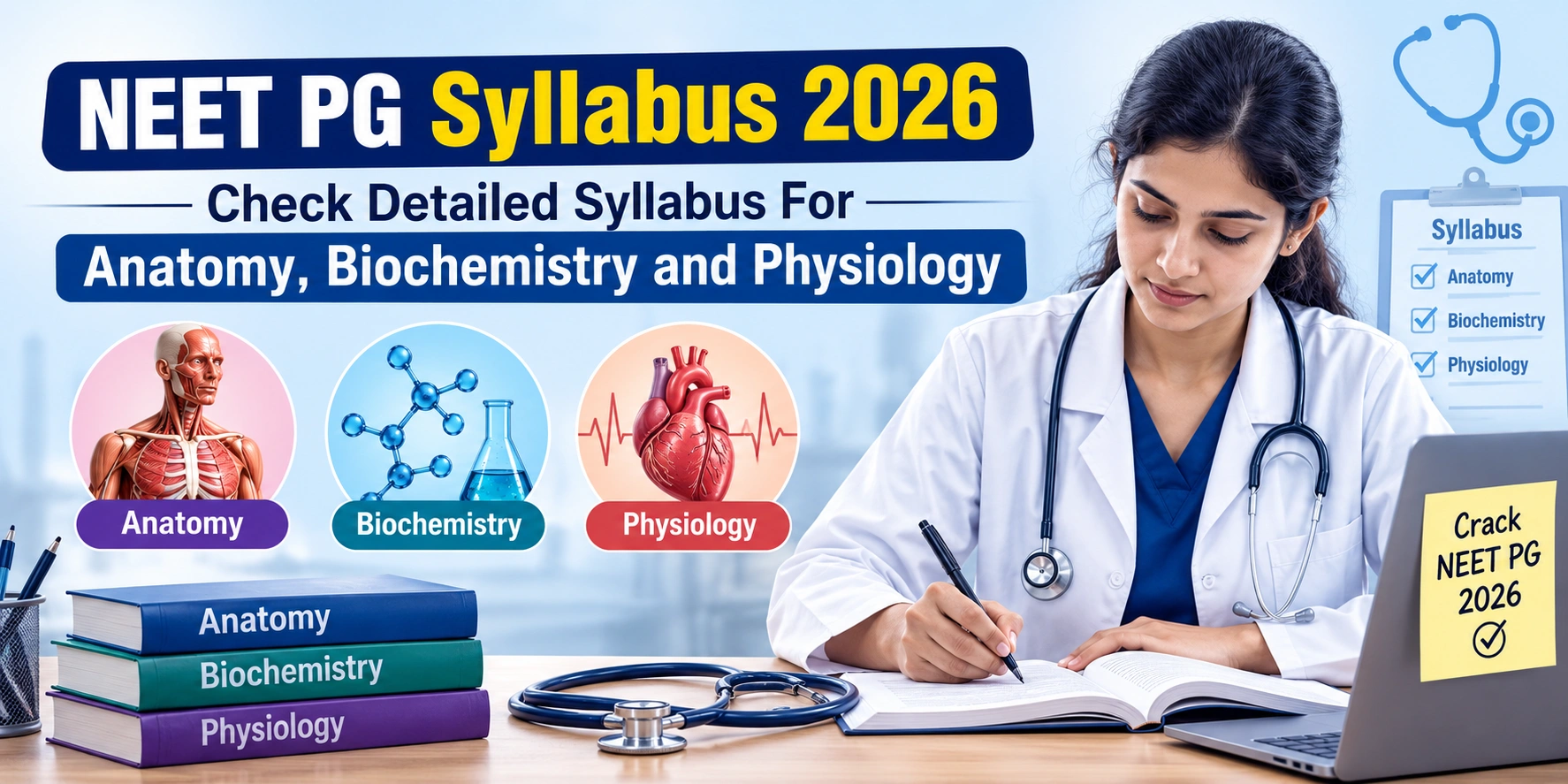
The NEET PG Syllabus 2026 serves as the basis for preparation for every medical graduate aspiring to get a postgraduate seat in India. Read the syllabus carefully: Syllabus is the first and foremost step to crack exam.The NEET PG tests a candidate’s understanding and knowledge of all subjects covered in M BBS. Anatomy, Physiology & Biochemistry are the backbone of pre-clinical subjects and needs to be a strong foundation for advanced subjects among all other subjects.
NEET PG Syllabus 2026 Overview
NEET PG syllabus is derived from the curriculum defined by the National Medical Commission. Topics from All Three Phases of MBBS are covered:
- Pre-Clinical Subjects (Anatomy, Physiology, Biochemistry)
- Para-Clinical Subjects
- Clinical Subjects
Pre-clinical subjects are no less because they lay the conceptual foundation of solving integrated and application-based individual QSS in clinical subjects which bear more weightage.
NEET PG Anatomy Syllabus 2026
Anatomy is on the essence of medical education. Let us first understand the definition of anatomy. Anatomy questions of NEET PG are usually conceptual and image-based.
Important Topics in Anatomy:
- Gross Anatomy
- Upper and Lower Limbs
- Thorax and Abdomen
- Head and Neck
- Neuroanatomy
- Histology
- Structure of tissues
- Microscopic anatomy of organs
- Embryology
- General embryology
- Development of organs and systems
- Congenital anomalies
- Osteology
- Study of bones
- Identification and features of bones
- Radiological Anatomy
- X-rays, CT scans, MRI basics
- Interpretation of anatomical structures
- Surface Anatomy
- Landmarks and clinical correlations
Preparation Tips for Anatomy
- Studying with diagrams and focus in visual memory
- It is memory based i.e you have to revise it quite often
- Practice image-based MCQs
- Link anatomy with clinical scenarios
Time is plentiful and vast when it comes to anatomy but with little smart revision, scoring well in this subject is not too difficult.
NEET PG Physiology Syllabus 2026
Physiology is the study of how the normal human body functions. It is a very conceptual subject and it holds the key to understanding clinical medicine.
Important Topics in Physiology:
- General Physiology
- Cell structure and function
- Homeostasis
- Blood and Immunology
- Composition and functions of blood
- Immunity and immune response
- Cardiovascular System
- Cardiac cycle
- Blood pressure regulation
- ECG basics
- Respiratory System
- Mechanics of respiration
- Gas exchange
- Oxygen transport
- Renal System
- Kidney functions
- Urine formation
- Acid-base balance
- Gastrointestinal System
- Digestion and absorption
- Enzyme functions
- Endocrinology
- Hormones and their functions
- Regulation of body processes
- Nervous System
- Central and peripheral nervous system
- Reflexes and neural control
Preparation Tips for Physiology
- Emphasizing understanding over rote memorization
- Use flowcharts and diagrams
- Practice numerical-based MCQs
- Relate physiology with clinical cases
Physiology will boost your performance while solving integrated questions in NEET PG.
NEET PG Biochemistry Syllabus 2026
Biochemistry studies human body's chemical processes. If handled in a certain way, it is a scoring topic.
Important Topics in Biochemistry:
- Biomolecules
- Carbohydrates, proteins, lipids
- Structure and functions
- Enzymes
- Enzyme kinetics
- Mechanisms and regulation
- Metabolism
- Carbohydrate metabolism (glycolysis, TCA cycle)
- Lipid metabolism
- Protein metabolism
- Molecular Biology
- DNA replication
- Transcription and translation
- Genetics
- Genetic disorders
- Inheritance patterns
- Clinical Biochemistry
- Liver function tests
- Kidney function tests
- Diagnostic markers
- Nutrition and Vitamins
- Role of vitamins and minerals
- Deficiency diseases
Preparation Tips for Biochemistry
- Focus on cycles and pathways
- Use mnemonics for memorization
- Practice clinical-based MCQs
- Revise frequently
Biochemistry questions are usually straightforward and scoring if the concepts are clear.
Contribution of Pre-Clinical Subjects in NEET PG
The actual number of questions may vary slightly, but the pre-clinical subjects are worth considerable marks as a whole. Typically:
- Anatomy: Around 15–20 questions
- Physiology: Around 15–20 questions
- Biochemistry: Around 15–20 questions
Thus, they are helpful in forming a solid base and gaining some extra marks.
Pre-Clinical Subjects in NEET PG- The Gravitational Impact
Many students don't take these subjects seriously, but they are a very important part in:
- Understanding clinical subjects
- Solving integrated questions
- Improving overall score
Advancement in medical subjects can be made easy when you have covered the basics of Anatomy (the study of animal and human structures), Physiology (the study of physiological processes, or how the body works) and Biochemistry.
“Integrated Approach in NEET PG 2026”
The exam pattern is now getting integrated. You will use multiple subjects for “concepts may combine”.
For example:
- Physiology + Medicine
- Biochemistry + Pathology
- Anatomy + Surgery
That means students have to get to grips with material rather than memorising facts.
Here is how you should approach it for the NEET PG 2026 syllabus
To cover the syllabus effectively:
- Create a Study Plan
- Break up subjects into bite-sized segments and schedule daily goals
- Focus on High-Yield Topics
- Diagnose Topics that are Common Questions and Prioritize
- Practice Regularly
- Previous Year Corporate Questions and Mock.
- Revise Consistently
- Revising is the key to retaining information.
Role of NEET, NMC, and FMGE
The framework through which the medical education system functions in India consists of certain key elements:
- The NEET ensures standardized admissions
- Medical education in the country is regulated by the National Medical Commission
- Foreign medical graduates must pass the FMGE to practice in India
They help standardise quality and uniformity in medical education.
Common Mistakes to Avoid
Common errors students make when preparing:
- Ignoring pre-clinical subjects
- Relying only on memorization
- Not practicing MCQs
- Skipping revision
These are a few mistakes that can easily cost you marks.
Conclusion
Although the NEET PG Syllabus 2026 is extensive, but a proper strategy will make it manageable. Acid Boot Camp revised for courses like Anatomy, Physiology, and Biochemistry are the ultimate skeleton that we all study to help with exams.For fundamentals, the regular practice with continuous revision are must for aspirants. But if you have a focused study plan and understand the syllabus well enough, NEET PG can be cracked.