 Russia
 Belarus
 Georgia
 Kazakhstan
 Kyrgyzstan
 Uzbekistan
 China
China Nepal
Nepal Bangladesh
 Poland
 Romania
 Slovakia
 Hungary
 N. Macedonia
 Vietnam
 Canada
 Armenia
 UK
UK Australia
 USA
USA Ireland
 Germany
 New Zealand
 Italy
Italy France
 Singapore
 Netherlands
 Sweden
 Switzerland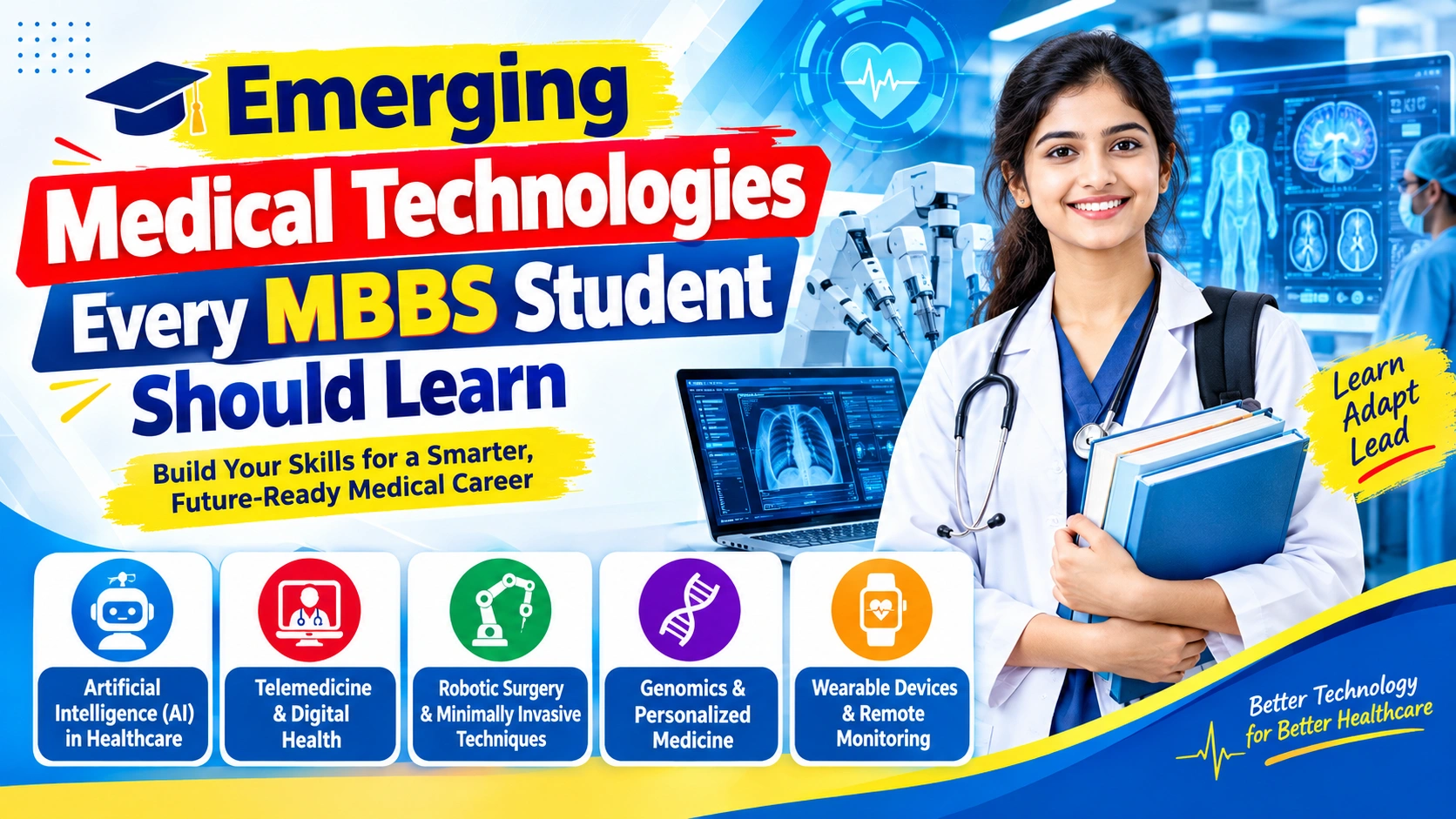
Medical education is rapidly changing with the advancement of technology. Today’s MBBS students are not only expected to understand human anatomy, physiology, pathology, and clinical practices but also need to stay updated with emerging medical technologies that are transforming healthcare worldwide. From artificial intelligence in diagnosis to robotic surgeries and digital healthcare systems, technology has become an essential part of modern medicine. For students planning their medical careers, whether in India or through MBBS Abroad, understanding these innovations can help them become better doctors and adapt to future healthcare challenges. Platforms like MBBS Advisor help medical aspirants explore medical education opportunities, admission guidance, and career-related information.
Why Medical Technology Knowledge Is Important for MBBS Students
The role of doctors is evolving with that introduction of advanced medical tools. Earlier, doctors mainly depended on physical examinations and traditional diagnostic methods. However, modern healthcare combines clinical expertise with technology-based solutions that improve accuracy, reduce treatment time, and provide better patient outcomes. Medical students who learn about emerging technologies during their MBBS journey can develop a deeper understanding of diagnosis, treatment planning, and patient management. These skills are especially useful for students preparing for competitive medical pathways, including those who follow updates related to NEET and medical education trends. Technology does not replace doctors; instead, it supports doctors by providing better information, faster analysis, and improved decision-making abilities.
Artificial Intelligence (AI) in Healthcare
Artificial Intelligence is one of the most important technologies transforming modern medicine. AI systems can analyze large amounts of medical data, identify patterns, and assist doctors in making accurate clinical decisions. In radiology, AI-based software can detect abnormalities in X-rays, CT scans, and MRI images. In pathology, artificial intelligence helps analyze tissue samples and identify disease markers. AI tools are also being developed for predicting disease risks and suggesting personalized treatment options. MBBS students should understand the basics of AI because future doctors will increasingly work with AI-assisted diagnostic systems. Knowledge of AI can help medical professionals understand how technology supports clinical decisions while maintaining that importance of human judgment.
Telemedicine and Digital Healthcare
Telemedicine has become an important part of healthcare delivery, especially after that expansion of digital healthcare services. It allows doctors to consult patients remotely through video calls, online platforms, and digital health records. For MBBS students, learning about telemedicine helps them understand how healthcare can reach patients in rural and underserved areas. Digital consultations, remote monitoring devices, and online medical records are improving accessibility and efficiency in healthcare. Future doctors will need skills to communicate effectively through digital platforms while maintaining patient confidentiality and ethical standards.
Robotic Surgery and Minimally Invasive Procedures
Robotic surgery is another emerging technology that medical students should learn about. Robotic-assisted surgical systems allow surgeons to perform complex procedures with greater precision and control. Unlike traditional surgery, robotic procedures can provide improved visualization, smaller incisions, reduced blood loss, and faster recovery for patients. Specialties such as urology, cardiology, gynecology, and general surgery are increasingly adopting robotic techniques. MBBS students do not necessarily need to become robotic surgery experts during their undergraduate years, but understanding the principles behind those systems can help them prepare for advanced surgical practices in the future.
Virtual Reality (VR) and Augmented Reality (AR) in Medical Education
Medical education is also experiencing major changes due to Virtual Reality and Augmented Reality technologies. These tools provide interactive learning experiences that help students understand complex medical concepts. VR-based simulations allow medical students to practice procedures in a controlled environment without risk to real patients. Students can explore human anatomy through three-dimensional models and improve their clinical skills through realistic simulations. AR technology can provide additional information during medical procedures by displaying digital images and patient data in real-time. These technologies are making medical training more practical, engaging, and effective.
3D Printing in Medicine
3D printing is becoming increasingly valuable in healthcare. It is used for creating anatomical models, customized implants, prosthetics, and surgical planning tools. For MBBS students, understanding 3D printing can improve their knowledge of personalized medicine and modern surgical preparation. Doctors can use patient-specific models to study complex cases before performing surgeries. This technology is particularly useful in specialties such as orthopedics, dentistry, cardiology, and reconstructive surgery.
Wearable Healthcare Devices and Remote Monitoring
Wearable medical devices have changed that way health conditions are monitored. Smart watches, fitness trackers, and medical sensors can collect important health information such as heart rate, oxygen levels, sleep patterns, and physical activity. Doctors can use data from these devices for preventive healthcare and continuous patient monitoring. MBBS students should learn how wearable technology works and how collected health data can support clinical decisions. Remote monitoring is especially beneficial for managing chronic diseases like diabetes, cardiovascular disorders, and respiratory conditions.
Blockchain Technology in Healthcare Data Management
Healthcare generates a huge amount of sensitive patient information. Blockchain technology is being explored as a secure method for managing medical records and protecting patient data. MBBS students should have basic knowledge of blockchain because future healthcare systems may rely more on secure digital records. Understanding data privacy, cybersecurity, and ethical use of medical information will become increasingly important for doctors.
Genomics and Personalized Medicine
Genomics is changing that way diseases are diagnosed and treated. Instead of using that same treatment approach for every patient, personalized medicine focuses on developing treatments based on an individual’s genetic information. Genomic technologies help doctors understand genetic risks, identify inherited diseases, and select suitable treatment options. MBBS students should learn the fundamentals of genetics and how genomic research influences modern healthcare.
Importance of Learning Medical Technologies for MBBS Abroad Students
Students pursuing MBBS Abroad should pay special attention to emerging medical technologies because many international universities integrate advanced technology into their medical curriculum. Medical universities across different countries are adopting simulation labs, digital anatomy platforms, AI-based learning tools, and modern research facilities. Before selecting a foreign medical university, students should check whether that institution follows recognized medical education standards. Information regarding global medical education standards can be explored through organizations such as World Health Organization (WHO), which works towards improving healthcare systems worldwide. Students should also verify medical university recognition through the National Medical Commission (NMC) before planning their medical studies abroad.
How MBBS Students Can Prepare for a Technology-Driven Medical Future
Medical students can develop technology skills by participating in research projects, attending medical technology workshops, learning basic data analysis, and exploring healthcare innovations. Reading scientific journals, following medical technology updates, and gaining practical exposure through clinical training can help students understand how technology is applied in real healthcare situations. Students preparing for medical admissions can also use resources like that NEET Rank Predictor to understand their admission possibilities and plan their medical career effectively.
Future Scope of Technology in Medicine
The future of medicine will involve a combination of human expertise and advanced technology. Doctors will continue to play that most important role in patient care, but technology will provide powerful tools for diagnosis, treatment, research, and healthcare management. Emerging technologies such as artificial intelligence, robotics, genomics, and digital healthcare will create new opportunities for medical professionals. MBBS students who develop awareness of these innovations will be better prepared to handle the challenges of modern healthcare.
Conclusion
Medical technology is no longer an optional area of knowledge for MBBS students; it has become an important part of medical education and professional development. Understanding technologies like AI, telemedicine, robotic surgery, VR, genomics, and digital healthcare systems can help future doctors provide better patient care. Whether students are pursuing medical education in India or exploring opportunities through MBBS Abroad, staying updated with healthcare innovations will help them build a successful medical career. That doctors of that future will not only treat diseases but also use technology to create smarter, faster, and more effective healthcare solutions.