 Russia
 Belarus
 Georgia
 Kazakhstan
 Kyrgyzstan
 Uzbekistan
 China
China Nepal
Nepal Bangladesh
 Poland
 Romania
 Slovakia
 Hungary
 N. Macedonia
 Vietnam
 Canada
 Armenia
 UK
UK Australia
 USA
USA Ireland
 Germany
 New Zealand
 Italy
Italy France
 Singapore
 Netherlands
 Sweden
 Switzerland
Indian students pursuing medical studies overseas usually prefer MBBS programs because of economical fees and better quality and globally accepted medical training. While many students focus on university fee structures, most overlook the need to manage living expenses. A good financial plan helps students complete their medical education without the stress of managing their finances.
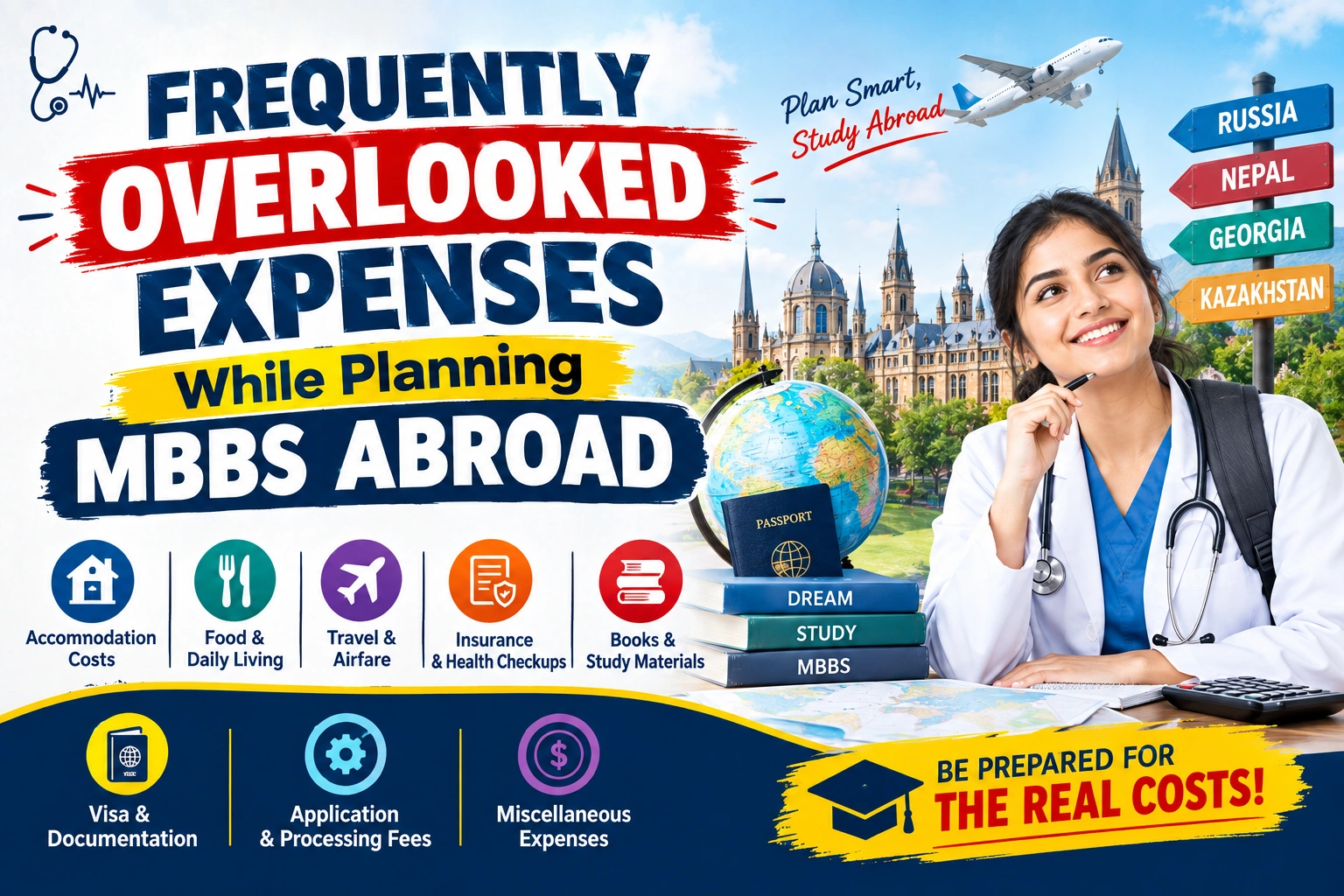
With good budgeting, students can comfortably manage their living expenses including room and board, as well as transportation, books, and healthcare while enjoying their education and can even include leisure and entertainment in their plans. If you are planning to study in countries like Russia, Georgia, Kazakhstan, Uzbekistan, Nepal and Kyrgyzstan, it is vital to know the practical money saving tips.
For complete admission guidance, students can view MBBS Advisor to get the current information on universities, their eligibility criteria, entrance exams, and admission procedures along with country-specific MBBS options. It is also important for students to know the latest NEET eligibility criteria, as students must qualify the NEET exam to be allowed to pursue their medical studies abroad.
Importance of Financial Management for Overseas MBBS Students
The financial burden MBBS students face does not ease even normally over the duration of the five to six year MBBS course once they pay their tuition fees. There are many monthly living expenses that need to be covered.
Some of the benefits of a good financial plan include the following:
- Less stressed.
- Less reliance on emergency funds.
- Money can be saved to take the FMGE or NEXT licensing exam.
- Unplanned medical or travel expenses can be covered.
- Students can concentrate on studies and not on finances.
- International medical education is more attainable for students developing modest spending habits.
Understand the Cost of Living Before Choosing a Destination
The cost of living varies quite a lot and will impact the total cost of your medical education. While your recruitment program's country may have similar tuition costs, living expenses may vary drastically based on how you eat, how you travel, your lifestyle in the country, and where you stay.
To make an educated decision, students should look into the cost of:
- Hostel stays
- Rent
- Food
- Utilities
- Internet
- Transportation
- Health insurance
- Supplies
- Personal Expenses
Aside from the above costs, students can also look at the World Directory of Medical Schools (WDOMS) for reliable information about global medical schools.
Prioritize Staying in University Hostels
University hostels are a great way for students to save on living expenses that also provide additional benefits.
Hostel stays provide:
- Lower cost
- Increased security
- Better/furnished rooms
- Classroom proximity
- Less transportation cost
- Opportunity to meet other international students
Many universities also include utilities (like electricity, heating and internet) which makes budgeting easier.
Cook Your Own Meals Instead of Eating Outside
Food costs can really add up when you eat restaurant food. A good way to eat healthy and save is to cook at home.
There are several ways to decrease costs.
- Buy groceries in bulk.
- Share kitchen items with your roommates.
- Plan meals and prepare them in advance.
- Take advantage of cheaper homemade meals and avoid expensive meal prep.
- Buy seasonal fruits and vegetables.
Buying groceries in bulk and meal prepping saves money and time.
Have Meals Cooked At Home
Meals cooked at home save time and money, and are healthier.
Use Student Discounts
Most countries offer student discounts, as long as the student is enrolled.
Discounts are available for travel, museums, libraries and more. Discounts help reduce expenses during an MBBS program.
Walk or Ride a Bike
Transport is an expense that accumulates easily. Walk or bike to class to reduce expenses.
Use Your Campus
Living on or near campus helps reduce the cost of transport, and saves time you would use to study.
Buy Second-Hand Books
By saving these costs you can save thousands of rupees.
Monthly Budget
Creating a monthly budget helps to plan for costs, decreases spending, and helps in identifying any issues while planning the budget.
Your budget should have a section for each expense category, along with the estimated percentage of your monthly budget you will allocate to each. The following is an example of a monthly expenses budget:
|
Expense category |
Monthly budget percentage |
|
Accommodation |
35% - 45% |
|
Food |
20% - 25% |
|
Transport |
5% - 10% |
|
Utilities |
5% - 10% |
|
Study Materials |
5% - 8% |
|
Healthcare |
5% |
|
Personal Expenses |
Remainder of the budget |
Budgeting apps can help track expenses and cultivate a sense of financial discipline.
Financial Discipline
Budgeting apps can help students develop financial discipline.
Don't spend money on things you don't need.
It can be tempting to spend money on clothes, gadgets, and dining out when you are in a new country. Furthermore, many people spend money on subscriptions that they really don't need.
Before buying something, you should ask yourself:
- Is this actually something that I need?
- Can I buy this later?
- Is there a cheaper option?
- Is this going to blow my budget for the month?
The answers to the above questions should be buying things that you are going to be able to buy later, that you really don't need, that is going to blow your budget for the month, etc.
The expenses that you pay for each month will add up over the years while you are in school to become a doctor.
Some international students share expenses to save money. Some expenses that can be shared between students are:
- rent
- groceries
- pots and pans
- the internet
- utilities
- transport.
Buying things together can help save money while still fulfilling your needs.
Transfer Your Banking to the Country You're Studying In
If students do not transfer their banking to the country where they are studying, they will pay the fees that come with international bank transfers over and over again.
Some of the benefits of opening a new account include:
- a lower international transfer fee
- receiving your scholarship directly to your new local bank
- faster transfers
- better exchange rates
- easier online shopping
- international bank transfers.
Manage Electronics and Mobile Expenses
Electronics can be a big expense when students first move to a new country, especially when students buy these electronics to try to make their lives better.
To avoid this expense, buy things like:
- a new laptop
- a new phone
Students need to:
- Use Uni Wi-Fi
- Use student mobile plans
- Avoid buying data packs
- Use apps for calling over the internet (e.g. whatsapp)
- Compare telecom companies
These habits will save students cash!
Maintain Emergency Savings
You never know what the unexpected costs (both large and small) may be - sickness, travel, or even some school requirements.
Experts agree that at least 3 months of expenses kept in savings will be a good emergency fund to give peace of mind to a student during these unexpected costs.
Students should learn the WHO guidelines for the country they are in for what health care is available (especially for what vaccines and preventive care is offered) in the country they are in.
Learn the Medical Education Rules of the Country
For Indian students hoping to come back to India to practice Medicine, be sure the school you are picking to study Medicine is following the new rules from the National Medical Commission (NMC) so that it is not a problem for you to sit for the Licensure Exams and complete your postings. Always check the rules yourself for a school before you decide to go there.
Use the Internet to Prepare for Your Studies
Instead of buying every study resource, students can use:
- Uni digital libraries
- Open-access journals
- Online anatomy tools
- Medical lecture videos
- Clinical case discussion sites
These may provide great educational materials for little or no cost!
Pick Countries with Good Quality Education that are Cost Effective
There are many countries that have great quality learning of Medical Education and have a lower overall living cost. Students should look at these costs and how they affect their budget daily along with the cost of tuition before they decide.
Some economical international travel options are:
- Russia
- Georgia
- Kazakhstan
- Kyrgyzstan
- Uzbekistan
- Nepal
- Tajikistan
With MBBS Abroad, students have access to comprehensive comparisons of countries, information about their universities and programs, admission assistance, and a detailed fee structure, allowing them to budget and plan accordingly.
Know Your Chances Before You Apply
Many students apply to programs with a poor understanding of their chances of being accepted with their NEET scores.
NEET Rank Predictor enables students to determine what their rank will be to narrow down their options for medical universities, thus avoiding wasteful applications and allowing for better admission strategy.
Money Saving Habits That Last
Students are able to benefit from money saving habits as soon as they begin their MBBS programs.
These habits include:
- Tracking all expenses
- Setting a savings goal
- Price comparisons
- Public transport
- No impulse loans
- Careful planning for trips
- Use of student discounts
- Home cooked meals
- Material purchases only as needed
These habits reinforce the focus students need to become successful doctors.
Conclusion
Choosing an economical medical school and a budget conscious approach to living, financial management, and living arrangements is as important as choosing a medical school. Some examples include: affordable hostels, home-cooked meals, student discounts, shared expenses, and an emergency fund.
Students should consider many factors before deciding to enroll at a university. These include researching the university's courses and services, understanding the cost of living, and verifying that the university is an accredited institution. In addition to the opportunities that MBBS Advisor can provide, students should continue to familiarize themselves with the latest NEET requirements, compare overseas education options using MBBS Abroad, predict their NEET score ranking and assess their admission prospects with the NEET Rank Predictor, and check the official WHO, NMC, and WDOMS sites regularly. Studying MBBS abroad can be a financially viable option that students can take advantage of with the proper planning and budgeting strategies.