 Russia
 Belarus
 Georgia
 Kazakhstan
 Kyrgyzstan
 Uzbekistan
 China
China Nepal
Nepal Bangladesh
 Poland
 Romania
 Slovakia
 Hungary
 N. Macedonia
 Vietnam
 Canada
 Armenia
 UK
UK Australia
 USA
USA Ireland
 Germany
 New Zealand
 Italy
Italy France
 Singapore
 Netherlands
 Sweden
 Switzerland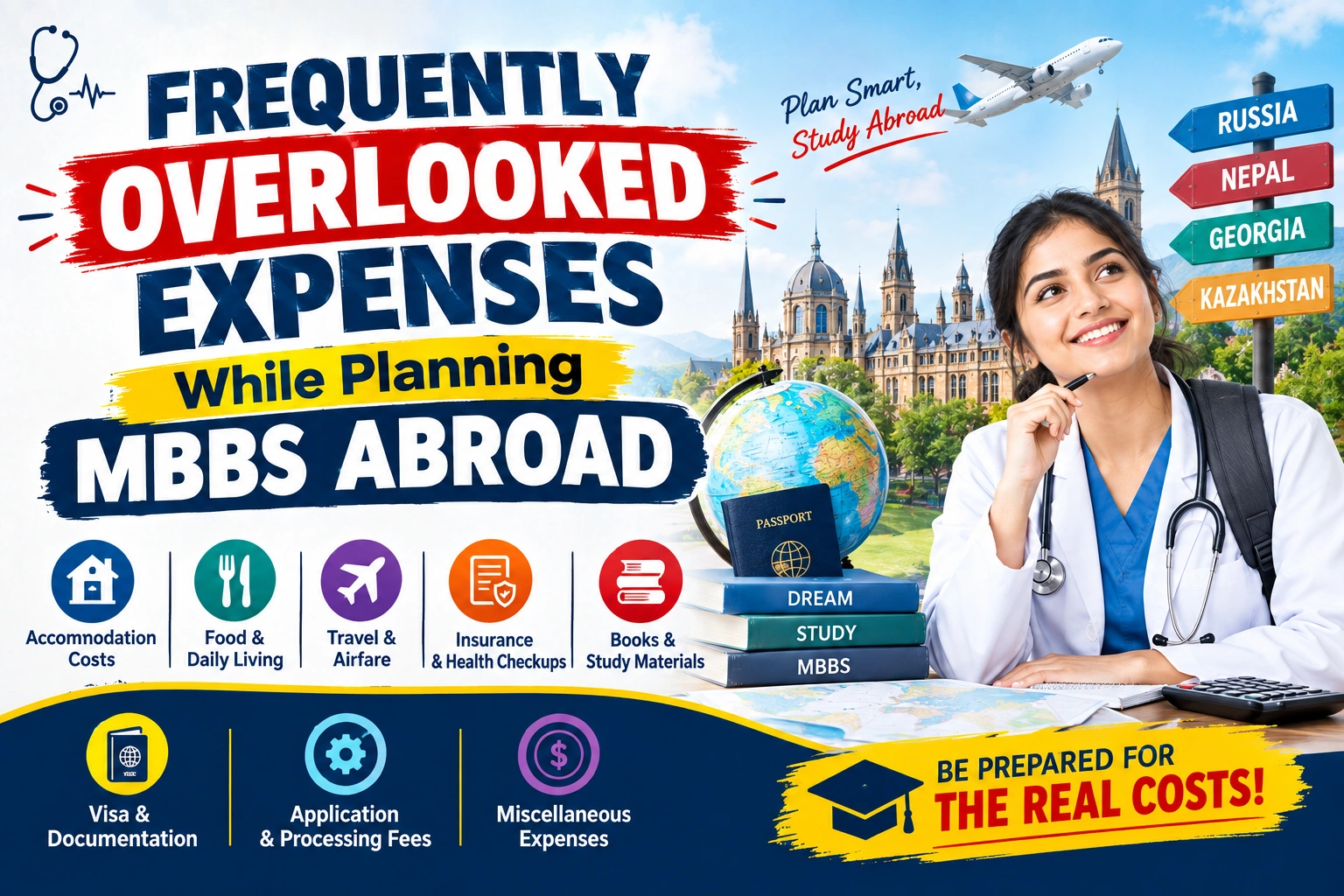
The university says the annual tuition is USD 4,000. Parents multiply it by six, add a hostel estimate, and feel the budget is ready. Then come visa renewals, insurance, flights, currency charges, hostel deposits, clinical equipment, winter clothing, and licensing-exam preparation. The original calculation? Not even close. At MBBS Advisor, we regularly see families compare universities using only tuition. That number matters, obviously, but it may represent barely 60–70% of the real expenditure in some destinations. A proper medical education budget should cover every academic year, daily living, regulatory paperwork, travel, emergencies, and the return-to-India pathway. The small expenses aren’t always small after six years.
Application and Document Preparation Costs
Before the university receives its first payment, a student may already have spent money on the passport, medical tests, photographs, notarisation, apostille, certified translations, police clearance, and courier services.
Application-stage costs commonly include:
- Passport application or renewal
- University application charge
- Document notarisation
- Apostille or legalisation
- Certified translation
- Medical fitness certificate
- HIV or other prescribed tests
- Police clearance certificate
- International courier
- Consultant or processing charges
Depending on the country and document requirements, this stage may cost roughly ?10,000–50,000 or more. Multiple university applications increase the amount. Check whether the university accepts digital documents initially. Sending original certificates abroad by courier before receiving verified instructions? Risky and often unnecessary.
Invitation Letter and Admission Processing
Here’s a charge many families don’t recognise immediately. Some countries require an official invitation or visa-support document after the university issues admission. The invitation may be included in tuition, charged separately by the institution, or included within a consultant’s package. Approximate processing charges can range from USD 50 to USD 500, depending on the country and university. Ask who issues the invitation, how long it remains valid, and whether the charge is refundable if the visa is refused. A consultant-created “invitation fee” should match an identifiable university or government process. MBBS Advisor recommends requesting an itemised admission invoice rather than accepting one combined figure called “processing.” That word can hide almost anything.
Visa Fees and Annual Extensions
A student visa isn’t always issued for the entire medical course. In several destinations, students receive shorter validity and must complete extensions, residence registration, or annual renewal. One visa payment appears manageable. Six years of renewals, photographs, medical reports, translations, university service charges, and immigration registration can become significant.
A student may need to budget for:
- Initial visa application
- Visa-support documents
- Residence registration
- Annual visa extension
- Multiple-entry permission
- Address registration
- Immigration card replacement
- Passport renewal
- Late-registration penalties
These expenses vary widely, but a yearly reserve of approximately USD 100–500 may be sensible until the university provides an exact figure. Don’t assume “visa included” means every extension is included. Ask for the years covered.
Currency Conversion and Bank Charges
I’ve noticed families discuss tuition down to the last dollar and then ignore the exchange rate completely. If the university charges USD 5,000 annually and the rupee weakens by ?4 against the dollar, the family pays an additional ?20,000 that year without any increase in the university’s official fee. Across several payments, currency movement can add lakhs.
Banks and payment platforms may also charge:
- Foreign exchange margin
- SWIFT fee
- Correspondent bank fee
- Service charge
- Goods and Services Tax on applicable forex services
- Card transaction markup
- Cash withdrawal fee
Ask the university which currency it accepts and whether local-currency payment is possible. Compare the bank’s final payable amount, not merely the public exchange rate shown online. MBBS Advisor suggests keeping a 5–10% currency buffer in a long-term foreign education budget. Exchange rates don’t follow family spreadsheets.
Tuition Increases After the First Year
The first-year fee gets the largest font in the brochure. Later-year charges sometimes appear in the smallest. Universities may revise tuition annually, charge different fees during clinical years, or introduce new administrative and laboratory costs. A “fixed package” should be supported by a signed university document explaining what remains fixed and what can change.
Request a year-wise table covering:
|
Academic year |
Tuition |
University charges |
Clinical or lab fees |
|
Year 1 |
Confirm officially |
Confirm |
Confirm |
|
Year 2 |
Confirm officially |
Confirm |
Confirm |
|
Year 3 |
Confirm officially |
Confirm |
Confirm |
|
Year 4 |
Confirm officially |
Confirm |
Confirm |
|
Year 5 |
Confirm officially |
Confirm |
Confirm |
|
Year 6 or internship |
Confirm officially |
Confirm |
Confirm |
Never calculate a six-year total from one year’s online fee unless the university confirms the remaining years.
Hostel Deposits and Utility Bills
Is hostel accommodation included in the package? Sometimes. Electricity, heating, bedding, laundry, Wi-Fi, and vacation stays may not be. University hostels in lower-cost destinations can range roughly from USD 500 to USD 1,500 annually. In Georgia or higher-cost cities, accommodation can be substantially more. Private apartments may require one or two months’ deposit and an agent commission.
Frequently missed accommodation costs include:
- Refundable security deposit
- Bedding and mattress
- Electricity
- Heating
- Water
- Wi-Fi
- Laundry
- Kitchen equipment
- Hostel registration
- Summer or vacation stay
- Damage deductions
Get recent photographs of the exact hostel building allocated to international students. A renovated block may have a different fee from the one shown in an old advertisement.
Food Costs Beyond the Indian Mess Package
The mess says ?10,000 per month. Then breakfast isn’t included, Sunday dinner is separate, and delivery to the hostel costs extra. Food may cost approximately USD 100–300 per month in lower-cost medical destinations, depending on the city, diet, and cooking habits. Students in Georgia or major capital cities may spend more.
Ask an Indian mess provider:
- How many meals are included?
- Are weekends covered?
- Is delivery charged separately?
- Are vegetarian and non-vegetarian plans different?
- Does the mess close during vacations?
- Can the subscription be paused?
- Are special meals charged separately?
Students who cook can save money, but the initial kitchen setup—utensils, cooker, storage boxes, spices, and cleaning supplies—also costs something. Cheap groceries. Expensive food delivery. The usual story.
International Flights and Baggage
One return flight each year can add several lakh rupees across a six-year course. Yet airfare is often missing from admission packages because it doesn’t go to the university. A return journey may cost roughly ?30,000–90,000 or more, depending on destination, season, departure city, connections, and baggage. Travel around Diwali, summer holidays, or semester breaks may cost more.
Look beyond the ticket price. Check:
- Checked baggage allowance
- Cabin baggage
- Transit visa
- Airport transfer
- Date-change charge
- Refund policy
- Overnight transit accommodation
- Extra baggage rate
Medical books and winter jackets are heavy. A low-cost ticket with 15 kilograms of baggage can become surprisingly expensive at check-in.
Winter Clothing and Initial Setup
Students travelling to Russia, Kazakhstan, Kyrgyzstan, Georgia, Uzbekistan, or other cold destinations need clothing designed for local winter conditions. Thermals, a proper jacket, gloves, waterproof footwear, warm socks, and bedding may cost ?15,000–40,000 or more. Buying everything in India isn’t always cheaper, especially if the clothing isn’t suitable for the destination’s temperatures.
The first month also brings spending on:
- Local SIM
- Transport card
- Groceries
- Utensils
- Room storage
- Extension board
- Toiletries
- Basic medicines
- Cleaning supplies
- Local-language books
MBBS Advisor recommends keeping a first-month setup reserve of at least USD 300–800, depending on the country and accommodation.
Health Insurance and Medical Treatment
Medical insurance may be compulsory for the visa, university, or residence process. The cheapest policy might satisfy paperwork without covering enough actual treatment. Review emergency care, hospitalisation, outpatient visits, medicines, dental emergencies, repatriation, and exclusions. Annual student insurance may cost approximately USD 50–500 or more, depending on the destination and coverage. The World Health Organization provides international health guidance, but it doesn’t replace a valid local insurance policy. Students should know which hospitals accept their plan and whether treatment is cashless or reimbursed later. Budget separately for medicines, eye tests, dental treatment, and illnesses not covered by insurance. Doctors get toothaches too.
Clinical Equipment and Academic Materials
The stethoscope is only the beginning. Students may need laboratory coats, scrubs, dissection instruments, gloves, masks, medical shoes, notebooks, printing, online resources, and clinical equipment. Universities don’t always include these items in tuition. A first-year academic setup might cost ?10,000–30,000. Clinical years can bring additional expenses for instruments, hospital transport, vaccination, or departmental requirements. Textbooks deserve planning too. Buying every recommended book new can become expensive. Check the university library, lawful digital access, senior-student book exchanges, and local second-hand options. One standard textbook you read is better than six untouched books decorating a hostel shelf.
Examination Retakes and Extended Study
This expense is uncomfortable, so families rarely include it. Students can fail a subject, miss an examination because of illness, or need to repeat a semester.
Possible charges include:
- Repeat examination
- Remedial classes
- Subject re-registration
- Additional semester tuition
- Extended hostel stay
- Visa extension
- Extra insurance
- Revised return flight
An additional semester can cost several thousand dollars after tuition and living expenses. Understand the university’s promotion and repeat-exam policy before admission. Ask whether failure in one subject delays the entire year. Also check how many attempts are permitted.
Local-Language Classes
English-medium medical education doesn’t guarantee English-speaking patients. In Russia, Kazakhstan, Kyrgyzstan, Uzbekistan, Georgia, and several other destinations, local-language ability becomes important during hospital postings. Basic language classes may be part of the curriculum. Additional tutoring, books, or private lessons can cost extra. Students who ignore the language may later spend money and time catching up before clinical rotations. This isn’t merely a lifestyle expense. It affects patient history, physical examination, and clinical learning. Honestly, local language is one of the cheapest investments in a foreign medical degree.
FMGE or NExT Preparation
The university teaches its approved medical curriculum. It may not cover Indian public-health programmes, national treatment protocols, or licensing-exam patterns in sufficient detail. FMGE remains relevant for eligible foreign medical graduates, while NExT-related implementation should be followed through current notices from the National Medical Commission. Students may purchase online classes, question banks, revision notes, or offline coaching after returning. Online preparation can cost roughly ?15,000–80,000 or more. Offline coaching, accommodation, food, and travel may take the total well beyond ?1 lakh. The MBBS Abroad budget should therefore include post-graduation examination preparation, application charges, document verification, and travel to the test city. Graduation isn’t always the last academic expense. Often, not even close.
Recognition Errors: The Biggest Hidden Cost
A wrong programme can cost years rather than thousands.Indian students must verify the university, course duration, internship, clinical training, teaching language, and local licensing eligibility against current NMC regulations. Don’t accept “NMC approved” as a complete explanation. The World Directory of Medical Schools can provide directory information about a medical school, but WDOMS states that listing doesn’t itself constitute recognition, accreditation, or endorsement. Before paying, MBBS Advisor recommends obtaining the official curriculum, programme-accreditation details, internship regulations, and written confirmation of local registration eligibility. A cheap non-compliant course is the most expensive option on the table.
NEET-Related Expenses and Eligibility
Indian students seeking a primary medical qualification abroad generally need to qualify NEET under the applicable regulations. The category-wise cutoff changes each year, so use the official NEET portal for current results and qualifying criteria. Students can also review the NEET guidance available for admission planning, while treating NTA documents as the official source for examination rules. The cost of NEET preparation, application, travel, and possible repeat attempts may be part of the pre-admission budget. More importantly, don’t pay a non-refundable foreign university fee before confirming the student’s NEET status and Class 12 eligibility. Admission urgency doesn’t cancel eligibility.
Emergency Funds and Unplanned Travel
A family emergency, sudden illness, passport loss, missed connection, political disruption, or hostel closure can require immediate money. Students should maintain an emergency reserve equal to at least two or three months of ordinary living expenses. This fund should remain separate from tuition and daily spending. Depending on the country, a reasonable reserve may be USD 600–1,500. Students should have access to more than one lawful payment method and keep a secondary bank card separately. An emergency fund feels unnecessary until the exact day it isn’t.
A Realistic Country-Wise Cost Buffer
Different destinations need different buffers because tuition, flights, climate, and living costs vary.
|
Destination |
Commonly overlooked six-year buffer |
|
Kyrgyzstan |
?3–6 lakh |
|
Kazakhstan |
?3–7 lakh |
|
Uzbekistan |
?3–6 lakh |
|
Russia |
?4–8 lakh |
|
Georgia |
?5–10 lakh |
|
Tajikistan |
?3–6 lakh |
These are broad planning amounts beyond basic advertised tuition and hostel figures. Individual spending can be lower or much higher. MBBS Advisor suggests adding at least 15–20% to the initial full-course estimate. If the family budget works only when nothing changes for six years, the budget is too tight.
Frequently Asked Questions
How much extra should families keep beyond the package?
A reserve of 15–20% above the advertised full-course amount is sensible. Higher-cost countries, private accommodation, and frequent travel may require more.
Does an MBBS package usually include flights?
Usually not. Some consultants may include the first outbound ticket or airport pickup, but annual return travel is commonly separate.
Are visa and insurance one-time expenses?
Not always. Students may need annual visa extensions, residence registration, insurance renewal, medical tests, and document processing.
Is hostel food included in the accommodation fee?
Usually not unless the university clearly states otherwise. Hostel, mess, electricity, Wi-Fi, laundry, and deposits may be billed separately.
Should students buy FMGE coaching in the first year?
Not necessarily. Early students should focus on university subjects and use limited MCQ practice. A structured paid programme may become more useful during middle or later years.
What is the biggest financial mistake?
Selecting a university only by first-year cost without verifying the complete course, internship, clinical training, fee increases, and licensing eligibility.
Conclusion
Tuition is easy to compare because it appears in every brochure. The real cost hides in the quieter lines: exchange rates, renewals, flights, insurance, food, clinical tools, retakes, exam preparation, and emergencies. Calculate every year. Add a buffer. Then ask whether the family can sustain the amount without depending on uncertain part-time work or last-minute borrowing. MBBS Advisor can help families compare the full financial and regulatory picture before paying an admission fee. A realistic budget may make the first discussion slightly uncomfortable. Much better than discovering the missing expenses halfway through medical school.