 Russia
 Belarus
 Georgia
 Kazakhstan
 Kyrgyzstan
 Uzbekistan
 China
China Nepal
Nepal Bangladesh
 Poland
 Romania
 Slovakia
 Hungary
 N. Macedonia
 Vietnam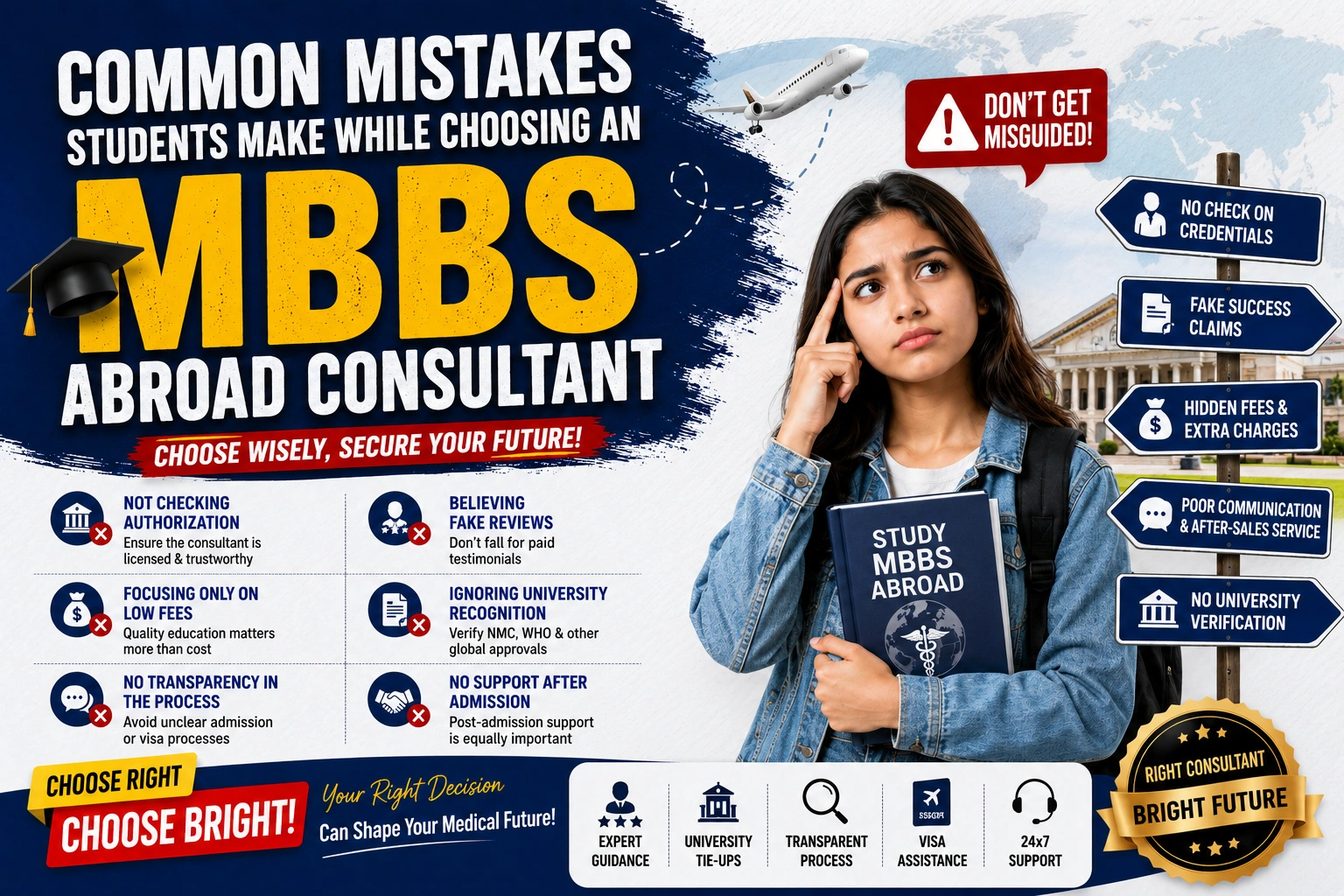
An MBBS abroad has become a popular choice for Indian students. Thousands of students look for opportunities abroad each year for medicine courses with internationally accepted education systems with modern infrastructure and low tuition. Students should take the total costs of studying MBBS abroad into consideration as much as they take into consideration evaluating the admission processes when deciding on a final choice.
Studying medicine abroad includes other costs besides tuition. Hostel, food and transportation costs as well as visa, health insurance, and other living costs should all be considered during financial planning to avoid unexpected last minute costs.
For those seeking guidance, MBBS Advisor is a way to access accurate comparisons among the universities, the admission processes, and accurate information to maximize the chances of a favorable outcome in the decision-making process. Country specific information, eligibility and fee structures for studying MBBS abroad are also accessible on this site.
Total Cost of MBBS Abroad
The only cost many students think about when studying medicine abroad is tuition. Total costs during the 5 to 6 years of the MBBS program are actually much higher.
Complete cost lets students:
- Budget appropriately.
- Choose the most affordable university.
- Select the country with the least cost.
- Minimize financial concerns.
Budgeting appropriately takes the stress of additional costs away and helps students to focus on studies.
Tuition Costs for Studying MBBS Abroad
Tuition costs are the main element of studying MBBS abroad. Factors that affect tuition costs are program length, country of study, private vs. public university, and clinical/laboratory resources.
Typically, studying MBBS abroad is more economical than studying MBBS at a private institution in India. Many universities develop medical programs that adhere to international standards while maintaining an acceptable level of quality.
Some factors that affect tuition costs are:
- Country of study
- University reputation
- Public vs. private university
- Duration of course
- Clinical training resources
Before choosing a university, students must evaluate the complete tuition fee structure and not just the first-year tuition fee.
Costs for Hostels
Studying MBBS abroad also incurs the cost of finding accommodation. Most universities have hostels on or near their campuses, which is more convenient for international students.
Hostel fees are determined by room type (single, double, or shared), bathroom type (attached or common), and other amenities (air conditioning and heating, internet and laundry services, security, proximity to the academic building, etc.).
During the first few years of study, university hostels are a more economical and safe option compared to private apartments.
Finalizing admission requires students to check if the host charges include utilities (internet, water, electricity, and maintenance).
Costs of Food and Daily Living
Daily living costs and the cost of food vary by country and depend on the student's lifestyle. Most international students studying MBBS abroad find that choosing university hostels and preparing their meals helps them maintain a balanced budget.
Here are a few common expenses:
- Food & Groceries
- Transportation
- Data
- Internet
- Personal expenses
- Laundry
- Entertainment
- School Supplies
Living in a bigger city generally means spending more money, but a good budget plan can limit the spending.
Transportation Expenses During MBBS Abroad
Transportation costs are generally low in the countries that are popular with Indian medical students.
Here are the popular transportation methods:
- Local bus
- Metro
- University Shuttle bus
- Taxi (rarely)
Some university campuses are a walkable distance from the housing, which saves the cost of transportation.
Health Insurance Costs
International students have to get health insurance for their studies.
Policies usually include:
- Emergency treatment
- Hospital stays
- Checkups
- Injuries
- Medicine
This helps keep the cost of studying in another country from getting out of control.
Visa and Document Expenses
Many things have to be done for the proper legal documentation to study in another country.
Some of these costs are:
- Student Visa
- Passport
- Medical fee
- Visa fee
- Document certification
These things are done once, but need to be a part of the education budget.
Travel Expenses for MBBS Abroad
Students have to plan how they are going to get to their destination.
Some costs are:
- One way ticket
- Round trip tickets for vacations
- Baggage fees
Booking flights in advance can help reduce travel costs.
Study Materials and Medical Equipment Costs
Medical students have to buy a lot of study materials. Some universities even have a list of materials that need to be purchased.
Students also spend money on:
- Medical kits
- White coats
- Stethoscopes
- Notebooks
- Instruments
The costs add up, but are relatively smaller than tuition.
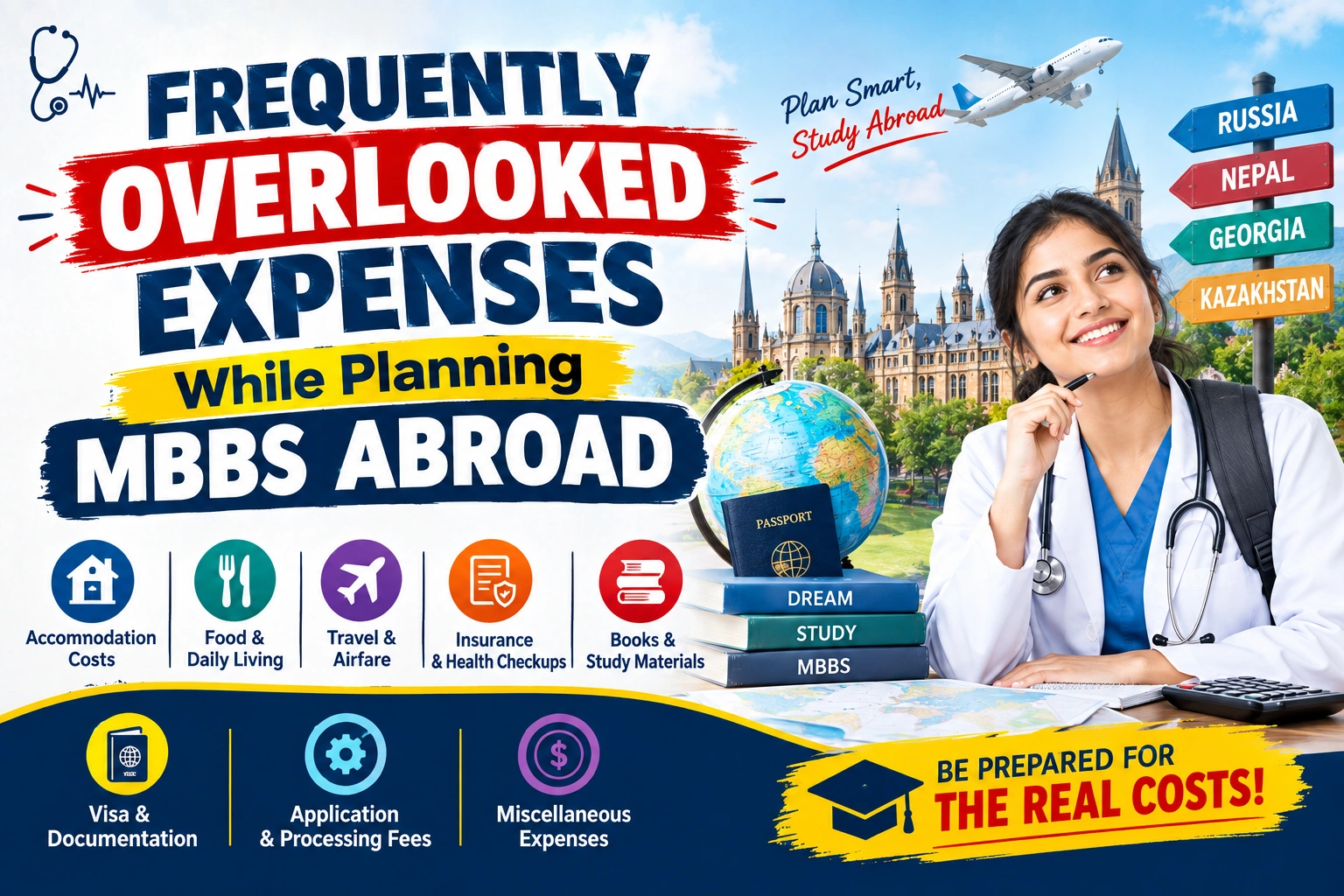
Overlooked Costs When Studying Abroad
Many students do not factor the smaller costs into the overall costs of studying abroad. This includes:
- Residence permit renewal costs
- SIM and local registration costs
- Winter attire
- Student activity and banking fees
- Subscription costs for internet
- Personal healthcare
It is advisable to plan the costs of these additional outliers to avoid unforeseen costs.
How to Save Money During MBBS Abroad
Restricted spending during and after the admissions process can lower outflows.
Some common suggestions are:
- Select affordable universities.
- Prefer university hostels to private hostels.
- Prepare meals.
- Use public transport.
- Purchase used textbooks.
- Schedule trips in advance.
- Identify preferred spending limits.
Minimizing spending during the course of study can reduce the cost of the course.
Significance of NEET for MBBS Abroad
NEET is a requirement for Indian students to practice medicine in India after they obtain their overseas degree.
Before applying, students should use the NEET Rank Predictor to set realistic expectations for possible admissions based on the predicted NEET score. This tool helps students shortlist universities.
Exiting NEET allows students to join many overseas medical programs.
Confirm Validity of Medical Schools Before You Apply
It is critical to only apply to internationally accredited medical schools when going abroad to study.
Students should check that schools they are interested in are accredited by:
- National Medical Commission (NMC)
- World Directory of Medical Schools (WDOMS)
- World Health Organization (WHO)
Studying at an accredited school enhances the degree's acceptance globally and aids in the fulfillment of future medical licensing in different countries.
How Important is the Correct Counsel?
The correct university selection is beyond simply comparing the costs. There are many factors to consider such as the school’s accreditation, their clinical exposure, available internships, infrastructure, the faculty, the safety, and the cost of living as well.
Well-established counseling platforms, like MBBS Advisor, enable students to analyze different universities, comprehend the eligibility and admission requirements, and provide the most current information on MBBS Abroad programs. This counseling allows students to define the school that meets their financial and academic requirements.
Conclusion
Studying an MBBS abroad is an expensive proposition. The cost of tuition is just one of many factors. Students should include accommodation, food, transport, insurance, visas, travel, books, and everyday expenses. Knowing these factors before starting the program will allow students to budget accordingly and not add stress to their education.
Prior to submission, candidates must scrutinize the accolades of the universities, check their acknowledgment by NMC, WDOMS, and WHO, qualify NEET, and take counsel from MBBS Advisor. Selecting the proper institution to create an adequate plan, and undertake research and investigations, allow students to pursue MBBS abroad with results that have a positive impact on their finances and future.