
 Russia
 Belarus
 Georgia
 Kazakhstan
 Kyrgyzstan
 Uzbekistan
 China
China Nepal
Nepal Bangladesh
 Poland
 Romania
 Slovakia
 Hungary
 N. Macedonia
 Vietnam
 Canada
 Armenia
 UK
UK Australia
 USA
USA Ireland
 Germany
 New Zealand
 Italy
Italy France
 Singapore
 Netherlands
 Sweden
 Switzerland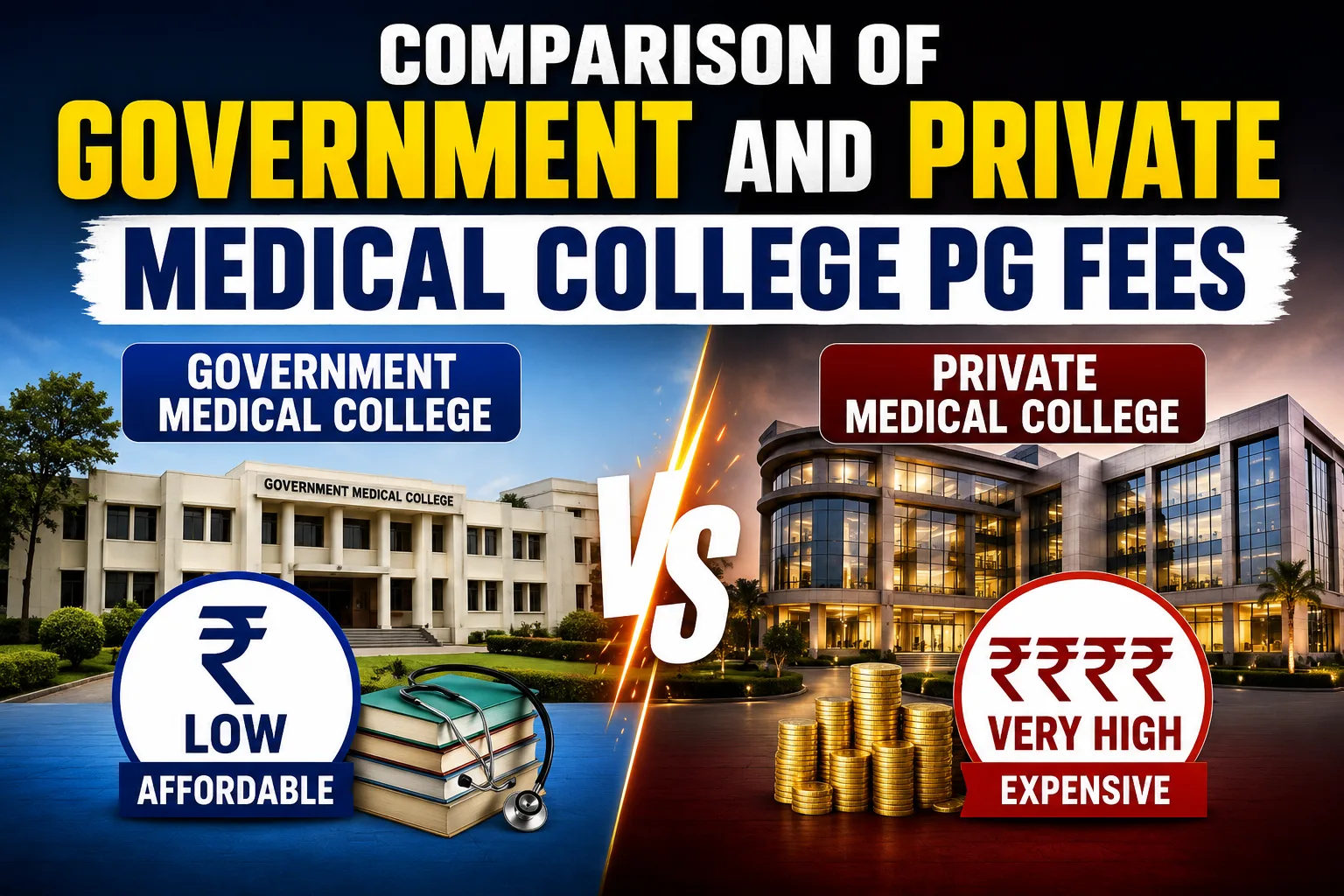
Obtaining a postgraduate medical degree following an MBBS is an important step for aspiring doctors. As they are high-stakes decisions, many students and their families have concerns regarding the costs of obtaining MD, MS, DNB, or other specialized courses. Although it is difficult to secure a PG seat via the NEET PG exam, it is important to understand the fee structures for government and private medical colleges to help make the most financially informed decision.
Many students and their families only consider the rankings and the likelihood of being offered a place in the course and neglect the long-term financial implications of their choice. The variation in government and private medical college PG fees is most pronounced for course specialization, college reputation, and state regulatory controls, with differences of several lakh to even several crores.
Students who are preparing for the NEET exam and are developing their medical career pathways can find valuable guidance on MBBS Advisor, and remain up to date with admission information via the NEET section. Students may also use the NEET Rank Predictor to assess the standing they are likely to achieve in the NEET exam.
This guide aims to help students select the best option for them by examining government vs. private medical PG college fees and ROI by factoring in the hidden costs, educational standards, and affordability.
About Medical PG Education in India
India’s Postgraduate Medical Education consists of several branches like the
- MD (Doctor of Medicine)
- MS (Master of Surgery)
- DM (Doctorate of Medicine)
- MCh (Master of Chirurgiae)
- DNB (Diplomate of National Board)
Admission to these branches is based on the NEET PG scores. Fee structures also vary on whether the institution is government or privately managed.
The standard of education is assessed by the National Medical Commission (NMC). Government or privately run approved/ recognized medical colleges have to meet the basic requirements of the NMC.
About PG Medical Fees
Most people assume MBBS education is the most expensive part of medical education. This is far from reality. PG medical education is much more expensive, especially in the case of private institutions.
This is due to:
- A limited number of PG seats compared to MBBS seats
- MBBS offers more clinical branches
- Get charged more for certain specialties
- Incur more hire and clinical training
- Have state based fee regulation policies
Government college MBBS graduates still face financial barriers when pursuing private college PG education.
Government Medical College PG Fees
Government medical colleges are the most affordable option for PG medical education.
Common Fee Range
Annual fees can be between:
- 10,000 to 1,50,000
- 50,000 to 5,00,000 for the total courses
There are heavily subsidized states where government medical colleges are much more economical compared to private medical colleges.
Benefits of Choosing Government PG Colleges
Affordability
The most notable benefit is affordability. Students are able to complete their specialization without heavy student loans.
Favorable ROI
Doctors are able to recoup educational costs in a reasonable time frame given low government college tuition.
Combined with heavy patient loads, government hospital systems provide ample opportunity to gain clinical experience.
Due to the large patient loads, government hospitals offer ample opportunities to gain hands-on experience.
Due to decades of excellence in medical education and research, a number of government institutions have solid academic reputations.
What to Expect from a Government Medical College
While government colleges are more affordable, students can expect to incur the following costs:
- Hostel accommodation
- Exam fees
- Library fees
- Research costs
- Study aids
- Conference attendance costs
The total cost still remains significantly lower than private college fees.
PG Opportunities in Private Medical Colleges
The growth of private medical colleges in the last 10 years means there are now more options for private college PG admissions for students who are unable to secure a government college seat.
Tuition Fee Ranges
Due to a number of factors, private college tier and specialty fees can range from:
- ?10 lakh – ?40 lakh (Non-Clinical Branches)
- ?15 lakh – ?60 lakh (Para-Clinical Branches)
- ?40 lakh – ?2 crore+ (Clinical Branches)
Radiology, Dermatology, Orthopedics, General Medicine, and Pediatrics are among the most popular and therefore expensive courses.
Why Private Medical Colleges are Expensive
Private medical colleges are expensive due to a variety of reasons, including:
- Investments in infrastructure and equipment
- Staff salaries
- High operational costs due to private hospital management
- Limited number of PG seats
Due to low student enrollment, private medical colleges rely exclusively on tuition fees to cover operational costs.
Government vs Private PG Fees: A Direct Comparison
Tuition
Government colleges have affordable tuition compared to their private counterparts. For a government college, MD Medicine may cost a student about ?2 lakh. A private college, on the other hand, may charge upwards of ?80 lakh.
Hostel and Living Expenses
The cost gap in living expenses is relatively smaller.
Government hostels are relatively cheaper, but living expenses depend on the city and individual preferences.
Educational Loans
Private college education requires students to take significantly higher education loans. Students enrolled in government colleges tend to have little to no loans after graduation.
Financial Stress
Government colleges have better fiscal investments. Private colleges, on the other hand, have expensive tuition, creating long-term financial obligations.
Branch Wise Fee Differences
MD General Medicine
Government Colleges
?50,000 – ?5 lakh
Private Colleges
?50 lakh – ?1.5 crore+
MS Orthopedics
Government Colleges
?1 lakh – ?5 lakh
Private Colleges
?40 lakh – ?1 crore+
MD Dermatology
Government Colleges
?1 lakh – ?5 lakh
Private Colleges
?70 lakh – ?2 crore+
MD Radiology
Government Colleges
?1 lakh – ?6 lakh
Private Colleges
?1 crore – ?2.5 crore+
In the case of high-demand specializations, this gap is even larger.
Are Private Medical Colleges Worth the Cost?
It is a case-by-case basis. Losing multiple years of career progress in order to gain entrance to a government medical college could, in some cases, justify the expense of admission to a private medical college.
Factors to consider include age, financial resources, expected future income, specialty preference, career timeline, and availability of education loans (including reimbursement options). Though, if a student selects a high-paying specialty, they will likely cover the educational costs through future income. However, this will take time and careful financial planning.
NEET PG Rank and Fee Affordability
Your NEET score will most strongly affect affordability. A better rank means more:
- Options for state (lower) payment quota
- Government college admission
- Lower tuition
- Scholarships
- Better choice of specialty
With good reason, the best way to reduce the cost of medical education is to work hard to prepare for the NEET. There are many resources available for prospective NEET students. These resources may help students identify options for counseling and remain updated on NEET.
Real Costs of Medical School
Many applicants only compare the cost of tuition, which actually is not the largest cost. Most overlook:
- Housing Costs
- Hostels
- Deposits, Cash Reserves, and Fees
- Books, Online Classes, Subscriptions and Other Learning Resources
- Research Tools and Publications
- Clinical Tools and Apparatus
- Travel Costs
- Conference Fees
- Exams
- Licensing Costs
These costs can easily total several lakhs over the duration of the program.
Government College ROI
When comparing the ROI of government and private colleges, government colleges have a better ROI when considering:
- Minimal educational debt
- Faster financial independence
- Greater savings potential
- More flexibility in career options
Private College ROI
Private College ROI is heavily determined by the specialty of choice, where the doctor practices, and the type of work the doctor will do (especially if the doctor will do other work outside of medicine). Doctors choosing high-paying specialties will be able to cover costs of medical school faster than those in lower-paying specialties.
Impact of NMC Regulations on PG Fees
The NMC is instrumental in standardizing PG medical education in India.
The commission oversees:
- Quality of PG education
- Med schools’ infrastructure
- Medical school faculty (quality, quantity, recruitment)
- Recognition of Med Schools
While fee structures are regulated mostly by state and institutional policies, NMC standards ensure that recognized colleges provide Med education of reasonable quality.
International Recognition and Career Opportunities
For students interested in international practice, it is imperative that their medical qualifications are recognized in the relevant countries.
The WDOMS is an important database of medical schools that are recognized internationally.
Graduates who intend to find work in other countries should confirm that their school is listed in the WDOMS, and that it satisfies the requirements of the country in which they wish to practice.
The WHO has played and continues to play an important role in the development of international standards in health care and medical education. However, recognition of an institution now largely depends on WDOMS and the local regulatory authorities.
Scholarships and Financial Assistance
There are different ways to ease the burden of the cost of a PG qualification.
Education Loans
Almost all of the major banks provide coverage for:
- Tuition Expenses
- Hostel Expenses
- Moratorium Period
State Scholarships
Some state governments grant scholarships based on:
- Merit
- Category
- Economically Weak
Institutional Scholarships
Some institutions provide:
- Merit Scholarships
- Scholarships based on performance
- Research Grants
Explore all resources of financial aid before confirming your admission.
Factors to Consider When Choosing a Government vs. Private PG College
The choice should not be based solely on cost.
Consider:
Quality of PG Education
Assess:
- Quality and quantity of faculty
- Quality and quantity of patients in the affiliated teaching hospital
- Research and training opportunities
Financial Capacity
Assessing:
- Family resources
- Eligible loans
- Future repayment ability
Career Goals
Specializations offer different earning potentials. The branch of medicine chosen based on long-term career goals may be more important than the institution.
Early Planning of Your Medical Career
Some students only start thinking about postgraduate admissions after completing the MBBS. This should happen much earlier.
Students applying for medicine can use MBBS Advisor resources to understand counseling, college choice, fees, and career options.
Students can use the NEET Rank Predictor to assess their chances of admission and check the NEET section for updates.
Conclusion
When comparing the PG fees of government and private medical colleges, the government colleges offer a clear advantage. Their lower tuition fees, excellent ROI, and a lot of clinical work make them the first choice of most applicants.
Private medical colleges are key to providing more opportunities for postgraduate medical education. For students who don't get a government seat and want to specialize, they provide an important option.
The right choice depends on several aspects, like NEET rank, specialization, finances, career goals, and personal priorities. Especially goals, but also opportunities for personal and professional development, should be the focus, rather than the cost of education.