 Russia
 Belarus
 Georgia
 Kazakhstan
 Kyrgyzstan
 Uzbekistan
 China
China Nepal
Nepal Bangladesh
 Poland
 Romania
 Slovakia
 Hungary
 N. Macedonia
 Vietnam
 Canada
 Armenia
 UK
UK Australia
 USA
USA Ireland
 Germany
 New Zealand
 Italy
Italy France
 Singapore
 Netherlands
 Sweden
 Switzerland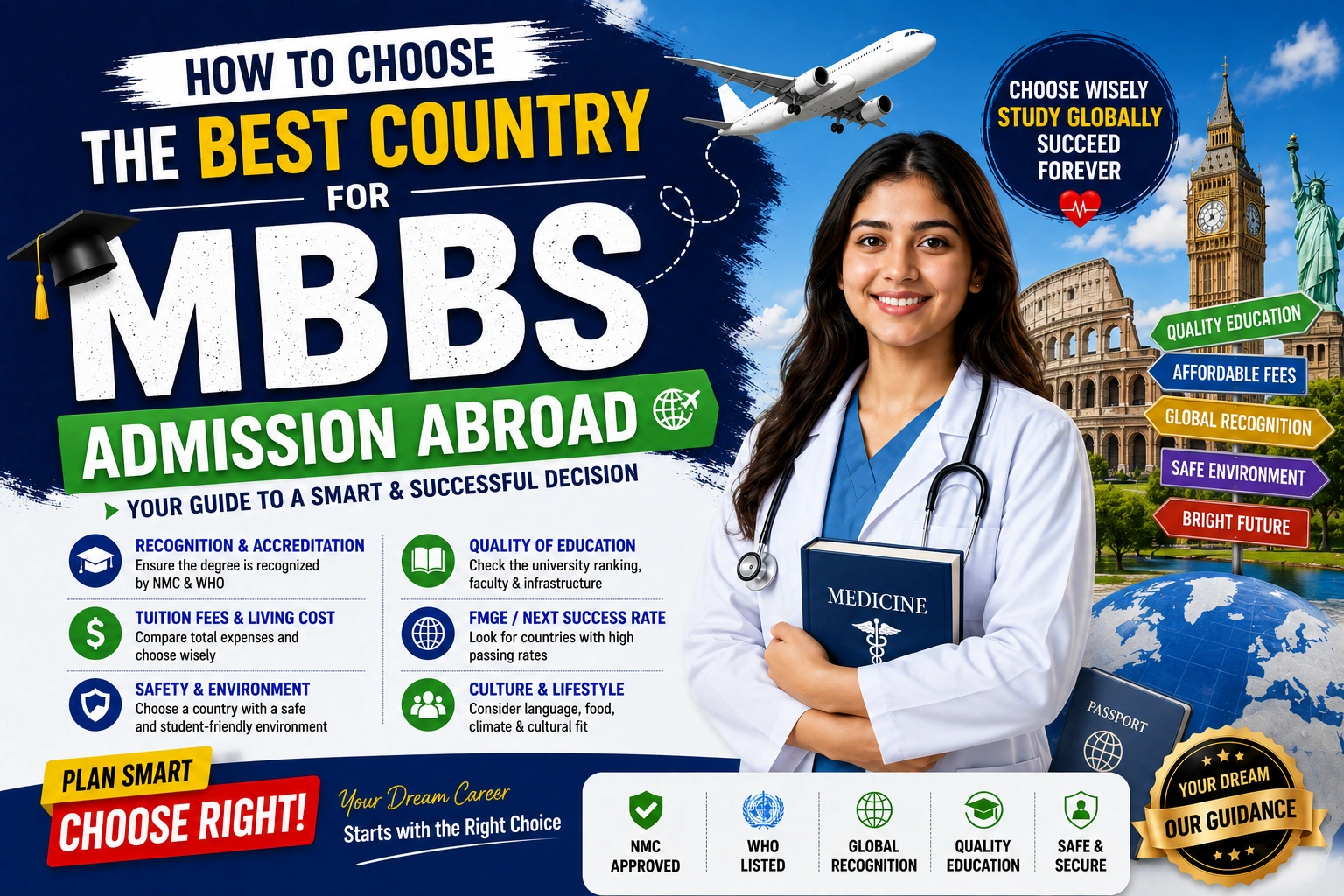
Choosing the best country for MBBS admission abroad is not easy for medical aspirants. It is no secret that the number of Indian students seeking international medical education is increasing due to the fierce competition for available medical seats, the rising costs of private medical colleges, and the limited affordable medical colleges in India. Select the least expensive country for medical education abroad and run the risk of problems later. There is no doubt that you will have problems. For example, the cost of education, the cost of living, access to clinical education, the language of instruction, the safety of the country, the licensing laws, and the potential for future employment. The country you choose can be the best option for you and your friends, but it can also be the worst for the next student. There is no doubt that the goal of MBBS Advisor is to provide you with the best and most current medical education and international opportunities. It is also true that most students are looking for the easiest way to reach their destination. The only way to do this is to find the country with the easiest options for international medical education. Taking the time to do the necessary research is critical. For example, quality, safety, cost, recognition, and academic opportunities. It is also critical to understand how medical colleges will be recognized in your home country. Many students simply base their country choice based on the cost of tuition.
Although affordability is a factor, student needs are shaped by hospital training, university reputation, local laws and licensing examinations.
Recognition of Medical Universities
Recognition is vital when selecting the country and medical school. To ensure the university is recognized, students check if the university is listed in the World Directory of Medical Schools and if the university complies with the medical regulator of the student's home country.
For students from India, checking the most recent guidelines and instructions of the National Medical Commission (NMC) is essential prior to admission. Students should not base their decisions on the information provided by agents and marketing websites. The university, course duration, internship, clinical training and other should be verified.
A university that is recognized and accredited can help students build a solid foundation for their future and their careers. It is also important for students to verify the current information of the university and licensing exams and not rely on old information.
The Quality of Medical Education
The quality of education should be prioritized over cost. There may be countries that provide affordable medical education, and students should verify if the universities have up to date laboratories, teaching staff, and infrastructure.
Medical education has an element of theory and an element of practice. Students should evaluate if universities have hospitals and other resources.
The teaching and training staff should also have a background in the major disciplines such as anatomy, physiology, biochemistry, pathology, pharmacology, microbiology, medicine, surgery, pediatrics and other clinical disciplines.
Hospital Exposure and Clinical Training
Exposure to hospitals and clinics is an integral part of the medical education that cannot be overlooked. Medical students hone their clinical skills by engaging with patients, seeing medical tasks performed, and participating in instruction that is conducted within the bounds of their supervision.
Hospital-related resources at medical schools differ from one country to the next. Students considering a medical school in an unfamiliar country should be sure to find out what hospitals the medical school is connected to. Do they have a dedicated teaching hospital or do they have official partnerships with hospitals?
Even in the same country, different medical schools can offer very different levels of clinical training and so students should consider medical schools on their individual merits.
There is a range of variation in the quality of clinical training and exposure at medical schools that impacts students' confidence during the clinical years and helps them appreciate the practice of medicine as it is performed.
Medium of Instruction
The languages that medical schools in different countries use to teach can be a major consideration for students. Some medical schools teach in English but use the national language for clinical interactions.
Medical students that are considering an English medical school in a non-English speaking country should be sure to find out if they will be required to study the local language for the clinical training.
Even when the primary medium of instruction is English, students that know the local language can be helpful for communicating with patients and hospital staff. Consideration should be given to language when choosing a study destination.
Tuition Fees and Cost of Living
Students should take into account the cost of tuition and the cost of living when choosing a country to study medicine.
Students should look at the overall expense of studying rather than just the annual cost of tuition. Additionally, the overall budget should include tuition, room, meals, transportation, visa cost, travel and health insurance, books, travel, and other personal expenses. The living cost can be much higher than the tuition in several countries.
Students have to draft a realistic expense plan for the entire duration of the medical program. Transparent fee structures are preferred since they show families the extent of their total financial obligation.
The university should not be selected based on a low initial fee only since other costs may be applied.
Eligibility Criteria for Indian Students
There are several academic and regulatory criteria that need to be met when Indian students intend to study medicine abroad. They have to verify the latest criteria.
Students have to verify their Class 12 subjects, PCB requirements, age, NEET qualifier status, passport, and other criteria. Important details for the medical entrance can be obtained from the official NEET information portal.
For Indian students who intend to study medicine abroad, the NEET requirement is of utmost importance. Students have to verify the latest applicable criteria for medical admission since they are subject to change.
Safety and Student Friendly Environment
Safety is of major concern, especially for students who are traveling abroad for the first time. Parents and students have to study the country’s political stability, crime rates, health care, transportation, and general living conditions.
Adjustment to a foreign culture and education system will be aided by a student friendly environment.
Indian students might choose locations because of international student communities that offer support. Access to Indian food, places to live, student services, and public transit can make life easier, but students are expected to acclimate to the local culture and customs.
Visas and Admissions
The admissions process should be direct and uncomplicated. Students should know the complete process for submitting applications, verifying documents, confirming admissions, paying fees, receiving invitation letters, applying for visas, and registering at the university.
A process that is too complicated leaves students frustrated, and may leave them waiting to complete the process. Students must have the correct documents and not pay fees until they have clear confirmation.
It should also be understood whether the country has straight-forward visa processes for incoming international students. The university should offer sufficient support for admissions and student documentation.
Potential Career Outcomes
Students should think about where they would like to be once they have finished their medical degree. Some may want to return to India, while others may wish to pursue additional education or licensing in other countries.
Students wanting to return to India should understand the NMC and the licensing system, as well as which examinations they would need to qualify after their overseas medical education.
Students may want to choose which countries to focus on using MBBS Abroad to see a wider range of global international medical education options.
The country they choose should allow for the best range of career options, as opposed to countries that have a more simple admissions process.
Why Students Should Thoroughly Verify University Information
After schools send students different types of information regarding course and study offerings, students need to be able to differentiate which information is genuine before enrolling in a university as a large number of online claims are often not trustworthy.
Students can refer to institutions like the World Health Organization (WHO) for information. The National Medical Commission and the World Directory of Medical Schools (WDOMS) are also excellent resources to confirm critical details.
Students must be vigilant about confirming the university recognition, course details, duration of the course, structure and details of the internship, eligibility and licensing requirements across different countries. Students are also encouraged to check the information directly from the universities themselves.
Important Parameters Students Need to Compare When Choosing a Country
|
Parameter |
What Students Should Check |
|
Recognition of University |
Current university recognition and listing |
|
Course Structure |
Course duration, curriculum and clinical training structure |
|
Tuition Fees |
Full fee structure for the course |
|
Living Expenses |
Full cost of boarding, transportation and food |
|
Hospital Exposure |
Presence of teaching hospitals and patient contact |
|
Medium of Instruction |
Presence of English medium instruction and local language instruction |
|
Safety |
Stable and safe country |
|
Career Scope |
Licensure and post graduate opportunities |
What Students Must Not Do
Students often select countries based on low fee structures and guaranteed admission promises. This leads to a choice of universities with no recognition and an academic structure that is compromised.
Students must also not ignore the total education cost and budget beyond tuition costs.
Students must also not use social media rankings and unverifiable sources to rank universities.
A proper assessment will include official university data, clinical exposure, regulatory standards, the prospects of your profession, and the overall quality of the education.
Frequently Asked Questions
What country is most preferred for MBBS admission abroad?
There is no ideal country that fits all students. The preferred country is determined by budget, academic and clinical aspirations, preferred style of instruction, recognition of the schools, and future licensing.
Is the cheapest country really the best country to pursue MBBS?
No. Education quality and recognition of the university, clinical exposure, living expenses, cost of education, and future career prospects should all be considered along with tuition when evaluating MBBS programs.
What do Indian students need to understand before pursuing admissions abroad?
Indian students should understand the university recognition, course structure, the clinical training and cost of education, the future licensing and the latest requirements of the NMC, NEET, and the eligibility criteria.
How do students evaluate the different MBBS destinations?
Students can evaluate countries on education quality, safety, recognition, clinical exposure, cost, ease of communication, ease of admissions, and career opportunities.
Conclusion
Choosing the best country for MBBS admission abroad requires planning for the long term and extensive consideration. Students should not rely on the ease of admissions, attractive marketing, or low tuition. The medical destination should assure a high quality of medical training, clinical exposure, safety, reasonable costs, and a clear pathway to the students’ professional aspirations.
Students should confirm medical schools by reputable legal and educational sources and verify all eligibility and licensing requirements prior to making an irreversible decision.
Potential students of medicine will be able to assess the financial factors of studying medicine abroad at a number of different international locations and forecast the potential for cost-effective locations to provide the best job opportunities. Best estimates would allow them to pivot their medical careers to the most beneficial position for their future.
For students taking alternate medical education pathways, reliable guidance and updated information can help them contextualize their choices. For example, MBBS Advisor is one of those platforms that could provide helpful information.