 Russia
 Belarus
 Georgia
 Kazakhstan
 Kyrgyzstan
 Uzbekistan
 China
China Nepal
Nepal Bangladesh
 Poland
 Romania
 Slovakia
 Hungary
 N. Macedonia
 Vietnam
 Canada
 Armenia
 UK
UK Australia
 USA
USA Ireland
 Germany
 New Zealand
 Italy
Italy France
 Singapore
 Netherlands
 Sweden
 Switzerland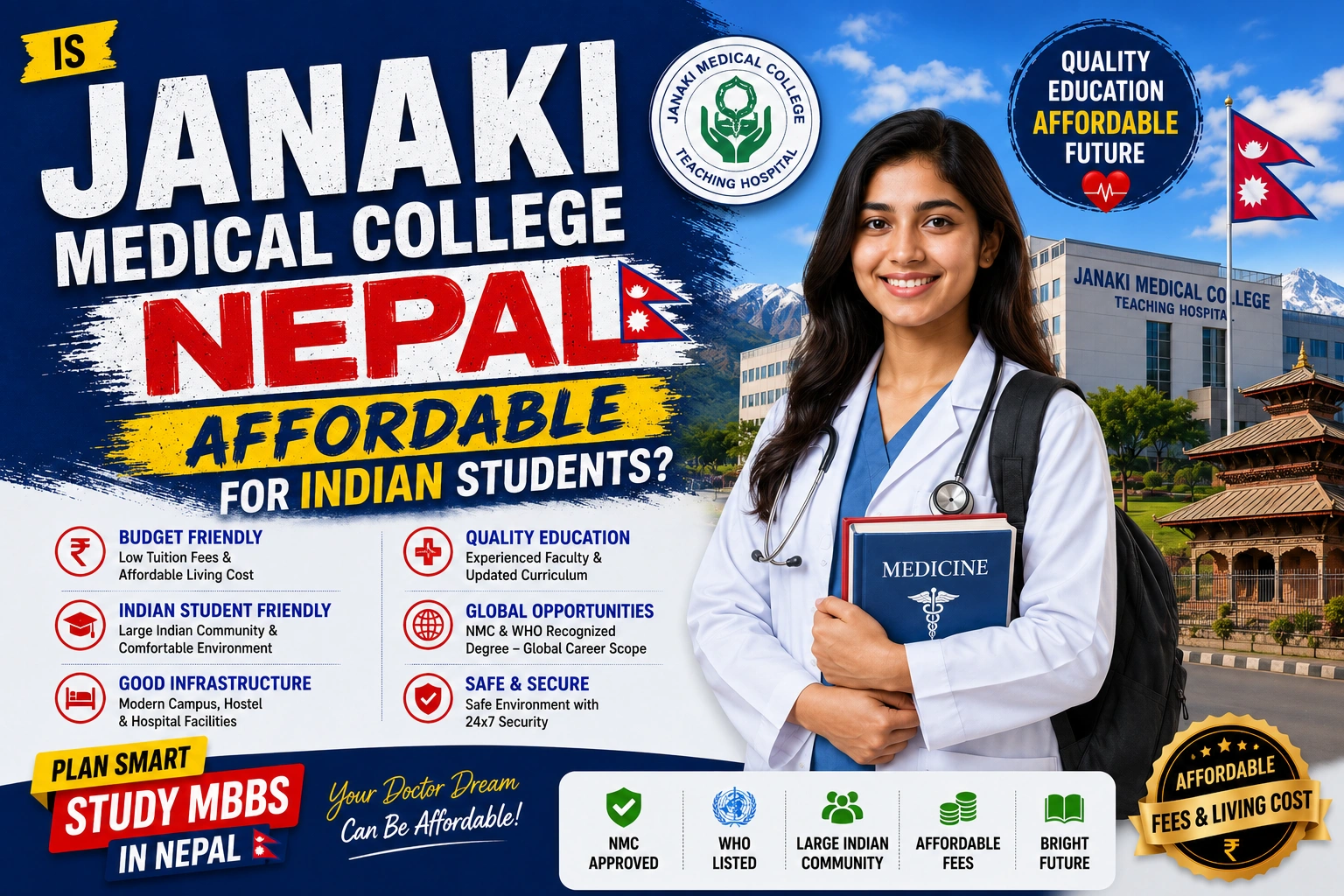
The number of Indian students trying to enroll for medical education in other countries is growing rapidly. This is a result of the overwhelming competition for government medical seats, costly private medical colleges in India, limited seat availability and other factors. Neighboring countries such as Nepal offer good options for many students. In addition to its proximity, there is less cultural difference and ease of travel.
There are many medical colleges in Nepal and Janaki Medical College is among those considered. However, when applying for admission, families want to know more than just whether they can get a seat. They want to know whether there is a financial burden for their family to pursue an MBBS degree at Janaki Medical College in Nepal.
A full financial assessment of tuition, housing, meals, travel and other expenses is required to answer this. To truly determine the affordability of this college, the costs must be assessed in total, not just the cost of tuition.
Featured Snippet: Is Janaki Medical College Nepal Affordable for Indian Students?
Janaki Medical College Nepal may be an affordable college option for some Indian students. However, it is based on the most recent government tuition fees and other expenses, which include: tuition, accommodation, feeding, examination fees, travel, personal and other educational expenses.
Prior to applying, Indian students must check the NEET requisites and the recent NMC regulations pertaining to foreign medical graduates.
Geographical proximity makes Nepal a favorable location for medical aspirants from India, as there is a South Asian environment. It is likely that Indian students can acclimatize to the local food and lifestyle quickly, as opposed to going to countries which are a lot further away.
Janaki Medical College, located in Janakpur, Nepal, offers the MBBS program. It is likely that many Indians are considering applying there since Janaki is located in a relatively neighboring country offering a Medical degree.
There are many other factors that must be considered when applying to colleges in neighboring countries. Geography does not guarantee any consideration in terms of affordability or accessibility. It is really important that students consider the Janaki Medical College tuition, how the College is regulated, and all of the other factors that may impact students’ future careers.
MBBS Advisor is a great resource for students looking for more information regarding Medical degree options and admissions.
The Complete Cost of MBBS in Janaki Medical College
The most substantial part of the MBBS investment is typically the tuition. The total cost of the degree is so much more that families need to budget a lot more than the tuition.
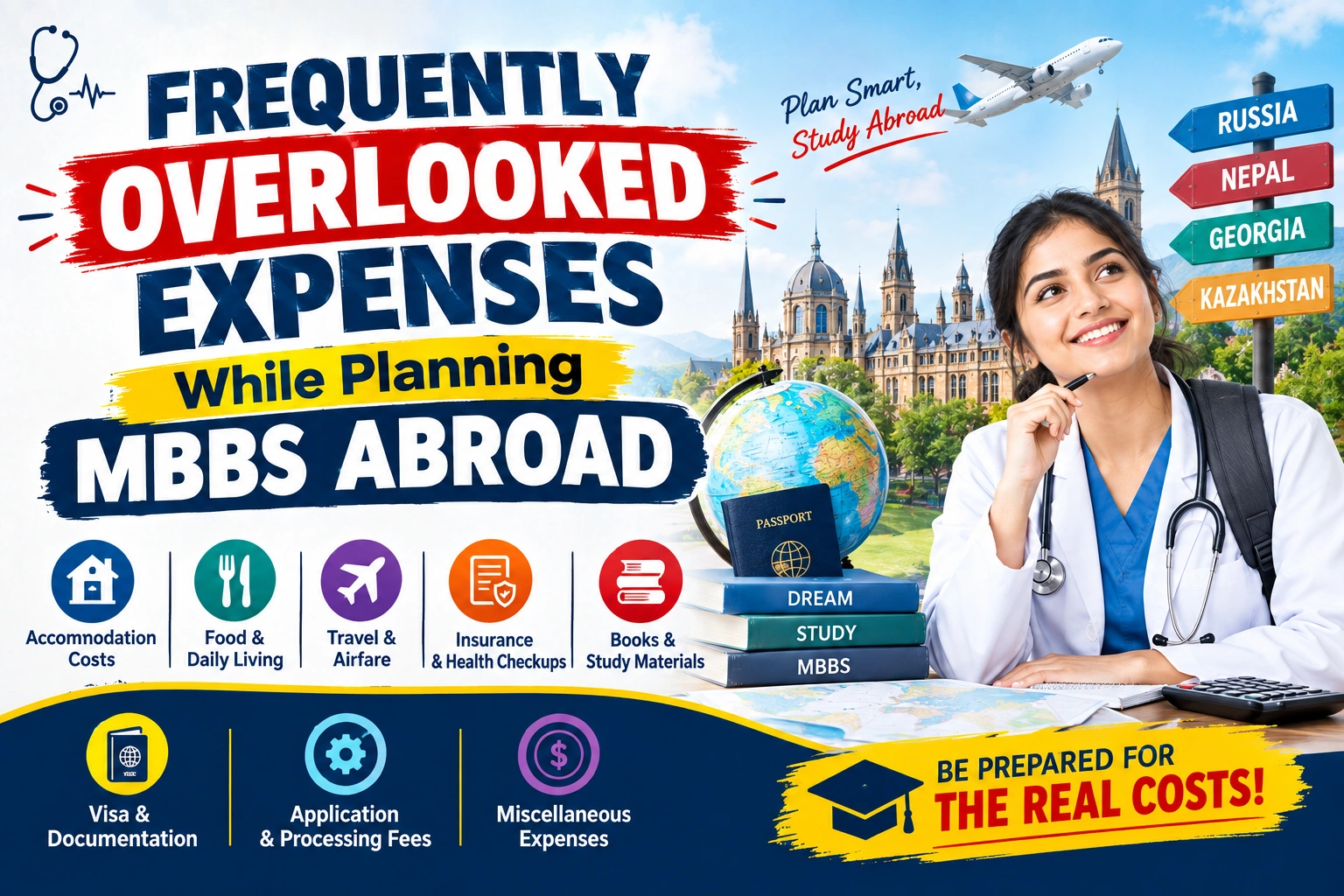
There may be a lot of different costs that students may be responsible for including, admission fees, university fees, exam fees, accommodation fees, the cost of food, books, medical supplies, and personal supplies.
Traveling between India and Nepal during the holidays may increase the total expenditure.
Major Expenses Indian Students Should Consider
|
Expense |
Why It Matters |
|
Tuition Fee |
Main cost for the MBBS programme |
|
Admission Fee |
May be charged for programme registration or admission |
|
Hostel Charges |
Required if student stays on campus or in institutional accommodation |
|
Food Expenses |
Cost of meals and food |
|
Examination Charges |
May be required in different academic years |
|
Books and Instruments |
Required for medical education/training and practice |
|
Travel Costs |
Travel between India and Nepal during holidays |
|
Personal Expenses |
Cost of communication, clothing, transport, and daily needs |
Fee structures may change for different academic sessions, so the students must get the most recent fee details in writing from the institution or an authorized source. Fee details on third-party websites may be outdated.
Is Janaki Medical College Nepal Cheaper than Private MBBS in India?
There is no one correct answer, as MBBS fees in Private Indian Medical Colleges are highly variable. The total fees depend on the state, college, the type of admission, and other institutional fees.
Because of the shorter travel distance and more familiar environment, studying in Nepal may be financially attractive for some families. Students may also have a much easier time adjusting since Nepal is not as culturally different as other more distant countries. This also makes travel easier for parents.
However, you need to look at the total cost of the MBBS programme.
Students should take into account the following:
- The total cost of tuition for the entire course period.
- The cost of hostel and accommodation.
- The cost of food and other living expenses.
- The cost of university examinations and related fees.
- The cost of travel during holiday breaks.
- The cost of books and other academic supplies and equipment.
- The cost of other licensing requirements and the fees for related services.
The lowest cost option at the time of admission is not necessarily the best value option. In this context, the importance of a clear and understandable fee structure cannot be overstated.
NEET and Eligibility Requirements for Indian Students
Indian students wishing to study medicine abroad need to be familiar with the most recent eligibility requirements before making an application. Students need to have completed higher secondary education with the requisite science subjects of Physics, Chemistry, and Biology.
NEET is a critical component for Indian students wishing to study medicine abroad. Students need to familiarize themselves with the most recent updates to NEET, and with the updated entrance requirements for foreign medical courses.
Students should also be aware that qualifying NEET does not imply that a foreign medical college is permitted to practice medicine in India. The college and course should be assessed against the regulatory requirements, and the licensing requirements of India.
Why Nepal Is a Good Option for Some Indian Students
One of the most important benefits of Nepal is its proximity. It is generally much more convenient to travel to Nepal than many other international destinations.
Food habits, social customs, and the socioeconomic landscape of South Asia may be more familiar. This is especially important for students leaving home for the first time.
One of the best things you can do is be familiar with the learning environment. Students must confirm the medium of instruction, course outlines, and the availability of practical and clinical training before seeking admission.
Students must refer to the World Health Organization (WHO) and the World Directory of Medical Schools before making any decisions regarding a medical institution.
NMC Regulations: Another Important Factor for Indian Students
Indian students must not finalize admission to any foreign medical college before knowing the most recent updates of the National Medical Commission (NMC).
A medical degree from a foreign country does not provide the right to practice in India. Graduates must meet the requirements of the Indian authorities relating to the duration of medical studies, clinical training, internship, and also the medical licensing exam.
As laws are subject to change, students must ascertain the most recent laws before admission and not rely on outdated information or unverified promotional content. This is especially important for students who wish to pursue an MBBS abroad as a means to avoid studying in India.
The student's decision must be based on the quality of the medical program and the student's future career.
Other Expenses that May Impact Your Budget
Students usually make the mistake of estimating their budget by looking only at tuition costs. Medical education lasts several years, and small costs add up significantly over time.
Financial calculations should include costs for hostel, food, exam fees, university fees, medical insurance, textbooks, and instruments.
Students will need to make and additional budget for transportation, phone services, clothing, and emergencies.
Parents need to request a detailed schedule of fees and determine what is included in the fees (hostel, exams, registration, and other institutional fees) before making payments.
A detailed fee structure will reduce the chances of unexpected costs.
Benefits of MBBS Study in Nepal
There are a number of real benefits for Indian students in choosing Nepal. India is nearby, and so home visits will be easier. Because of the proximity, cultural and linguistic similarities, traveling to Nepal will be easier.
There is also the benefit of being able to study in a regional environment. However, all benefits must be carefully evaluated alongside the regulatory and educational quality of the institution.
There are multiple factors students must evaluate when considering the quality of an institution, including the clinical and educational infrastructure, the faculty, the support services, and the opportunities for clinical training.
Drawbacks Students Must Evaluate
Studying abroad and in Nepal in particular, requires students to carefully evaluate and ensure that the quality of education at the institution is acceptable. Choosing an institution solely based on proximity to India is simply a poor choice.
Some of the factors students must verify include:
- The most current official fee structure.
- The duration of the course and the academic curriculum.
- Clinical training and hospital exposure.
- Details for examinations and internships.
- The current regulatory requirements for Indian graduates.
- Credibility and listing from recognized sources.
- Accommodation and student support services.
Informed decisions will always outweigh the choice based on advertisements and low fee claims.
How Indian Students Can Realistically Budget for MBBS Studies
Economic feasibility usually involves drawing up comprehensive financial projections for the entire time students will be in school. Students begin by estimating the cost of the school and add the cost of housing and the cost of living.
Academic costs include tuition, fees, costs of taking exams, costs of books and medical equipment. Housing costs include costs of housing and food. Personal costs include the costs of travel, communication, local transport, and pocket and contingency funds.
Since there are likely to be many unanticipated costs during a lengthy medical program, students should be prepared to budget additional costs.
Students comparing Indian medical options with foreign medical options can use a NEET Rank Predictor to evaluate the likelihood of their foreign medical school admission before making a selection.
Final Analysis: Indian Students and Janaki Medical College Nepal
Indian students looking for a more affordable foreign medical option may wish to consider Janaki Medical College Nepal, as its proximity and regional familiarity may appeal to both the students and their families.
However, a comprehensive cost of attendance should also include tuition, hostel fees, food, travel, study materials, exam fees, and more.
Students also need to be up to date with the latest NMC and check the college for its educational and clinical setup. Medical colleges should never be selected solely because they have low advertised fees.
The final choice should incorporate their budgets, educational aspirations, future goals, and their eligibility to practice per the regulations.
Thorough research, completed fee confirmations, and verification through trustworthy sources allow Indian students to make enhanced secure decisions while considering MBBS programs in Nepal.
Frequently Asked Questions
Is Janaki Medical College Nepal financially viable to Indian students?
Maybe for some families, but the answer depends on the total cost of tuition, lodging, food, transportation and other costs. Students should confirm the most recent official tuition before admission.
Do Indian students require NEET for MBBS in Nepal?
Indian students should check what the requirements are at the time of admission. NEET qualification is required for Indian students who pursue their medical studies abroad.
Is MBBS in Nepal less expensive than private MBBS in India?
It depends on what Indian college and what Nepalese college. MBBS costs are at least comparable in tuition, lodging and other known costs.
Are graduates of Nepal eligible to practice medicine in India?
Graduates will need to comply with the processes of Indian medical authorities and fulfill the requirements for licensing and registration. A foreign medical degree is insufficient for practicing medicine in India.
What should students confirm before going to college?
Students should verify the current costs, the curriculum, available clinical exposure, the status of the institution, internship, and the Indian medical graduate regulations.