 Russia
 Belarus
 Georgia
 Kazakhstan
 Kyrgyzstan
 Uzbekistan
 China
China Nepal
Nepal Bangladesh
 Poland
 Romania
 Slovakia
 Hungary
 N. Macedonia
 Vietnam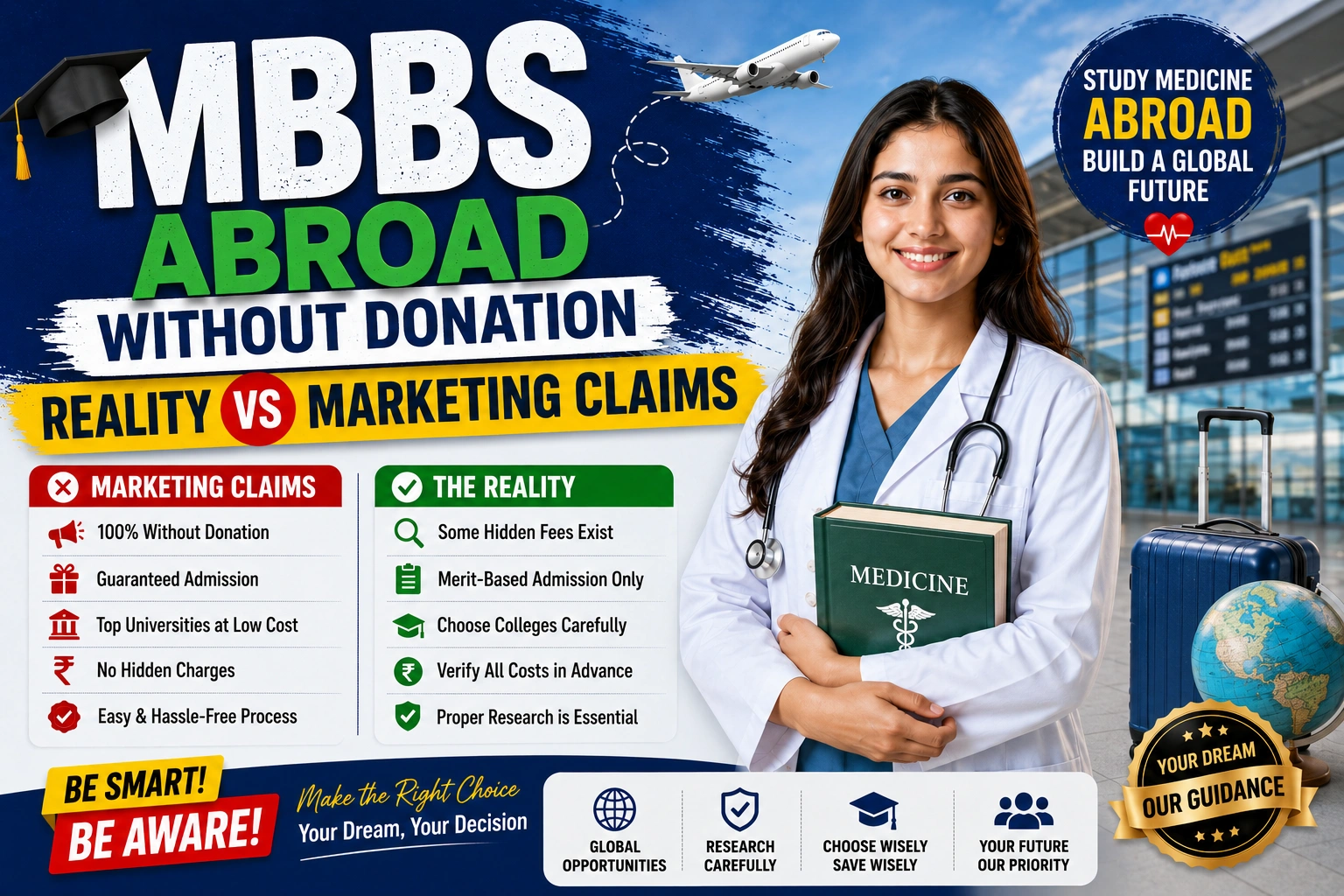
Indian students wanting to pursue MBBS have an uphill battle when it comes to getting a seat in government institutions due to high levels of competition. Private medical colleges, with even more restrictive seat availability, are an even less palatable option due to high fees and capitation costs. Strained by their circumstances and the options available to them, many Indian students find themselves the target of the phrase, "MBBS Abroad Without Donation." Taking the phrase at face value, many education consultants and advertisements either “don’t request a donation,” “provide direct admission” or “guarantee an MBBS seat abroad.” Such phrasing implies that the options available to Indian students wanting to study medicine abroad are numerous, simple, and low cost.
Indiscriminately, many advertisements and offers are tactical at best or false at worst. Although a good number of medical colleges abroad won’t request a donation or capitation premium, students should think critically about costs, the recognition of the qualifications in their home country, and living costs when making college admission choices.
MBBS pursued abroad offers more options than the advertisements of such programs. For reliable information, students can consult MBBS Advisor where students can make better choices by comparing the institutions available to them and other criteria such as costs and the admission criteria and processes.
What Does “MBBS Abroad Without Donation” Actually Mean?
Most students initially interpret the phrase “without donation” to mean that there will be no donation requests. Many of the colleges coming to mind when students think of donation or management quota are the private medical colleges and government and public universities abroad can be much better options in this regard, as they will admit students primarily based on their eligibility and NEET, without requests for donations or capitation.
Even with all this, it remains a fact that studying abroad for MBBS is not a cost-free endeavor.
Students are still required to spend money on legitimate expenses including tuition fees, hostel accommodation, visa charges, medical insurance, documentation fees, travel expenses, and other expenses incurred in the course of daily living. These are real costs for services rendered by either the university or the government.
Recognizing these facts is important, as some advertisements aim to create the impression that the entire MBBS program is almost entirely subsidized or extremely low cost.
Why is Studying MBBS Abroad More Popular?
There are practical reasons for the surging popularity of MBBS abroad. Every year lakhs of aspiring doctors take the NEET exam for a few hundred available government medical seats. Even students with qualified scores do not get admission at a subsidized cost.
Because of this, countries such as Russia, Georgia, Kazakhstan, Uzbekistan, Kyrgyzstan, Nepal, and other European countries have become extremely popular among Indian Students.
Students can compare available options before taking an admission in the MBBS Abroad section, which will help them understand different options in different locations, admission procedures, and universities.
What Makes Advertisements So Attractive?
Most advertisements focus on a few cherry picked aspects of overseas medical education. Students frequently view slogans that boast:
- 100% Guaranteed Admission
- No Donation
- Lowest Fees
- Direct Admission
- No Entrance Test
- Easy Visa
- Guaranteed FMGE Success
While a handful of these statements may actually contain some truth, most of them tend to be just false.
- Eligibility requirements determine admission.
- Government policies will determine the issuance of a visa.
- Success in academics will be determined by the student.
- Licensing examinations for the practice of medicine will require preparation.
Hence, students are always advised to verify the claims by the university directly before making any financial commitments.
Real Picture of 'No Donation'
A primary benefit of studying medicine overseas is the straightforward admission processes many globally accredited universities employ.
In lieu of donations, universities assess:
- Class 12 performance
- NEET results
- Supporting documents
- Validity of passport
- Medical fitness
- Visa requirements
Due to these processes, the predictability of admissions is higher when compared to universities with a system of unofficial payments to secure admission.
However, it is important to note that just because a system is transparent, it does not mean education is free.
What are the Real Costs of Studying Medicine Overseas?
Most international students believe 'No Donation' implies low overall costs; this is an assumption born of ignorance.
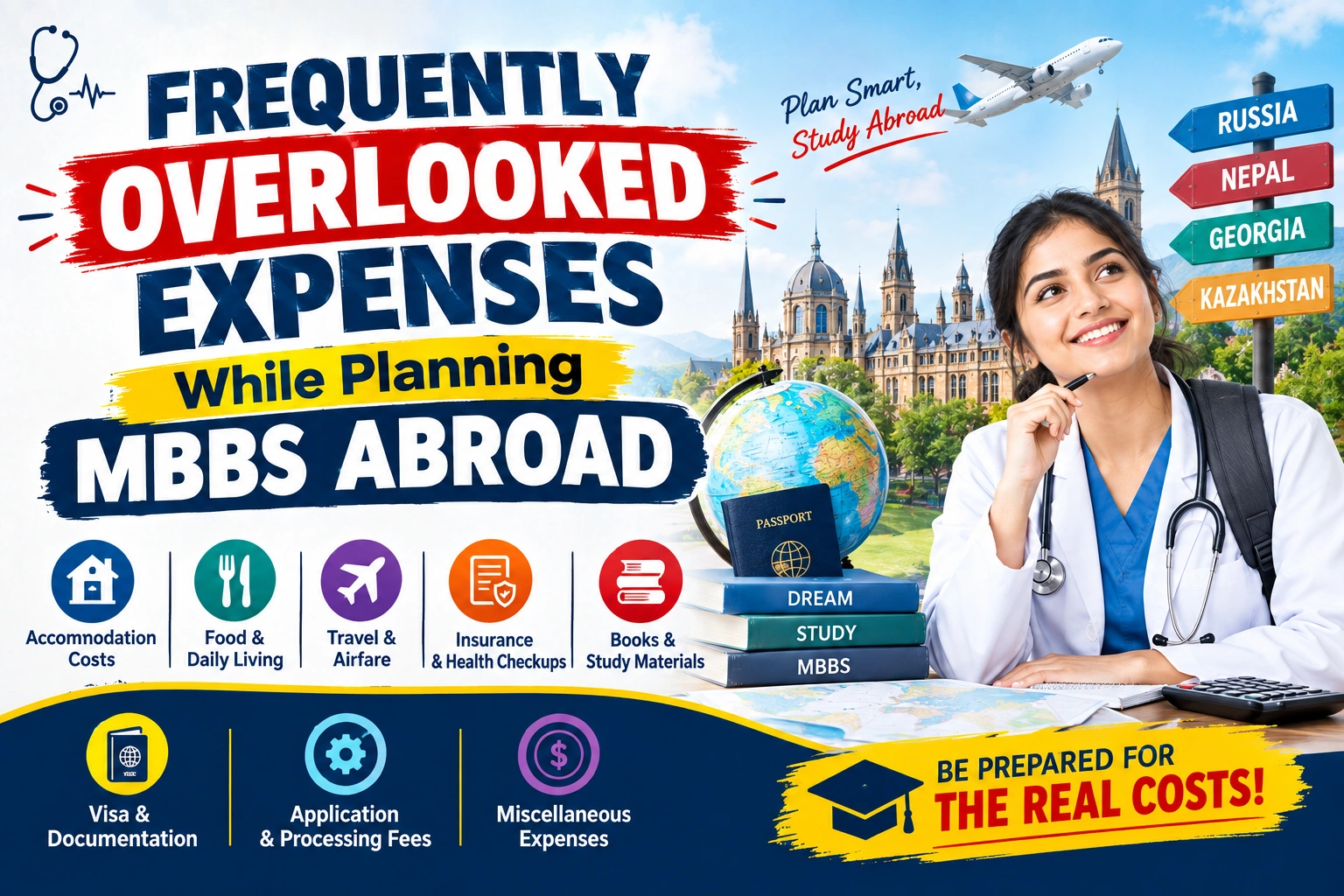
Most students will find medicine overseas has a number of costs. Some of the most common costs include:
Tuition
This cost varies by university.
Accommodation
This may or may not be included in the tuition costs.
Food
This cost varies greatly based on the location of the university.
Medical Visa Costs
This includes the cost of insurance and medical documentation.
Flight Costs
This cost is easily forgotten.
Miscellaneous Costs
This includes personal costs that are easily overlooked.
Students should expect to see all of these costs when presenting tuition, and should not expect to see a low tuition cost.
Is it Possible to Study Medicine Overseas Without NEET?
This is also a misconception born of misleading advertisement.
Guided by National Medical Commission (NMC) regulations, aspiring Indian MBBS graduates must clear NEET before obtaining an MBBS seat in any foreign medical institution. Thereafter, they cannot practice medicine in India.
In case of doubt, claim forms should be checked against the most recent updates on the official NMC site and NEET. The NEET section provides additional info on admissions.
Why You Should Only Choose NMC-Affiliated Universities
It's a misconception that universities with no donation systems in place are good for Indian students.
Low fees are not as critical as recognition.
Students must check that universities:
- comply with NMC regulations,
- are listed in the World Directory of Medical Schools (WDOMS),
- offer courses in English,
- provide good clinical experience,
- have good teaching faculty,
- have good academic standing.
Recognition needs to be in place to avoid licensing problems down the line when seeking to practice in India.
Students can check medical universities against the World Directory of Medical Schools (WDOMS).
WHO Recognition vs WDOMS Listing
Some advertisements say that universities are "WHO Approved."
This phrasing is often correct.
The World Health Organization (WHO) does not give medical colleges approval to start admissions.
WHO collaborates with the different health systems and global standards.
WDOMS, the global directory of medical schools, is the primary listing of medical colleges.
Students should avoid the marketing of "WHO Approved Universities" and check WDOMS for their listings.
How to Identify Genuine Admission Consultants
The right consultant should be as important of a consideration as recognition as many admission related misconceptions have their roots in incorrect counseling.
A trustworthy consultant typically:
- Details the full fee structure
- Shares official university documents
- Provides written information on admissions
- Honestly discusses visa procedures
- Provides information on NMC (National Medical Commission) regulations
- Does not make unrealistic guarantees
- Provides counselling from a student-centred perspective, not commission-based
Counselling from a trustworthy consultant decreases the chance of selecting the wrong university.
How a NEET Rank Can Influence Admission for MBBS Abroad
While a vast majority of foreign universities require only NEET qualification, as opposed to other high-ranking entrance examinations, students must be aware of their options.
To assist with this, a NEET rank predictor can help students gauge their rank for the NEET examination and assist with university selection.
Rank prediction can be useful for Indian medical counselling and comparison to available options for admissions abroad.
Questions All Students Must Ask Before Committing to Pay
Before students are committed to paying for admission, they must obtain clear/well-defined answers about the university.
A few important questions are:
- Is this university recognized by the NMC?
- Is the university listed in the WDOMS?
- What is the total tuition fee for the entire course?
- Are hostel accommodations included in the total tuition fee?
- What are the expected yearly living expenses?
- Is clinical training done in affiliated hospitals?
- What is the medium of instruction?
- Are there any undisclosed administrative costs?
- What is the visa rejection refund policy?
If students do not pay for admission before asking the above questions, they most likely will not pay for admission in the future.
Debunking the Major Myths Regarding a Donation-Free Path to MBBS Abroad
Many students and parents still believe the same few myths regarding pursuing an MBBS abroad.
One of the more common myths is that every foreign university is less expensive than every Indian private university.
While there are many affordable universities abroad, there is a wide range of costs of attending a university depending on which country you study in and which university you choose.
Another misconception is that everyone is admitted. Universities evaluate if NEET is qualified along with eligibility and documentation before sending admission letters.
Some people think every graduate gets a practicing license in India. However, this is far from the truth. Graduates are expected to meet the standards of the NMC and the licensing procedures after completing the studies of medicine.
They can then make plans accordingly.
Conclusion
There is an opportunity to study MBBS abroad, “without donation”, as many foreign medical schools that offer a medical program and are sanctioned by international medical boards, have a fair admission process, and do not ask for capitation fees at admission. However, students need to realize that “without donation” does not mean “without expenses”. The cost of studying medicine includes Tuition fees, accommodation and travel fees, insurance, visa fees, the cost of all required documentation and, most importantly, the cost of living.
Taking into consideration the recognition of the university, the quality of education, the quality of clinical training, a clear fee structure, and NMC compliance, instead of the attention-grabbing advertisements, is the best way forward. Students will be able to avoid false advertising and enroll in a university with a medical program that will help them with their career the best.
Compare universities thoroughly and make sure to have a clear understanding of the fee structure beforehand, and use educational resources you trust, like the MBBS Advisor, the MBBS Abroad portal, the NEET section, and the NEET Rank Predictor, before making any admission decision. To prevent acceptance of marketing ploys, verify recognition of the university according to the NMC, NEET, WDOMS, WHO and the World Directory of Medical Schools.