 Russia
 Belarus
 Georgia
 Kazakhstan
 Kyrgyzstan
 Uzbekistan
 China
China Nepal
Nepal Bangladesh
 Poland
 Romania
 Slovakia
 Hungary
 N. Macedonia
 Vietnam
 Canada
 Armenia
 UK
UK Australia
 USA
USA Ireland
 Germany
 New Zealand
 Italy
Italy France
 Singapore
 Netherlands
 Sweden
 Switzerland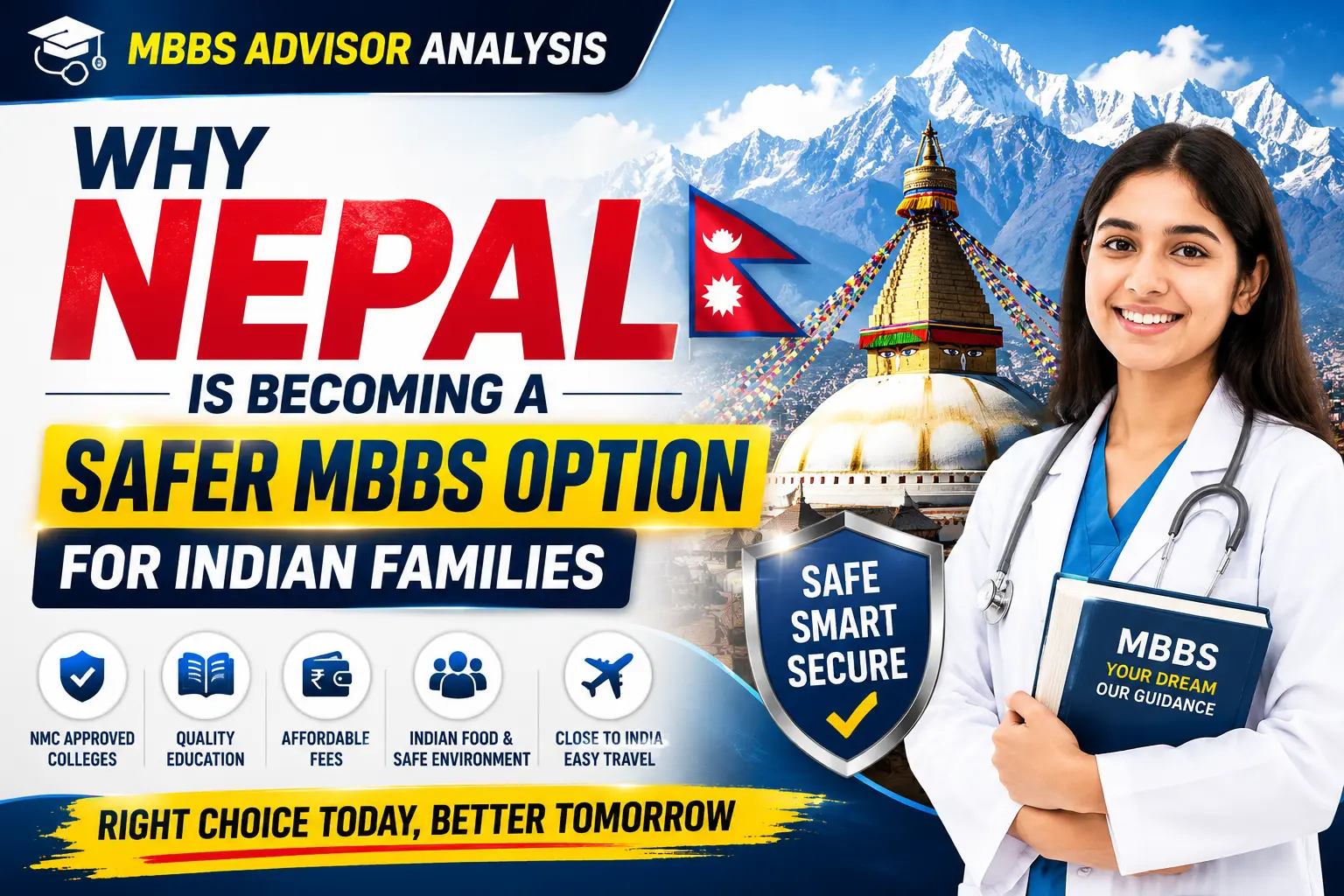
For Indian students and their families planning to pursue a Bachelor of Medicine, Bachelor of Surgery (MBBS) degree, the difficulties of gaining admission to a domestic medical program have long been a core barrier standing in the way of their academic goals.
This is also the central rationale for this study’s selection of Nepal as a safe, high-quality option for Indian families seeking to complete an MBBS overseas.
MBBS seats at India’s government-run public medical colleges have been extremely scarce for years. Private medical colleges not only have overly complex application processes, but their tuition fees also far exceed the financial capacity of ordinary families.
Each year, hundreds of thousands of candidates sit for the National Eligibility cum Entrance Test (NEET), India’s unified national medical school entrance exam. Only a tiny fraction of these test-takers ultimately secure the coveted seats at public medical colleges, while the exorbitant tuition fees of private medical colleges place an unbearable heavy burden on large numbers of middle-class households.
This predicament has directly spawned strong demand among Indian students to pursue their MBBS degrees abroad.
Why Nepal is Emerging as a Preferred MBBS Destination
Based on this market context, this paper puts forward its core argument: Nepal is currently one of the safest, most practical overseas study destinations for Indian students pursuing an MBBS.
When screening overseas medical study destinations, the seven core industry-standard assessment dimensions are:
- Degree recognition
- Education quality
- Safety
- Language barriers
- Cost of living
- Alignment of admission requirements
- Future career opportunities
Key Advantages of Studying MBBS in Nepal
Academic and Language Compatibility
The medical education systems of India and Nepal are highly similar, and most Nepali medical institutions use English as the medium of instruction, eliminating barriers to academic transition and verbal communication.
Recognition and Licensing Pathway
Multiple medical colleges in Nepal have received accreditation from India’s National Medical Commission (NMC) and leading international authorities such as the World Health Organization (WHO) and World Directory of Medical Schools (WDOMS).
This ensures that graduates can return to India to complete professional registration and practice medicine legally after qualifying required licensing exams.
Cultural Familiarity and Lifestyle Ease
The cultural environments of the two countries differ very little, meaning students do not need to spend extensive time adapting to a new life.
Role of Study Abroad Guidance Platforms
In addition, MBBS Advisor, a vertical education consulting platform, can provide students with transparent and reliable admissions information, helping them gain a comprehensive understanding of both domestic and overseas medical school admission opportunities and make informed decisions that align with their personal needs.
Comparative Advantages of Nepal for Indian Students
This paper takes Indian families planning to send their children to study medicine overseas as its core audience.
Focusing on the core study-abroad concerns of this group, it breaks down the comparative advantages of Nepal as a study destination for medical students across six dimensions.
Through horizontal comparisons with long-distance study destinations in regions such as Europe and Central Asia, as well as private medical colleges within India, this paper comprehensively demonstrates Nepal’s overall competitiveness.
Cultural Compatibility Advantage
Nepal shares highly aligned food cultures, festivals, daily customs and cultural values with India, which can greatly reduce the difficulty of international students’ transition to a new environment, ease homesickness, and precisely meet the demand for their children’s emotional well-being that Indian families prioritize.
Geographic Accessibility Advantage
Compared with faraway study destinations such as those in Europe and Central Asia, the geographic advantage of Nepal sharing a border with India brings travel convenience and low costs.
This supports family visits, holiday travel, and emergency responsiveness, boosting families’ sense of security.
Safety and Student Support Environment
Safety is the top study-abroad concern for Indian families. Nepal has a reputation for peace and friendliness, and it hosts a large community of Indian international students.
All medical colleges in the country are equipped with dedicated dormitories, student support systems, and structured campus environments.
Cost Advantage in Medical Education
Cost is the core decision-making factor for Indian families. Against the high expenses of private medical colleges in India and some international destinations, Nepalese medical colleges offer comparatively affordable tuition while maintaining modern infrastructure, experienced faculty, and sufficient clinical resources.
This financial structure simplifies long-term planning for families.
Clinical Training Exposure
Hands-on off-campus practical training is a core requirement of medical education. Relying on affiliated hospitals, Nepalese medical colleges provide students with real-world clinical exposure, helping them develop practical skills and prepare for licensing exams.
Regulatory Structure and Academic Reliability
All Nepalese medical colleges follow structured enrollment rules set by Nepal’s national medical education regulatory authority, strengthening transparency and institutional reliability.
Compliance Requirements for MBBS Admission
Indian students and their families planning to apply for MBBS must first meet the core compliance threshold: all application activities must comply with the relevant regulations of the National Medical Commission (NMC), while also meeting the regulatory requirements of their target study-abroad country, to avoid forfeiting admission eligibility due to unmet qualification criteria.
Role of Professional Guidance in Admissions
The professional consulting platform MBBS Advisor can sort out clear application eligibility requirements, document checklists, and tuition fee structures for applicants, assist with university shortlisting, sync transparent, up-to-date admission information for both Indian local and overseas universities, and resolve the common pain point of information asymmetry that most applicants face.
Final Assessment of MBBS in Nepal
Compared with studying in India or other overseas destinations, the medical school programs in Nepal are fully aligned with NMC requirements, and their academic systems are adapted to India’s healthcare system.
Courses are taught in English, Nepal offers geographical proximity to India and high cultural familiarity for Indian students, universities provide sufficient clinical internship resources, and the study environment remains safe and reliable.
Nepalese medical schools perform strongly across all core evaluation dimensions including official accreditation, tuition costs, infrastructure, and academic quality, making them a high cost-effective study-abroad option.
Students who graduate from accredited universities can pursue licensing, postgraduate studies, and medical careers in India and globally.
Final Advisory for Applicants
Before making a final decision, applicants must follow official consultation and admission processes, verify admission information through trusted channels, consult professionals before paying tuition fees, and conduct thorough research on target universities’ qualifications and accreditation status to ensure the entire application process is compliant and secure.