 Russia
 Belarus
 Georgia
 Kazakhstan
 Kyrgyzstan
 Uzbekistan
 China
China Nepal
Nepal Bangladesh
 Poland
 Romania
 Slovakia
 Hungary
 N. Macedonia
 Vietnam
 Canada
 Armenia
 UK
UK Australia
 USA
USA Ireland
 Germany
 New Zealand
 Italy
Italy France
 Singapore
 Netherlands
 Sweden
 Switzerland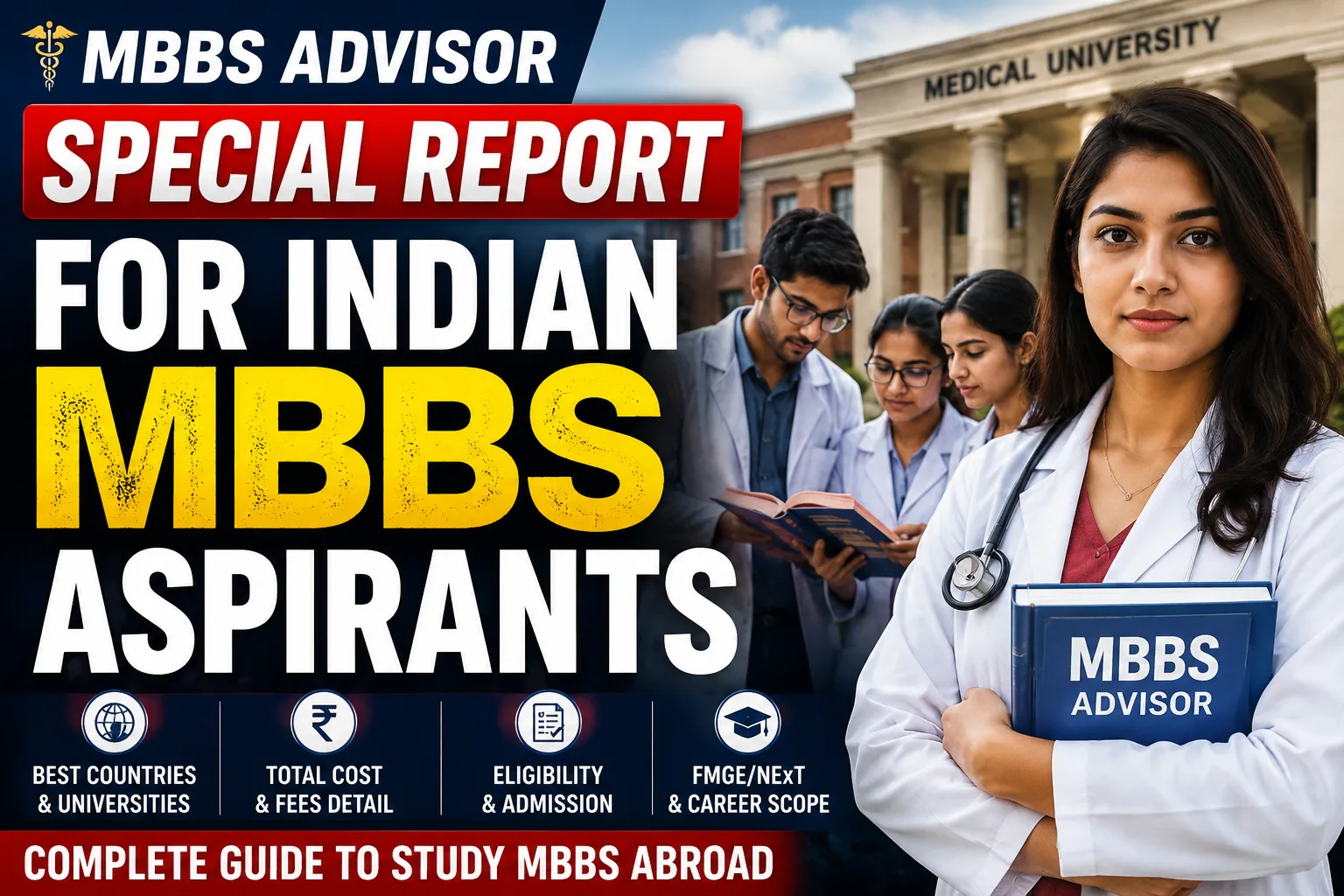
Released by MBBS Advisor, this is a dedicated special report for Indian medical students pursuing an overseas Bachelor of Medicine, Bachelor of Surgery (MBBS) degree. The report opens by laying out its core industry trend: in recent years, a fundamental shift has taken place in the core mindset of Indian medical students planning to study abroad. A large number of students who once viewed overseas medical schools as a backup option for domestic higher education admission now treat overseas institutions as their active, first-choice study path.
The core domestic pressure driving this shift is the supply-demand mismatch in India’s domestic medical education sector: hundreds of thousands of candidates sit for the NEET exam every year, public medical school seats are extremely scarce, and private medical schools charge exorbitantly high tuition that far exceeds what most families can afford.
Mainstream MBBS Abroad Destinations
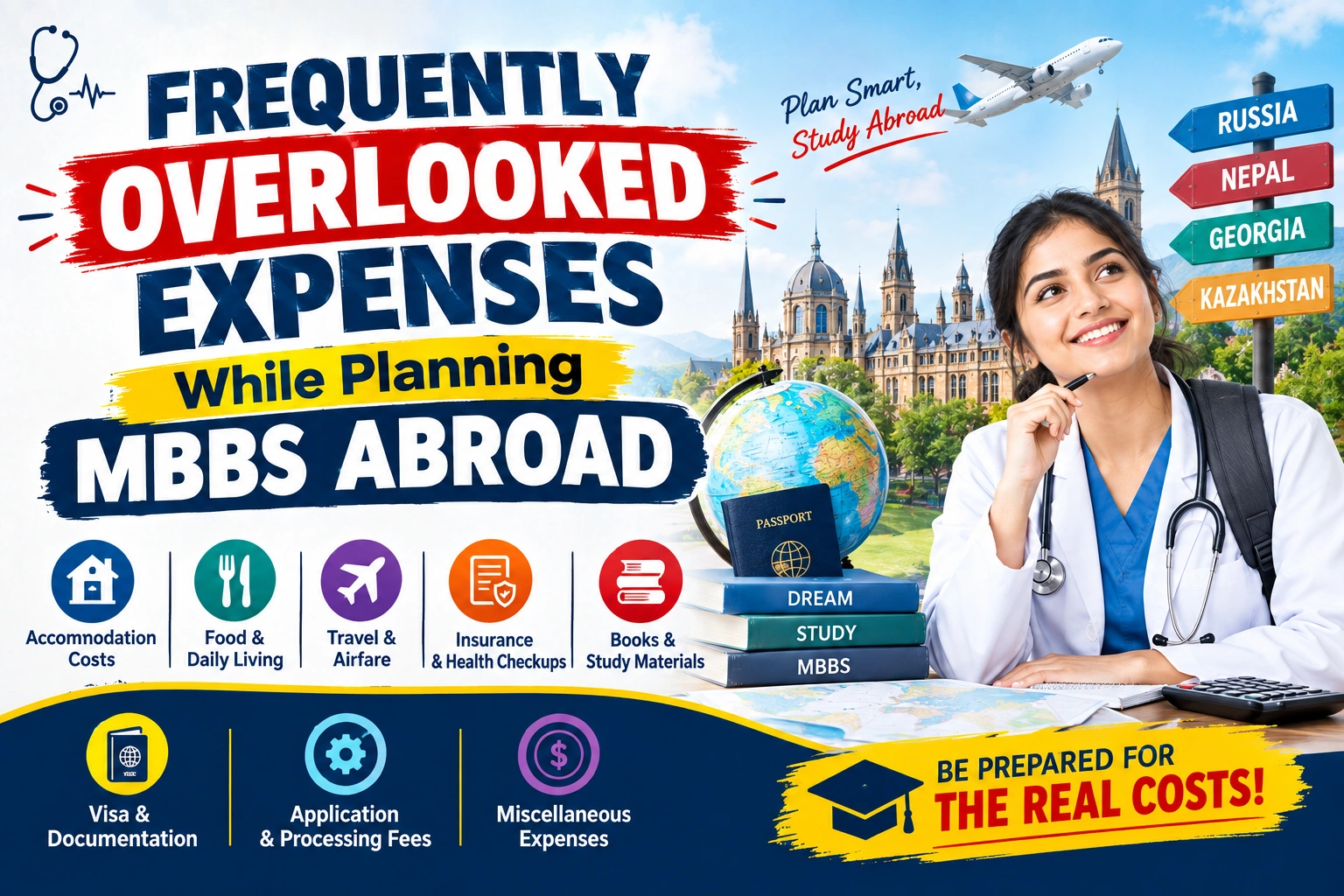
The current mainstream study abroad destinations include Georgia, Russia, Kazakhstan, Uzbekistan, Kyrgyzstan, and the Philippines. Institutions in these regions have six prominent core advantages for prospective students:
- Low tuition
- Global medical accreditation
- Access to modern facilities and laboratories
- English-taught programs
- Access to international clinical resources
- Reasonable student-to-faculty ratio
NMC Regulations and Compliance
The NMC of India has introduced transparency and quality regulations for this student group, laying a solid compliance foundation for their study abroad pathway.
The new generation of overseas students breaks through geographic limits, possesses global vision and digital literacy, and proactively verifies information from the WDOMS and WHO global medical standards. Their core pursuits cover five dimensions:
- Global perspective
- Global professional mobility
- Access to cutting-edge research opportunities
- Learning from advanced medical systems
- Multicultural learning environment
Changing Decision-Making Logic of Students
Their decision-making logic has also evolved: unlike the older generation who made vague decisions relying on local agents and neighborhood word-of-mouth, the new cohort proactively compares six core application indicators online:
- FMGE/NExT pass rates
- University rankings
- Clinical resources
- Dormitory facilities
- Internship systems
- Professional practice eligibility
MBBS Advisor simultaneously provides this group with full-process updated guidance covering applications, application documents, country comparison, and university accreditation.
Information Sources Module
Current applicants primarily obtain school-selection information from:
- Social media
- YouTube
- Student communities
- Former Indian students who studied abroad
NMC Regulation Module
This section notes that India’s national medical regulator, the National Medical Commission (NMC), has issued announcements and guidelines for overseas MBBS students, requiring them to verify five core indicators before enrollment:
- Program duration
- Language of instruction
- Internship structure
- Clinical training
- University qualification recognition
All applicants must comply with the Foreign Medical Graduate regulations, which pushes students to be more cautious when choosing schools.
Impact of Medical Licensing Exams Module
Data from this section shows that two Indian medical licensing exams—the existing Foreign Medical Graduate Examination (FMGE) and the upcoming National Exit Test (NExT)—have pushed students to prioritize universities with four core hard indicators:
- Strong academic curricula
- Clinical practice resources
- Senior experienced faculty
- Hospital-based practical training
Students’ core demand is to obtain Indian medical practice qualifications, and online communities focus their discussions on:
- Qualification recognition
- Online courses
- Licensing regulations
This has led to a notable increase in the seriousness of students’ school-selection processes.
Top Study Destination Module
Georgia has become the first choice for Indian MBBS applicants. With five core advantages, it is the fastest-growing study abroad destination for Indian applicants in recent years:
- Affordable tuition
- English-taught programs
- European infrastructure and lifestyle
- Safe environment for international students
- Modern teaching methods
Parental Participation Module
This section finds that parents are deeply involved in the application process and proactively verify seven core dimensions including university accreditation. They view overseas medical education as a large, long-term investment, while online consultation fairs and education guidance platforms have also improved the transparency of the application process.
Cost-Centric Module
This section points out that affordability is the core factor influencing school selection. Tuition fees at private medical colleges in India range from 6 million to 10 million Indian rupees, and the total cost of MBBS programs at overseas universities is far lower than that of domestic programs.
Cost and Return on Investment
The affordability of overseas medical schools allows India’s middle-class families to avoid bearing extreme financial pressure. Most study-abroad destinations have rolled out four core support policies:
- Low cost of living
- Flexible tuition payment plans
- Exclusive scholarships for international students
- Affordable on-campus housing
Currently, the vast majority of Indian applicants first assess the return on investment of their planned overseas study experience.
Global Perspective Enhancement
Amid the wave of medical globalization, studying abroad delivers five core areas of growth:
- Improved cross-cultural communication skills
- Exposure to diverse national patient populations
- Ability to adapt to multicultural environments
- Confidence in independent clinical practice
- Professional networks across the global healthcare industry
These gains help students build a global mindset aligned with industry trends.
Institution Selection Criteria
Healthcare industry experts remind prospective students that choosing a school must never be based solely on low tuition. Six core qualifications must be verified:
- Institution’s global recognition
- Quality of clinical training
- Hardware and software infrastructure
- Level of support from full-time faculty
- Aligned internship opportunities
- Requirements for articulation with India’s national medical licensing qualification
These credentials can be cross-checked through three authoritative channels:
Potential Challenges to Avoid
Applicants must also face six core challenges:
- Preparation for the FMGE/NExT exams
- Language barriers in clinical settings
- Cultural adaptation
- Disruption from homesickness
- Cross-national differences in medical licensing regulations
- Oversights in verifying institutional qualifications
Many Indian international students have shared their negative experiences of mistakenly applying to non-compliant schools in online discussions, so relying on professional school selection consulting is highly necessary.
Future Industry Trends
The current cohort of Indian MBBS students studying abroad exhibits four new characteristics:
- More informed decision-making
- Long-term career-centric focus
- Emphasis on global connections
- Cautious attention to qualification and licensing requirements
The MBBS Advisor platform can provide professional planning support. Overall, pursuing an MBBS degree overseas is an important strategic career choice. Only by making reasonable plans, clarifying compliance requirements, and carefully screening host institutions can students successfully achieve their study abroad goals.
We propose four core action principles:
- Follow a compliance-oriented path
- Prioritize quality over shortcuts
- Align with evolving trends in international medical education
- Integrate into the genuine global healthcare community