 Russia
 Belarus
 Georgia
 Kazakhstan
 Kyrgyzstan
 Uzbekistan
 China
China Nepal
Nepal Bangladesh
 Poland
 Romania
 Slovakia
 Hungary
 N. Macedonia
 Vietnam
For many Indian families, getting a medical seat in an Indian college is no longer a viable option. Each year, thousands of students look for MBBS overseas after performing well in the NEET exam. This is mainly due to the shortage of Government medical seats and the high cost of Private medical seats. While students look for information regarding colleges and the admission process, parents are concerned about safety, costs, quality of education, and employment after graduation.
Proper research is required for selecting the right college, and many of them are not adequately informed. Parents need to understand the education system of that country as well as the accreditation process in addition to the living conditions, total cost, and available career options after making the investment. With the guidance of MBBS Advisor, families can make their college selection process easier by being able to compare colleges based on information they have collected as opposed to the colleges’ marketing.
Why Parents Must Be Involved in MBBS Planning
Studying medicine abroad is a huge financial and career commitment. Parents have the most responsibility out of the family and need to help their children the most as they are pursuing medical education.
Going for the cheapest option in tuition is not the best choice when selecting the college. Parents need to look for college safety, recognition, the amount of clinical exposure for the students, the availability of a hostel, support in the language as well as the licensing options after graduation.
High quality medical education is a lot easier to get when the institutions are internationally accredited, and a lot of the concerns can be addressed when parents take on their responsibility.
Is Studying MBBS Abroad Safe for Indian Students?
Safety concerns from parents never show signs of reducing. The good news is there are numerous countries that see Indian medical aspirants in thousands every year.
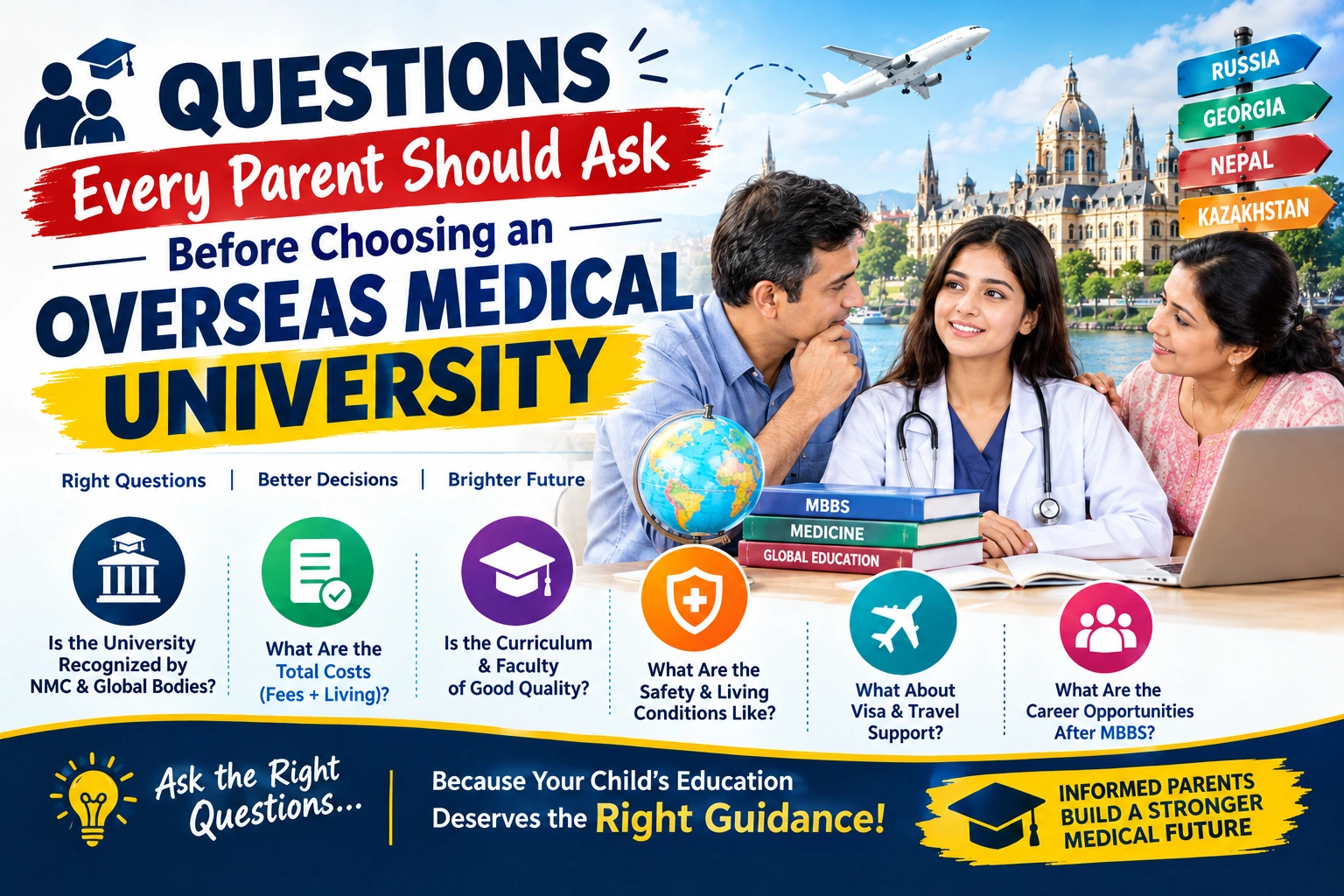
Before shortlisting the universities, parents need to check:
- The overall safety of the country
- Safety on the university campus
- Presence of Indian student communities
- Quality of hostel facilities
- Availability of emergency medical services
- Availability of Indian food in the locality
- Quality of local transport system
- Type and level of support the university offers to international students
The majority of the reputed medical universities maintain secure campuses and have departments dedicated to international students and separate hostels for male and female students.
Parents are advised to encourage students to abide by the local laws, respect the local traditions, and keep in touch with family regularly.
Importance of Choosing an NMC-Approved University
One of the crucial things that parents need to check is how up to date the university is with Indian eligibility laws.
Students intending to practice medicine in India post MBBS must always select NMC compliant universities.
Parents need to check the following:
- Duration of the course
- Format of the internship
- Language of the course
- Clinical training
- Recognition
From the very first step, parents need to be focused to avoid issues related to practice and career.
Check University Recognition via WDOMS
Parents must not rely only on the brochures and advertisements of the agency.
Before applying, parents need to check that the university is listed in the World Directory of Medical Schools (WDOMS). A listing in WDOMS indicates that the university is internationally recognized, which is of utmost importance for many licensure and further education pathways.
Always confirm all university details with trusted resources before submitting your application and paying any fees.
Budgeting for MBBS Overseas
One big responsibility for most parents is planning the finances for their children’s education, especially when considering MBBS. Many families think only about the tuition fee, the most visible expense.
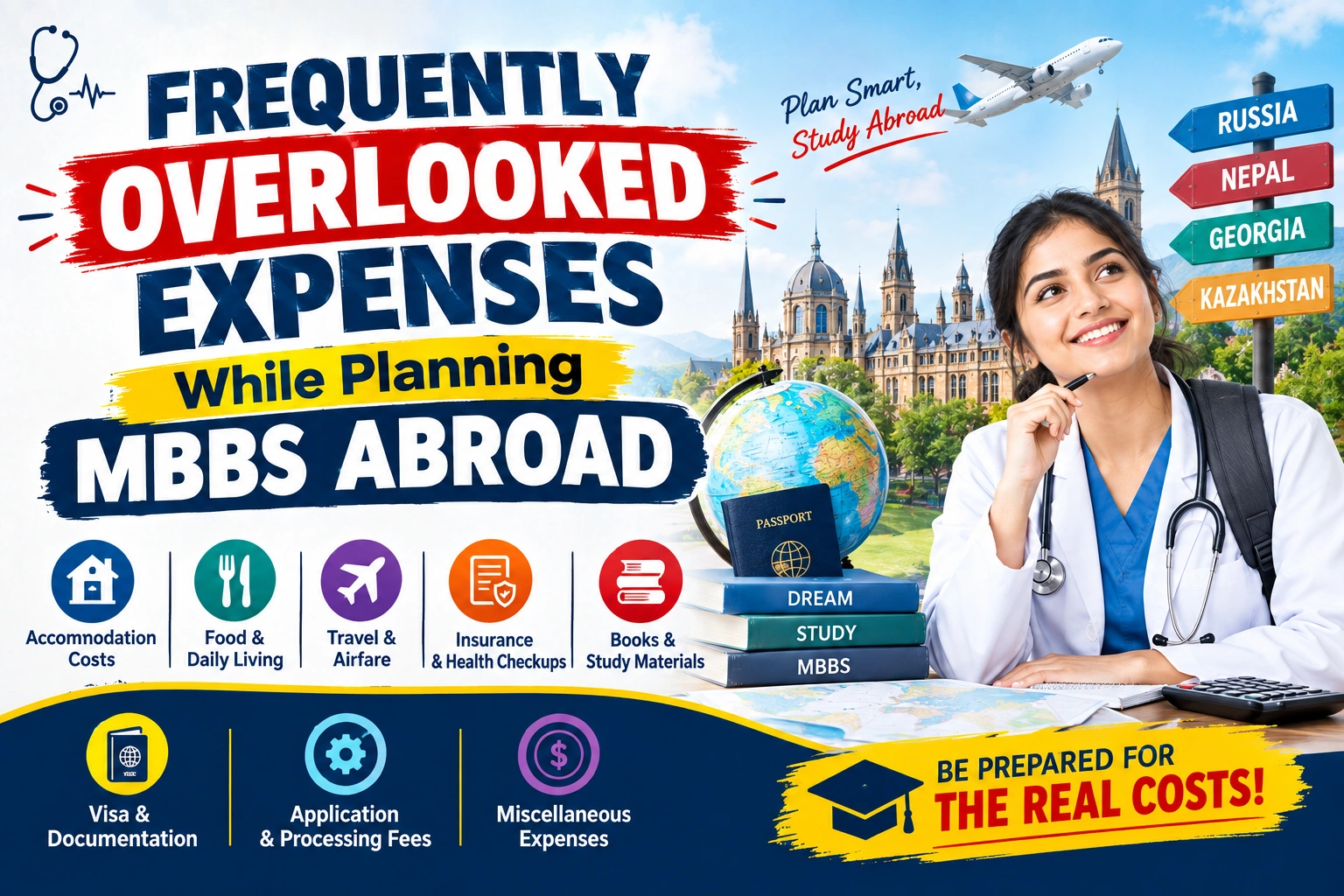
Here’s the budget breakdown you should expect:
- Tuition Fee
- Hostel Fee
- Visa Fee
- Food Costs
- Air Travels
- Transportation Costs
- Books
- Study Materials
- Medical Insurance
- Personal Expenses
Don’t Forget
Budget for medical school to account for fluctuations in currency.
Parents should also budget for emergency travel.
What Does MBBS Overseas Cost?
How much MBBS cost overseas greatly depends on the country and the selected university. Price also varies by country.
Always consider the total cost to send a child to university for the entire course. Many families only consider the first year’s fees.
Always choose the university that is open and transparent with their fee structure when compared to other schools with low tuition and a long list of avoidable fees.
Families should always demand a comprehensive fee structure at least 2 years before the student plans to attend that university.
Why Is NEET Important for MBBS Overseas?
Indian students are required to qualify with NEET if they wish to study MBBS abroad and practice medicine in India.
Always complete this step in the process before beginning the admission process.
Students can also use the NEET Rank Predictor, a tool to predict what rank they may achieve in the NEET exam to help parents determine what options are available for MBBS overseas.
Choosing the Right Destination
Every country provides its own specific benefits. Parents should use the following criteria to judge each country:
- Quality of Education
- Tuition Costs
- Living Expenses
- Availability of Clinical Exposure
- Safety of Students
- Weather
- Language
- Global Recognition
- Population of Students from India
Don’t choose a country just because a family member or friend has suggested it. Everyone’s financial situation and study objectives differ.
Living and Housing Facilities
Available accommodation that is comfortable has a huge bearing on the study performance of a student.
Parents ought to check if a University has:
- On-site hostels
- In-room furnishings
- Wi-Fi
- Laundry services
- Reading rooms
- Security Staff
- CCTV
- Dining facilities
- Availability of Indian Food
Students housed in secure, caring environments adapt to their new education systems and international study much quicker.
Insurance and Health Care
In many countries, Medical Insurance is a legal necessity.
Parents ought to check if their child has:
- Health Insurance
- Emergency Medical Insurance
- Health Insurance with access to a hospital
- Vaccination
- Medical Papers
Universities usually provide International Students healthcare services. Parents should check what services are offered before the student is enrolled.
Language and Communication
There are many good universities that offer MBBS in English which makes the education easy.
Students should still learn the basics of the local languages as a big part of their clinical training is communicating with the patients. Parents should motivate the Students to learn some simple sentences, prior to them leaving.
Quality of Education Trumps Cheap Fees
Many parents only look at affordable tuition.
They should also look at:
- Experience & Qualifications of Teaching Staff
- Availability of Labs
- Clinical Instruction
- Affiliated Hospitals
- Research
- Student/Teacher Ratio
- Internship Opportunities
- Examination System
Selecting a University that offers good educational services is worth the money as it offers the student better career prospects.
Career Prospects After Studying Medicine Abroad
One major concern parents have after a child goes abroad to study medicine is what happens once they graduate?
Studying medicine abroad opens many doors after graduation as you can choose many pathways including:
- The ability to practice medicine after becoming licensed
- Postgraduate studies
- Working in a hospital
- Conducting research
- Working in public health
- Medical Administration
- Health care management
- Taking licensing exams
- Pursuing a career in academia
With a great medical degree, you can practice in many different countries and their healthcare systems.
Common Errors Parents Should Avoid
Having no research is usually what causes the most admissions errors.
Common errors parents need to avoid are:
- Choosing schools based solely on cheaper tuition
- Believing in placement promises and salary claims that are too good to be true
- Not verifying if the university is recognized
- Paying any type of unofficial fees
- Relying only on social media posts that are not fact-checked
- Not verifying the conditions of the hostels
- Not calculating the cost of living
- Not checking the documents
The right research can lead to great outcomes for both the family and student.
Documents Parents Should Have Ready
Families usually need to have the following documents ready in order to start the admission process:
- School Certificates
- Passport
- Passport-sized photo
- Birth Certificate
- Medical Certificate
- Evidence of NEET
- Some forms of ID
- Financial Documents
- Some documents related to Visa
Admission can be delayed if the documents are not ready early.
Why Expert Guidance is Essential
Choosing the right university based on eligibility, checking requirements, gathering documents, applying to the university, securing the admission, processing the visa, and booking your tickets is the entire admission procedure to study medicine abroad.
MBBS Advisor can ease the entire process for families by evaluating universities, requirements, and eligibility, and by providing official resources to make educated decisions. Families of students interested in MBBS Abroad have resources that include information on countries, universities, and admissions, as well as career prospects and planning.
Conclusion
For many families, making the decision to study MBBS abroad is substantial. The success of the decision is determined by far more than just the admission to a program; selecting a university, planning finances, understanding program recognition, and evaluating future career prospects are critical as well. Families that research the safety and academic standards of a program, as well as licensing requirements and overall costs, are more likely to make educated decisions.
Make sure to check university recognition with the National Medical Commission (NMC), consult the World Directory of Medical Schools (WDOMS), assess global healthcare resources offered by the World Health Organization (WHO), and evaluate your child’s eligibility for NEET before confirming the admission. With the right guidance and planning, investing in your child’s education and future medical career is guaranteed to offer excellent returns.