 Russia
 Belarus
 Georgia
 Kazakhstan
 Kyrgyzstan
 Uzbekistan
 China
China Nepal
Nepal Bangladesh
 Poland
 Romania
 Slovakia
 Hungary
 N. Macedonia
 Vietnam
 Canada
 Armenia
 UK
UK Australia
 USA
USA Ireland
 Germany
 New Zealand
 Italy
Italy France
 Singapore
 Netherlands
 Sweden
 Switzerland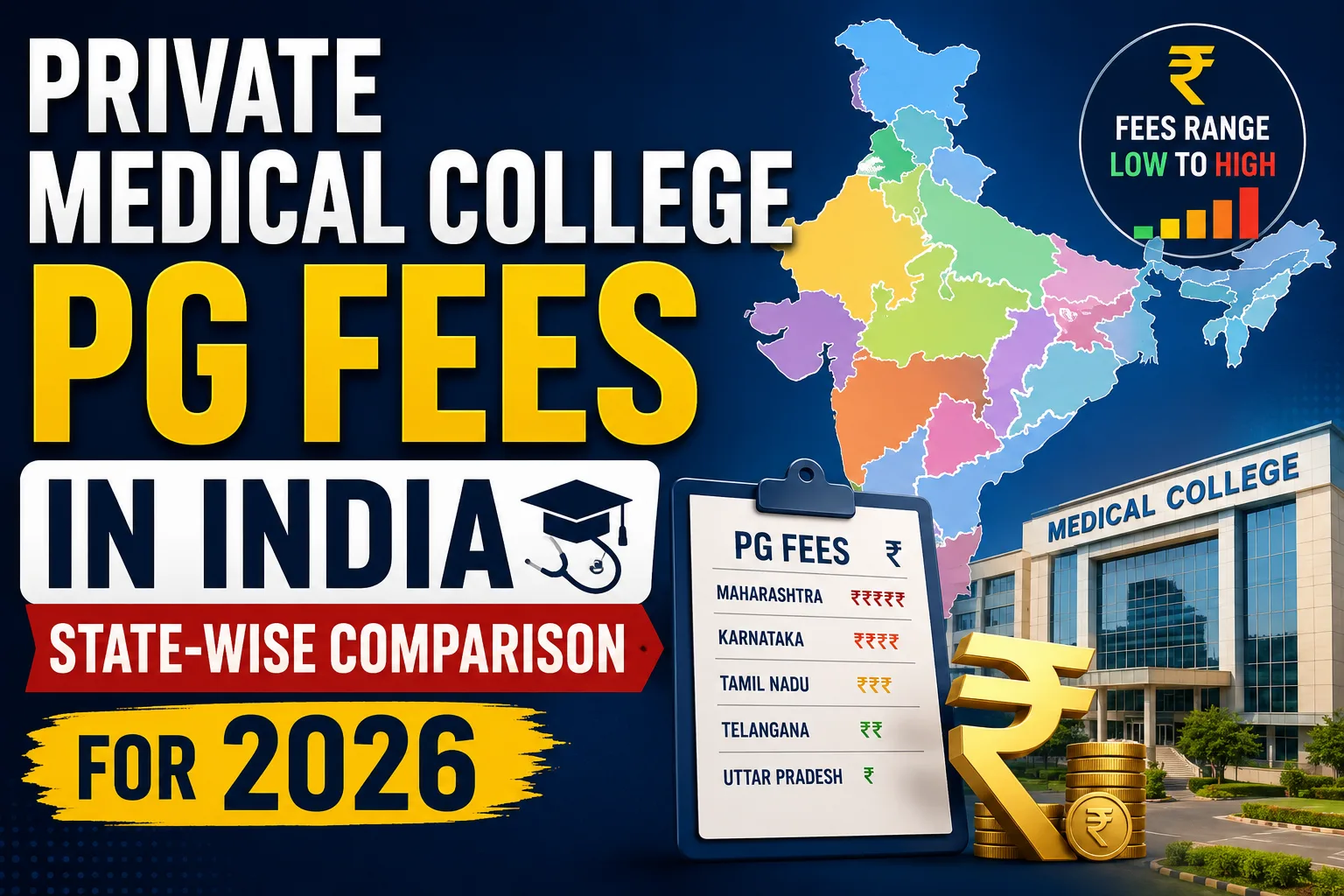
Medical education in India is highly competitive, with an abundance of MBBS graduates competing in the NEET PG to obtain admissions in MD, MS, PG Diploma, DNB, etc. courses. Admission to government medical colleges is the most economical option, but due to limited capacity they often need to consider private medical colleges. It is important to understand private medical college fees for medical aspirants and their families.
The fees of private medical postgraduate courses vary by state. Management quotas, NRI quotas, college reputation, clinical exposure, infrastructure, demand for medical specialties, and state policies all have an effect on the fees private medical colleges charge.
It is important for aspirants to keep abreast of the most recent counseling updates and other important exam information on reliable educational sites like MBBS Advisor. In addition, the dedicated NEET Section provides exam updates and information to help aspirants estimate their admission chances with the NEET Rank Predictor.
Understanding PG Medical Fees in Private Colleges
Private medical colleges offer numerous postgraduate courses, and the fees for each course are dependent on the branch selected.
Some of the branches with the most demand and high earning potential, like Radiology and Dermatology, have the highest fees. In contrast, general parity is observed in fees for non-clinical and para-clinical branches.
Beyond tuition, students should take into account:
Additional Expenses
- Hostel fees
- Food charges
- Security fees
- Exam charges
- Registration fees
- Library and lab fees
- Other fees
Therefore, total costs will likely outweigh tuition fees.
Why Are There Differing Fee Structures in India?
Medical education in India is regulated by the National Medical Commission (NMC), which replaced the Medical Council of India. Jurisdiction on fees is more fragmented and will likely include state governments, fee fixation committees, and private universities.
Furthermore, medical schools on the World Directory of Medical Schools (WDOMS) have an added advantage of providing world-recognized qualifications. Medical education, along with all its components, is further regulated by the education quality standards set by the World Health Organization (WHO).
Because of this, students are likely to see a large discrepancy in postgraduate fees in India depending on the state of entry.
State-Wise Comparison of Private Medical College PG Fees in India 2026
Karnataka
Karnataka is still one of the preferred states for pursuit of postgraduate medical education in India due to the large number of private medical colleges and deemed universities.
Government quota seats have fees that vary between ?1 lakh and ?15 lakh based on specialty. Private quota seats have fees of between ?10 lakh to ?40 lakh, with Radiology fees likely crossing ?50 lakh in some colleges.
Karnataka Advantages
- Lots of PG seats
- Clear counseling
- Variety in specialties
- Adequate clinical exposure
However, students need to do proper due diligence of each college's fee prior to counseling.
Maharashtra
Maharashtra is home to India’s top private and deemed medical universities. Annual costs of Postgraduate Programs range from ?8 to ?35 Lakhs.
MD Radiology, MD Dermatology, MD General Medicine and MS Orthopedics command even higher costs.
Maharashtra is preferred by students from all over the country for its well-established infrastructural support and a good patient turnout.
Tamil Nadu
The healthcare system support and medical education in Tamil Nadu are among the best in the country. Private postgraduate medical fees range between ?5 Lakhs to ?30 Lakhs annually.
Many colleges keep moderate costs compared to deemed universities in other states.
Student Benefits
- High patient exposure
- Good academic environment
- Well-established teaching hospitals
- Research Opportunities
The demand for postgraduate seats is extremely high, due to the state’s educational quality.
Telangana
Telangana, especially in the last decade, has gained a lot of attention as a state with medical education opportunities. There are multiple private medical colleges and universities which provide postgraduate education for different specialties.
Annual fees for different branches and admission categories are between ?7 Lakhs to ?40 Lakhs.
Popular specialties with the highest fees are Radiology, Dermatology, General Medicine, and Obstetrics & Gynecology. The developing healthcare system of the state also provides opportunities for postgraduate aspirants.
Andhra Pradesh
Private medical colleges in Andhra Pradesh provide postgraduate education in a number of different streams. Fees vary from ?6 Lakhs to ?35 Lakhs annually.
Andhra Pradesh is a common choice for students owing to:
Key Advantages
- Quality teaching hospitals
- The counseling process is competitive
- Good clinical exposure
- Multiple private colleges
Management quota fees are normally significantly less than government quota fees.
Kerala
Among the states in India, Kerala has the best healthcare system. The private medical college PG fees usually lie between ?5 lakh and ?25 lakh per annum.
Kerala Colleges Are Famous For
- Academics
- Clinical training
- Healthcare infrastructure
- Education with a focus on the patient
While the fees are somewhat on the lower end when compared with other deemed universities, the competition is ruthless.
Uttar Pradesh
Uttar Pradesh has experienced massive growth in the private medical education sector. Many private medical colleges have been established in the state, offering postgraduate education.
The fees range between ?10 lakh and ?45 lakh per annum, based on the specialty and quota.
Large competition among candidates has led to a high competition based fee structure for the preferred branches.
Rajasthan
Private medical colleges in Rajasthan have become popular due to the growing infrastructure, and the healthcare services.
PG fees are around ?8 lakh to ?35 lakh on an annual basis.
Students are considering Rajasthan more and more due to:
Reasons for Growing Popularity
- Better medical facilities
- Increasing PG seats
- Better specialty options
- Growing network of hospitals
Punjab
There are a number of private institutions and universities in Punjab that offer PG medical education. The fees usually range between ?8 lakh and ?30 lakh.
Factors Influencing Fees
- Specialty demand
- Reputation of the college
- Infrastructure
- Teaching hospital capacity
Colleges must be compared carefully before making a decision.
Haryana
Haryana has become a favored choice for medical education because of its closeness to Delhi NCR.
The cost for PG medical programs is estimated between ?10 lakh and ?40 lakh for one academic year.
Institutions Offer
- Sophisticated medical systems
- Up-to-date labs
- Trained staff
- Quality service training
Northern India candidates are still being drawn to the region.
Fee Structure of Deemed Universities
Deemed universities set a higher fee range compared to private universities that follow the state counseling system.
Annual Fee Range
- ?15 lakh to ?60 lakh for most specialties
- ?40 lakh to ?80 lakh for most favored specialties
- ?1 crore for some high demand specialties for the entire course
Deemed universities charge high fees. Hence, students must evaluate:
Important Evaluation Factors
- The factors of investment and returns
- Reputation of the university
- Exposure to clinical practice
- Job placement prospects
- Research opportunities
Highest PG Medical Specialties
MD Radiology, MD Dermatology, MD General Medicine, MS Orthopedics, MD Pediatrics, and MS Obstetrics and Gynecology are the most expensive PG medical specialties.
Many private universities charge over ?1 crore for these specialties.
Least PG Specialties Fee in Private Universities
MD Anatomy, MD Physiology, MD Biochemistry, MD Pharmacology, MD Microbiology, and MD Community Medicine are the specialties that charge a low fee.
These specialties are found to charge low fees and offer a good academic career.
Impact of NEET PG Ranking on Fee Structure
The better the NEET PG ranking, the lower the education cost.
For candidates with higher ranks, there is a greater chance of obtaining:
Benefits of a Better Rank
- Government quota seats
- State quota seats
- Merit-based admissions
- Reduced fee structures
On the other hand, seats acquired by students via the management quota come at a very high cost.
Before counseling, candidates can predict their chances of admission using tools such as the NEET Rank Predictor. The NEET Portal on MBBS Advisor provides the latest updates on counseling, cutoffs, and admission-related information.
Costs After Admission
Some students believe that tuition costs are the only costs they will incur during their postgraduate education. They fail to consider other costs like:
Additional Educational Expenses
- Hostels
- Food and dining facilities
- Thesis
- Examination
- Fees for attending conferences
- Books and other supplies
- Medical instruments
Over a 3-year duration (PG course), these costs can easily add up to several lakhs.
PG Medical Education Financial Planning
Private medical education costs are extremely high and make financial planning very important.
Students Must Consider
- Education loans
- Scholarships
- What they and their families can afford
- What they will earn in the future
- What specialty they will choose and the prospects for that specialty
This will help students avoid the burden of unnecessary debt during their postgraduate education.
Many banks now provide loans for medical students pursuing MD and MS education in approved institutions.
What to Expect Regarding PG Medical Fees
Each year, the number of students wanting to complete postgraduate studies in medicine increases. Consequently, the number of MBBS students competing for a limited number of PG seats will increase. This will result in a higher cost for seats in private medical colleges in 2026 and years beyond that.
The future is likely to be influenced by several trends:
Future Trends
- An increase in the number of medical colleges
- An increase in the number of available PG seats
- More regulation of fees by authorities
- More regulation in counseling to ensure fairness
- Better digital admission systems
The work of the World Health Organization (WHO), the National Medical Commission (NMC), and systems of recognition such as the World Directory of Medical Schools (WDOMS), will continue to be critical in determining the standards and the quality of medical education worldwide.
Conclusion
In the context of India's growing need for postgraduate medical education, private medical colleges are essential. There are many variations in fee structures across states, medical specialties, and across different admission categories. Karnataka, Maharashtra, Tamil Nadu, Telangana, Andhra Pradesh, Kerala, Uttar Pradesh, Rajasthan, Punjab, and Haryana will continue to be preferred states for PG medical education in 2026.
Students should make these important decisions based on more than just fees structures. Other factors that should be evaluated are the quality of teaching and learning, the exposure to the practice of medicine, the teaching faculty, the physical facilities, the recognition of the program, and the opportunities for employment. Candidates should perform an adequate amount of research to help them make an important decision in counseling that provides the best possible returns on their education.
For current trends in medical admissions, counseling, NEET information, and career planning, students are encouraged to visit MBBS Advisor regularly and explore the dedicated NEET Section.