 Russia
 Belarus
 Georgia
 Kazakhstan
 Kyrgyzstan
 Uzbekistan
 China
China Nepal
Nepal Bangladesh
 Poland
 Romania
 Slovakia
 Hungary
 N. Macedonia
 Vietnam
 Canada
 Armenia
 UK
UK Australia
 USA
USA Ireland
 Germany
 New Zealand
 Italy
Italy France
 Singapore
 Netherlands
 Sweden
 Switzerland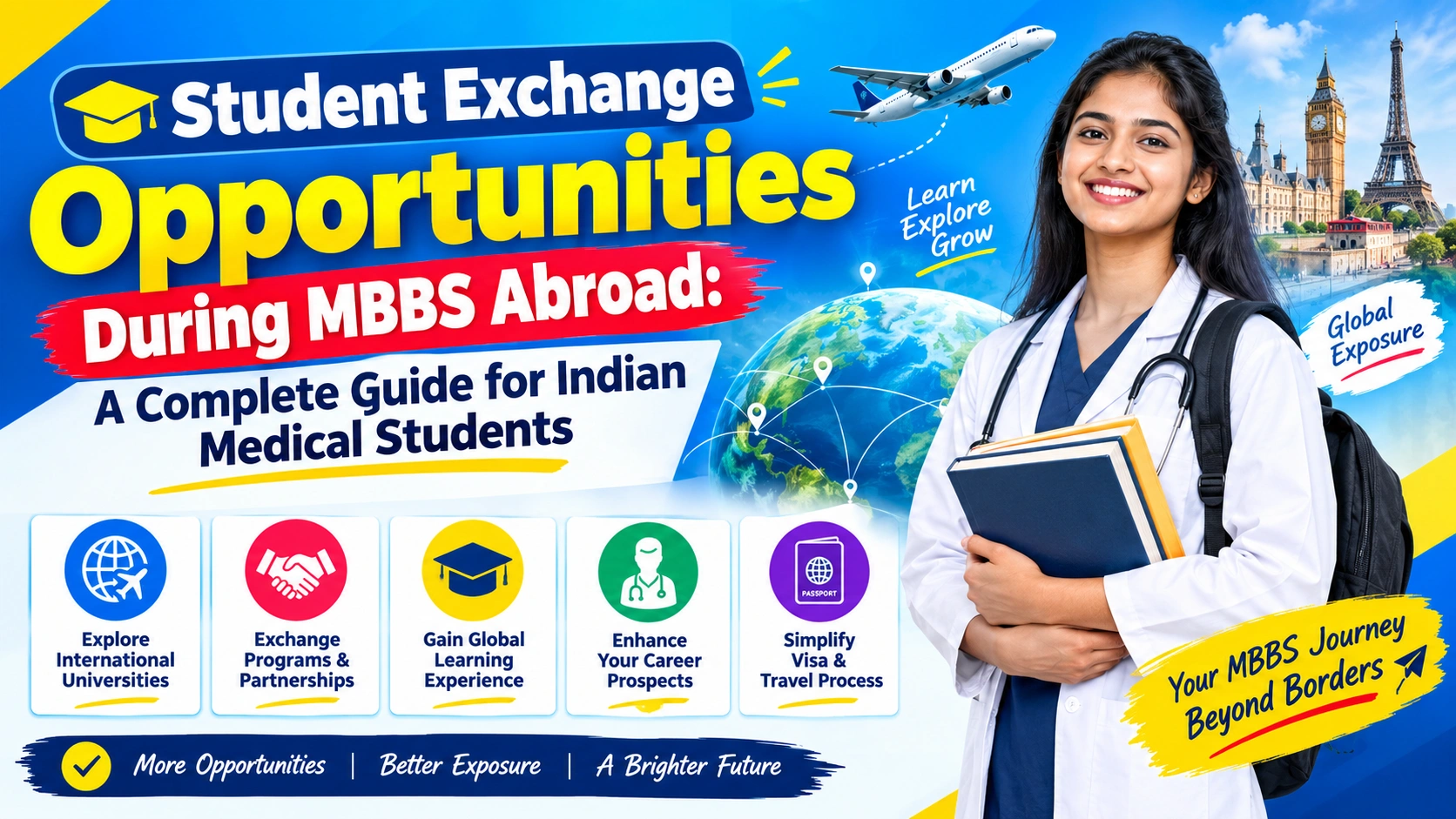
Studying MBBS abroad provides Indian medical students with opportunities that go beyond classroom learning and clinical training. Along with earning a globally recognised medical degree, students can explore various international exposure programs, including student exchange opportunities. Exchange programs allow medical students to experience different healthcare systems, understand diverse medical practices, interact with international peers, and improve clinical knowledge.
For students planning a medical education journey, choosing the right destination and understanding global opportunities is important. Platforms like MBBS Advisor help students explore information related to medical education abroad, admission procedures, universities, and career opportunities. Students can also check complete details about MBBS Abroad options before selecting a country or university.
What Are Student Exchange Opportunities During MBBS Abroad?
Student exchange programs during MBBS abroad are academic and clinical training opportunities where medical students can temporarily study, train, or participate in research activities at another university or healthcare institution. programs are generally conducted through partnerships between medical universities located in different countries.
The main purpose of the programs is to provide students with international medical exposure. A student studying MBBS in one country may get a chance to attend lectures, observe advanced treatment methods, participate in medical research, or complete clinical rotations in another country.
For Indian students, opportunities are valuable because they help develop a broader understanding of global healthcare practices and improve professional skills required for future medical careers.
Why Should Indian Students Consider Exchange Programs During MBBS Abroad?
International exchange programs provide several advantages for medical students. Medical education is not limited to textbooks; practical knowledge, communication skills, and exposure to different healthcare environments play an important role in becoming a successful doctor.
Students participating in exchange programs can experience advanced medical technologies, modern hospital infrastructure, and different approaches to patient care. This exposure helps them understand how healthcare systems work in different parts of the world.
Another important benefit is cultural learning. Medical professionals often treat patients from different backgrounds, and understanding cultural differences improves communication between doctors and patients.
Exchange opportunities also help students build international connections. Meeting medical students, professors, and healthcare professionals from different countries can create valuable networking opportunities for future research and career growth.
Types of Student Exchange Programs Available During MBBS Abroad
Student exchange opportunities can vary depending on university, country, and partnership agreements. Some common types of exchange programs include:
Clinical Exchange Programs
Clinical exchange programs allow medical students to gain practical experience in hospitals or healthcare centres outside home university. Students may observe surgeries, attend clinical rounds, and learn about different treatment procedures.
programs are especially useful for students who want to improve clinical skills and understand international healthcare standards.
Research Exchange Programs
Research-based exchanges focus on medical research activities. Students can work with international researchers on projects related to medical science, biotechnology, public health, or clinical studies.
Participation in research programs can strengthen a student’s academic profile and may be beneficial for those planning higher studies or specialised medical careers.
Short-Term Medical Training Programs
Many universities offer short-term training programs during summer or academic breaks. Programs may include workshops, hospital visits, medical conferences, and practical training sessions.
Short-term exchanges are suitable for students who want international exposure without affecting regular MBBS academic schedules.
Popular Countries Offering MBBS Exchange Opportunities
Many countries with internationally recognised medical universities provide exchange opportunities for international students. Some popular destinations include:
Russia
Russia is one of the preferred destinations for Indian students pursuing MBBS abroad. Several Russian medical universities have collaborations with international institutions, allowing students to participate in academic and clinical exchange programs.
Students studying in Russia can gain exposure to advanced healthcare facilities and different medical approaches.
Georgia
Georgia has become a popular choice among Indian medical aspirants due to its English-medium medical programs and internationally recognised universities. Many Georgian universities maintain academic partnerships with institutions worldwide, creating opportunities for student mobility programs.
Kazakhstan
Medical universities in Kazakhstan also provide international exposure through collaborations and academic exchange initiatives. Students can experience different healthcare environments while continuing medical education.
Nepal
Due to geographical and cultural similarities with India, Nepal is another preferred destination for medical education. Some medical institutions provide opportunities for international students to participate in academic activities and medical conferences.
How Do MBBS Abroad Universities Manage Student Exchange Programs?
Universities generally manage exchange programs through international relations departments. Departments coordinate with partner universities, manage student applications, and provide guidance throughout the exchange process.
Students usually need to fulfil certain eligibility requirements before participating. may include academic performance, attendance records, language requirements, and approval from university administration.
availability of exchange programs depends on the university's international collaborations. Therefore, students should check exchange opportunities before selecting a medical university abroad.
Students can also verify whether a medical university follows recognised global standards through resources such as the World Directory of Medical Schools (WDOMS). Recognition and accreditation play an important role when planning medical education outside India.
Eligibility Criteria for MBBS Student Exchange Programs
Although requirements may differ between universities, common eligibility criteria include:
- Students must be enrolled in a recognised MBBS program.
- A good academic record may be required.
- Students should maintain proper attendance.
- Basic communication skills in English are generally necessary.
- Approval from home university may be required.
- Students may need to submit academic transcripts and recommendation letters.
Some exchange programs may also require students to complete specific years of medical education before participating, especially for clinical rotations.
Role of Recognition and Guidelines for MBBS Abroad Students
Before selecting an MBBS abroad university, students should carefully check recognition, accreditation, and eligibility requirements. guidelines provided by National Medical Commission (NMC) are important for Indian students planning to study medicine outside India.
Students must ensure that the chosen university meets required criteria so that they can continue their medical career in India after completing their degree.
International medical education also requires awareness about global healthcare standards. Organisations like the World Health Organization (WHO) provide valuable information related to global health systems and medical practices.
How MBBS Advisor Helps Students Explore Global Medical Opportunities
Choosing the right medical university abroad can be challenging because students need to consider multiple factors such as university recognition, fees, curriculum, clinical exposure, and future career opportunities.
MBBS Advisor provides useful guidance for students searching for reliable information about medical education abroad. Students can explore different countries, understand admission procedures, and compare available options before making an informed decision.
Students preparing for medical admission can also use resources like NEET preparation guide and NEET Rank Predictor to understand admission possibilities and plan medical journeys better.
Challenges Students May Face During Exchange Programs
Although exchange programs provide excellent opportunities, students may face certain challenges while adapting to a new environment.
Language differences can sometimes create communication difficulties, especially during clinical training. Students may also need time to adjust to different healthcare systems, teaching methods, and cultural practices.
Financial planning is another important factor. Students should consider travel expenses, accommodation costs, insurance requirements, and other additional expenses before participating in an exchange program.
Proper preparation and guidance can help students overcome challenges and make the most of international experience.
Future Benefits of Student Exchange Opportunities for Medical Students
Participation in international exchange programs can positively impact a student’s medical career. It improves confidence, clinical understanding, communication skills, and professional knowledge.
Students who gain international exposure often develop a better understanding of global healthcare challenges. This experience can support future opportunities in research, postgraduate studies, and international medical collaborations.
For Indian students planning MBBS abroad, exchange programs can become an additional advantage by providing practical learning beyond regular curriculum.
Conclusion
Student exchange opportunities during MBBS abroad allow medical students to experience international healthcare systems, improve clinical skills, and develop a global perspective toward medicine. programs provide valuable exposure through clinical training, research activities, and cultural learning.
Before choosing a medical university abroad, students should carefully evaluate recognition, academic quality, exchange opportunities, and future career prospects. Proper planning with reliable information sources like MBBS Advisor can help students make better decisions for their medical education journey.
With increasing global collaboration in healthcare, student exchange programs are becoming an important part of medical education, helping future doctors gain knowledge and skills required to succeed in an interconnected world.