 Russia
 Belarus
 Georgia
 Kazakhstan
 Kyrgyzstan
 Uzbekistan
 China
China Nepal
Nepal Bangladesh
 Poland
 Romania
 Slovakia
 Hungary
 N. Macedonia
 Vietnam
 Canada
 Armenia
 UK
UK Australia
 USA
USA Ireland
 Germany
 New Zealand
 Italy
Italy France
 Singapore
 Netherlands
 Sweden
 Switzerland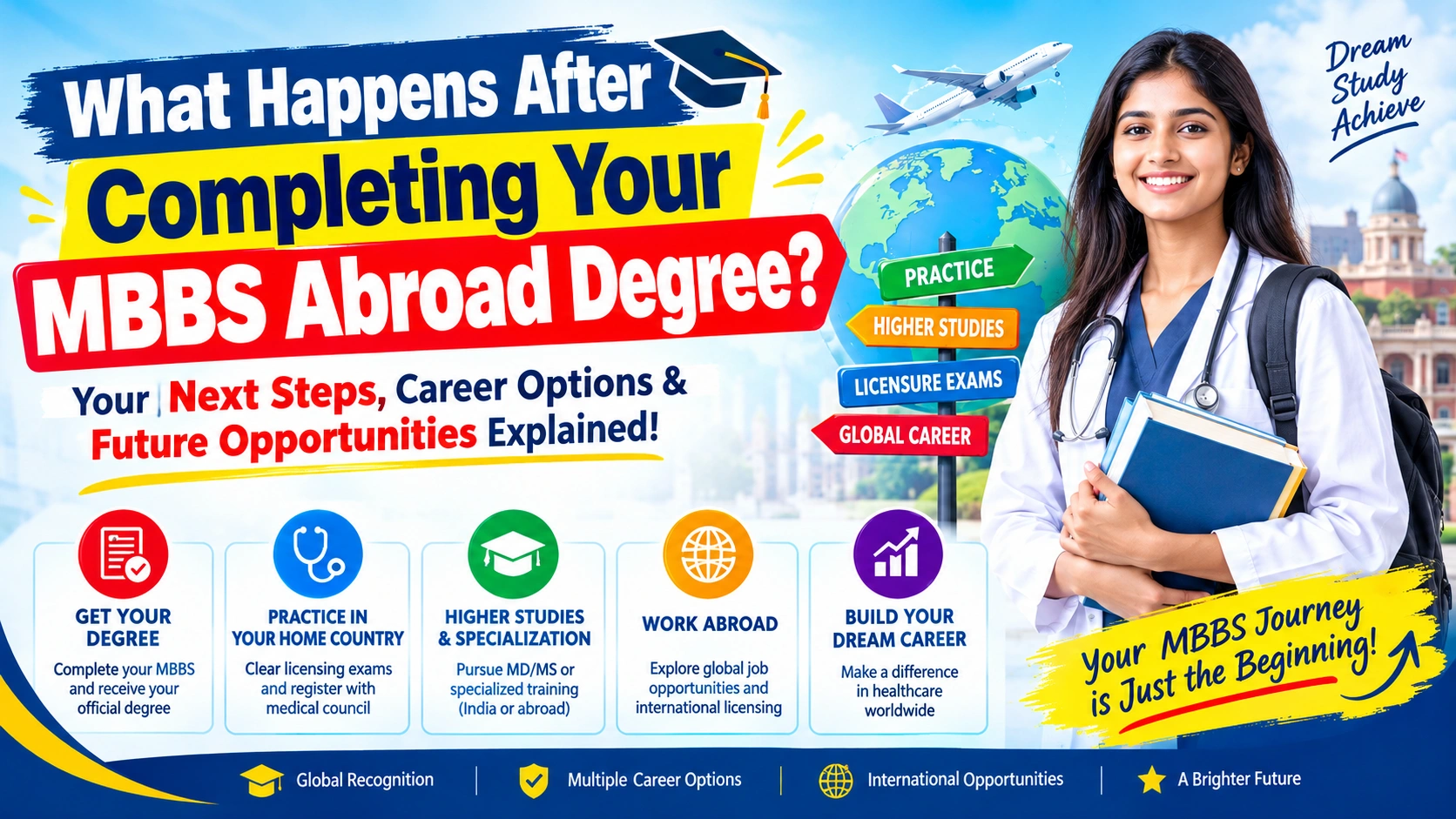
Completing an MBBS abroad degree is a major milestone for Indian medical aspirants. After spending several years studying medicine in a foreign country, students often have questions about what comes next. Many students believe that receiving an MBBS degree is the final step, but in reality, it is the beginning of their professional medical journey.
After completing MBBS abroad, Indian students need to complete certain formalities, licensing requirements, and practical training before they can start practising medicine in India.The process involves understanding rules of the National Medical Commission (NMC), preparing for licensing examinations, completing internships, and planning future career options.
Students who choose foreign medical education through reliable guidance platforms like MBBS Advisor can get better clarity about admission procedures, university selection, and post-graduation career pathways. Understanding steps after completing MBBS abroad helps students prepare themselves for a successful medical career.
Receiving MBBS Degree from a Foreign Medical University
After completing required academic years and clinical training, students receive their medical degree from foreign university where they studied. The degree name may vary depending on the country, such as MD, MBBS, or equivalent medical qualification.
However, Indian students must ensure that their university and course structure meet eligibility requirements of the National Medical Commission (NMC). Recognition of university plays an important role when students plan to return to India for medical practice.
A student should verify important factors such as:
- Recognition of medical university by respective country's medical authority
- Eligibility according to NMC guidelines
- Duration of medical course
- Clinical exposure and internship structure
- Availability of proper hospital training
A recognised foreign medical degree creates a strong foundation for future licensing and career opportunities.
Returning to India After Completing MBBS Abroad
Many Indian students return home after completing their medical education abroad. However, you cannot immediately start practising as a doctor in India. According to Indian medical regulations, foreign medical graduates need to qualify for the required licensing process.
The first step after returning to India is to complete documentation and prepare for the licensing examination conducted for foreign medical graduates.
Students should keep important documents ready, including:
- Original medical degree certificate
- Academic transcripts
- Internship completion certificate
- Passport and visa records
- University documents
- Certificate of eligibility (if applicable)
Proper documentation helps avoid unnecessary delays during the registration process.
FMGE/NExT Examination for Foreign Medical Graduates
For Indian students who complete MBBS abroad, qualifying for the medical licensing examination is one of the most important steps. National Eligibility cum Entrance Test (NEET) is required for admission into medical courses abroad, but after completing degree, graduates need to fulfil licensing requirements to practise medicine in India.
Foreign Medical Graduate Examination (FMGE) has traditionally been a licensing examination for foreign medical graduates. It evaluates where students have necessary medical knowledge and skills to practise safely in India.
In the future, the National Exit Test (NExT) is expected to become an important examination pathway for medical graduates. Students should regularly check updates from official medical authorities regarding examination patterns and implementation.
To understand your NEET performance before choosing medical education options, students can also use tools like NEET Rank Predictor to estimate your expected rank and explore suitable medical opportunities.
Completing Mandatory Internship in India
After clearing the required licensing examination, foreign medical graduates generally need to complete a compulsory internship in India before obtaining permanent registration.
internship provides practical exposure in different medical departments, including:
- Medicine
- Surgery
- Pediatrics
- Obstetrics and Gynecology
- Community Medicine
- Emergency Care
Clinical training is an essential part of becoming a competent doctor. Students who have studied abroad may experience differences between healthcare systems, so internship training helps me understand Indian medical practices and patient care methods.
Registration with State Medical Council
After completing all necessary requirements, medical graduates can apply for registration with the concerned State Medical Council. Registration allows doctors to legally practise medicine in India.
registration process usually requires verification of:
- Medical degree
- Licensing examination qualification
- Internship completion
- Identity documents
- O r required certificates
Once registered, doctors can work in hospitals, clinics, healthcare organisations, or continue their higher studies.
Career Options After MBBS Abroad
Completing MBBS abroad opens multiple career opportunities for graduates. After obtaining medical registration, doctors can choose different career paths depending on your interests.
Working as a Doctor in India
Many foreign medical graduates choose to work in government hospitals, private hospitals, healthcare centres, and clinics. Doctors can gain experience in different specialities and improve their clinical skills.
Demand for qualified doctors continues to increase due to expanding healthcare facilities across India. Graduates who focus on improving their medical knowledge and patient communication skills can build successful careers.
Preparing for Postgraduate Medical Education
Many MBBS graduates aim to specialise in fields such as:
- Cardiology
- Neurology
- Orthopedics
- Dermatology
- Radiology
- General Surgery
- Pediatrics
After completing MBBS abroad and fulfilling Indian licensing requirements, students can prepare for postgraduate entrance examinations like NEET PG.
Specialisation allows doctors to develop expertise in specific medical fields and improves career growth opportunities.
Medical Opportunities Abroad
Some graduates also explore career options in countries o r than India. However, each country has separate licensing requirements for international medical graduates.
Doctors planning to work abroad need to clear each country's medical licensing examination and meet professional requirements.
Students should research these requirements carefully before selecting a career destination.
Opportunities for Higher Studies and Research
An MBBS degree is not limited to clinical practice. Many graduates choose research, healthcare management, medical teaching, and public health careers.
Doctors can explore opportunities in:
- Medical research organisations
- Pharmaceutical companies
- Public health programmes
- Medical education
- Healthcare administration
Continuous learning helps doctors stay updated with medical advancements and new treatment methods.
Importance of Choosing Right MBBS Abroad University
The journey after completing MBBS abroad depends significantly on the quality of education received during medical studies. Choosing the right university ensures better academic preparation and clinical exposure.
Students should consider factors such as:
- University recognition
- Teaching quality
- Hospital facilities
- International student support
- Clinical training opportunities
- Past performance of graduates
Platforms like MBBS Abroad help students understand different international medical education options and compare universities according to your requirements.
Students should also verify global recognition details through resources like World Directory of Medical Schools (WDOMS) before finalising a university.
Challenges Faced After Completing MBBS Abroad
Although studying medicine abroad provides valuable opportunities, graduates may face certain challenges after completing their degree.
Some common challenges include:
- Adapting to Indian medical examination patterns
- Preparing for licensing exams
- Managing documentation requirements
- Understanding healthcare practices in India
- Competing for postgraduate seats
Proper planning during medical education can help students overcome these challenges. Students should focus on strong medical concepts, clinical skills, and regular exam preparation.
Role of WHO and International Recognition
International recognition plays an important role when selecting a medical university abroad. Students should check when a university follows acceptable medical education standards.Information provided by organisations like World Health Organization (WHO) and global medical education directories helps students understand international medical education frameworks.However, students should always verify current Indian regulations through official sources like NMC before making any final decision.
Conclusion
Completing an MBBS abroad degree is an important achievement, but it is only the beginning of a doctor's professional journey. After graduation, students must complete licensing requirements, internships, registration procedures, and career planning to establish themselves as medical professionals.With proper preparation, dedication, and awareness of regulations, foreign medical graduates can successfully build rewarding medical careers in India and other countries.Choosing a recognised university, understanding licensing process, and staying updated with medical guidelines are essential steps for every student planning a future after MBBS abroad. Platforms like MBBS Advisor provide valuable guidance for students who want to explore medical education opportunities and make informed decisions about their healthcare careers.