 Russia
 Belarus
 Georgia
 Kazakhstan
 Kyrgyzstan
 Uzbekistan
 China
China Nepal
Nepal Bangladesh
 Poland
 Romania
 Slovakia
 Hungary
 N. Macedonia
 Vietnam
 Canada
 Armenia
 UK
UK Australia
 USA
USA Ireland
 Germany
 New Zealand
 Italy
Italy France
 Singapore
 Netherlands
 Sweden
 Switzerland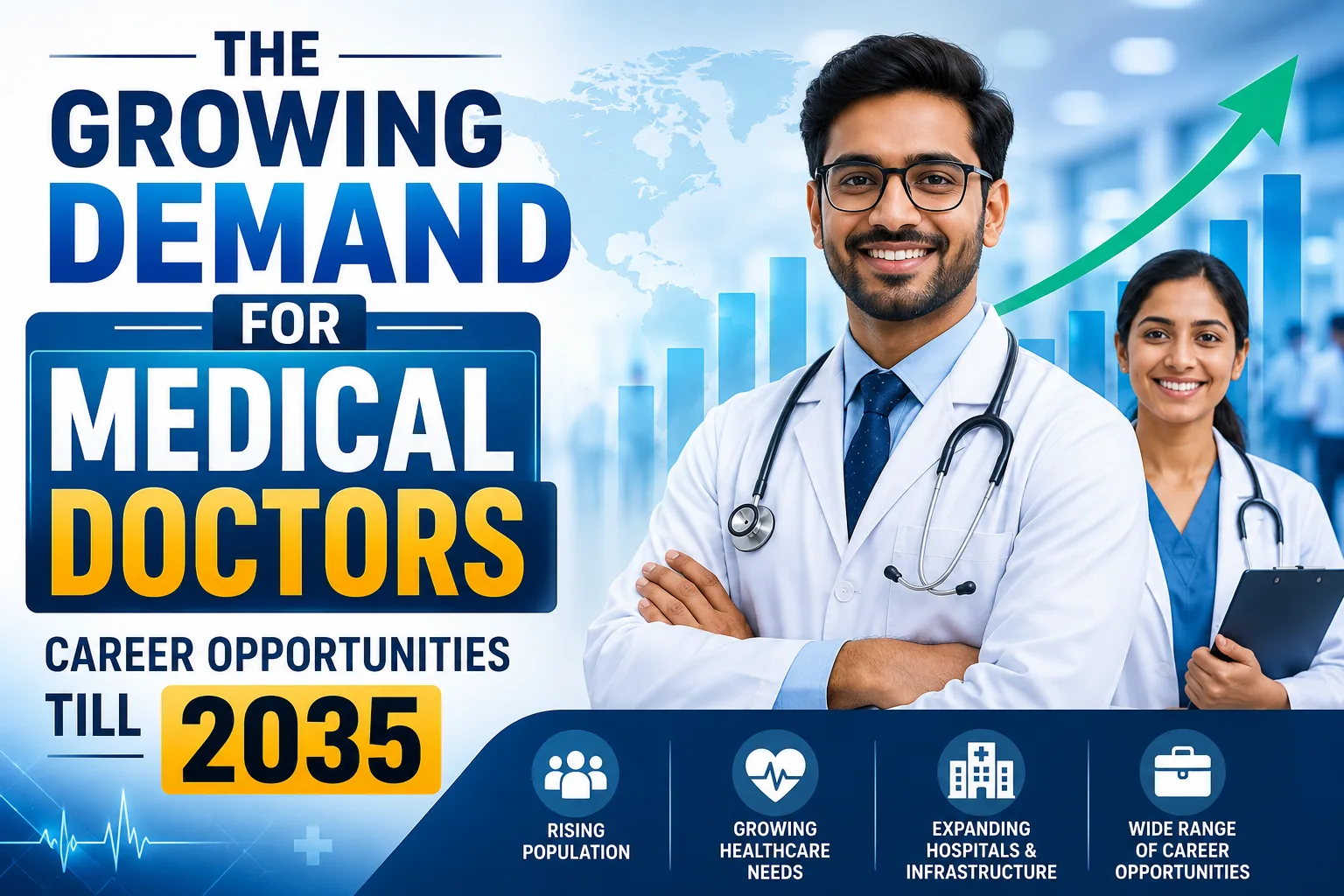
If you are dedicated to building a career in the medical field, you must first recognize that the global healthcare sector is undergoing one of the most significant transformations in modern history: sustained population growth, steady increases in global life expectancy, continuous breakthroughs in medical technology, accelerating global urbanization, and the world-spanning high prevalence of chronic diseases—these overlapping factors have generated an unprecedented demand for healthcare practitioners.
As the core role that connects patient diagnosis and treatment with the industry’s medical innovation, the medical profession enjoys long-term positive career prospects. Official projections from the World Health Organization (WHO) further corroborate this trend: by 2030, the world will face a shortage of approximately 11 million health workers, with low- and middle-income countries confronting the most severe supply-demand imbalance.
This continuously expanding shortage creates a large number of scarce career opportunities for medical students planning to enter the industry before 2035. If you are using MBBS Advisor to map out your medical education path, it is even more critical to grasp this core industry trend in advance.
The following part of this article will break down the three core driving frameworks that fuel rising demand for physicians:
- Intensifying population aging
- The continuously expanding global healthcare workforce shortage
- The year-on-year growing burden of chronic diseases
Through clear dimensional analysis, it will help you fully sort out the career opportunities in the healthcare sector and provide a solid reference for you to plan your academic work and long-term professional development.
Core Drivers of Rising Physician Demand
This work outlines global physician career development trends for medical students, with a core focus on employment needs and opportunities leading up to 2035.
Chronic Diseases Create Lifelong Demand
First, the core difference between various chronic conditions such as diabetes and hypertension and infectious diseases is that chronic illnesses require lifelong management.
This attribute generates sustained demand for physicians and multi-disciplinary medical teams.
By 2035, specialties including:
- Cardiology
- Endocrinology
will hold extremely high market value.
Expansion of Medical Infrastructure
Currently, the world is undergoing a wave of medical infrastructure expansion.
Governments across Asia, Africa, Europe, and the Americas are investing heavily in constructing new hospitals, specialty centers, and telemedicine networks, which has spawned six categories of new healthcare positions including general practitioners and surgeons.
Medical students currently consulting MBBS Advisor should prioritize the long-term career stability brought by this trend.
Will AI Replace Doctors?
Regarding the widespread anxiety among medical students about AI-driven job replacement, industry experts have reached a unified conclusion:
AI can only serve as an auxiliary tool in six scenarios including:
- Medical image analysis
- Clinical document processing
Core medical links still rely on irreplaceable human capabilities such as:
- Clinical judgment
- Empathy
AI will only free physicians to dedicate themselves to core clinical work.
Expanding Career Paths for Doctors
By 2035, physicians’ scope of employment will have long expanded far beyond traditional hospitals.
The clinical career track covers:
- Five categories of employment institutions
- Nine high-demand specialties
At present, a new employment preference trend has also emerged among current medical students, who increasingly favor:
- Radiology
- Dermatology
Telemedicine Career Opportunities
The new opportunities arising in the telemedicine career track are equally worthy of focused attention.
As job-search-focused popular science content designed for medical students across the globe, we first sorted out the core employment trends in the global healthcare sector through 2035.
Four major tracks will see substantial expansion before 2035:
- Virtual consultation
- Remote monitoring
- Rural medical outreach
- International medical services
Public Health and Preventive Medicine
In the field of public health and preventive medicine, the COVID-19 pandemic has fully highlighted the core value of professionals working in this sector.
Specialist physicians in areas such as:
- Epidemiology
- Preventive medicine
will maintain long-term high market demand, as countries around the world continue to strengthen their public health and medical reserves.
Medical Research and Innovation Careers
As the core driving force behind medical innovation, the medical research sector covers five core employment areas including:
- Clinical trials
- Drug development
Researchers in this field play a key supporting role in advancing the upgrade of treatment plans and improving the long-term prognosis of patients.
International Career Opportunities for Doctors
For medical students who intend to pursue career development overseas, we analyzed the shortage of international physicians, supporting recruitment policies, and corresponding official license application channels in the United States, the United Kingdom, and Australia.
These channels are respectively:
- United States Medical Licensing Examination (USMLE) for the United States
- General Medical Council (GMC) for the United Kingdom
- Medical Board of Australia for Australia
Emerging Medical Fields Through 2035
In addition, we sorted out four emerging medical fields that will experience growth by 2035:
- Digital health
- Genomic medicine
- Medical AI
- Healthcare management
We broke down the sub-field employment directions for each of these fields one by one.
Why Medicine Remains a Future-Secure Career
Finally, by comparing the healthcare industry with other sectors that have suffered severe impacts from automation, we summarized seven core factors that support the long-term stability of medical careers.
These factors highlight the strong recession-resistant resilience of the healthcare industry and clearly point out that medicine is one of the most future-secure career paths available at present.
If you are considering pursuing a career in medicine, you must first recognize that this industry still holds a highly competitive long-term development outlook.
If you have completed your career direction assessment through MBBS Advisor, you need to align your preparation in advance with the core industry needs.
Essential Skills Future Physicians Must Master
Future physicians must master five essential skills to establish a foothold in the industry:
- Communication skills to support doctor-patient interaction and cross-team collaboration
- Digital literacy to adapt to smart medical tools
- Adaptability to respond to industry changes
- Leadership to coordinate overall medical resources
- A mindset of lifelong learning that runs through the entire professional practice cycle
How MBBS Advisor Supports Medical Career Planning
To help you meet all your end-to-end needs, from college admission and school selection to practicing medicine globally, MBBS Advisor offers six exclusive planning services:
- MBBS admission application guidance
- Global medical school screening
- Policy comparison for different countries that host medical education programs
- Breakdown of cost structures during enrollment
- Interpretation of medical licensing requirements across countries
- Long-term career planning support
Verifying Global Medical Qualifications
If you need to verify the compliance of your global medical practice qualifications, you may also cross-check through three authoritative bodies:
- World Directory of Medical Schools (WDOMS)
- National Medical Commission (NMC)
- World Health Organization (WHO)
Conclusion
The five core factors currently driving global demand for medical talent:
- Deepening population aging
- The global shortage of medical workforce
- Rising prevalence of chronic diseases
- The expansion of national medical infrastructure
- The accelerated iteration of medical technology
further cement medicine as a scarce future career that combines both stable employment security and lofty social value.