 Russia
 Belarus
 Georgia
 Kazakhstan
 Kyrgyzstan
 Uzbekistan
 China
China Nepal
Nepal Bangladesh
 Poland
 Romania
 Slovakia
 Hungary
 N. Macedonia
 Vietnam
 Canada
 Armenia
 UK
UK Australia
 USA
USA Ireland
 Germany
 New Zealand
 Italy
Italy France
 Singapore
 Netherlands
 Sweden
 Switzerland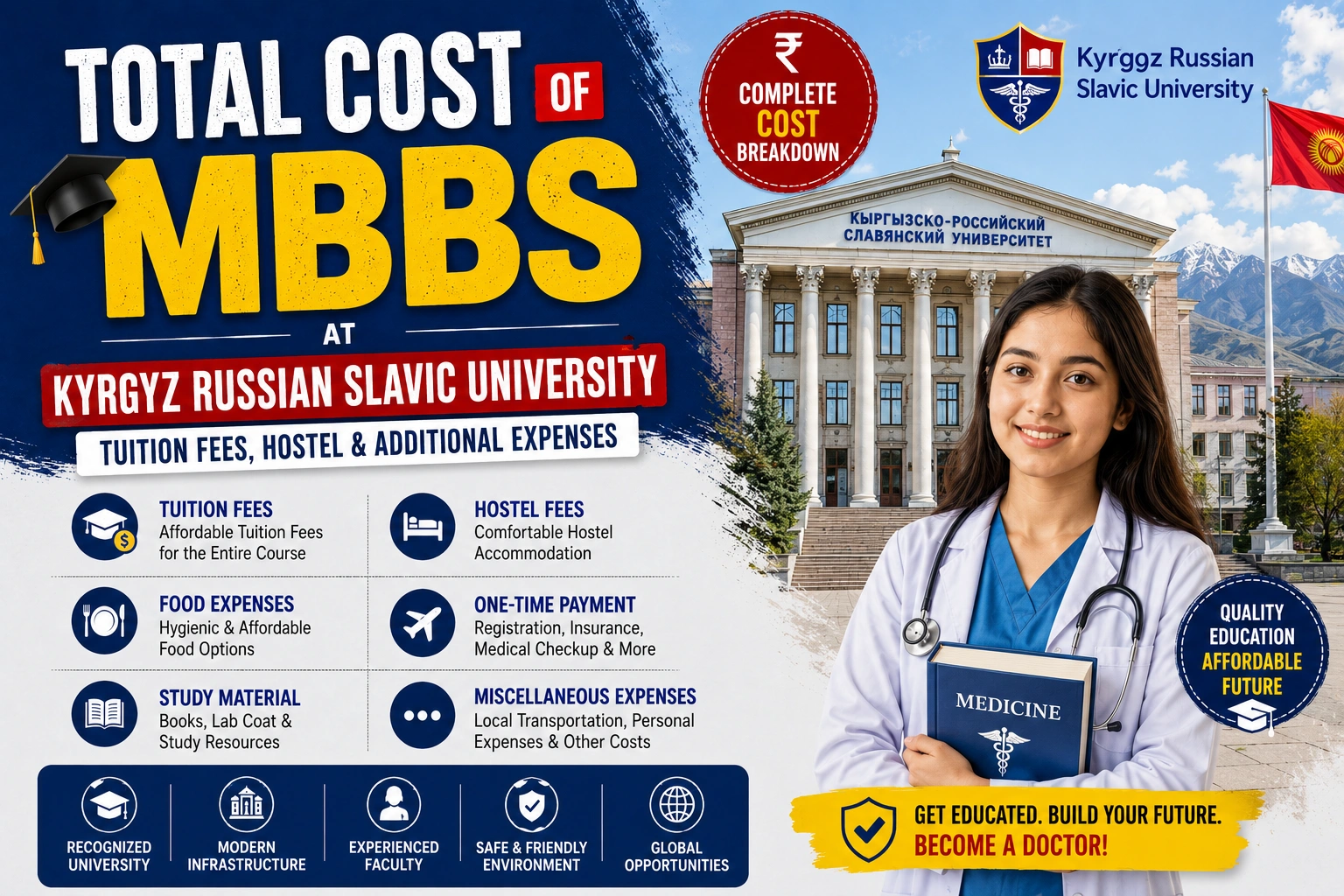
Selecting a medical school abroad is one of the biggest budget decisions for many Indian families. The primary focus when comparing schools tends to be the tuition. However, the total cost of a medical degree is determined by many other factors. The cost of food, travel, the visa and its accompanying bureaucracies, basic insurance, and study materials, along with personal living costs, all contribute to the medical degree's total cost. It is therefore important to understand the Total Cost of MBBS at Kyrgyz Russian Slavic University before a final admission decision is made.
Sitting in Bishkek, Kyrgyzstan, Kyrgyz Russian Slavic University (KRSU) has a Faculty of Medicine and is a popular choice for students wishing to pursue medical studies outside of India. Being located in a capital city, students have access to an advanced urban setting and all the amenities and educational services that a city can offer. The development of a student's budget is dependent on a number of factors, including the applicable tuition fee, accommodation, the cost of living, exchange rates, and personal spending habits.
MBBS abroad students will mostly consider the tuition fees. However, students and families must plan finances properly and be prepared for the total costs after considering the complete cost of living and budgeting for emergencies throughout the duration of the student’s stay in Kyrgyzstan.
Featured Snippet: What is the total cost of MBBS in KRSU?
The total cost of MBBS in Kyrgyz Russian Slavic University is calculated by tuition fees, accommodation in hostels, and the cost of food, travel, visa, insurance, books, medical fees, and personal expenses.
The total cost for the last six years of education can differ per student due to the various changes that can occur in university tuition, currency exchange, and personal living costs. Prospective students must check the current university fee list before making any payments and before confirming their admission.
Components that Make up the Total Cost of MBBS
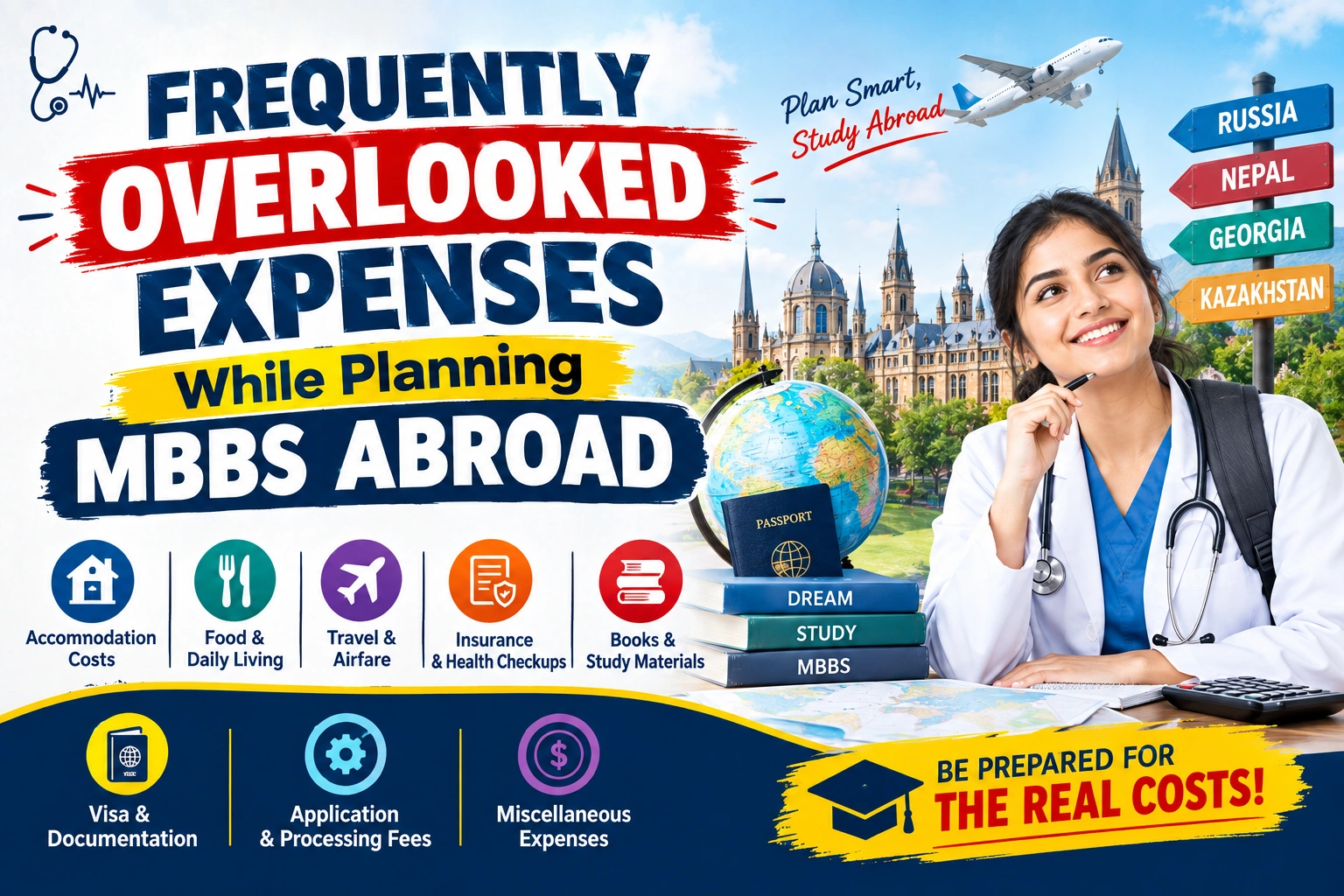
The cost of an education in medicine at KRSU can be broken down to costs associated with education and costs associated with subsistence. Academic costs include tuition and costs associated with the study, while living costs include rent, food, transport, and personal costs.
Costs associated with the education of a family member can be broken down to costs associated with the education and subsistence costs. Of the costs planned for education, the tuition costs are the most significant, though costs associated with subsistence during the student’s time at the university should not be overlooked.
Tuition Costs at Kyrgyz Russian Slavic University
For the international student, the first and most significant cost associated with education is the cost of tuition. This cost is not constant and is subject to the cost structure of the university for the given academic session. Therefore, prospective students are encouraged to check admission costs before making an application, as the costs of international study are subject to change.
Planned costs for education should include a cost for currency conversion, as the cost of tuition may not change in the foreign currency. To avoid budgetary shortfalls, students should account for currency fluctuations over the planned costs for education, especially when considering costs over multiple years.
Accommodation and Hostel Costs
Part of the planned budget for medical education should include accommodation costs.
Students may select university-hosted accommodation or choose private accommodation, depending on availability and rules regarding private accommodation.
There are multiple determinants of hostel accommodation expenses. These are room occupancy and cost of facilities and maintenance. Some students prefer shared accommodation, which may offer opportunities to manage housing expenses better, while others prefer separate accommodation.
First-year, international students may choose hostel accommodation to ease the burden of locating independent accommodation in a foreign country. First-year students are also considered to benefit from hostel accommodation due to the ease of travel to campus; however, students are advised to check the cost and availability of hostels before making accommodation commitments.
MBBS Food Expenses
Food is an inevitable expense for students and is expected to be included in a student's monthly budget. There is no uniformity in food expenses; these are highly individualized and subjective.
Some students prefer to eat at Indian restaurants, while others prepare food at home or eat at restaurants. Food expenses should be consistent with monthly budgeting and added to the annual budget. Reasonable estimations should include the possibility of fluctuating food costs and student needs throughout the year.
Traveling Expenses from India to Kyrgyzstan
Travel is another expense that families should plan in advance.
Aspiring students should factor in the expenses for their trip to Kyrgyzstan and expenses for travel during academic breaks.
Airline ticket prices are typically subject to fluctuations in season, date, and demand. Tickets purchased for travel during off-peak times are usually cheaper. Also, students should think about transport from the airport to their accommodation.
For this reason, families are encouraged to set aside a planned travel budget, as opposed to considering travel expenses as an unplanned cost.
Visa, Registration, and Documentation Costs
In contrast to students traveling for leisure, students traveling for the purpose of education incur expenses related to visa formalities, registration, documentation, and administration. These costs are subject to the rules and the situation of the individual student.
Students are encouraged to thoroughly review the documentation and prepare all the paperwork prior to the trip. In the absence of the required paperwork or the paperwork is completed incorrectly, there are expenses, as well as delays, that are incurred.
Students are discouraged from relying on outdated information that has been posted on the internet. Rather, they are encouraged to obtain current information from official sources and contact the authorized admission offices of the respective universities.
Medical Insurance and Personal Healthcare Costs
Students traveling outside of India should incorporate healthcare expenses into their travel plans. Per the laws of the host country, insurance may be mandatory for international students.
Students are also encouraged to set aside an emergency fund as part of their travel reservations, as students may incur expenses on the purchase of medicine or medical consultations.
A contingency fund should be a small part of any budget to ensure that unexpected costs do not impact critical tuition or other academic needs.
Essentials for Medical Students
Medical education has a practical and theoretical aspect. Students must have access to a variety of items at different stages of their education, including but not limited to, books, notebooks, a lab coat, and several other materials.
The cost for these education resources is highly dependent on the choices made by the student for book purchases (new, used, or digital), as well as other potentially legitimate resource choices. Practical courses may require additional specialized instruments or equipment.
Because of the unpredictability of medical school, it is wise for families to set aside a small academic materials budget every year, rather than only the first year.
Expected Expenses for the Next 6 Years
A complete picture of the financial commitments for a medical education must extend beyond just one year. The total medical school funding planning formula is as follows:
Total MBBS Budget = Tuition + Hostel + Food + Travel + Visa & Documentation + Insurance + Study Materials + Personal Expenses
There is no universal or standard figure for an accurate or final cost because the individual expenses that make up the budget vary significantly. For example, one student may choose to live in an economical hostel and limit their personal spending, while another student may choose to spend more on travel and personal expenses.
To get an early and realistic commitment, students should prepare a low, average, and emergency budget prior to admission.
Expense Comparison Table
|
Expense |
Nature of Cost |
Main Factors Affecting the Amount |
|
Tuition |
Academic |
University fee schedule and currency exchange |
|
Hostel |
Accommodation |
Room Considerations |
|
Food Preferences |
Monthly Living Costs |
|
|
Travel Costs |
Seasonal Costs |
|
|
Visa & Registration |
Administrative Costs |
|
|
Insurance |
||
|
Books & Equipment |
||
|
Personal Expenses |
Why Total Cost is More Important Than Tuition
A low tuition fee doesn't guarantee the choice will be the most cost-effective. The total cost is the cost of education and the cost of living combined.
The total cost also encompasses the cost of available academic services, opportunities for clinical education, and the cost of the university and environment, as well as the regulatory costs. This is most relevant for students looking into MBBS Abroad programs as an alternative to the medical programs available in India.
Students are encouraged to look into recent and established forms of evidence when making a choice, like the National Medical Commission (NMC) and the World Directory of Medical Schools (WDOMS).
NEET and Other Considerations for Indian Students
Indian students should also be aware of the eligibility criteria, which NEET qualification is a requirement, along with the current policy framework in India.
Admission-related information can be found in relation to NEET, and students should check the official NEET site for the most recent news on the exam.
Students should check the eligibility criteria, which are academic qualifications and documents, before considering the cost of studies in a foreign country.
Tips for Students on Budgeting in Kyrgyzstan
When students make the distinction between essential spends and discretionary spends, financial planning can be easier. The essentials can include tuition, accommodation, food and supplies. Discretionary spends can include entertainment, shopping and travel, which can all strain the monthly budget.
A monthly spending plan, in conjunction with tracking monthly spends, creating a monthly budget and having a monthly emergency fund, can help students maintain their monthly budget. Also, pooling accommodation and other discretionary household expenses, where reasonable and permitted, can help maintain a budget.
Using the entire available budget for expenses related to admission can create a drain on a family budget. Setting aside some funds for emergency and future academic years can provide financial flexibility and security.
What Should Parents Check Before Paying Admission Fees?
It is important for parents and students to check the current tuition fee structure and the scheduled tuition payments, as well as the payment policies for accommodation and the services included in the payment, and the policies on the cover of the admission documents.
Students should be careful when making decisions based on unofficial claims of guaranteed admission, total costs or evaluations on post study employment.
Reliable information and proper verification can help make the right decision.
Conclusion
When considering studying at Kyrgyz Russian Slavic University, families need to consider a complete six-year budget rather than a six-year tuition budget. While tuition is the single largest cost, there are other significant costs like accommodation, food, personal travel, visas, insurance and personal spending.
Due to the constant change in the university fees, exchange rates, accommodation and personal preferences, it is not possible to give an exact amount.
For Indian students looking at options for pursuing an MBBS Abroad after NEET, there are several additional factors to keep under consideration, one of the primary being the cost, not only of pursuing an MBBS, but of unforeseen expenses over the course of the program. By taking advantage of the available information, documenting properly, and utilizing a trustworthy resource like MBBS Advisor, students are able to determine the best choice for them and plan their MBBS program more confidently and with a better understanding of the potential costs and expenses.