 Russia
 Belarus
 Georgia
 Kazakhstan
 Kyrgyzstan
 Uzbekistan
 China
China Nepal
Nepal Bangladesh
 Poland
 Romania
 Slovakia
 Hungary
 N. Macedonia
 Vietnam
 Canada
 Armenia
 UK
UK Australia
 USA
USA Ireland
 Germany
 New Zealand
 Italy
Italy France
 Singapore
 Netherlands
 Sweden
 Switzerland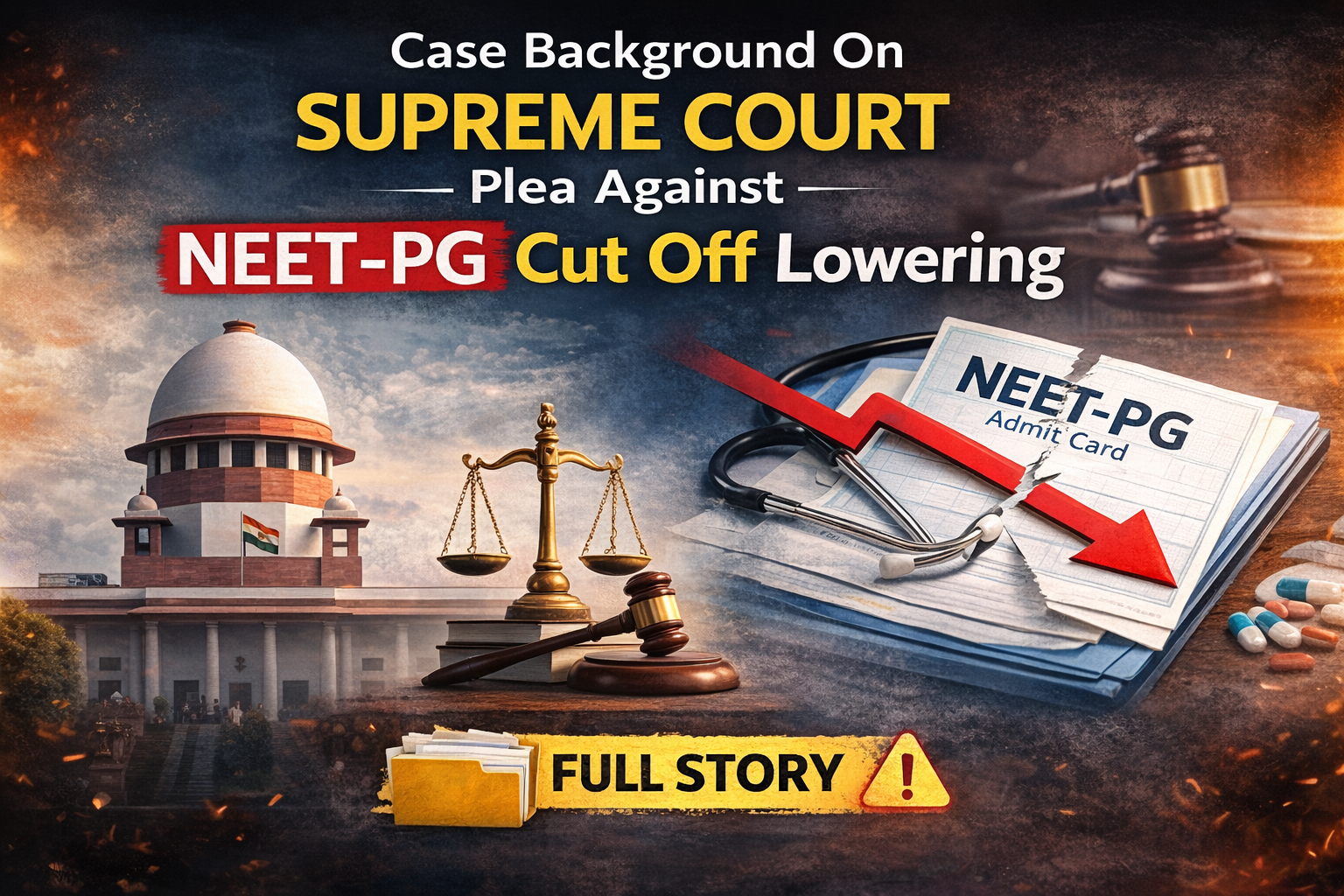
In 2023, the Supreme Court of India is deliberating on a major legal challenge against halving the qualifying cut-off percentiles in NEET-PG. In India, NEET-PG is the sole national level entrance examination conducted for admission to postgraduate (PG) medical courses including MD, MS and PG Diploma. The NMC is responsible for overseeing medical education standards and the framework at this national level to ensure quality in academia as well as professional skills are preserved during training.
This case has received widespread attention as postgraduate medical education directly impacts the quality of specialist doctors that treat patients across India. Policies on medical education also align with global principles of public health as advocated by those focusing on patient safety, quality health-care systems, and sturdy medical training frameworks.
Background of the Cut-Off Reduction
NEET-PG traditionally operated on fixed qualifying percentiles:
- 50th percentile for General category
- 40th percentile to SC, ST and OBC categories
- This process ensured that only those candidates were eligible to appear in counselling for postgraduate seats who had been able to perform above the benchmark level.
- However, in the previous admission cycle, officials slashed the qualifying percentile to almost half. In some categories, the cutoff was dropped near zero. This meant that even candidates with very low marks also became eligible for counselling. This policy change was justified on grounds of preventing wastage of a large number of postgraduate medical seats.
- Empty seats in postgraduate medical education are a national issue because they mean that teaching hospitals and even government resources cannot be utilized efficiently. The drastic reduction in qualifying criteria did, however, raise concerns over academic standards and the long-term implications on the quality of healthcare.
Why the Case Went to the Supreme Court
A petition was challenged on Constitutional and professional grounds. The primary contention was that the principle of selection based on merit is violated if the cut-off mark is reduced subsequent to the examination process. Such a drastic relaxation might undermine the credibility of the entrance examination system, petitioners had contended.
They further asserted that postgraduate doctors manage complex medical responsibilities, such as surgeries, emergency care and advanced diagnostics. This excessive access of candidates with poor grades in their qualifications for such training programmes may endanger patient safety, a critical goal of the nmc and the who.
The petition also raised further concerns about whether the regulatory framework permits such extreme changes without appropriate review by academics. Because medical education is inherently linked to public health, any erosion of standards becomes a matter of constitutional significance.
Government’s Position
Defending the cut-off reduction, the government said NEET-PG is just a ranking examination and does not serve as a certification of medical competence. As per this perspective, medical competency is established as and when a student undergoes training in MBBS followed by mandatory internship under broad guidelines set up by nmc.
The government also highlighted that if thousands of postgraduate seats went unutilized, there would be adverse effects on the healthcare delivery system. A shortage of specialists like anesthetists, radiologists and internal medicine experts can undermine a hospital's capabilities — particularly in public healthcare facilities.
Thus, the reduced cut-off was explained as a policy decision aimed at balancing workforce needs with academic merit.
Supreme Court’s Concerns
The Supreme Court was sympathetic to the government’s rationale but expressed concern about whether such a significant reduction might be harmful to the quality of education. The Court said that while filling seats is important, ensuring quality is also critical.
The judiciary is looking into whether the policy change is against the equality creed as enshrined in the Constitution or if it undermines professional standards laid down by regulatory authorities. The Court is considering challenging whether those decisions should require a deeper academic evaluation instead of red tape urgency.
The case is now pending, with no final ruling to date.
Impact on Medical Students
For MBBS graduates, the case has dire consequences:
- It directly impacts levels of competition in NEET-PG counselling
- It changes admission possibilities for higher-scoring candidates
- It changes the way merit in postgraduate medical education is perceived
- Students aiming for NEET-PG should take these updates into consideration as nmc and who has mentioned other international healthcare education standards.
Students turn to platforms like mbbs advisor, which assists with medical admission processes and regulatory clarity for counselling guidance, policy interpretation, and structured admission information.
What This Case Means for Public Health
Doctors in training reconvene doctors proposed for almost all 80 hospital systems. They are trained to handle critical cases, carrying out operations and overseeing junior doctors. This can have far-reaching effects on the delivery of health care as selection standards cannot be compromised.
The WHO has repeatedly stressed that strong health systems rely on a well-trained medical workforce. In the same way, the NMC is to make Indian medical education up-to professional and ethical marks.
So this case extends beyond a mere dispute over an entrance exam to the quality of healthcare at a national level and patient safety.
Conclusion
The Supreme Court petition on the reduction of NEET-PG cut-off represents competing priorities — a need to fill vacant postgraduate seats and to ensure that academic excellence is maintained. The outcome of this case will affect how admission policies in the future are crafted and how strictly standards for qualification are enforced.
As the Court deliberates legal and educational issues, medical students and institutions should rely on official regulatory guidance by nmc, global public health policies derived from who and counselling support interfaces like mbbs advisor.
The chapter that awaits in a post-Duke settlement, however, could be one of the most important to set the course for postgraduate medical admissions moving forward and serve as a precedent for finding equilibrium between accessibility and quality within pedagogy.