
 Russia
 Belarus
 Georgia
 Kazakhstan
 Kyrgyzstan
 Uzbekistan
 China
 Nepal
 Bangladesh
 Poland
 Romania
 Slovakia
 Hungary
 N. Macedonia
 Vietnam
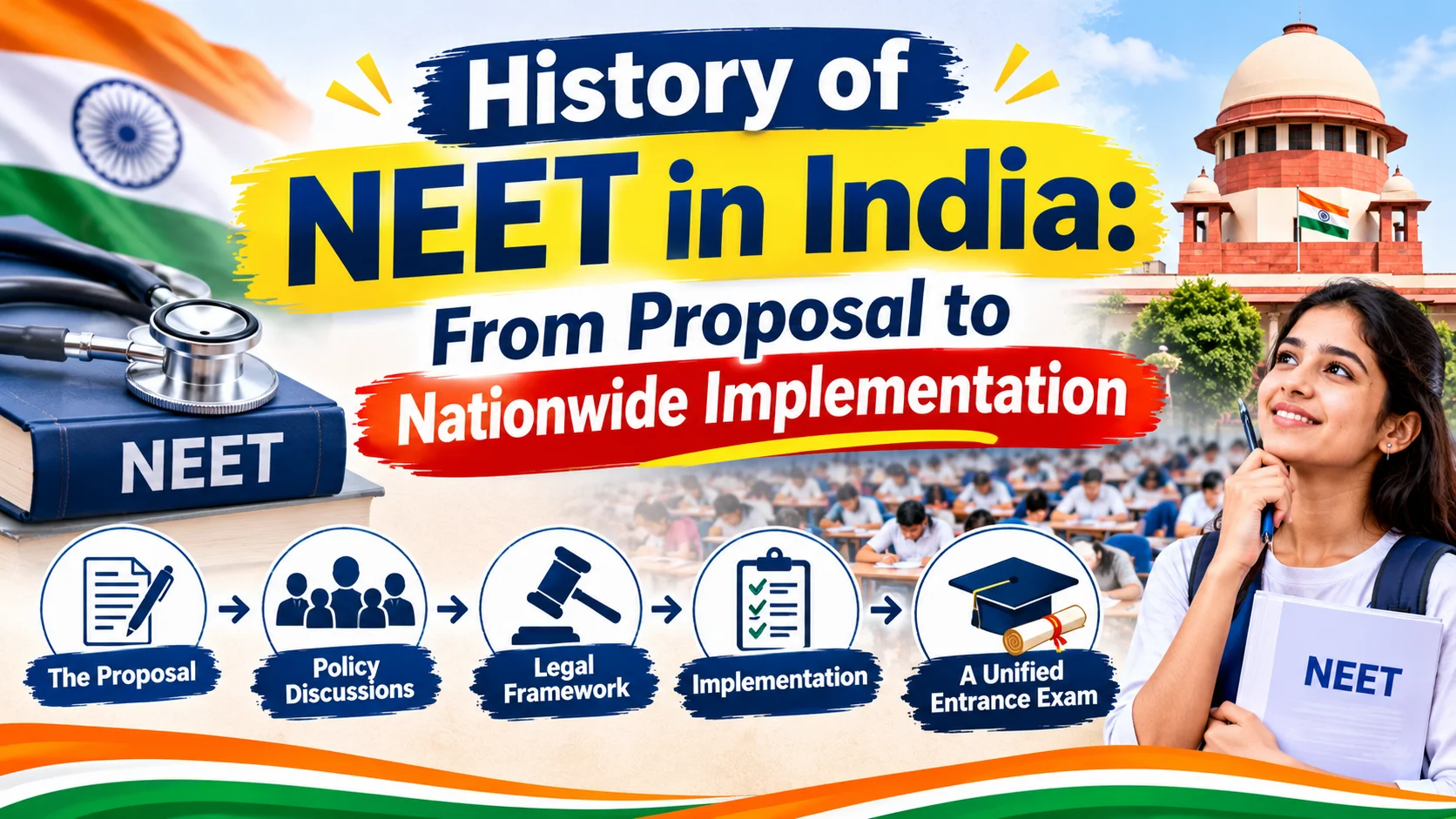
Prior to NEET being implemented students were required to take a number of different entrance exams to gain a place on an MBBS course. This resulted in students completing a number of different application forms, sitting different exams based on different curricula, and going through a number of different counselling processes.
The introduction of NEET (National Eligibility Entrance Test) resulted in a significant change to the admission process. However, the journey to making NEET mandatory was not an instant change. With various government decisions, opposition from states and private medical institutions, Supreme Court rulings and policy changes. Understanding the history of NEET will help students wishing to study medicine in the UK or abroad understand why NEET qualifications have become so important in medical education. At MBBS ADVISOR we believe that knowing the background to the admission process will make it easier for students and parents to understand the current medical admission policies.
Why Was NEET Proposed?
Prior to NEET there were a number of different entrance exams used to admit students onto medical courses throughout India. Students may have had to sit a number of different entrance exams to get into an MBBS course.
This can create issues for students. As they will have to pay application fees, travel costs, sit exams and complete different types of questions. This is a large burden to students from middle income and economically disadvantaged backgrounds. There were also concerns around transparency within private medical colleges. To address these issues the Medical Council of India (responsible for regulating medical education) proposed a common entrance exam. This would mean students would sit one exam at a national level.
2010 – NEET Proposed
On the 21st December 2010 the Medical Council of India issued a notification amending the Graduate Medical Education Regulations 1997. This proposed the introduction of a single entrance exam to enter MBBS courses. A similar notification was issued regarding postgraduate medical courses. This aimed to introduce a common entrance exam for students wishing to enter medical institutions.
However, this was quickly challenged in the courts. A number of private medical colleges, minority institutions and states raised concerns around the MCI’s right to introduce a common exam.
Although the idea of having a national exam seemed simple, there were a number of challenges to overcome. As there are a variety of different education systems throughout the country.
2012 – Amended Notification
On the 27th February 2012 the MCI issued an amended notification. This stated that NEET would be introduced from the 2013-14 academic year. There were still some concerns. Some states and private institutions raised concerns around the impact having one exam would have on their admission process. There were concerns that students from different state boards would not have a fair chance. This led to the case going to the Supreme Court of India. A number of petitions were filed.
2013 – First NEET Exam
The first NEET-UG exam was held on the 5th May 2013 by the Central Board of Secondary Education (CBSE). This was an important milestone as students were sitting a common entrance exam.
However, this year was a major setback. On the 18th July 2013 a three judge panel ruled that the NEET notifications should be quashed. This was due to the Christian Medical College Vellore Association case. This was a key point as NEET had already been sat. This left students, colleges and state authorities confused. Both the Central Government and MCI submitted review petitions.
2014-2015 – Legal Dispute
Over the next couple of years there was a lot of uncertainty around NEET. The government tried to go through the review process. However different parties had different views on the common entrance exam.
Some people supported NEET as it would reduce the amount of exams students would have to sit and increase transparency. However others felt that states and private institutions should have more control over their admissions.
Overall this is why it took a few years for NEET to become a national requirement. There were many constitutional issues, medical education standards and issues with central and state authorities. Students had to keep up to date with the admissions notifications.
2016 – New Beginning
2016 was a key year in NEET history. On the 11th April 2016 the Supreme Court overturned their previous ruling. This was done as the review petitions had been allowed. On the 28th April 2016 the Supreme Court allowed NEET-UG to be sat in two stages for the 2016 admissions.
The Central Government also introduced the Indian Medical Council (Amendment) Ordinance on the 24 th May 2016. This was followed by legislation in August 2016. This provided a statutory framework for a common entrance exam for medical admissions. It also stated that certain seats in state government would be allowed to be taken under the transitional provisions for 2016-17.
This made NEET applicable for medical admissions throughout the country. NEET was introduced from the 2016-17 academic year, and was successfully sat again in 2017, according to the Ministry of Health and Family Welfare.
2017-2018 – Main Medical Entrance Exam
By 2017 NEET had become the main entrance exam for undergraduate medical admissions. Students wishing to gain a place on an MBBS or BDS course in a government or private medical college had to qualify.
It also became relevant for institutions who previously had their own entrance exams. This ensured a common entrance exam and merit based admissions. One major change was that students did not have to prepare for a variety of medical entrance exams. They only had to prepare for one national exam covering Physics, Chemistry and Biology.
The government also highlighted that there would be increased transparency, minimum standards and less multiple exams. This was a major change for aspiring doctors. NEET was no longer an experiment but a key part of the medical admissions process in India.
2019 – NEET-UG Taken By NTA
In 2019 a key change occurred. NEET-UG was now taken by the National Testing Agency. Previously this was taken by the CBSE. The NTA would now be responsible for inviting applications, carrying out the exam, releasing the results and providing All India Ranks.
The National Medical Commission Act 2019 received presidential assent on the 8th August 2019. Section 14 outlines that a common and uniform NEET exam would be introduced for undergraduate medical education in all medical institutions.
This includes institutions such as AIIMS and JIPMER who had their own entrance exams. Students can find information on exam notifications, applications and updates via the official NEET website.
2020 onwards – NEET Upheld As A Common Exam
In April 2020 the Supreme Court upheld NEET as a common entrance exam for undergraduate and postgraduate medical courses in all medical institutions. This further solidified NEET’s legal standing.
The Medical Council of India has been replaced by the National Medical Commission. This regulates medical education in the country. Their role includes ensuring that medical education standards are maintained. Students and parents can find current medical education regulations and official notices on the National Medical Commission website.
What Changes Have Occurred Due To NEET?
The introduction of NEET has caused a number of changes to the admissions process. These include:
- Common Entrance Exam – Students no longer have to sit a variety of entrance exams.
- Merit Based – NEET scores and counselling rules are now key in deciding who gets a medical seat.
- Increased Transparency – Students are given a standardised exam.
- Applicable to More Institutions – Now applicable to government and private medical institutions, including AIIMS and JIPMER.
- National Competition – Students from different states compete against each other.
- More Structured Counselling – Admissions are done through counselling authorities.
However, just passing NEET does not guarantee you an MBBS seat. Your rank, category, state quota, how many seats are available, your college choices and counselling rules will all be considered.
Why Is NEET Important For Students Wishing To Study MBBS Abroad?
Something students often forget is that NEET does not just apply to students wishing to enter medical colleges in India. Indian students wishing to study MBBS in countries such as Russia, Bangladesh, Nepal, Kazakhstan and Georgia must pay attention to the NEET requirements. Indian students wishing to study medicine abroad must meet the required NEET requirements as set out by the NMC. They should also check the Foreign Medical Graduate Licentiate Regulations and any other requirements before choosing a university.
Students should check that the foreign institution they are wishing to attend is recognised. They should check this on the World Directory of Medical Schools (WDOMS). They should also check the requirements with the NMC. Just because an institution is listed on the WDOMS does not mean they are eligible for medical registration in India.
At MBBS ADVISOR we would always recommend students check these requirements before paying any admission or university fees. A small check at the start can avoid larger issues later.
Key Dates In NEET History
- 21st December 2010 – Original NEET notification issued by the MCI.
- 27th February 2012 – Amended notification issued.
- 5th May 2013 – First NEET-UG Exam.
- 18th July 2013 – NEET notifications quashed by the Supreme Court.
- 11th April 2016 – Previous ruling overturned by the Supreme Court.
- 28th April 2016 – NEET-UG allowed to be sat in two stages.
- 24th May 2016 – Indian Medical Council Amendment Ordinance promulgated by the Central Government.
- 2016-17 – NEET introduced as a common entrance exam.
- 2019 – NEET-UG taken by the NTA.
- 8th August 2019 – National Medical Commission Act receives presidential assent.
- 29th April 2020 – NEET upheld as a common entrance exam.
NEET FAQs
When Was NEET First Proposed In India?
NEET was officially proposed by the MCI on the 21st December 2010. This was done through amending the Graduate Medical Education Regulations 1997. This aimed to introduce a common entrance exam for MBBS admissions.
When Was The First NEET Exam Held?
The first NEET-UG exam was held on the 5th May 2013 by the CBSE. However, the original NEET notifications were quashed by the Supreme Court on the 18th July 2013.
Why Was NEET Cancelled In 2013?
The NEET notifications were quashed due to legal challenges from a variety of institutions and organisations.
When Did NEET Become A Mandatory Exam In India?
NEET was introduced as a common medical entrance exam from the 2016-17 academic year. This was due to the orders from the Supreme Court in 2016. The Indian Medical Council Act was amended. Certain transitional provisions were in place.
Who Conducts The NEET-UG Exam?
Since 2019 the NEET-UG exam has been conducted by the National Testing Agency. They oversee the exam, applications, results and All India Rank information.
Is NEET Mandatory For Indian Students Wishing To Study MBBS Abroad?
Indian students wishing to study MBBS abroad must meet the requirements set out by the NEET qualifications. They should also check the relevant NMC rules before entering a foreign medical university.
Conclusion
The history of NEET in India shows that there was a long debate around the policy. There were many legal issues and changes to medical education. Originally proposed in 2010 NEET has become the common entrance exam for undergraduate medical admissions. Now NEET plays a key role in deciding if students are eligible for medical admissions in India. Whether you are wishing to study at a government medical college, private institution or overseas university it is important to know what the exam involves and what the relevant rules are.
At MBBS ADVISOR we aim to help medical aspirants make informed decisions. Before applying for MBBS in India or abroad, check the latest NEET notifications, NMC regulations and university eligibility criteria.

.webp)