 Russia
 Belarus
 Georgia
 Kazakhstan
 Kyrgyzstan
 Uzbekistan
 China
China Nepal
Nepal Bangladesh
 Poland
 Romania
 Slovakia
 Hungary
 N. Macedonia
 Vietnam
 Canada
 Armenia
 UK
UK Australia
 USA
USA Ireland
 Germany
 New Zealand
 Italy
Italy France
 Singapore
 Netherlands
 Sweden
 Switzerland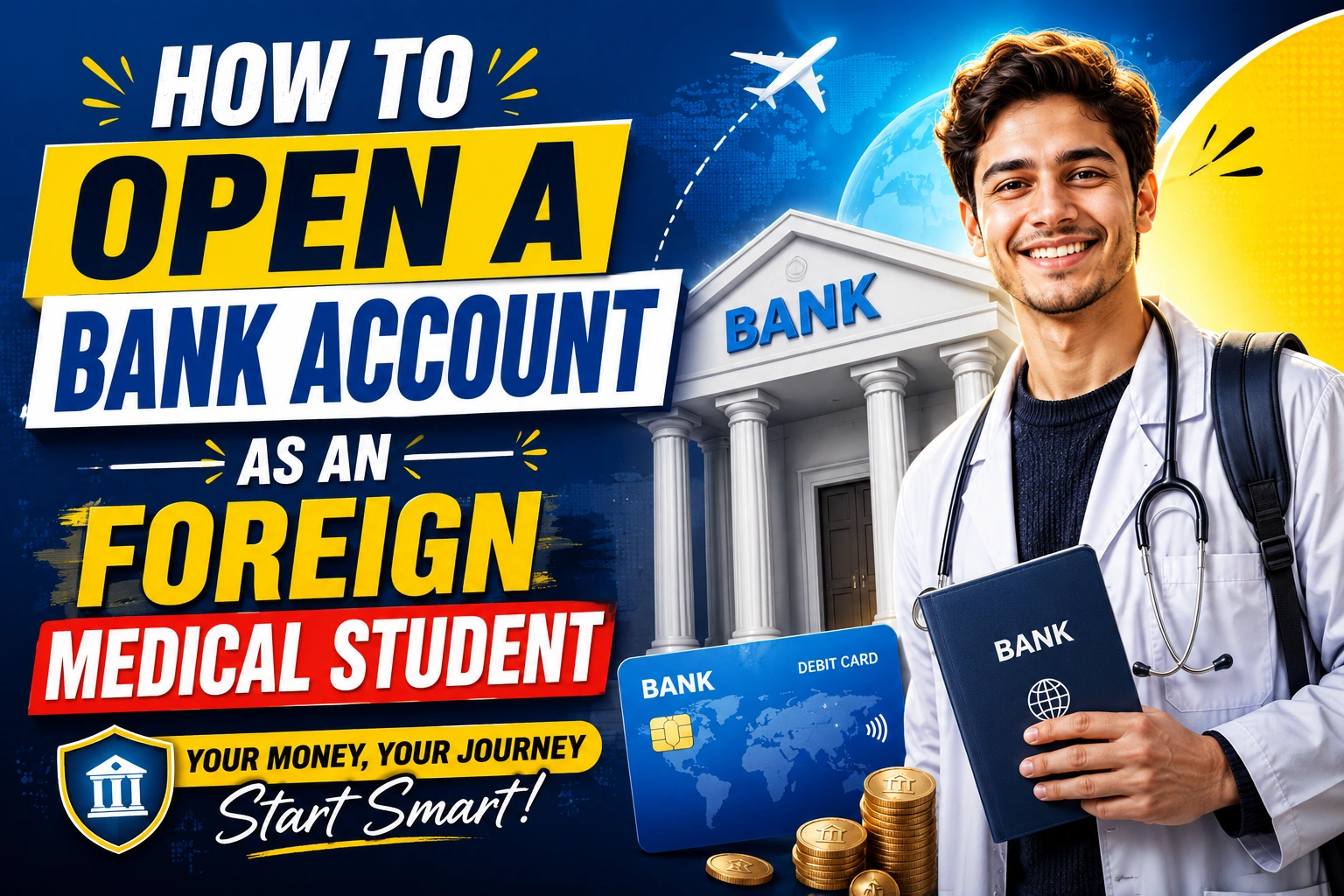
Studying in a foreign country brings in a lot of new experiences and opportunities, however, medical students need to know the importance of keeping proper financial records. Opening a local bank account is one of the first things that all medical students should do. With a local account, students can receive money from family, pay tuition fees, manage daily needs, pay rent and avoid costly international transaction fees.
Understanding the banking system in the country where you are studying is very important, whether you plan on studying MBBS Abroad from Russia, Georgia, Kazakhstan, Uzbekistan, Nepal, Kyrgyzstan, the Philippines, etc. with the help of an MBBS Advisor or you are already an admitted student in these countries.
MBBS Advisor students also receive support in the fields of documentation, accommodation, visas and other important formalities to help streamline and simplify the transition to a new country.
Why Do You Need a Local Bank Account as an International Medical Student?
After arriving on campus, opening a local bank account goes from being a convenience to a necessity. Transaction with the majority of universities, landlords and service providers will require the use of local bank systems.
Advantages of Local Accounts:
- Tuition can be paid easily.
- Hostel and apartment rents can be paid conveniently.
- Money transfers from family can happen faster.
- There are less currency conversion charges.
- There is easier access to cash via ATMs.
- There is the ability to shop online and pay bills.
- There is a better financial record while studying abroad.
- Depositing scholarships or stipends becomes easier.
Many Students who go Abroad to Study MBBS realize that finances become easier to manage after opening a Local Bank Account.
When is the best time to Open a Bank Account?
The first week after arriving in the destination country is the best time to open the account. Some universities have orientation sessions where representatives from local banks help students to open an account.
Several universities have a partnership with banks, and that helps to make the process more efficient and with less paperwork.
If you wait to open a local account, it can become problematic to pay the university fees, rents, transportation, and living expenses.
Documents for Opening a Foreign Student Bank Account
The paperwork to open a Local Student Bank Account is similar in most countries, with minor variations.
Personal Identification Documents
Most banks will ask for the:
- Original Passport
- Valid Student Visa
- Passport photos
- University Admission Letter
- Student Identity Card (if issued)
These documents help banks with identification and legal status of the student.
Proof of Residence
Many banks require a local address, confirmed by a:
- Hostel confirmation letter
- Lease Agreement
- University accommodation certificate
- Utility bill (if applicable)
If you are new to the country, the international office of your university may provide a temporary address, and help confirm it.
University Verification
Some banks request further authorization from the university validating:
- Enrollment confirmation
- Course length
- Student ID
Medical universities usually issue this document upon request.
Stepwise Process to Open a Bank Account
Opening a student bank account is usually hassle-free.
Step 1: Look for Suitable Banks for Students
Before visiting any bank, compare:
- Monthly maintenance cost
- Availability of ATMs
- Online banking
- International wire transfer cost
- Mobile banking
- Customer service in English
Choosing the appropriate bank can save you a lot of money during your medical education.
Step 2: Collect Required Documents
Make sure you have every document before visiting the branch.
Collect:
- Passport
- Visa
- Admission letter
- Proof of address
- Student ID
- Passport size photos
Step 3: Visit the Bank
Most banks require you to be present for identity verification.
The bank official will:
- Verify documents
- Complete the KYC process
- Ask you to fill an application form
- Take your signature
- Set your mobile number
Some countries will also do biometric verification.
Step 4: Pay the Minimum Balance
Some banks will require you to pay a minimum balance to open the account.
The amount will depend on the:
- Country
- Bank’s policy
- Type of student account
This is usually waived off for international students.
Step 5: Obtain Access to Banking
You will receive:
- Banking account number
- Debit card
- Online banking
- Mobile banking
- Banking credentials
Debit cards will either be issued on the spot or delivered in a few working days.
Features to Expect from Student Bank Accounts
Student accounts are not the same.
Here are some of the features you may want to consider when choosing a bank:
- Zero maintenance fees
- Free ATM cash withdrawals
- Low fees for international transfers
- A mobile banking app
- Support for multiple currencies
- Online transfers
- A contactless debit card
The facilities you see here are helpful throughout your six-year medical program.
Ways Parents Transfer Money
Parents typically transfer money through the following:
- International bank transfers
- Forex cards
- Wire transfers
- Student remittance services
- Authorized banking partners
Having a local bank account allows parents to transfer funds to you much faster as opposed to you relying on international cards. A lot of countries support local bank accounts and allow instant transfers once your account is set up.
How to Manage Currency Exchange
When choosing to exchange currency, you should know that the exchange rates are not the same and tend to change frequently to avoid losing potential money when you:
- Don't exchange money at the airport
- Check the exchange rates
- Use authorized forex services
- Consider the exchange rates when you decide to transfer money
- Keep a record of every money transfer
The cost of currency exchange can be particularly high throughout the entire MBBS course if you don't manage your finances.
Banking Mistakes to Avoid as an International Student
Many students just out of high school make mistakes when it comes to banking. Some of these are:
- Failing to activate online banking
- Sharing debit card pin with people
- Ignoring SMS banking alerts
- Missing the minimum balance
- Important banking documents are lost
- Using unauthorized money transfer services
- Not informing the bank of an address change
Being responsible with your finances can prevent a lot of these issues.
Can Students Open a Bank Account Before Arriving to the Country?
Some international banks allow partial online applications before you arrive to the country. However, to complete the verification process, you must first:
- Verify your passport
- Confirm your visa
- Confirm your new residence
- Provide a signature
Because of this, most students complete the verification process once they arrive to their new country.
Digital Banking Makes Student Life Easier
Digital banking apps make it easy for students to:
- Send money
- Pay hostel fees
- Recharge mobile accounts
- Pay bills
- Check account balances
- Get notified about transactions
- View account statements
- Freeze cards
Digital banking reduces the number of times students need to visit a bank branch.
Safety Tips While Using Banking Services Abroad
Safety should always be a priority. To help safeguard finances, take the following precautions:
- Don't give anyone your OTP.
- Keep your debit card safe.
- Turn on transaction notifications.
- Use a strong password.
- Don't use public Wi-Fi to do banking.
- Check account statements, and notify the bank if your card is lost.
Financial fraud is easy to prevent with a few precautions.
Banking During Your MBBS Journey
Banking systems should be reliable and allow you to focus on your medical studies rather than worrying about being able to perform financial transactions.
Students studying MBBS Abroad typically use their bank accounts to pay for:
- Tuition
- Hostel fees
- Food
- Transportation
- Travel insurance
- Internet
- Banking abroad
- Supports their family while studying abroad
The right banking partner allows students to focus on studies.
How NEET Aspirants Planning MBBS Abroad Can Prepare Financially
Financial planning can begin once students have completed the NEET.
Understanding costs such as tuition, living expenses, banking, and international transfers will make the first few days in a new country less stressful.
Students can use the NEET Rank Predictor to gauge their chances of admission. This gives a rank estimate to select the medical school options and develop the budget for possible study abroad options.
Students should understand the changes in order to select a potential study destination.
Before application, students need to check a university's compliance to the medical education standards of India and the international framework. Good sources to check are the:
- National Medical Commission (NMC)
- World Health Organization (WHO)
- World Directory of Medical Schools (WDOMS)
These agencies provide the lists of medical schools and frameworks for their regulatory compliance. Students need to check the official NEET updates to remain informed about the changes to the eligibility and other testing announcements.
Conclusion
One of the first important things to do when reaching a new country where a student is going to complete their medical studies is to open a bank account. This is necessary to facilitate the payment of school fees and to cover other daily expenses. If students prepare the documentation necessary to open a bank account, choose a student-friendly bank, and learn the local banking system, they can focus on their studies without stress.
Beginning your MBBS Abroad journey with MBBS Advisor will help you learn about the university admissions, visa, documentation, accommodation, banking and financial procedures, and more. Today’s planning can help you achieve your international medical education goals.