 Russia
 Belarus
 Georgia
 Kazakhstan
 Kyrgyzstan
 Uzbekistan
 China
 Nepal
 Bangladesh
 Poland
 Romania
 Slovakia
 Hungary
 N. Macedonia
 Vietnam
.webp)
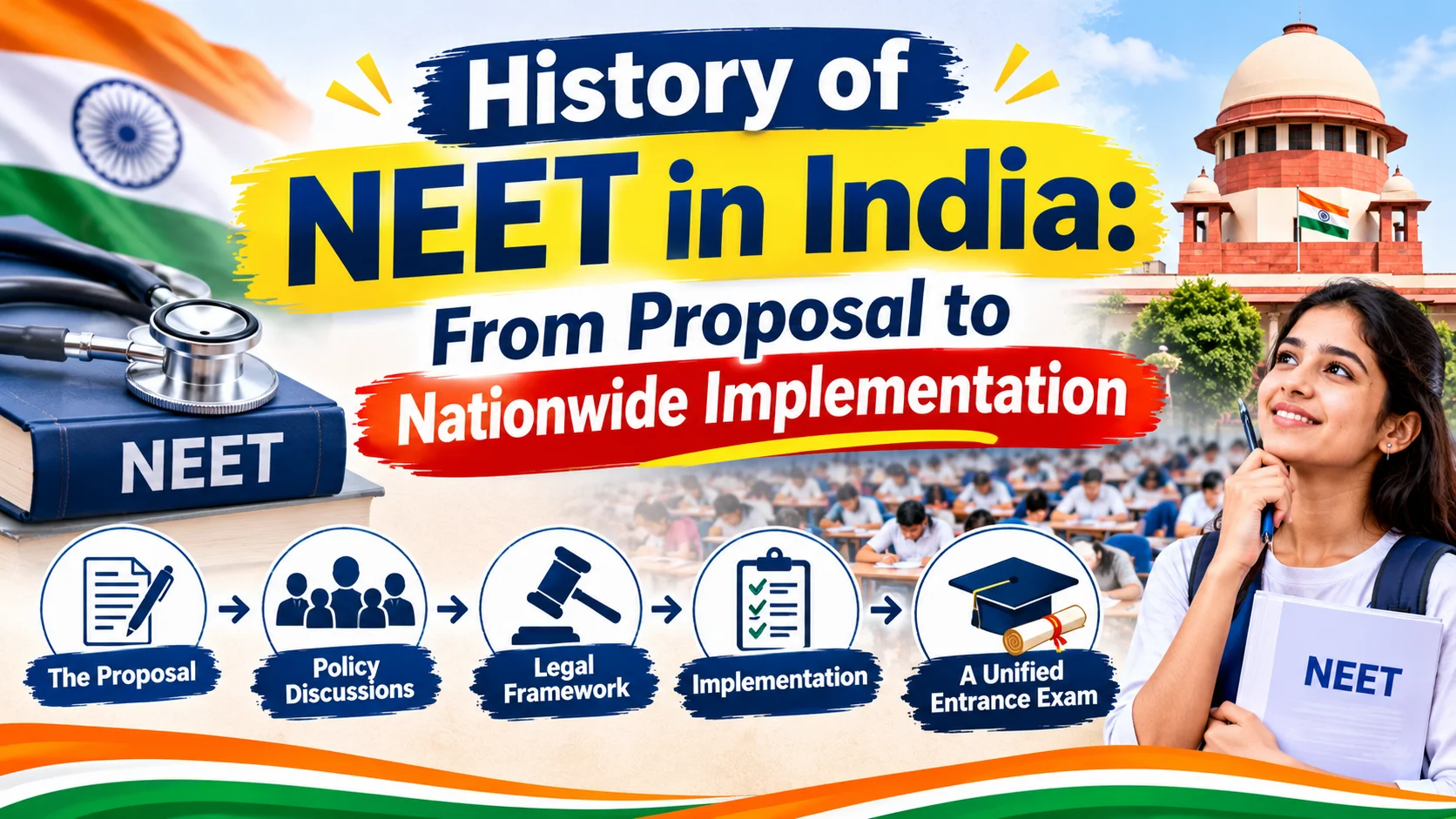
For thousands of medical students, NEET can be the difference between entering a Government Medical College, gaining a place on a Private MBBS course or considering studying overseas. However, have you ever wondered why NEET is now compulsory for nearly all Medical Colleges in India? This can be attributed to a number of influential Supreme Court decisions.
There have been numerous disagreements between Private Medical Colleges, State Governments, Medical Council of India (MCI), Students and the Central Government. The Supreme Court has even changed their stance on NEET throughout the years. These decisions will be useful for students using MBBS ADVISOR to keep up-to-date with the latest medical admissions news so that you know why things are the way they are and what your rights are.
Why Was NEET Introduced?
Prior to NEET becoming the standard entrance exam, students would have to sit a number of Medical Entrance Exams set by different states, universities and private institutions. This meant you would have to prepare for 5 or 6 different exams. It wasn’t easy.
The Medical Council of India proposed the introduction of a common entrance exam called the National Eligibility-cum-Entrance Test in 2010. This would mean only one entrance exam would be required to enter MBBS and Postgraduate Medical courses. This would help reduce unfair admission practices.
However, a number of Private Medical Colleges and Minority Institutions disagreed. They claimed this would infringe upon their constitutional rights. The matter was taken to the Supreme Court resulting in one of the most important legal decisions regarding medical admissions in India.
1. Christian Medical College Vellore Case (2013)
One of the biggest turning points in the NEET story was on 18th July 2013, where the Supreme Court gave their verdict in the case of Christian Medical College Vellore Association v. Union of India.
The majority ruled that the NEET notifications from the MCI and DCI were unconstitutional. The concerns raised regarding the authority of regulatory bodies and rights of Private and Minority Medical Institutions were accepted.
This caused a lot of confusion. Students who had prepared for a common entrance exam were confused whether individual colleges and states would continue to hold entrance exams. This was confusing for medical students. The common entrance exam had hit a major roadblock. However, this wasn’t the end of the story.
2. Supreme Court Ruling (2016)
On 11th April 2016, A 5 Judge Constitution Bench of the Supreme Court agreed to allow review petitions to be heard. This meant the original NEET ruling was overturned. Shortly after, a key ruling was made in Sankalp Charitable Trust v. Union of India (28th April 2016).
The Supreme Court ruled that NEET could be held in two phases for the 2016/17 academic year. The AIPMT exam would be held on 1st May 2016 (Phase I). Candidates who had not sat the exam would sit Phase II on 24th July 2016. They made it clear that Private Medical Colleges and Universities could not hold individual entrance exams for MBBS.
Why was this important?
This meant that NEET was reintroduced to the medical admissions system. A common entrance exam was put in place for MBBS and BDS. The Government began to move towards a centralised admissions system. You can view the 2016 ruling from the Supreme Court.
3. Modern Dental College (2016)
Another key ruling was made on 2nd May 2016 in the case of Modern Dental College and Research Centre v. State of Madhya Pradesh. Whilst this case mainly concerned regulating admissions and fees for Private Professional Institutions in Madhya Pradesh, the constitutional principles had a wider impact.
Private Colleges argued that they had a right to establish and run educational institutions under Article 19(1)(g) of the Constitution. This should include controlling admissions and fees.
The Supreme Court acknowledged that Private Institutions do have some rights in regards to running their institution. However, the Government can implement reasonable regulations to ensure standards of education are maintained and unfair admissions are prevented. This ruling helped show that common entrance exams and admissions can be valid ways to ensure fairness and merit.
This means that Private Medical Colleges cannot simply argue they have full freedom to choose candidates. This ruling became a key basis to regulating admissions to medical colleges across different states.
4. Christian Medical College Vellore Ruling (2020)
After a period of uncertainty surrounding NEET, a key ruling was made on 29th April 2020. The Supreme Court ruled in favour of NEET being constitutionally valid after the new hearing of Christian Medical College Vellore Association v. Union of India.
They dismissed the claims made by Private and Minority Medical Institutions. NEET can be made compulsory for admissions to Medical and Dental courses, including those protected under Article 30 of the Constitution. This was a key ruling.
This showed that having standards of education, ensuring merit and preventing unfair admissions are valid reasons to have a common entrance exam. It also showed that Minority Education Institutions do not have automatic exemptions.
This provided more clarity for Indian students. NEET qualification is a key requirement to gain a place in Government Medical Colleges, Private Medical Colleges, Deemed Universities and Minority Institutions. You can view the official ruling here on the National Medical Commission (NMC) website.
5. NEET UG 2024 & the Supreme Court
Another key chapter in the relationship between the Supreme Court and medical admissions was the NEET UG 2024 controversy. The exam took place on 5th May 2024. Shortly after the results were released, claims of leaks, irregularities, grace marks and extremely high scores led to mass protests and legal challenges. Many students appealed to the Supreme Court to cancel the exam and have a new NEET UG.
On 23rd July 2024 the Supreme Court reviewed the evidence and noted that there was no evidence to suggest there was a large-scale breach. The final ruling was made on 2nd August 2024 in the case of Vanshika Yadav v. Union of India (2024 INSC 568).
The Supreme Court ruled that a nationwide re-sit would not be ordered. They stated that for an exam to be cancelled there needs to be evidence to suggest the integrity of the exam has been affected. They also considered if candidates who benefitted from malpractice could be identified.
They acknowledged there had been leaks. Including those related to Patna and Hazaribagh. However, there was no evidence to suggest there had been a large-scale leak. Another key point was the 1,563 candidates who had received compensatory marks. Their grace marks have been removed and they have been given the option to sit a re-test.
This ruling is very relevant to future students. It shows that if there are any issues with the exam you can challenge them legally. However, if you want the exam to be cancelled you need substantial evidence. You can view the official ruling from the Supreme Court.
How Have These Rulings Impacted MBBS Admissions?
The combined rulings have impacted the current medical admissions system. NEET is now a common entrance exam and Medical Colleges must follow the relevant regulations and counselling.
Some of the key changes include:
Common Entrance Exam – To gain a place on an MBBS course in India you will need to qualify NEET UG.
Merit – Medical Colleges cannot override the NEET admissions process.
Private Institutions – Private and Minority Institutions must follow the relevant admissions.
Accountability – Any issues with the exam, leaks or unfair admissions can be challenged legally.
Centralised Counselling – Admissions are carried out using the relevant All India Quota and state counselling processes.
The National Medical Commission is a key resource for students to check medical education regulations, eligibility and relevant notifications.
What Should You Know About MBBS Admissions?
Whilst it is useful to know about court rulings, you also need to know about the admissions process. Generally, to gain a place on an MBBS course in India you will need to qualify NEET UG. However, this does not guarantee you a place on a Government MBBS course. The ranking, category, state quota, number of places and your preferences during counselling will all play a part.
You can find all of the exam notifications, information guides, answer keys and results on the official NEET website. If you are considering studying Medicine overseas you should also be aware of the relevant regulations in India. The NMC website will provide you with the relevant rules for foreign medical graduates. The World Directory of Medical Schools (WDOMS) can also be used to confirm if a medical school is listed.
However, this does not guarantee recognition or eligibility for medical registration. You should check the relevant NMC rules and foreign medical graduate requirements. MBBS ADVISOR can help you find information about admissions, medical universities and what you should be checking.
FAQs
1. Is NEET compulsory for MBBS admissions in India?
Yes. NEET UG is the common entrance exam for MBBS admissions in India. Government, Private, Deemed and Minority Medical Institutions must follow the relevant NEET admissions.
2. Was NEET cancelled in 2013?
On 18th July 2013, the Supreme Court ruled that the original NEET notifications were unconstitutional in the Christian Medical College Vellore case. However, on 11th April 2016 the ruling was overturned after review petitions were allowed.
3. Which ruling confirmed NEET?
On 29th April 2020, the Supreme Court confirmed that NEET was constitutionally valid after the new proceedings of Christian Medical College Vellore Association v. Union of India.
4. Did the Supreme Court order a re-sit for NEET UG 2024?
No. On 2nd August 2024 the Supreme Court ruled that a nationwide re-sit would not be ordered as there was no evidence to suggest there was a large-scale breach.
5. Can Private Medical Colleges hold their own entrance exams for MBBS?
No. Private Medical Colleges cannot override the NEET admissions process. They must follow the relevant admissions and counselling.
6. Where can I find official updates on NEET and medical admissions?
You should regularly check the NTA NEET website, National Medical Commission website and relevant state counselling body. These are much more reliable than social media. MBBS ADVISOR can help you understand what is happening with medical admissions and what you should be checking.
Conclusion
The Supreme Court has had a major impact on the medical admissions system in India. From the 2013 ruling which questioned the implementation of NEET, the 2016 review and landmark 2020 ruling. Each of these decisions have impacted how Medical Colleges choose their students. The NEET UG 2024 paper leak case has also taught us an important lesson about transparency, accountability and protecting honest candidates.
As an aspiring doctor, the main takeaway is don’t believe rumours about admissions rules or rulings. Always check official notifications, what you are eligible for and follow the counselling process. If you are planning your medical education journey, MBBS ADVISOR can help you stay up-to-date with admissions requirements, options and important developments.