 Russia
 Belarus
 Georgia
 Kazakhstan
 Kyrgyzstan
 Uzbekistan
 China
China Nepal
Nepal Bangladesh
 Poland
 Romania
 Slovakia
 Hungary
 N. Macedonia
 Vietnam
 Canada
 Armenia
 UK
UK Australia
 USA
USA Ireland
 Germany
 New Zealand
 Italy
Italy France
 Singapore
 Netherlands
 Sweden
 Switzerland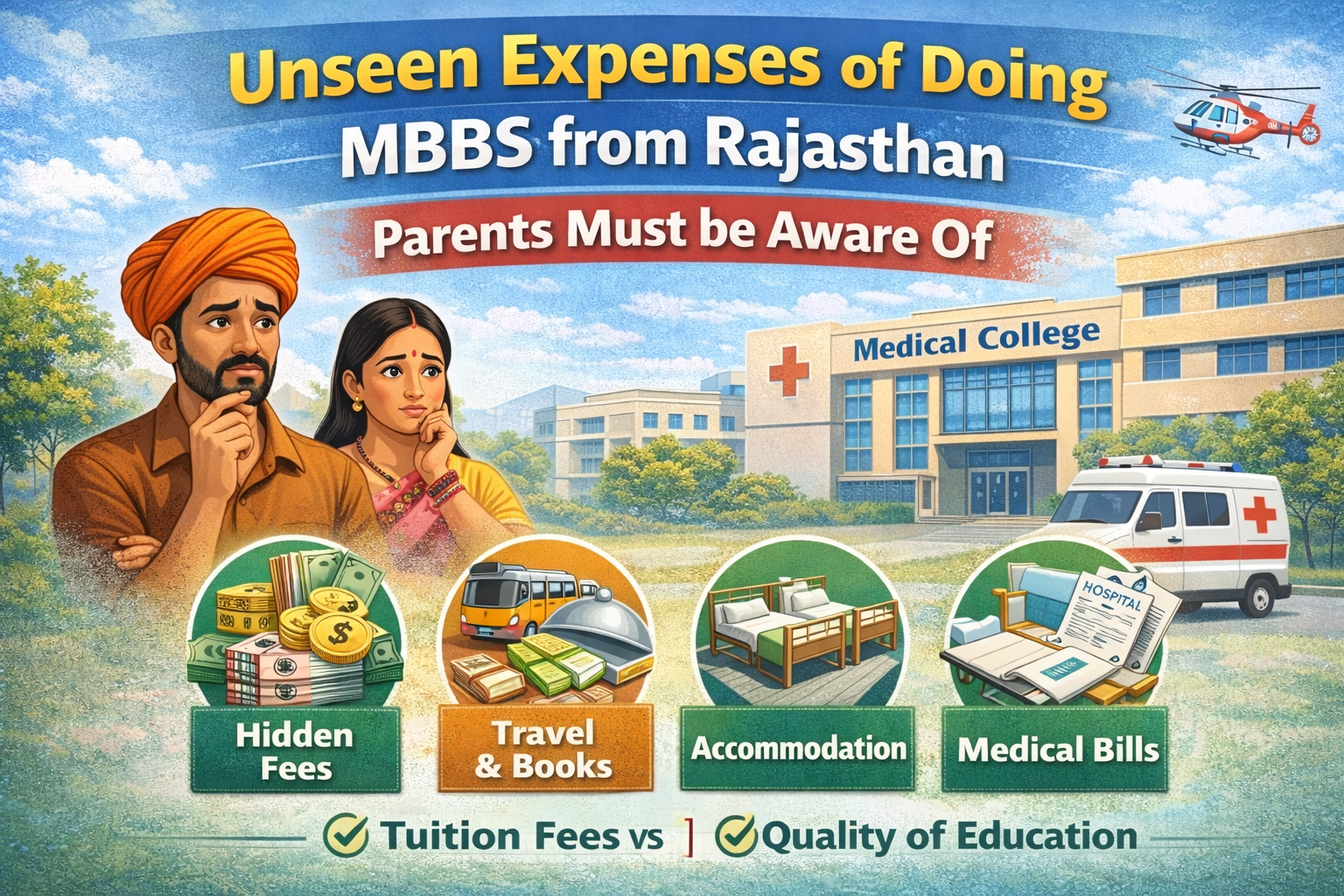
Pursuing MBBS in Rajasthan is affordable as compared to private medical colleges situated in other states. Rajasthan is also home to number of institutes that are approved by the National Medical Commission (NMC) and listed in the World Directory of Medical Schools which provides global recognition for its courses. Though tuition fees are explicitly put forth during NEET UG counselling but there are several unattended hidden costs too. These additional costs can add up and this can have a huge impact on parental expenses along the 5.5-years MBBS duration.
To gain correct information about admissions, college and counseling parents can visit MBBSAdvisor a reliable place for MBBS admission help and assistance.
Academic Fees Beyond Tuition
Tuition Fee Although the tuition fees of government medical colleges in Rajasthan are quite low, students also have to pay for:
- Laboratory charges
- Library and digital access fees
- Examination and re-evaluation fees
- University registration charges
As per the dues guideline of NMC, schools can gather academic and administrative fees only except for tuition. These can cost another ?50,000 to ?1 lakh a year – an amount that few such parents account for in the initial budgeting.
Hostel and Living Expenses
Most MBBS candidates travel from their native place to places like Jaipur, Jodhpur, Kota and Udaipur. With most hostels, what you get for your money is the average bed. Extra costs include:
- Mess charges
- Electricity and water bills
- Security deposits
- Laundry and housekeeping
- The hostel and food cost alone would cross ?2–3 lakh over five years, particularly as the price of food has been increasing.
EXPENSE FOR BOOKS AND MEDICAL APPLIANCES
Medical Books and Devices for the Medical Course. Students need:
- Anatomy, Physiology, and Biochemistry textbooks
- Dissection kits
- Stethoscopes and BP apparatus
- Lab coats and clinical uniforms
- Revised editions or reference books add more to the bill. In MBBS, an average family invests 1–2 lakh rupees for study material and equipments.
Travel and Daily Transportation
Students travel often from institution to home, during semester breaks and clinical postings. My group used to joke about how we might make $500 in Rajasthan — or even that day — but that it could cost us half of those earnings just to get there. Expenses include:
- Intercity travel
- Daily commuting to hospitals
- Local transport during internships
- These can easily be ?20,000–?50,000 a year considering the distance and the frequency.
- Clinical Rotation and Internship Expenses
- Clinical training In the third year, the students receive intensive clinical education. Some positions involve travelling to hospitals or health centres across the district. This leads to:
- Transportation expenses
- Temporary accommodation
- Food costs
- While internships can be paid, and even provide a stipend, they probably won’t pay enough to cover all living expenses—this is a hidden cost that no one can avoid.
- Digital Learning and Online Subscriptions
- MBBS education has largely gone online in the modern times and this includes:
- Video lectures
- Test series
- Medical databases
- Research journals
- Most students use or pay for online learning resources and cloud storage. These subscriptions can be ?10,000–?30,000 a year which parents don’t always factor in when they are planning admission.
- Uniform, Activities, and Institutional Charges
Colleges also collect charges for:
- ID cards and uniforms
- Annual cultural and sports events
- Student welfare and development funds
- Library security deposits
- It is nothing in itself but the sum can really add up.
- Medical Insurance and Emergency Medical Expenses
MBBS is a physically and mentally challenging course. Medicine will be often prescribed to the students; illness, fatigue and accidents may require their attention. Having health insurance of a certain type which meets standards set by Global health institutions like the World Health Organization (WHO) provides improved financial security. Another hidden cost is insurance premiums and emergency treatments.
Licensing and Examination Costs
After MBBS, they have to sit for an exit exam, that is N National Exit Test (NExT) before registering with the NMC. Coaching, study materials, and application fees increase the costs after MBBS. TRANSPORTATION These costs are normally unaccounted for at the time of admission through NEET UGCounselling.
Opportunity Cost for Families
MBBS students cannot do part time jobs because of tough study routine. Families must continue to financially provide for their children fully until at least then. This indirect, but material, opportunity cost.
Conclusion
MBBS in Rajasthan is highly beneficial academically especially when you are doing it from NMC approved medical colleges of WDOMS list. But parents will have to look beyond tuition fees and prepare for additional costs on accommodation, books, travel, clinical training, and exams. Good financial planning allows students to learn without feeling as if they’re trembling under the straining weight of their bank accounts.
Whether you are looking for detailed useful and depth resources to guide your MBBS journey in India, MBBSAdvisor can help! Citizens (both parents & teens) of India will also find this site a helpful PC Software resource.