
 Russia
 Belarus
 Georgia
 Kazakhstan
 Kyrgyzstan
 Uzbekistan
 China
 Nepal
 Bangladesh
 Poland
 Romania
 Slovakia
 Hungary
 N. Macedonia
 Vietnam

Admission to a medical college in India used to be quite confusing, costly and stressful. If you wanted to gain admission to MBBS, you would have to sit multiple entrance exams, fill out multiple application forms and go through multiple counselling sessions. You would also face varied admission criteria based on your location. NEET (National Eligibility cum Entrance Test) was introduced to simplify the process of gaining admission to undergraduate medical courses in India. However, there was more to it than just simplifying the admissions process. We will now look into the history of NEET, its main objectives and what it really means to students who want to study MBBS in India or abroad.
What Is NEET?
NEET stands for National Eligibility cum Entrance Test. It is a national level entrance exam run by the National Testing Agency (NTA). The exam is used to gain admission to MBBS and BDS undergraduate medical courses. Previously, many students would have to sit for multiple entrance exams. Each exam would have its own syllabus, registration fee, exam date and admission criteria. If a student was applying for 3 or 4 medical entrance exams in the same year it can be a huge task.
NEET has simplified this by providing students with a single national exam score to gain admission to medical institutions. This is subject to their eligibility and counselling criteria. It is also useful to know why NEET was introduced. At MBBS ADVISOR we believe this will help students understand why things are the way they are.
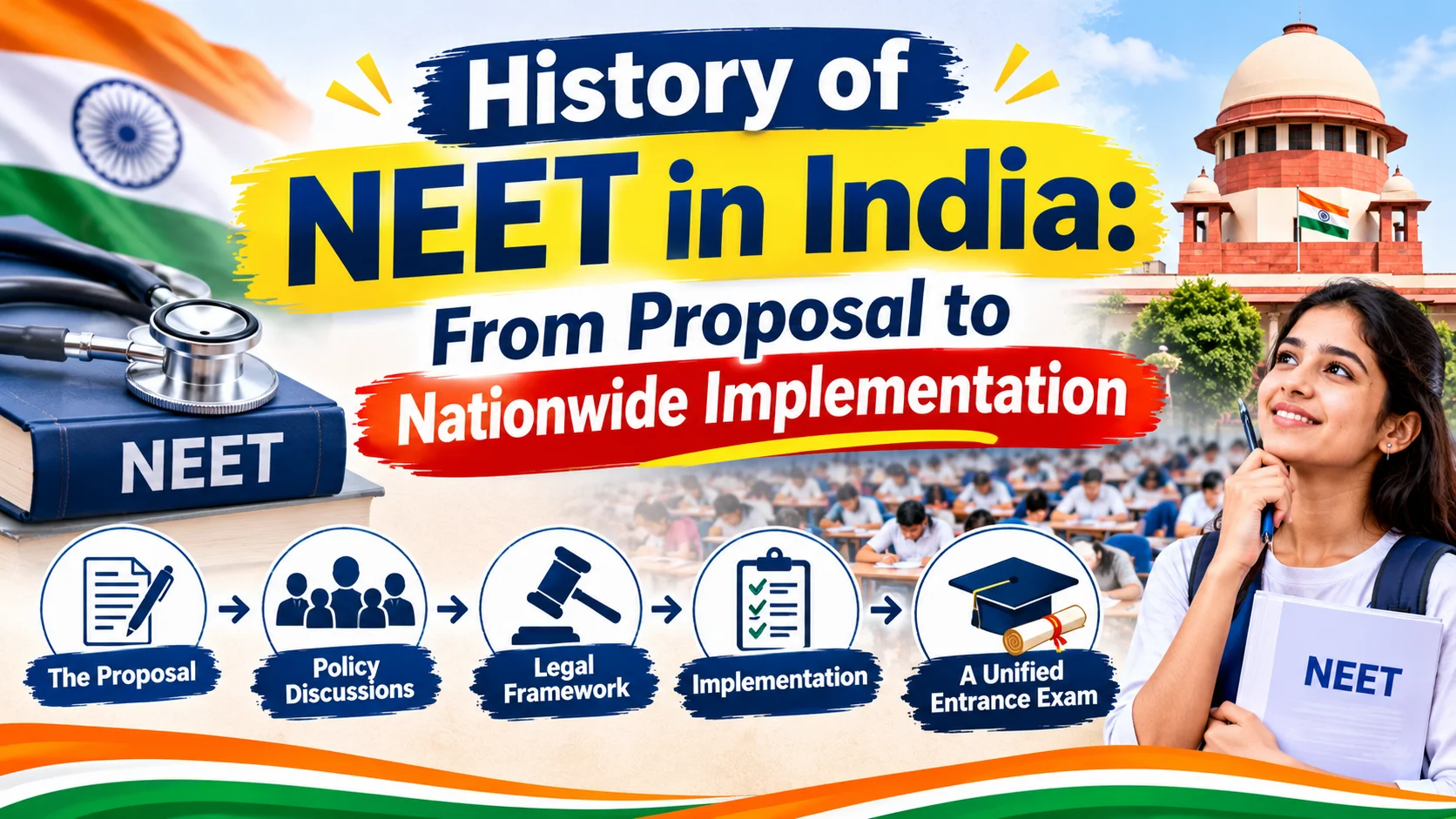
History Of NEET
NEET was first proposed by the Medical Council of India (MCI) in 2010. They wanted to create a single entry exam for medical admissions. The Medical Council of India published regulations in December 2010 to introduce NEET for undergraduate and postgraduate admissions. The exam was originally going to be introduced in 2012-13 but this was changed.
2013 – NEET Faces Its First Big Legal Issue
The Supreme Court of India overturned NEET in July 2013 after the judgement in Christian Medical College Vellore Association. Many private medical institutions and state governments objected to the introduction of a common exam. The original NEET was therefore put on hold. The government and MCI filed review petitions.
2016 – NEET Becomes Common Medical Entrance Exam
On the 11th April 2016 the Supreme Court overturned its previous judgement. NEET was to be held in 2016-17. The exam was run in two parts that year. The first part was the existing All India Pre-Medical Test. Combined results were used for admissions. Section 10D of the Indian Medical Council Act 1956 provided the legal grounds to introduce a common entrance exam. NEET was introduced nationally from 2016-17.
Why Was NEET Introduced In India?
There were many reasons why NEET was introduced. The government wanted to improve upon some long standing issues in medical admissions. These included inconsistent entrance exams and unfair admissions. Below are the key reasons why NEET was introduced.
1. Increase Transparency
Prior to NEET, different colleges had different admission processes. This can cause confusion to students on how seats are allocated, what exam they should be sitting and what criteria they are being judged on.
The common entrance exam provides a standardized process. Students receive scores and ranks from a centralized exam. The government has highlighted that NEET increases transparency and reduces malpractice in admissions.
2. Reduce Multiple Exams
A student may wish to apply to medical colleges in 5 different states. Prior to NEET they would have been required to revise for multiple state and institution specific exams. Different exam dates, registration fees, syllabi and revision methods.
NEET has reduced this burden for students by providing a single common entrance exam for covered undergraduate medical courses. This is one of the most practical reasons why NEET was introduced.
3. Reduce Capitation Fees & Malpractice
Medical courses can be very expensive, especially private institutions. There were concerns over irregularities in entrance exams and unfair admissions.
Having a common entrance exam based upon merit reduces the opportunity for this to happen. Admissions will be based on how well the candidate performed. Although it doesn’t guarantee that all medical seats will be affordable, the tuition fees and other costs for private colleges can vary greatly.
4. Ensure Minimum Academic Standards
To become a doctor students will need to have a good foundation in Physics, Chemistry and Biology. They will also need to undergo years of medical training. Students must be academically prepared. NEET ensures that candidates have a common assessment of their knowledge. This helps to ensure that admissions are more standardized.
5. Merit Based Entry
Students should be given a fair chance of gaining admission. NEET was introduced so that there is a common merit based process. Candidates will be competing based on their scores and ranks in the exam.
Although passing NEET will not guarantee admission to a government medical college, there are many factors that will affect this. This includes the amount of seats available, category, state quotas, reservation, college choices and counselling.
What Are The Main Objectives Of NEET?
The objectives of NEET are:
- Standardization – Common entrance exam for undergraduate medical admissions.
- Transparency – Easier to monitor the selection process.
- Merit – Common criteria to determine candidate ranking based on exam performance.
- Reduce Exams – Students do not have to sit multiple medical entrance exams.
- Fairness – Candidates from different educational and geographical backgrounds can sit a common exam.
- Better Standards – Minimum academic requirements.
- Reduce Malpractice – Less opportunity for irregular admissions.
The Ministry Of Health and Family Welfare have highlighted that NEET has reduced the number of entrance exams students have to sit whilst increasing transparency and minimum standards.
What Are The Benefits Of NEET For Medical Students?
NEET has changed the admissions process for millions of medical students. There are still challenges to overcome, especially due to the competitiveness, but it does have some practical benefits.
1. Single Exam For Multiple Medical Colleges
You can use your NEET score to enter applicable counselling processes for Government and Private Medical Colleges across India.
2. Standardized Exam
Students from CBSE, ICSE and different state boards will all sit the same national exam.
3. Improved Transparency
NEET scores, rankings, eligibility and counselling processes can be easily understood. Students can also refer to official counselling notices.
4. Opportunity To Apply In Different States
Candidates are not restricted to applying in their home state. Subject to eligibility, domicile requirements and counselling criteria students can apply for All India Quota and state quota seats.
5. Increased Clarity For International Medical Education
This is another area to discuss. Indian students who wish to study MBBS internationally must understand what NEET requires. Citizens of India and eligible OCI’s wishing to study undergraduate medical courses must pass NEET. MBBS ADVISOR can help students understand what they need to know to gain admission to their desired university.
Is NEET Mandatory For MBBS In India And Internationally?
Yes. Passing NEET is mandatory for Indian students wishing to gain admission to MBBS courses. This applies to Government, Private, Deemed and other applicable medical institutions. For MBBS internationally, the process is slightly different but Indian citizens and eligible OCI’s must pass NEET if they wish to study undergraduate medical courses.
The National Medical Commission (NMC) provides information relating to regulation. Students should refer to the latest regulations. It is important to note that passing NEET does not mean that the medical university will be recognised in India. Students should check what the applicable regulations are for foreign medical graduates, course length, internships etc.
How Does NEET Work Now?
NEET UG is run by the National Testing Agency. The exam covers:
- Physics
- Chemistry
- Biology (Botany & Zoology)
The exam is 720 marks in 2026. The exam will cover all 3 subjects. Always refer to the latest information bulletin for the applicable syllabus, exam format and marking criteria.
The general process is:
- Register Online – Candidates register via the official NTA website.
- Complete Application – Students enter their personal, academic and other details.
- Sit Entrance Exam – Candidates sit the NEET exam.
- Results Released – NTA release the results, scores and All India Rank.
- Register For Counselling – Eligible candidates register for counselling.
- Seats Allocated – Seats will be allocated based on merit, preferences, reservations and availability.
- Attend College – Selected candidates complete document checks.
Students can refer to exam notices and download the latest information bulletin from the official NEET website. The Medical Counselling Committee provides information regarding counselling.
Are There Any Disadvantages To NEET?
Whilst there are many benefits to NEET, there have also been criticisms. Below are some common concerns.
- Highly Competitive – Many students compete for limited government medical seats.
- Stressful Exam – Many students will spend 1+ years revising for the exam.
- Costly Coaching – Many families spend large amounts on coaching, resources and practice exams.
- Lack Of Flexibility – If students don’t perform well on exam day it can be hard to get into their desired college.
- Regional Issues – Different education in schools, language and resources can be a challenge.
Overall, NEET has solved many issues with admissions but it did not solve everything.
NEET & MBBS Internationally – What Indian Students Need To Know
Not all students who pass NEET will gain a government MBBS seat. Some students will look to study medicine internationally, particularly in countries like Russia, Bangladesh, Nepal and Kazakhstan. However, researching the right university is key.
Before applying students should ensure:
- The university and medical qualification meets applicable NMC requirements.
- The course meets the Foreign Medical Graduate Licentiate Regulations 2021 (where applicable).
- The course meets Indian regulation requirements for length and internships.
- Appropriate teaching language and clinical training.
- The university appears on the World Directory of Medical Schools (WDOMS).
However, just because it appears on the WDOMS does not mean that they will be eligible for medical registration in India. Students should also refer to the applicable regulation requirements.
The World Health Organisation (WHO) provides global health information but does not recognise individual foreign medical universities for medical registration in India. We would recommend students research these details before paying any university registration/admission fees. A little research can save you from any big issues.
FAQ’s
1. Why was NEET introduced in India?
NEET was introduced to provide a common medical entrance exam, increase transparency, reduce multiple entrance exams and provide merit based admissions.
2. When was NEET first introduced in India?
The Medical Council of India published regulations for NEET in December 2010. The exam was first sat in 2013 however faced legal issues. It became the common entrance exam for medical admissions in 2016-17.
3. Who runs NEET in India?
NEET UG is run by the National Testing Agency. The exam is run under the applicable guidelines and regulations.
4. Is NEET mandatory for private medical colleges?
Yes. NEET is mandatory for applicable private medical colleges in India. Candidates must also meet applicable eligibility and counselling criteria.
5. Is NEET mandatory for Indian students studying MBBS internationally?
Yes. Citizens of India and eligible OCI’s who wish to study undergraduate medical courses must pass NEET. Students should also ensure they meet the applicable requirements for foreign medical education.
6. Does passing NEET guarantee an MBBS seat?
No. Passing NEET will make you eligible for the applicable admissions process but your rank, category, availability of seats, preferences in counselling and other eligibility criteria will determine your admission.
Conclusion
NEET was introduced to solve a real issue with the medical admissions process in India. Having multiple entrance exams, irregular admissions, concerns over capitation fees and inconsistent selection processes were causing issues for students and their families. Having a common national exam provided a standardized process. Whilst the system is far from perfect, with highly competitive exams, costly coaching and it can still be difficult to gain a government MBBS seat. NEET has provided a common admissions process for medical education in India.
If you are looking to study MBBS in India or are considering studying medicine internationally, understanding NEET should be your first step. Visit MBBS ADVISOR to learn more about medical admissions guidance, eligibility and important information.


.webp)