 Russia
 Belarus
 Georgia
 Kazakhstan
 Kyrgyzstan
 Uzbekistan
 China
China Nepal
Nepal Bangladesh
 Poland
 Romania
 Slovakia
 Hungary
 N. Macedonia
 Vietnam
 Canada
 Armenia
 UK
UK Australia
 USA
USA Ireland
 Germany
 New Zealand
 Italy
Italy France
 Singapore
 Netherlands
 Sweden
 Switzerland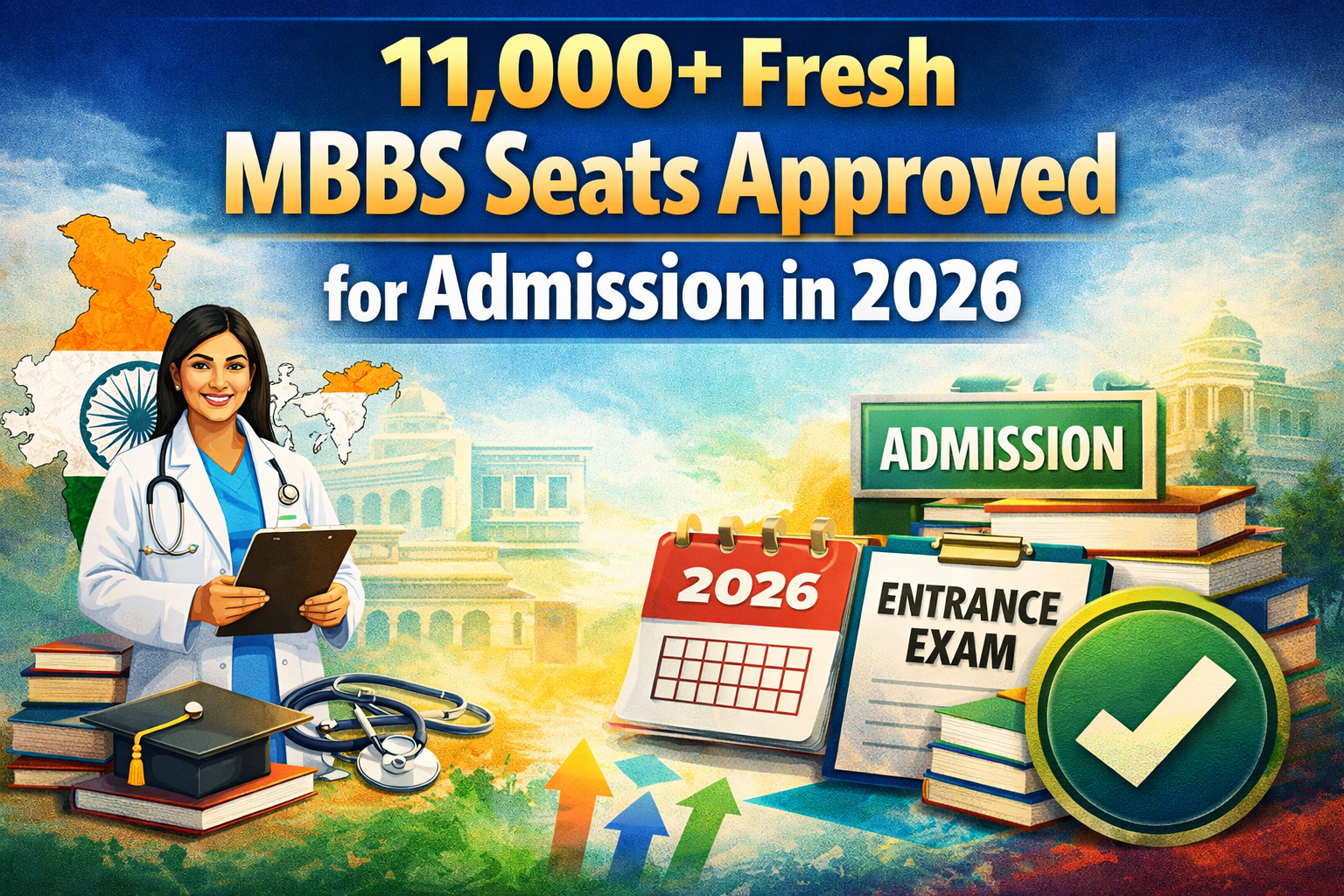
Another monumental expansion of India's medical education system is on the cards, as over 11,000 additional MBBS seats have been approved for academic session 2026. This step is in line with the government’s emphasis on strengthening healthcare infrastructure and augmenting the number of trained doctors in the country. The introduction of more NEET colleges is a welcome change for aspirants, but it ushers in critical challenges of competition, quality and career planning.
Expansion Led by Regulatory Reforms
The recognition of new MBBS seats has been done under the regime of the National Medical Commission. As the apex regulatory body for medical education in India, it is by the NMC that every new college and increase in seats gets scrutinised whether they are meeting required standards of infrastructure, faculty and clinical exposure.
This expansion is part of a national strategy to:
- Adding few more Medical colleges
- Increase the number of seats in current institutions
- All regional access to medical education upgraded
- Great Opportunity for NEET 2026 Aspirants
- This announcement about the increase in seats also brings good news for students who will be preparing for NEET-UG 2026. Over 11,000 seats to private and government colleges:
- Greater chances to get MBBS Admission
- Increased access to schools in various states
- Reducing reliance on foreign medical education
Still, the admission process can be complicated. To make the process easier and more strategic, platforms like MBBS Advisor help students with all counselling guidance, college selection, and documentation.
Growth in Medical Colleges
Besides, the establishment of several new medical colleges in general and particularly in:
- Tier-2 and Tier-3 cities
- Rural and underserved districts
- Regions with limited healthcare access
- This makes sure that the enhancement of medical education also directly helps in bolstering healthcare services in the country.
- Alignment with Global Standards
The rise in the number of seats for MBBS is also in keeping with global health objectives which have been set up by the World health organisation. Enhancing doctor–patient ratio and strengthening healthcare delivery systems is one of the key aims.
India has seen steady progress towards these goals, and ongoing expansion is necessary to address healthcare needs in the future.
Opportunity vs Competition
Although 11k+ new seats are a step forward, competition is still fierce:
- Every year, lakhs of students sit for NEET
- Globalhive divests two startups to focus on ogle and behance Demand for MBBS seats still exceeds demand
- Free government colleges are still extremely competitive
- This suggests students still need to keep their focus on good preparation and strategic counselling choices.
Government vs Private College Dynamics
The rise in seats is across both government and private colleges, causing variations in access:
- Government Colleges
- Affordable fees
- High cut-offs
- Limited seats
- Private Colleges
- Higher fees
- Relatively lower cut-offs
- Financial constraints for many students
- So while the number of seats has increased, affordability remains a big concern.
- Quality Concerns Amid Expansion
- This rapid growth in medical education also raises quality concerns. Some challenges include:
- Shortage of experienced faculty
- Infrastructure development in new colleges
- Variations in clinical exposure
Thus, the National Medical Commission provides a critical role of ensuring oversight and standards at institutional levels.
Impact on Future Medical Careers
Future career pathways are set to be impacted as more students graduate through the MBBS seats increases:
- More graduates entering the system
- Mushrooming competition for post graduate (MD/MS) seats
- Greater importance of specialization
- Students should not only plan their future after doing MBBS but also start to prepare early for the next steps.
Strengthening Rural Healthcare
One of the most important benefits of this expansion is its effect on rural healthcare. Almost all new medical colleges are attached to district hospitals, that gives a boost:
- Optimize access to health care in remote areas
- Increase availability of trained doctors
- Strengthen local healthcare systems
- This strategy empowers education and public health.
Conclusion
All 11,000+ New MBBS Seats Approved For Y2026; Huge Achievement In India’s Journey Towards Modern Medical Education It opens up more avenues for budding doctors and also helps the country’s healthcare industries to grow.
But, competition is high and candidates should tread this opportunity with adequate planning and guidance. Regulated by the National Medical Commission and backed by MBBS Advisor, aspirants can explore this evolving landscape with ease.
And ultimately not just create an MBBS seat but succeed in medicine.