 Russia
 Belarus
 Georgia
 Kazakhstan
 Kyrgyzstan
 Uzbekistan
 China
 Nepal
 Bangladesh
 Poland
 Romania
 Slovakia
 Hungary
 N. Macedonia
 Vietnam

With NEET-UG already being one of the most stressful exams for many medical aspirants across the country, there may be some major changes on the horizon.
The Central Government has told the Supreme Court that consideration is being given to the two stage examination pattern like JEE Main and JEE Advanced. With the possibility of converting the pen and paper exam to a Computer Based Testing exam (CBT), these changes have caught the attention of many students, parents, coaching institutes and medical experts. However, it is important to remember that these changes are being considered. This is good news for those keeping up-to-date with medical admissions news on MBBS ADVISOR.
What Has The Centre Said About NEET-UG?
As part of the NTA reforms, the Centre submitted an affidavit to the Supreme Court in August 2026. This came after concerns were raised about exam security.
The submission by the Government states that consideration is being given to making NEET-UG a one or two stage exam. They are also considering converting the exam to CBT.
The final decision will also include expert recommendations from a High-Powered Task Force led by Nandan Nilekani (Infosys co-founder). The Task Force is looking to investigate many elements of the exam including technology, security, infrastructure, accessibility and how these changes may affect different candidates.
Simply put, the government wants to look at ways to improve the security and manageability of the current system without putting students in a difficult situation.
What Is The Two Stage JEE Model?
Most medical aspirants will be familiar with the current NEET structure. Students sit the exam once, gain their score and rank and attend counselling. However, the JEE system works in a slightly different way.
Students will sit the JEE Main exam first. Those who are eligible will then be able to sit the JEE Advanced exam for entry into the IITs. Both exams are for different admissions and have different eligibility criteria. If NEET-UG were to go down this route, the Government would have to decide how both exams would work.
How Would A Two Stage Exam Work?
Whilst nothing official has been announced, a potential structure could be:
Stage One: Initial exam to check the understanding of Physics, Chemistry and Biology.
Stage Two: Further exam for those who meet the eligibility/qualification criteria.
Final Merit: The authorities would have to decide how the scores from both exams would affect their eligibility and ranking for medical admissions.
Counselling: Those who have qualified will attend the correct medical admissions counselling.
These are just potential structures and the actual number of stages, passing marks, dates, subjects and merit calculation will depend on what is decided upon. To be honest, having two exams does not necessarily mean it will be easier. Students will have to prepare for two exams which may affect their revision.
Why Is The Government Considering Changing NEET-UG?
The main issue is exam security. NEET-UG is a large-scale exam with students from various states, cities and rural areas attending. This makes the management of question papers, exam centres, transport and marking very complex. The Centre has highlighted that NEET-UG is still the largest paper-based exam run by the NTA. Other exams such as JEE Main, CUET and UGC-NET have already been converted to computer-based exams.
There are a few key reasons why the Government are considering this change:
1. To Reduce Question Paper Leaks
Question paper leaks can affect thousands of genuine candidates. Moving to a computer-based exam can help reduce some risks involved with printing, storing and transporting paper question papers. However, there will be a need for strong cyber security.
2. Easier Exam Management
Having a computer-based exam can allow the authorities to hold multiple exam sessions on different dates depending on the infrastructure available.
3. Greater Transparency
A well-designed computer-based system can help with monitoring, record keeping and exam management. However, it will depend on how this is put in place.
4. More Reliable Exam System
The government is considering how the NTA can create long-term structures rather than rely heavily on temporary staff. Ultimately, you want a fair exam.
The Nandan Nilekani Task Force
One of the most important aspects of this news is the involvement of the High-Powered Task Force led by Nandan Nilekani. The panel has been asked to look into ways to improve the public exams in India including the technologies and infrastructures needed to ensure secure exams. The panel is not just deciding whether NEET should become a computer-based exam. They are looking at the whole exam process from question paper creation to results.
They are discussing several important factors such as:
Infrastructure for large-scale exams.
Cyber security.
Exam centre availability in urban and rural areas.
Accessibility for female candidates and those from low connectivity districts.
Staff recruitment and training.
Fairness within multi-exam sessions.
Improved communication between exam authorities and regulatory bodies.
An update on October 9th 2026 stated that so far they have had around 58 meetings (panel and consultation meetings). They have also received over 50,000 suggestions from stakeholders. Officials have said that they expect to have their final report by the end of October. This is an important stage. The recommendations may affect not only NEET-UG but also other national competitive exams.
Could NEET-UG Become Computer-Based?
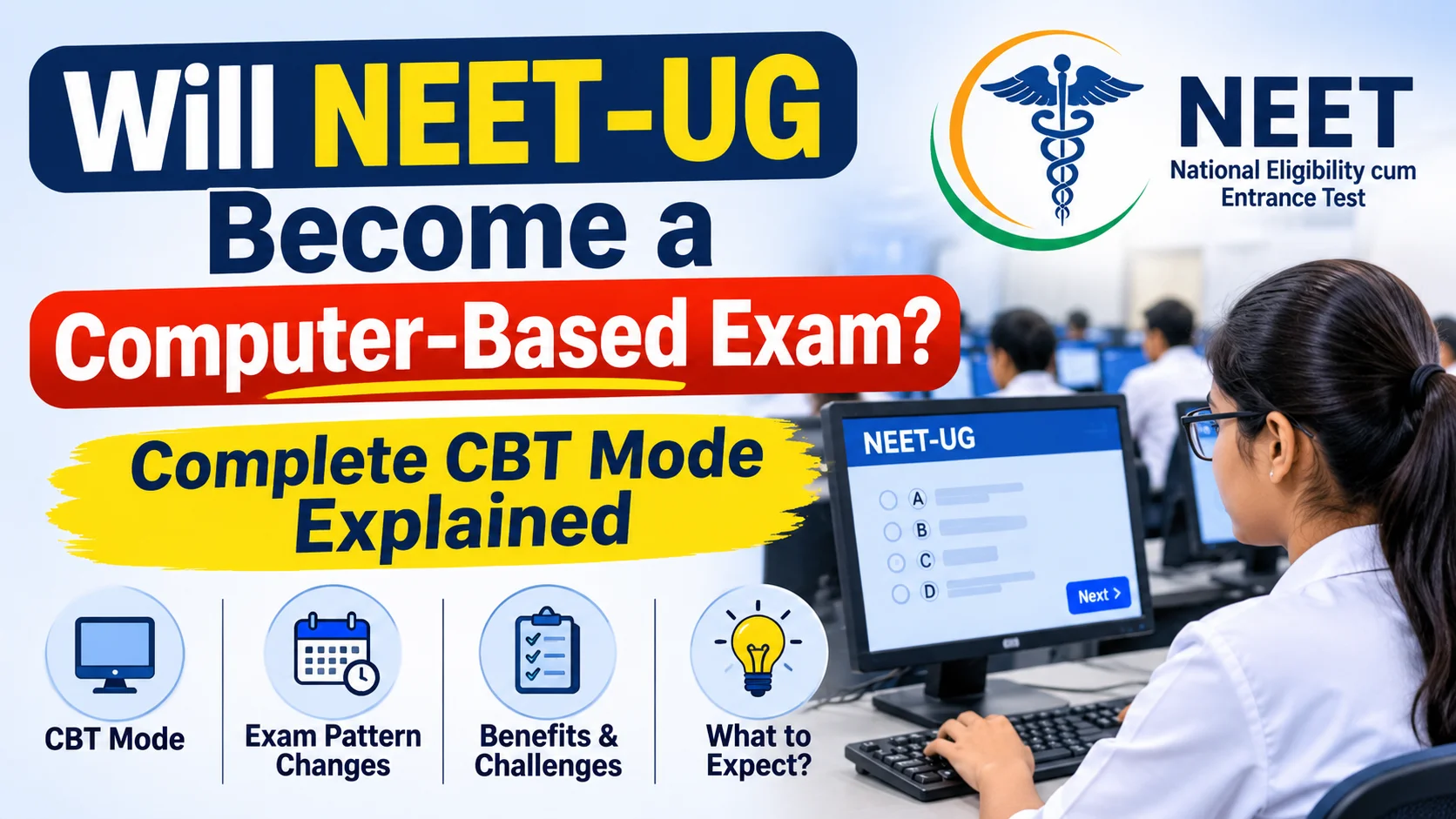
Yes, this is one of the options they are looking into. However, do not take this as an official decision for NEET-UG 2027. A Computer-Based Test means students answer questions on a computer at an authorised exam centre. JEE Main already uses this method. If NEET becomes computer-based, students may notice some differences.
Advantages of a computer-based exam could include:
Less reliance on transporting question papers.
Better exam control.
Faster processing.
Reduced risks with OMR papers.
Possibly improved monitoring.
However, there are some issues to consider.
Not all students will have regular access to computers. Those from rural areas or low digital connectivity districts may need extra support to feel comfortable with this format. There are also technical issues to consider. The government has recognised that they need to consider the infrastructure and fairness issues.
Will The Eligibility Criteria For NEET-UG Change?
No, just because the exam is changing does not mean the eligibility criteria will change. Those preparing for MBBS admissions should still be aware of the current basic eligibility criteria unless the NTA or National Medical Commission (NMC) announce any changes.
Key requirements include:
Studied Physics, Chemistry and Biology/Biotechnology with the correct English requirement.
Meet the minimum age requirements.
Qualifying marks will depend on your category and regulations.
Must qualify for NEET.
Follow the latest counselling and admissions guidelines.
For general eligibility information, refer to the official NEET website and National Medical Commission.
We recommend that students do not change their whole revision strategy based on the news. Until an official notification is released, you should stick to the current syllabus and exam requirements.
Will The NEET Syllabus Or Difficulty Change?
Another question many students are asking. At the moment there is no official announcement that the syllabus, subject weighting or difficulty will change due to the two-stage exam. If the exam was to move to a JEE style exam, the authorities will need to clarify whether the syllabus will be the same for both stages.
For example, the initial exam could be to test basic conceptual knowledge. However, this is just an example of how this could work and there is no official confirmation that this would happen.
Students should still revise all three subjects:
Physics – Mechanics, Electricity, Optics, Thermodynamics and others.
Chemistry – Physical, Organic and Inorganic.
Biology – Botany and Zoology (including NCERT concepts).
NCERT books are a key resource for NEET aspirants. Regular practice of mock exams, past papers and revision is also important. A tip would be to get familiar with basic computer skills whilst revising. You do not need to attend a course. However, practicing online mocks will help you feel more comfortable if the exam does come to a digital format.
What Does The Supreme Court Want From The Government?
The Supreme Court has stressed that changes to the exams should be made long-term.
During the NTA reforms hearing, the court highlighted concerns about accountability, long-term staff, infrastructure and having a reliable system in place to run NEET every year. In September 2026, the court asked the Centre to update them on how the Nandan Nilekani committee was getting on. They also discussed the importance of long-term structures within the NTA and reducing reliance on deputed staff.
The courts are not just concerned with changing the exam. Even if the exam is computer-based, they want to ensure question paper security, staff accountability and exam centre management are in place. This is where the recommendations from the expert committee come into play.
What Should NEET Aspirants Be Doing?
It can be frustrating for those preparing for their medical entrance exams in 2027 and beyond. Some students may be wondering whether they should change their coaching, buy new resources or change their revision strategy.
However, we would advise against making sudden changes.
Until guidelines are released, you should:
Continue with your revision based on the current NEET-UG syllabus.
Give equal attention to all three subjects.
Practice full mocks regularly.
Complete past papers.
Practice computer-based mocks.
Follow announcements from the NTA.
Keep an eye on application dates, eligibility and exam announcements from the official NTA NEET website.
We believe it is important to stay informed. However, there is no need to panic as this is just a proposal.
Will These Changes Affect MBBS Admissions In India And Overseas?
These changes are purely related to the NEET-UG exam. However, NEET qualification is important for Indian students wishing to study medicine overseas.