 Russia
 Belarus
 Georgia
 Kazakhstan
 Kyrgyzstan
 Uzbekistan
 China
China Nepal
Nepal Bangladesh
 Poland
 Romania
 Slovakia
 Hungary
 N. Macedonia
 Vietnam
 Canada
 Armenia
 UK
UK Australia
 USA
USA Ireland
 Germany
 New Zealand
 Italy
Italy France
 Singapore
 Netherlands
 Sweden
 Switzerland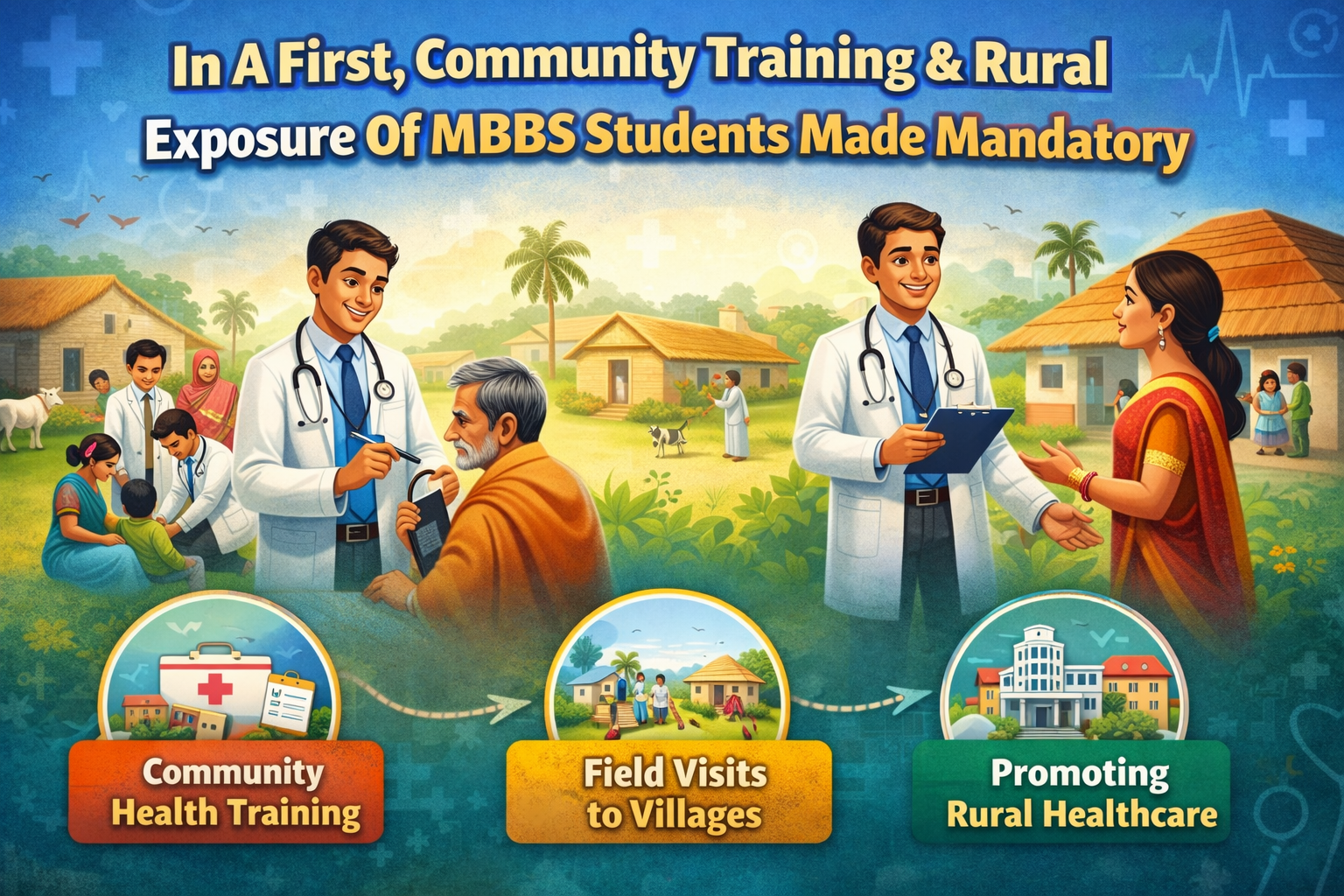
With an eye on improving the ability of future doctors to contribute optimally as far as the health needs of the country are concerned, medical education in India is going through a sea change. One of the major changes that has happened over time is the compulsory unbundling as well as integration of community training and rural exposure in the MBBS curriculum.
These changes are designed to make sure that medical students get actual training in public health, rural healthcare systems and community medicine. The changes have been made under new rules by the National Medical Commission, which regulates medical education and standards nationwide.
These reforms aim to train doctors who can address not just the hospital-based medicine they’re trained in but also the larger public health challenges confronting communities.
Mandatory Community Training: Here Is Why
Urban and rural healthcare access in India is a little behind. Most of the population lives in rural areas with few doctors and medical facilities.
To mitigate this challenge, the National Medical Commission implemented reforms in MBBS curriculum through Competency-Based Medical Education (CBME) framework.
The model emphasises interactive education, clinical experience and training in community-based healthcare. It ensures that medical graduates acquire competencies beyond textbook knowledge; they have to grapple with real public health issues. (Medical Dialogues)
Leading international health organisations like the World Health Organisation have similarly emphasised that community-based healthcare training is integral to medical education in modern contexts.
The Family Adoption Programme
Family Adoption Programme: One of the most pathbreaking elements of new MBBS curriculum
Under this program:
- Each medical student (or each group of students) is assigned five families in neighboring rural or urban communities.
- During the MBBS course, students keep checking the families for health.
- They follow illness, nutrition, maternal health and preventive care needs.
- They assist families in accessing healthcare services when necessary.
- This program commences in the first year of MBBS and extends throughout the course, providing an active community engagement at all times. (Medical Dialogues)
- During the final year, students must prepare detailed reports on the health conditions and improvements in these families.
Rural Health Training During MBBS
Besides community surveys and family adoption programmes, MBBS students also have to undergo rural health training in their course.
Medical colleges need to have Rural Health Training Centres (RHTCs) or Urban Health Training Centres, where students treat patients directly under supervision.
Through these postings, students get the chance to understand:
- Primary healthcare delivery
- Vaccination programs
- Maternal and child health services
- Nutrition programs
- Disease prevention strategies
- It provides students with exposure to healthcare systems beyond a large hospital system.
- Internship Posting in Community Medicine
- Under the MBBS and during CRMI, they have certain community medicine postings as mentioned under the heading Compulsory Rotating Medical Internship (CRMI).
These postings typically include:
- Rotations in Community Health Centres
- Rural hospital exposure
- Public health program participation
- Preventive healthcare initiatives
The standard duration for training in community medicine during internship is about 12 weeks after which students get an early glimpse of rural healthcare systems. (Edufever)
Early Clinical Exposure for Students
Early clinical exposure is another landmark reform in the MBBS curriculum. Medical students traditionally met patients only in the latter part of their education.
Now students get clinical exposure from first year itself, which paves the way for them to:
- Observe doctor-patient interactions
- Understand real disease conditions
- Build communication and diagnostic skills early
- These changes allow medical students to put their theoretical knowledge into practice in clinical settings.
- Importance of Medical Colleges in Rural Health Care
- Relation of medical colleges with rural health institutions is needed for community based training.
- The new guidelines state that hospitals seeking to open medical colleges will be attached to an existing rural or urban health centre where students can receive field training and internships. (The Times of India)
- These centres serve as practical training sites and teach students treatment of patients in primary health care.
Benefits of Community-Based Medical Training
The addition of community training in the MBBS curriculum has multiple long-term advantages.
Better Understanding of Public Health
Students study the pressing health issues that many people around the world face, including malnutrition, infectious diseases, sanitation difficulties and maternal health problems.
Improved Doctor–Patient Communication
And direct engagement with families and communities has engaged students in empathy and communication skills.
Stronger Rural Healthcare System
Training medical students in rural areas has been shown to increase doctors working in underserved areas.
Focus on Preventive Medicine
Based on the data from community training you can see how important the prevention of diseases is in comparison to their treatment.
Importance for Future Doctors
As these curricula evolve, they reflect a new emphasis on providing care to communities. Modern medical professionals need to consider the social, economic and environmental factors impacting patient health.
Here are the areas where MBBS graduates can work under revised curriculum:
- Rural health centres
- Public health programs
- Community medicine departments
- Government healthcare initiatives
For example, students searching for in-depth information about MBBS admission processes, MBBS curriculum updates, or the planning of medical careers can visit trusted educational platforms like MBBS Advisor.
Conclusion
This is a significant step towards the enhancement of medical education in India with mandatory requirements for community training and exposure to rural milieu. Adding field practice, family health records and rural postings to the MBBS curriculum also aims to train doctors in a more holistic manner that prepares them for widespread communities of need.
These reforms are consistent with global healthcare principles supported by the World Health Organisation and emphasize preventive medicine, public health awareness, and community engagement.
With such a strategy, this new line of approach is provided with its book finding that medical education will not be confined to classrooms and cable hospitals so students can prepare to become health-care providers who can meet the real health needs of society.