 Russia
 Belarus
 Georgia
 Kazakhstan
 Kyrgyzstan
 Uzbekistan
 China
 Nepal
 Bangladesh
 Poland
 Romania
 Slovakia
 Hungary
 N. Macedonia
 Vietnam
Introduction
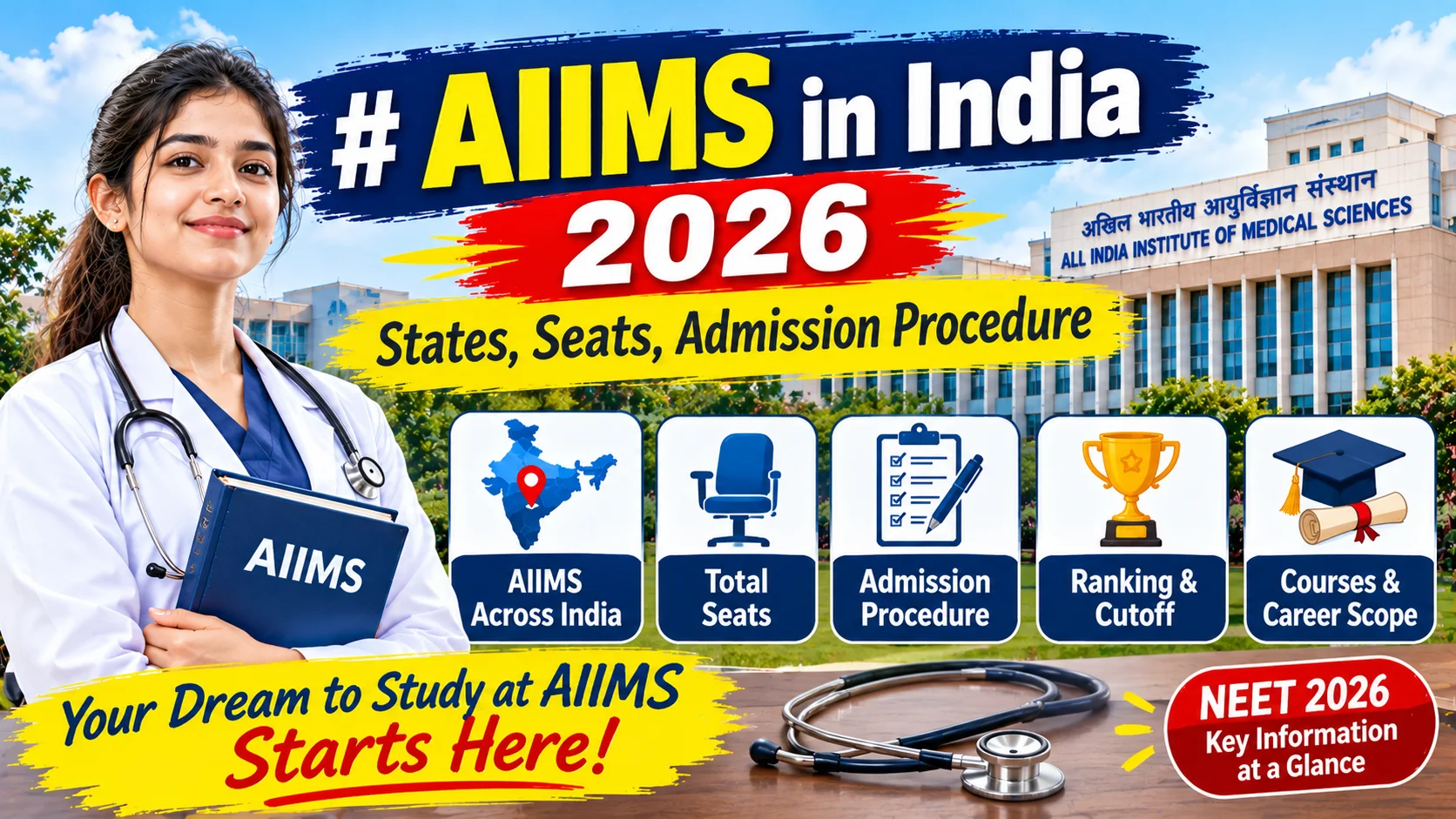
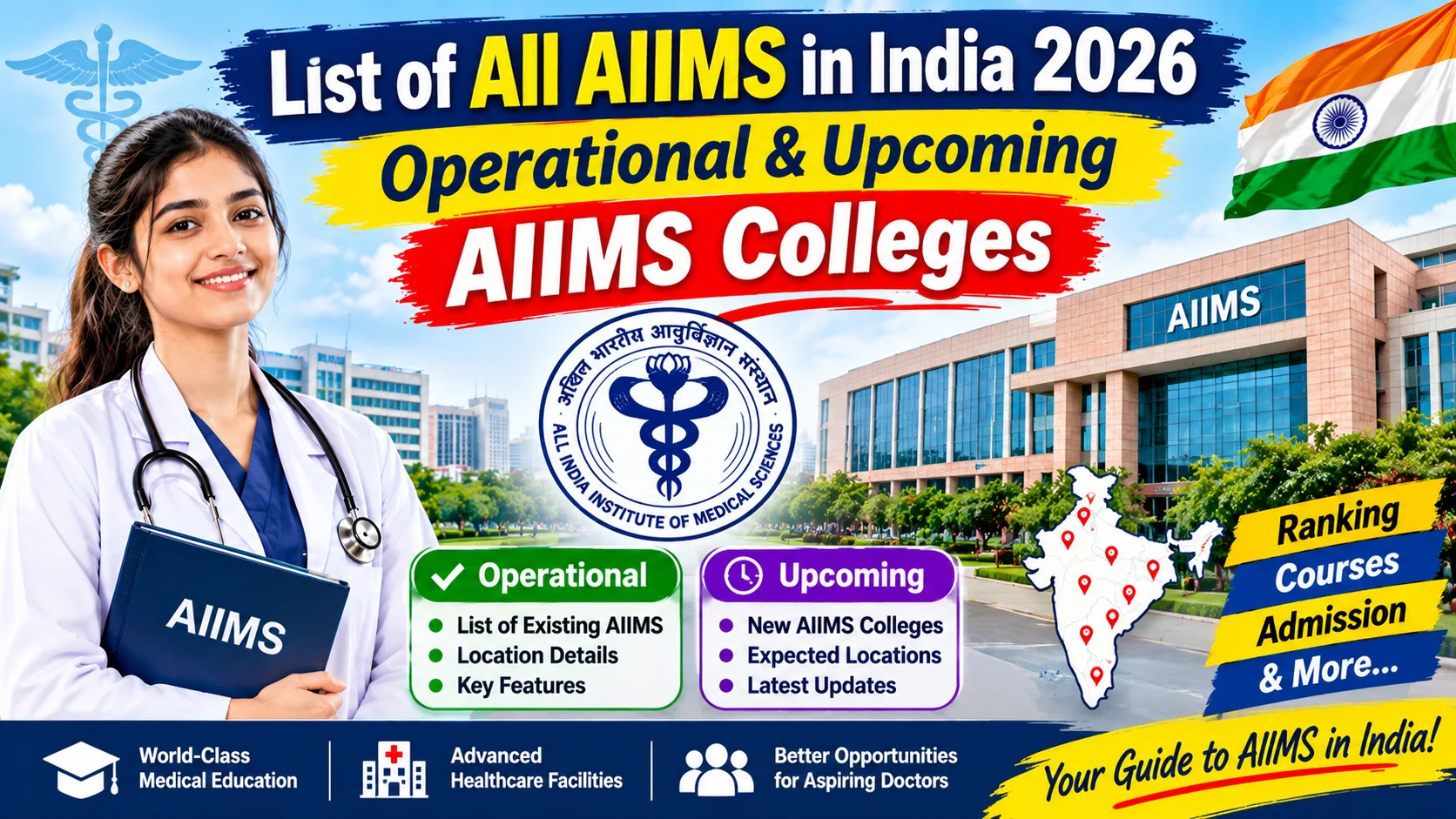
The All India Institutes of Medical Sciences (AIIMS) are among India's most recognised government medical institutions. They are known for medical education, healthcare services, clinical training and research opportunities. For many students preparing for the National Eligibility cum Entrance Test (NEET UG), securing an MBBS seat at an AIIMS college is an important academic goal.The Government of India has established AIIMS institutions in different parts of the country to improve access to quality medical education and healthcare facilities. While several AIIMS campuses have started MBBS classes, some newer projects are still under construction or development.Understanding the difference between operational medical colleges and upcoming AIIMS projects is important before selecting colleges during counselling.In this article, we will explore the List of All AIIMS in India 2026, their locations, MBBS courses, admission requirements and important factors students should consider before choosing an institution.
List of Operational AIIMS Colleges in India 2026
The following table lists AIIMS institutions that have started MBBS teaching. However, the level of infrastructure, hospital services and permanent campus development may differ across institutions.
|
S.No. |
AIIMS College |
State/UT |
|
1 |
AIIMS New Delhi |
Delhi |
|
2 |
AIIMS Bhopal |
Madhya Pradesh |
|
3 |
AIIMS Bhubaneswar |
Odisha |
|
4 |
AIIMS Jodhpur |
Rajasthan |
|
5 |
AIIMS Patna |
Bihar |
|
6 |
AIIMS Raipur |
Chhattisgarh |
|
7 |
AIIMS Rishikesh |
Uttarakhand |
|
8 |
AIIMS Raebareli |
Uttar Pradesh |
|
9 |
AIIMS Mangalagiri |
Andhra Pradesh |
|
10 |
AIIMS Nagpur |
Maharashtra |
|
11 |
AIIMS Gorakhpur |
Uttar Pradesh |
|
12 |
AIIMS Bathinda |
Punjab |
|
13 |
AIIMS Deoghar |
Jharkhand |
|
14 |
AIIMS Bibinagar |
Telangana |
|
15 |
AIIMS Kalyani |
West Bengal |
|
16 |
AIIMS Guwahati |
Assam |
|
17 |
AIIMS Jammu |
Jammu and Kashmir |
|
18 |
AIIMS Rajkot |
Gujarat |
|
19 |
AIIMS Bilaspur |
Himachal Pradesh |
|
20 |
AIIMS Madurai |
Tamil Nadu |
Important Note: Starting MBBS classes does not necessarily mean that an AIIMS campus has completed all its permanent infrastructure or hospital facilities. Students should check the latest official admission notices and seat matrix before making their college preferences. The list should also be cross-checked against the relevant year's official counselling documents.
Upcoming AIIMS Colleges in India
Apart from institutions that have started MBBS teaching, several AIIMS projects are at different stages of approval, construction and development.
Some notable projects include:
|
AIIMS Project |
State/UT |
Development Status |
|
AIIMS Darbhanga |
Bihar |
Approved for development |
|
AIIMS Awantipora |
Jammu and Kashmir |
Under development |
|
AIIMS Rewari (Manethi) |
Haryana |
Under development |
The development status of these projects may change over time. An announcement, approval or construction activity does not automatically mean that MBBS admissions have started.
Students interested in these institutions should confirm whether the college has received the necessary approvals and appears in the official MBBS seat matrix for the relevant admission year.
MBBS Course at AIIMS Colleges
AIIMS institutions offer undergraduate medical education through the Bachelor of Medicine and Bachelor of Surgery (MBBS) programme. The course combines classroom learning, practical training and clinical exposure to help students develop medical knowledge and patient-care skills.
The MBBS programme generally takes 5.5 years, including:
- 4.5 years of academic education: Students study pre-clinical, para-clinical and clinical subjects.
- 1 year of compulsory rotating internship: Students receive supervised practical training in different medical departments.
Subjects Taught During MBBS
The MBBS curriculum covers several subjects related to medical science and healthcare.
|
Subject Category |
Important Subjects |
|
Pre-clinical |
Anatomy, Physiology and Biochemistry |
|
Para-clinical |
Pathology, Pharmacology, Microbiology and Forensic Medicine |
|
Clinical |
General Medicine, General Surgery, Paediatrics, Obstetrics and Gynaecology |
|
Other Areas |
Community Medicine and allied clinical subjects |
The curriculum follows applicable medical education regulations. Students can visit the National Medical Commission (NMC) website for information about undergraduate medical education regulations and updates.
AIIMS MBBS Admission Process 2026
Admission to MBBS courses at AIIMS institutions is based on the NEET UG examination. Students must qualify for NEET UG and participate in the prescribed counselling process to secure a seat.
Eligibility Criteria
Students generally need to fulfil the following requirements:
- Pass Class 12 or an equivalent examination.
- Study Physics, Chemistry and Biology/Biotechnology along with English as required under the applicable eligibility rules.
- Meet the minimum qualifying criteria prescribed for their category.
- Fulfil the prescribed age requirements.
- Qualify for NEET UG in the relevant admission year.
Eligibility rules and qualifying requirements can change. Students should read the latest information bulletin available on the official NEET NTA website.
NEET UG Counselling Process
After qualifying for NEET UG, students need to participate in the relevant counselling process.
The general steps include:
- Check the NEET UG result and All India Rank.
- Register on the official counselling portal.
- Review the available AIIMS colleges and MBBS seats.
- Fill in college preferences in the required order.
- Lock choices within the prescribed schedule, if applicable.
- Check the seat allotment result.
- Complete reporting, document verification and admission formalities if a seat is allotted.
AIIMS MBBS seats are allotted through the centralised counselling process conducted by the Medical Counselling Committee (MCC). Students should use the official MCC website to check counselling schedules, seat matrices, choice-filling rules and allotment results.
Why Choose AIIMS for MBBS?
AIIMS colleges are popular among medical aspirants because they provide government-funded medical education and opportunities for academic and clinical learning.
1. Government Medical Education
AIIMS institutions are government-funded. Their MBBS fees are generally lower than those of many private medical colleges. However, students should check the latest fee structure and other compulsory charges for their selected institution.
2. Clinical Training
AIIMS institutions are associated with hospitals that provide clinical learning opportunities. Students can develop their understanding of patient assessment, diagnosis and medical management through supervised training.
The level of clinical exposure may vary depending on the hospital's operational capacity and the development stage of each campus.
3. Research Opportunities
Medical research is an important part of healthcare education. Students may get opportunities to learn about research methods, scientific publications and evidence-based medicine through academic departments and institutional activities.For broader information about global health research and medical priorities, students can explore the World Health Organization (WHO) website.
4. Structured Medical Education
AIIMS institutions provide medical education through academic departments and structured undergraduate programmes. Students should still compare the teaching facilities, faculty availability and academic environment of individual campuses.
5. Specialist Medical Departments
Many AIIMS hospitals provide services across different medical specialities. However, the availability of departments and advanced healthcare facilities may differ between established and newer campuses.
Factors to Consider Before Choosing an AIIMS College
Getting an AIIMS seat is a significant achievement, but students should also understand the facilities and academic environment of the institution before finalising their preferences.
Consider these factors:
- MBBS teaching status: Confirm whether the institution is admitting students for the current academic year.
- Available seats: Check the latest official MBBS seat matrix.
- Hospital facilities: Review the operational status of the associated hospital and clinical departments.
- Hostel facilities: Check accommodation availability, rules and charges.
- Fee structure: Review tuition fees and other compulsory expenses.
- Faculty and departments: Consider the availability of teaching staff and academic departments.
- Campus infrastructure: Check whether the permanent campus and student facilities are fully operational.
- Previous closing ranks: Review previous counselling results to understand the competition level.
Students can also use the World Directory of Medical Schools (WDOMS) to look up medical school information. However, a WDOMS listing by itself should not be treated as proof of recognition or eligibility for medical registration in India. Always check the applicable information from the NMC and other relevant official authorities.
For further guidance on medical colleges and admission-related topics, students can explore MBBS Advisor.
Conclusion
The number of AIIMS institutions in India has increased over the years, giving NEET aspirants more government medical college options across different states. AIIMS New Delhi remains the original institution, while several newer campuses have started MBBS teaching.However, students should understand the difference between AIIMS institutions that are admitting MBBS students and projects that are still under development. Campus infrastructure, hospital facilities, academic departments and seat availability may vary.For the 2026 admission process, students should qualify for NEET UG, follow the official MCC counselling schedule and carefully review the latest seat matrix, fee details and admission notices before selecting their preferences.
Frequently Asked Questions (FAQs)
1. How many AIIMS are there in India in 2026?
The total number depends on whether approved, developing and operational projects are included. For MBBS admission, students should focus on institutions listed in the official seat matrix for the relevant academic year.
2. Which was the first AIIMS in India?
AIIMS New Delhi was the first AIIMS institution in India. It was established in 1956.
3. How can I get MBBS admission to an AIIMS college?
Students must qualify for NEET UG and participate in the centralised MCC counselling process. Seats are allotted according to eligibility, rank, preferences, seat availability and applicable reservation rules.
4. Is NEET compulsory for AIIMS MBBS admission?
Yes. NEET UG is the required entrance examination for MBBS admission to AIIMS institutions in India.
5. What is the duration of the MBBS course at AIIMS?
The MBBS programme generally takes 5.5 years, including 4.5 years of academic education and one year of compulsory rotating internship.
6. Which is the most established AIIMS in India?
AIIMS New Delhi is the original and most established AIIMS institution. Students comparing other campuses should consider their academic facilities, hospital services and individual preferences.
7. Are all AIIMS colleges fully operational?
No. Some AIIMS institutions have started MBBS classes but may still be developing permanent campuses or hospital facilities. Other projects may be at an earlier stage and may not have started MBBS admissions.
8. Are all AIIMS colleges government-run?
Yes. AIIMS institutions are government-established and publicly funded medical institutions.
9. Do all AIIMS colleges have the same MBBS fees?
Not necessarily. Students should check the latest official fee notices of the specific institution because fees and other charges may vary.
10. Where can I check the number of MBBS seats available at AIIMS?
Students can check the latest MBBS seat matrix and counselling updates on the official MCC website. NEET examination information is available on the NTA NEET portal.