 Russia
 Belarus
 Georgia
 Kazakhstan
 Kyrgyzstan
 Uzbekistan
 China
China Nepal
Nepal Bangladesh
 Poland
 Romania
 Slovakia
 Hungary
 N. Macedonia
 Vietnam
 Canada
 Armenia
 UK
UK Australia
 USA
USA Ireland
 Germany
 New Zealand
 Italy
Italy France
 Singapore
 Netherlands
 Sweden
 Switzerland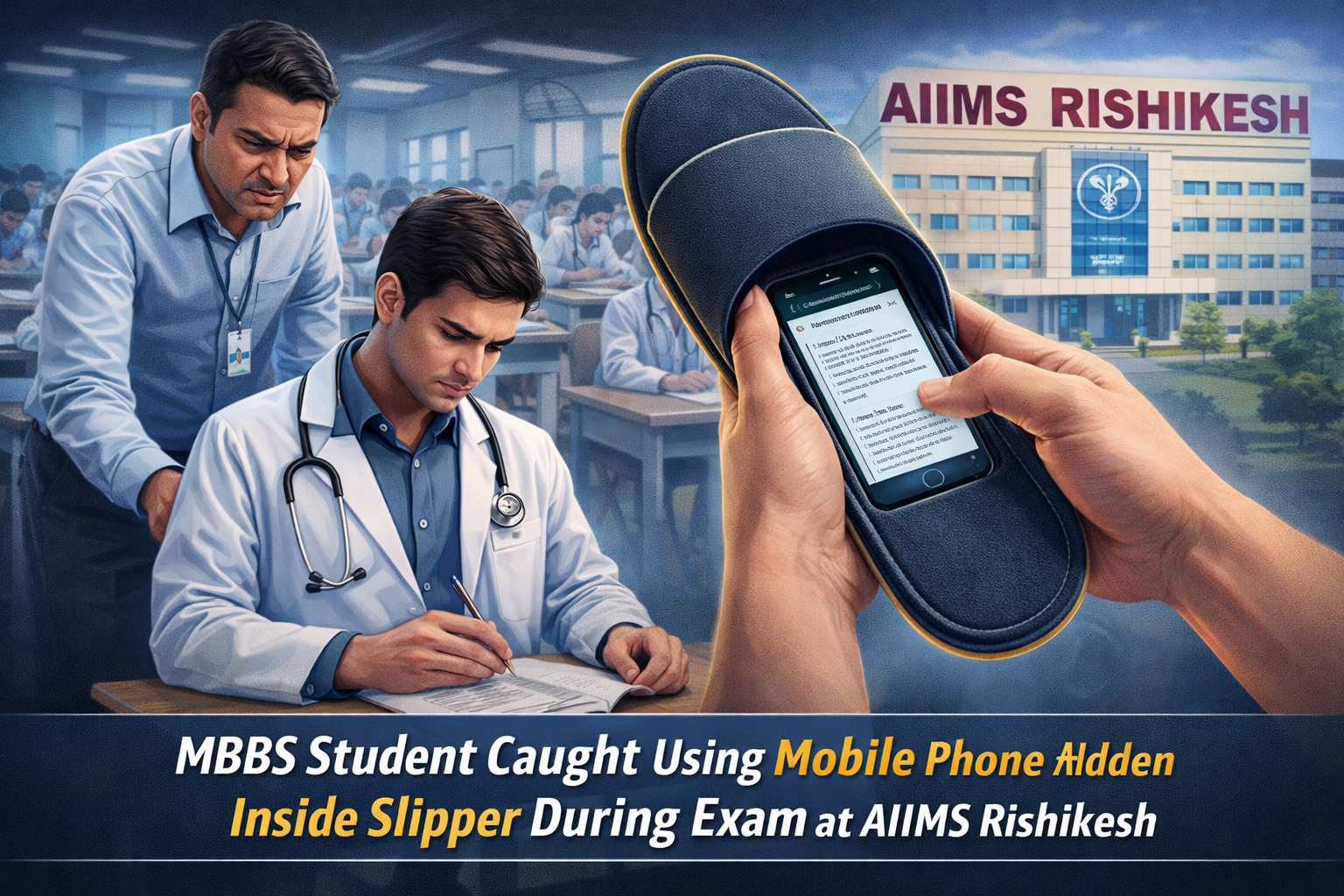
A recent case of examination malpractice at AIIMS Rishikesh has brought the issue back into focus, and if we were to believe the history this probably needs little introduction about academic integrity in Indian medical institutions. The case was against an MBBS student who was reportedly caught using a mobile phone hidden in the cavity of a slipper, during an internal examination. The case has led to conversations regarding the security of exams, pressure on students, and the need for firmer monitoring systems in top colleges.
Overview of the Incident
The student allegedly tried to cheat an MBBS exam of academics and he hid a mobile device on top of a footwear during the professional examination. It was allegedly used to get study material or contact outside during the exam. Invigilators observed suspicious activity, resulting in further investigation and eventual discovery of the hidden phone.
The case came to light when the student, identified as Sandeep Mishra, was caught with his mobile phone during an examination at AIIMS Rishikesh, following which the authorities swiftly disposed of the device and filed for disciplinary action against him. Incidents like this are taken very seriously, especially in institutions of national importance where standards with respect to education are expected to be top notch.
Examination Protocols and Security Measures
Especially for AIIMS campuses, medical institutions observe high standards of examination procedure to uphold the integrity of the process. These typically include:
- Compulsory frisking before entering examination hall
- Curbing of electronic devices like mobile phones, smartwatches, and Bluetooth gadgets
- The system involves constant surveillance by invigilators and CCTV cameras
- Messy seat charts so they can't talk
- Yet despite such measures, students sometimes try to sneak past security through creative means, including this example.
Read more about the growing worry surrounding exam malpractice in medical education.
Incidents like this one reflect a growing concern in the field of medical education — exam malpractice fueled by extreme academic pressure. MBBS is one of the toughest courses in India, as it needs to maintain a constant performance between theory and clinical subjects.
Most students follow the fair means, but few of them use unfair means because:
- Fear of failure
- High competition
- Academic stress
- Lack of preparation
- Unfounded threats attack individual careers but weaken the credibility of the entire healthcare system.
Institutional Response and Possible Consequences
Institutions, including AIIMS Rishikesh, have to adhere to strict disciplinary guidelines when handling cheating cases. There are several possible consequences depending on the severity of the offense:
- Cancellation of the examination paper
- Suspension from the course
- Debarment from future exams
- Expulsion in extreme cases
These penalties seek to discourage students from committing unethical acts and ensure that the integrity of medical education is maintained.
Role of Regulatory Bodies
Regulatory bodies like the National Medical Commission stress that ethics is a key part of medical training. It covers not only how students are performing academically, but also in their professional behavior and integrity.
Ethics is the cornerstone of medical practice and any breach during training time should be a cause for concern as to how future responsibilities as healthcare providers would be executed.
Technology: A Double-Edged Sword
Technology has been a tremendous boon to medical education, but it is not without its new challenges, especially with respect to exam integrity. Miniaturized devices and wearable tech have made it easy to try to cheat in new ways.
In response, institutions are increasingly embracing:
- Advanced surveillance systems
- Signal jammers in exam halls
- AI-based monitoring tools
- Biometric verification
- Without ethical student mindsets, technology alone cannot remove malpractice.
Why Ethics is Important in Medical Field
The highest standards of honesty and accountability are demanded from the medical profession. A student that cheats not only detriments their own learning but also patient safety down the line.
And doctors are responsible for human lives, so the medical decisions being made should be rooted in real knowledge and expertise. Such incidents reinforce the need for ethical education to go hand in hand with academic training.
The Root of the Problem: Teacher Stress
The fatal incidents, one of the root causes could be immense pressure on MBBS students. Long hours of study, the frequency of examinations and high expectations could induce anxiety and burnout.
Institutions must focus on:
- Providing mental health support
- Encouraging open communication
- Promoting balanced study approaches
- Reducing stigma around academic struggles
- These problems must be rectified to reduce the possibility of malpractice.
- Preventive Measures for the Future
- Medical colleges could take several practices to prevent similar incidents:
- Strengthening frisking and security checks
- Metal detectors and scanning devices
- Increasing invigilator vigilance
- Conducting awareness programs related to academic ethics
- Enforcing strict penalties consistently
- The opposite to enforcing rules is creating a culture of honesty.
Conclusion
The incident at AIIMS Rishikesh is a reminder that academic corruption can occur even among the finest institutions. Although strict action will reportedly be taken against the complainant student, the chain may look at how ethical values can be strengthened to prevent such instances from happening and aim to reduce touch pressure as well.
Medical education is more than a series of exam passes—it produces capable and trustworthy practitioners. Maintaining integrity is vital in training to help provide safe and reliable healthcare moving forward.